
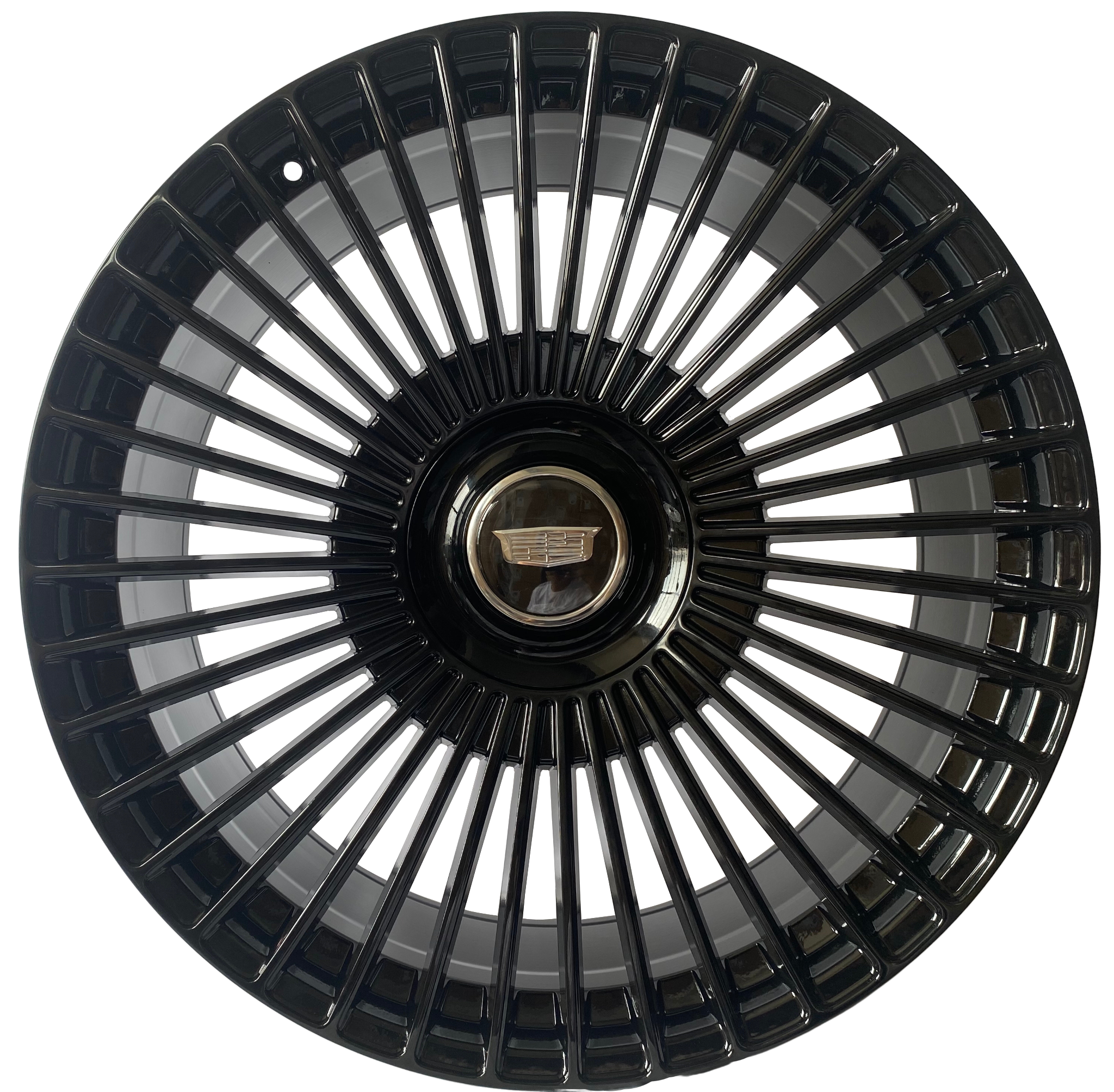
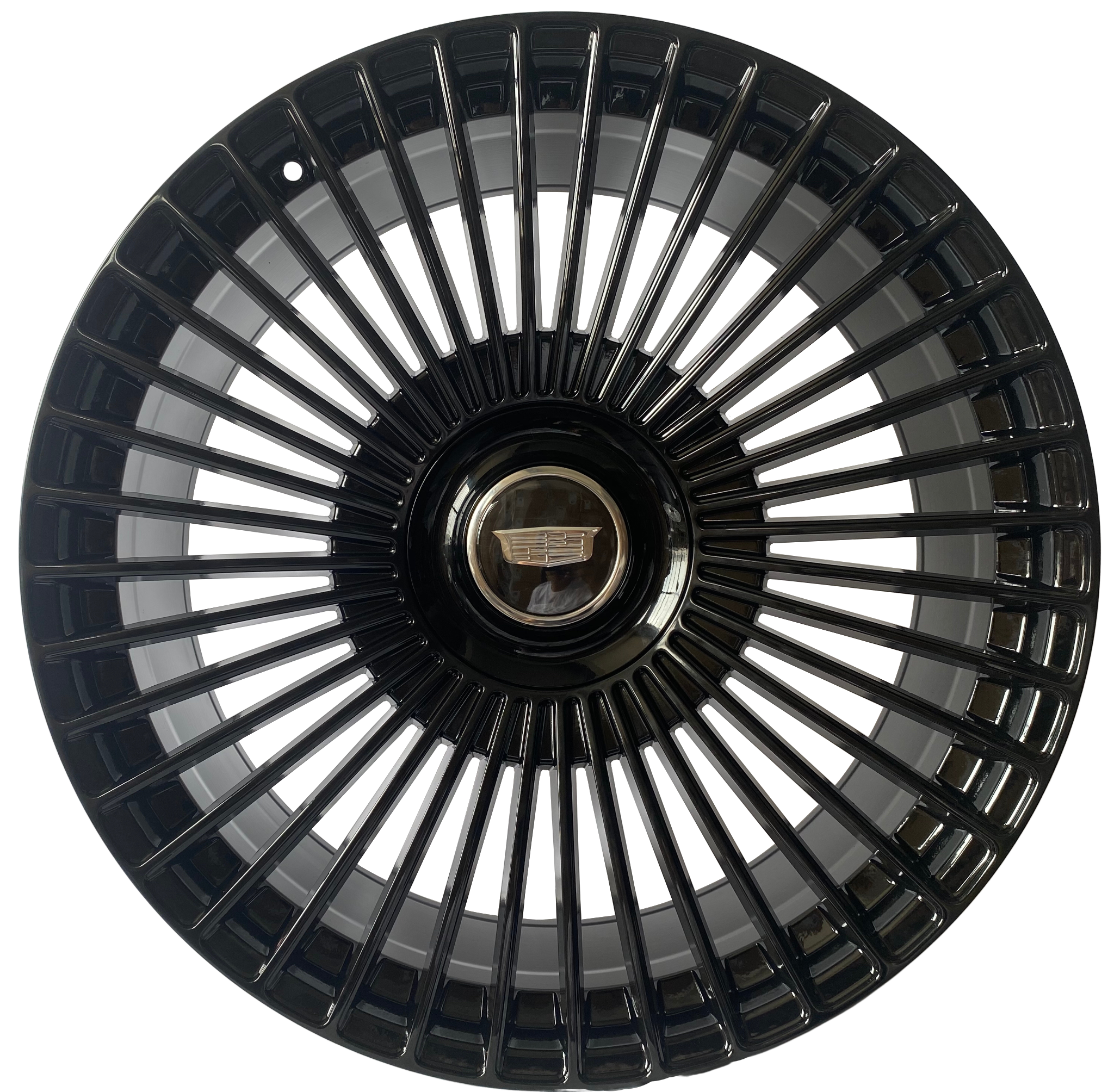


A 6,000-pound luxury SUV riding on mass-produced cast wheels isn't just an aesthetic mismatch; it's a structural liability. You've invested in a pinnacle of automotive engineering, so you shouldn't have to tolerate steering wheel vibrations or the constant fear of a rim cracking on a minor road defect. The debate of forged vs cast wheels is no longer a matter of simple preference. It's a matter of engineering necessity for the 2026 standard of luxury icons.
We'll demonstrate why forged engineering is the only choice that provides total peace of mind and the bespoke aesthetic your vehicle deserves. You'll learn how these precision-engineered components outclass traditional casting in every metric, from reducing unsprung weight to enhancing long-term resale value. We'll explore the shift toward monoblock minimalism and why your high-performance vehicle requires a wheel that's as uncompromising as its engine.
Key Takeaways
- Understand the fundamental engineering shift from pouring molten metal to high-pressure forging, ensuring a denser and safer grain structure for your vehicle.
- Discover why the 6,000lb weight of modern luxury SUVs makes the forged vs cast wheels debate a matter of critical structural safety.
- Learn how architectural milling creates intricate, sculptural designs that are physically impossible to achieve with traditional casting methods.
- Evaluate the true cost of ownership by comparing the frequent replacement cycles of cast rims against the lasting durability of aerospace-grade forged aluminum.
- Elevate your vehicle's market value and curb appeal with custom-engineered wheels designed specifically for elite marques like Rolls Royce and Bentley.
What Is the Real Difference? Forged vs. Cast Wheel Engineering
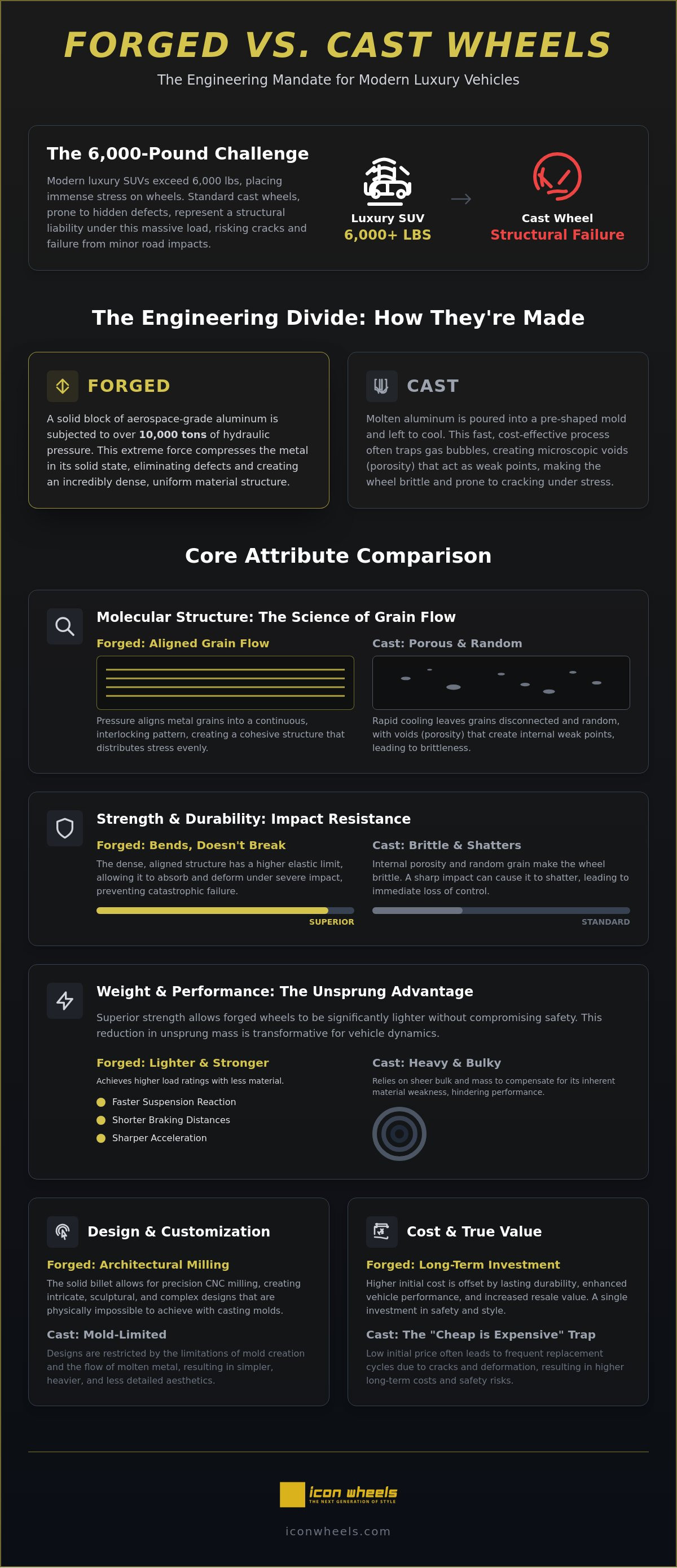
Engineering excellence begins at the molecular level. For many, the choice between forged vs cast wheels seems like a simple aesthetic decision. The reality is hidden deep within the metal itself. Casting is the industry standard for mass production. It involves heating aluminum until it liquefies and pouring it into a pre-shaped mold. It's fast and cost-effective. Unfortunately, it's also prone to internal flaws. As the liquid metal cools, gas bubbles often get trapped inside the structure. This creates microscopic pockets of air known as porosity. These tiny voids are the invisible birthplaces of structural failure. They create weak points where cracks can propagate under the weight of a modern luxury vehicle.
Forging is a different discipline entirely. We don't use liquid. Instead, we take a solid block of aerospace-grade aluminum and subject it to over 10,000 tons of hydraulic pressure. This extreme force crushes the metal into its final shape while it remains in a solid state. This process effectively eliminates porosity. It creates a dense, uniform material that can withstand the brutal demands of a 6,000-pound SUV. Understanding the different manufacturing processes for alloy wheels is essential for any owner who values safety as much as style. The result is a component that is not just a part, but a testament to structural perfection.
The Molecular Science of Grain Flow
The true secret of forging lies in grain flow. Think of the metal's internal structure like a muscle. In a cast wheel, the metallic grains are random and disconnected. They have no direction. This lack of cohesion makes the wheel brittle. When a cast rim hits a deep pothole, it often shatters because there's no internal web to hold it together. Forging aligns these grains into a continuous, interlocking pattern. This directional grain flow ensures the metal behaves like a cohesive unit. It allows the wheel to handle high-stress loads without fracturing. Continuous grain flow is the primary differentiator that guarantees structural safety under extreme stress. It is the reason forged metal is used in the most demanding aerospace applications.
Weight vs. Strength: The Forged Advantage
Forged wheels are engineering marvels. They achieve superior strength with significantly less mass. Because the metal is so dense, we can mill thinner spokes and lighter barrels without compromising load ratings. This reduction in unsprung weight is transformative. Your suspension reacts faster. Your braking distances shorten. Your acceleration becomes sharper. This is the ICON WHEELS standard of precision. We don't just build wheels; we engineer performance assets for the world's most elite marques. Cast wheels are heavy because they rely on bulk to compensate for their inherent weakness. Forging relies on integrity. Every gram of material in an ICON WHEELS build serves a specific structural purpose.
Structural Integrity for Heavy Luxury SUVs: A 2026 Priority
The modern luxury icon is a heavyweight. In 2026, the average luxury SUV exceeds 6,000 lbs. This isn't just a statistic; it's a structural challenge. When you're piloting a vehicle of this magnitude, the physics of the road change. Every pothole and expansion joint exerts massive force on your rims. This is where the debate of forged vs cast wheels becomes a safety mandate. Cast wheels are made from molten liquid. They're brittle. When a 6,000lb vehicle hits a sharp edge at speed, a cast wheel doesn't absorb the energy. It shatters.
Forged wheels react differently. Because they're created from solid billet under immense pressure, they possess a higher elastic limit. They bend before they break. This structural resilience is what keeps your vehicle stable during an unexpected impact. According to SAE International on wheel integrity, the manufacturing process dictates how the metal handles these extreme stress cycles. For owners of large vehicles, choosing 22 inch Range Rover wheels isn't about vanity. It's about ensuring the wheel's load rating matches the vehicle's mass. Maintaining wheel true-ness on the highway is impossible with low-quality casting that deforms under the weight of a modern SUV.
Load Rating and Modern Luxury Weights
We use T6-6061 aerospace-grade aluminum. It's the gold standard for heavy fitments. This material allows us to engineer wheels with massive load capacities without adding unnecessary bulk. Many "replica" cast wheels are flooding the market. They look the part. However, they lack the grain density to support a Rolls Royce Cullinan or a Bentley Bentayga. Using a cast replica on a heavyweight luxury vehicle is a dangerous gamble. At ICON WHEELS, we over-engineer every set. We provide a margin of safety that exceeds the latest federal guidelines for performance transparency. You deserve total peace of mind at highway speeds.
Suspension Synergy: Reducing Unsprung Mass
Heavy wheels kill performance. Your air suspension is a high-speed computer. It tries to manage road imperfections in milliseconds. When you have heavy cast rims, the suspension struggles to control that mass. It creates a "heavy-footed" sensation in Mercedes S-Class or G-Wagon models. Lighter forged wheels reduce unsprung mass. This allows the suspension to react instantly. The result is a smoother ride and sharper handling. High-density forged metal also dampens road noise (NVH) more effectively than porous casting. It's a quieter, more refined experience. If you're ready to upgrade, our Custom Built Forged Wheels offer the perfect balance of strength and agility.
2026 Trend Analysis: Architectural Design and Customization
Design in 2026 has moved beyond simple patterns. The new era of luxury icons demands architectural depth. Cast wheels are prisoners of gravity. Because they're created by pouring liquid into a mold, they're limited to "soft" geometries. You can't achieve razor-sharp angles or complex undercuts with a casting mold. Forged wheels change the rules. We start with a solid, pressurized block and use high-speed CNC milling to sculpt the design. This allows for "Floating Spokes" and deep concavity that creates a massive visual impact on exotic fitments. The aesthetic gap in the forged vs cast wheels debate is a choice between generic mass production and sculptural art.
Personalization is the ultimate luxury. For 2026, we're seeing a surge in "Total Integration." This means matching wheel accents to specific interior leather stitching or carbon fiber trim. You can't get this level of detail from a shelf-stock cast rim. Whether you choose a lightweight Monoblock for a Porsche or a complex Multi-piece construction for a Lamborghini, the goal is a bespoke signature. Modern luxury isn't about fitting in; it's about dictating the standard of your vehicle's presence.
CNC Precision and Intricate Detailing
Forging allows us to mill thinner, sharper spokes that would be physically impossible to cast safely. Cast wheels require thick, bulky structures to maintain strength because the metal is less dense. Forged aluminum is so strong that we can remove excess material to create "crisp" lines and intricate detailing. This precision defines the modern aesthetic. For a deeper look at how to elevate your vehicle, explore our custom forged wheel finishes guide. It covers the satin, brushed, and multi-tone trends dominating the 2026 market.
Bespoke Fitment: Beyond the Universal Hub
The days of "one-size-fits-all" are over. High-performance luxury vehicles require vehicle-specific engineering. Most cast wheels use universal hubs and generic offsets. This often forces owners to use dangerous spacers to achieve a flush look. Our process eliminates this. Every set of Custom Built Forged Wheels is engineered for a specific VIN. We calculate custom offsets to the millimeter. This ensures a perfect stance without compromising suspension geometry. Our hub-centric designs provide a vibration-free cruising experience at any speed. It's the difference between a tailored suit and something off the rack.
The Hidden Costs of Cast Wheels: Why "Cheap" Is Expensive
The initial price tag is a distraction. When evaluating forged vs cast wheels, owners often overlook the long-term financial trajectory of their investment. Cast wheels are disposable. A single season of navigating city potholes can leave a cast rim out of round, requiring professional truing or total replacement. These costs accumulate. By the time you've repaired or replaced a second cast wheel, you've already approached the cost of a high-end forged set that would have remained perfectly true.
The "Luxury Tax" of failure is real. Imagine being stranded on a busy highway because a cast wheel shattered on a minor road defect. The cost of a specialized tow for a low-clearance vehicle, combined with the loss of your time, far outweighs the upfront savings of a budget rim. Forged wheels offer structural insurance. They're an asset that protects your schedule and your safety. Beyond structural integrity, lightweight forging reduces tire wear by allowing the suspension to maintain a more consistent contact patch with the road. You'll save on rubber and fuel while enjoying a superior ride.
Durability and Long-Term Value
Forged wheels maintain their finish and structure for decades. Because the metal is denser, it's less susceptible to the oxidation that often causes cast wheels to pit and peel over time. This longevity translates directly to the secondary market. Authentic forged brands are highly sought after by enthusiasts. While cast wheels have almost zero resale value, a well-maintained set of forged rims can often be sold for a significant portion of their original price. A decade of ownership with forged rims costs less than three years of maintaining and replacing fragile cast alternatives.
Protecting the Vehicle Investment
Your vehicle's suspension is a delicate ecosystem. Heavy, imbalanced cast wheels put unnecessary strain on bushings, bearings, and air struts. Over time, this leads to premature wear and expensive repair bills. This is why our Wheels For Mercedes must meet strict factory-plus standards. We ensure that our engineering complements the vehicle's original geometry rather than fighting against it. From an insurance perspective, structural integrity is paramount. In the event of a claim, having wheels that meet or exceed OEM safety standards provides an extra layer of protection for your investment. Don't settle for less than the best. Explore our range of Custom Built Forged Wheels to secure your vehicle's future performance.
The ICON Standard: Engineering the Future of Forged Luxury
The ICON Standard isn't about meeting expectations. It's about redefining them. While the market continues to debate forged vs cast wheels, we've already moved toward a singular focus on aerospace-grade 6061-T6 aluminum. This isn't just metal. It's a high-performance alloy that provides the structural foundation for the world's most prestigious vehicles. From the silent power of a Rolls Royce Ghost to the track-bred precision of a Porsche 911, our wheels are engineered to complement the soul of the machine. We treat every fitment as a unique engineering project, ensuring the final product matches the prestige of the badge it carries.
We don't believe in compromise. Our design philosophy merges elite performance with timeless elegance. Every set of rims we produce is a testament to our vision of modern luxury. We don't follow trends. We dictate them through a commitment to technological advancement and artisanal precision. You're not just choosing a wheel; you're choosing a partner that understands the demands of the 2026 luxury landscape. Our expertise ensures that your vehicle doesn't just look the part but performs with absolute technical superiority. This commitment to engineering precision is a hallmark of industrial leaders, including Compass Wire Cloth Corporation, which provides specialized industrial screening solutions for demanding environments.
Tailored for the Elite: Our Process
The journey of an ICON WHEELS creation is a meticulous progression from digital concept to physical reality. We begin with advanced digital renderings tailored to your vehicle's specific geometry. This ensures a fitment that's literally perfect. Once the design is finalized, we move to high-speed CNC milling. This is where we carve your vision out of a solid, pressurized block of aluminum. Our process eliminates the structural weaknesses inherent in the mass-production manufacturing methods discussed earlier in this guide.
We view forged wheel manufacturing as a craft, not a commodity. It's a distinction that separates us from mass-market producers. Every wheel undergoes rigorous testing protocols. We test for radial fatigue, impact resistance, and structural trueness. We ensure that every set leaving our facility exceeds international standards. You aren't just buying a product. You're commissioning a piece of engineering that will define your vehicle's presence for years to come. This dedication to the craft is what makes ICON WHEELS the choice for the world's most demanding collectors.
Command the Road: Your Next Steps
Starting your custom build is a seamless experience. Our fitment experts are ready to consult with you to achieve the perfect stance. We analyze your vehicle's offsets and brake clearances to ensure an aggressive yet functional look. You have the power to select the finish that defines your individual style. Whether you prefer a brushed titanium look or a bespoke multi-tone finish, the choice is yours. Our team handles every detail to ensure your transition to forged performance is effortless. We respect your time and your vision.
The engineering standard for 2026 luxury icons has been set. It's time to align your vehicle with the pinnacle of structural safety and aesthetic dominance. Elevate your vehicle with ICON WHEELS custom forged solutions. We're ready to engineer the future of your driving experience. Don't settle for the limitations of the past when you can command the future of the road with absolute confidence.
Command the Future of Automotive Excellence
Choosing between forged vs cast wheels is a decision that defines your vehicle's safety and your personal status. You now understand that aerospace-grade 6061-T6 forged aluminum isn't a luxury; it's a structural requirement for the heavyweight icons of 2026. While cast rims offer a temporary solution, only precision forging provides the maximum load-bearing integrity required for elite marques like Rolls Royce, Mercedes, and Range Rover. This is the engineering standard that separates the visionary from the follower.
You've seen how custom engineering eliminates the hidden costs of vibration and structural failure. Forged wheels are an investment in your vehicle's resale value and your own peace of mind. It's time to move beyond generic mass production and embrace a standard that matches your ambition. Elevate your driving experience with a fitment that's as unique as your VIN. Your journey deserves a foundation that never wavers.
Design your bespoke forged masterpiece with ICON WHEELS and secure the pinnacle of precision performance today. Step into the elite circle of owners who refuse to compromise.
Frequently Asked Questions
Are forged wheels really worth the extra cost for a daily driver?
Forged wheels are worth the investment because they provide structural insurance against the road defects that frequently destroy cast rims. A daily driver faces potholes and debris every day. Forged engineering ensures your wheel bends rather than shatters during an impact. This prevents catastrophic failure and protects your time. It is a calculated move for long-term value against the inherent fragility of mass-produced alternatives.
Can you repair a forged wheel if it gets curb rashed?
You can absolutely repair surface curb rash on a forged wheel through professional refinishing. Since the metal is dense and uniform, a skilled technician can sand and polish the affected area without compromising the wheel's integrity. This is a standard aesthetic procedure. If the structural barrel is severely bent, we recommend a full replacement to maintain our rigorous safety standards.
Do forged wheels improve the ride quality of a luxury SUV?
Forged wheels significantly improve ride quality by reducing unsprung mass. This allows your suspension to react faster to road imperfections. You'll notice a reduction in the "heavy-footed" vibration common in large SUVs equipped with heavy rims. The result is a smoother, more composed cruising experience that finally matches the prestige of your vehicle's interior, a standard of luxury also maintained by rbexecutivehire.co.uk for professional executive transfers.
What is the weight difference between a typical cast and forged 22-inch wheel?
A typical 22-inch forged wheel is often 20% to 25% lighter than its cast counterpart. For a large SUV fitment, this can mean a saving of 10 to 15 pounds per corner. Reducing up to 60 pounds of rotating mass across the vehicle transforms handling, braking, and fuel efficiency. It is an engineering advantage you can feel immediately at the steering wheel.
Why do most luxury manufacturers use cast wheels as standard equipment?
Luxury manufacturers use cast wheels as standard equipment to manage mass production costs and high-volume logistics. A casting facility can produce thousands of units per day, whereas a specialized forging facility might only produce 50 to 100 sets. Casting is an economic choice for the manufacturer's bottom line, not a performance choice for the discerning driver. Our process prioritizes excellence over volume.
How can I tell if a wheel is truly forged or just "flow formed"?
You can identify a truly forged wheel by examining the backpad and the sharpness of the design lines. Forged wheels feature crisp, CNC-milled edges that are impossible to achieve in a liquid mold. Flow-formed wheels are essentially cast wheels with a rolled barrel; they still possess the porous grain structure in the face that makes the forged vs cast wheels debate so critical for safety. True forging is solid from hub to rim.
Do forged wheels require special maintenance or cleaning?
Forged wheels don't require special maintenance beyond the care you'd give any high-end automotive finish. We recommend regular cleaning with pH-neutral soap and a soft microfiber mitt. Because forged aluminum is denser, it resists oxidation and pitting better than porous cast metal. This ensures your investment maintains its luster for years with basic, consistent care.
Will installing custom forged wheels void my luxury car warranty?
Installing custom forged wheels won't void your vehicle's factory warranty. In most jurisdictions, manufacturers can only deny a warranty claim if they can prove the aftermarket part directly caused the specific failure. Because our wheels are engineered to meet or exceed OEM load ratings and fitment specifications, they're a safe and professional upgrade for any elite marque.
