
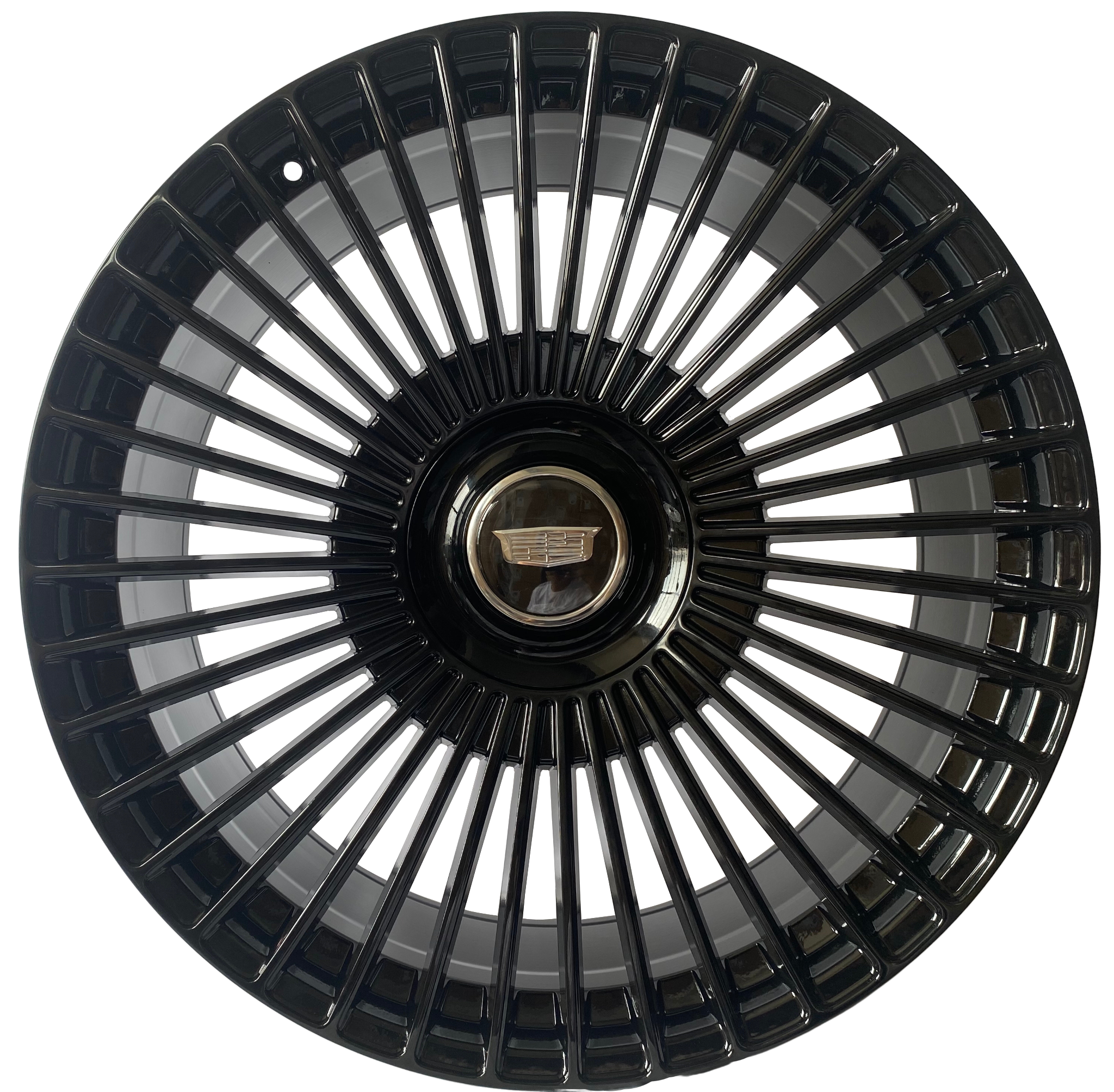


Your factory luxury wheels are the weakest link in your vehicle's performance chain. It's a sobering thought for anyone piloting a three-ton SUV or a high-torque supercar. Most standard rims are mass-produced compromises that fail to meet the rigorous demands of elite driving. The forged wheel manufacturing process changes everything by utilizing extreme pressure to create a grain structure that's significantly denser and stronger than any cast alternative. This isn't just about avoiding the fear of wheel failure; it's about reclaiming the precision your vehicle was designed for.
We understand the frustration of settling for generic designs that don't reflect your status or dealing with the nagging vibrations of inferior aftermarket parts. You demand uncompromising safety and a look that commands respect. This guide will show you exactly how forged engineering delivers enhanced aesthetics and improved handling through critical weight reduction. We'll explore the technical superiority of aerospace-grade 6061-T6 aluminum and the custom craftsmanship that turns a functional component into a definitive statement of excellence.
Key Takeaways
- Master the technical superiority of the forged wheel manufacturing process, where aerospace-grade aluminum is transformed under intense pressure for maximum structural density.
- Identify how grain flow alignment eliminates internal porosity, providing the uncompromising safety required for high-torque luxury SUVs and supercars.
- Compare the performance gap between mass-produced cast rims and lightweight forged alternatives to make a calculated investment in vehicle dynamics.
- Unlock the secrets of bespoke engineering for elite marques like Rolls Royce and Mercedes-Benz, ensuring every detail from brake clearance to aesthetic status is flawless.
What Are Forged Wheels? Defining the Pinnacle of Automotive Engineering
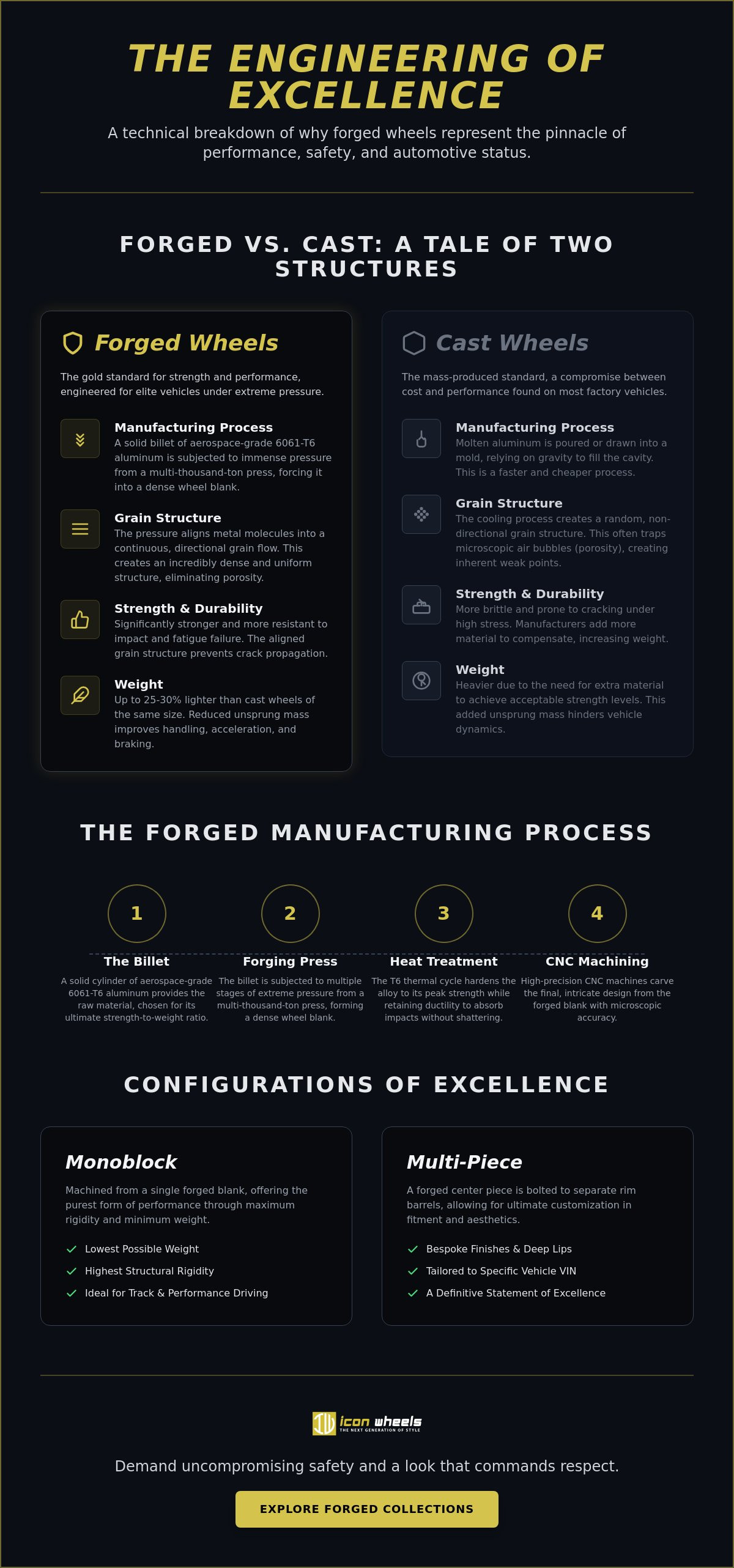
Forged wheels represent the absolute limit of wheel technology. They aren't poured into molds. They're forced into existence. Each wheel begins as a solid cylinder of 6061-T6 aluminum. This aerospace-grade material provides the highest strength-to-weight ratio available in the industry. The forged wheel manufacturing process relies on immense mechanical pressure rather than simple gravity. This ensures the metal retains its structural memory and grain flow, creating a component that's fundamentally superior to any factory rim.
Cast wheels are made by pouring molten metal into a mold. This process often traps tiny air bubbles known as porosity. These microscopic voids are structural weaknesses. Forging eliminates this risk entirely. It's the reason elite motorsport teams and aerospace engineers refuse to use anything else. For a high-performance Lamborghini or a heavy Rolls Royce, only this level of material density is acceptable. It's not just a luxury; it's a structural necessity for vehicles that demand peak performance.
The Forging Process: From Billet to Masterpiece
We subject the aluminum billet to a multi-thousand-ton press. This massive force crushes the metal into a dense wheel blank. It aligns the molecules along the shape of the wheel, which significantly increases tensile strength. After the initial shape is formed, the T6 heat treatment begins. This specific thermal cycle hardens the alloy while maintaining critical ductility. The result is a wheel that can absorb massive impacts without shattering. It's engineering at its most refined, ensuring your vehicle remains planted and safe.
Monoblock vs. Multi-Piece Configurations
Monoblock wheels are the gold standard for pure performance. They're carved from a single forged blank using high-precision CNC machines. This single-piece wheel manufacturing approach offers the lowest possible weight and the highest level of rigidity. It's the ideal choice for an S-Class or a Porsche where reducing unsprung mass is the priority. You get a clean, purposeful aesthetic that communicates raw power and precision.
Multi-piece configurations offer a different kind of excellence. These wheels consist of a forged center piece bolted to separate rim barrels. This allows for deep lips and complex, contrasting finishes that monoblocks can't easily achieve. Whether you choose a 2-piece or 3-piece design, you're investing in a component tailored to your vehicle's specific VIN and brake clearance. It's about personal expression. It's about matching your wheels to the unique status of your vehicle without ever compromising on safety.
The Structural Science: Why Forged Wheels Outperform Cast Alternatives
Forged wheels aren't just lighter than their cast counterparts. They are fundamentally different at a molecular level. While a cast wheel relies on the hope that molten metal fills a mold without trapping air, the forged wheel manufacturing process uses brute force to eliminate every microscopic void. This creates a material density that casting simply cannot replicate. When you pilot a high-performance vehicle, you aren't just looking for style. You're looking for the structural certainty that your wheels can handle the immense torque and lateral G-forces of spirited driving.
Metallurgy 101: Grain Structure Explained
The secret lies in the grain structure of the aluminum. In a cast wheel, the metal molecules are arranged in a random, porous pattern. This creates internal weak spots where structural fatigue begins. Forged aluminum is different. The intense pressure of the forging press aligns the metal molecules into a continuous, directional flow that follows the actual shape of the wheel. This continuous grain flow acts as a structural shield, preventing the propagation of stress cracks that lead to fatigue failure over time. To truly appreciate How forged wheels are made, one must recognize that this molecular alignment is what allows for thinner, more intricate spoke designs that are actually stronger than bulkier cast versions.
This structural integrity also translates to superior heat dissipation. Forged 6061-T6 aluminum is an excellent thermal conductor. It pulls heat away from your braking system faster than cast alloys. This reduces brake fade during aggressive maneuvers and ensures your performance remains consistent. Whether you're decelerating from high speeds or navigating a mountain pass, the thermal efficiency of a forged rim is a silent partner in your vehicle's safety.
Performance Gains: Unsprung Weight and Handling
Every kilogram saved at the wheel hub is worth multiple kilograms of "sprung" weight inside the cabin. This is known as unsprung mass. It's the weight that the suspension doesn't support. Reducing this mass allows your shocks and springs to react with lightning speed to road imperfections. It's the reason why upgrading to forged wheels for Porsche Cayenne can make a heavy SUV feel as nimble as a sports sedan. Acceleration becomes more immediate. Braking distances shorten. The steering feels alive in your hands.
In the era of electric vehicles, this weight reduction is even more critical. Heavy battery packs already strain the chassis. Lightweight forged wheels help offset this burden, directly improving energy efficiency and extending range. Discerning owners who refuse to compromise on dynamics often begin their journey by browsing custom built forged wheels to see how these scientific principles translate into a more refined driving experience. You aren't just buying a rim. You're investing in the physics of perfection.
Forged vs. Cast vs. Flow Formed: Navigating the Hierarchy
Not all wheels are created equal. The market is flooded with options, but the engineering gap between them is vast. Understanding this hierarchy is essential for any owner of a high-performance or luxury vehicle. At the bottom, you find cast wheels. These are mass-produced by pouring molten aluminum into a mold. It's a budget-friendly method for entry-level cars, but it's fundamentally flawed for elite applications. Casting creates a porous structure that lacks the density required to handle high-torque loads or heavy vehicle weights safely.
Flow forming sits in the middle. It's often marketed under confusing names to sound more premium than it actually is. While it's an improvement over basic casting, it's not a substitute for the forging process for wheels. Fully forged wheels remain the undisputed pinnacle. They offer the highest strength-to-weight ratio and the most precise fitment. Beyond performance, they're a smarter financial move. Forged rims retain significantly higher resale value. They're viewed as a permanent upgrade rather than a consumable part.
The Myth of Hybrid Forged Wheels
Don't be misled by the term "Hybrid Forged." This is a marketing label for flow-formed wheels. In this process, a cast blank is placed on a machine that spins and stretches the rim barrel. This makes the barrel thinner and stronger, but the center face of the wheel remains cast. This center face is where the most stress occurs. Because it's still cast, it retains the same porosity and random grain structure as a cheap rim. For a heavy-duty luxury SUV, this hybrid approach often falls short of the necessary structural integrity. A true forged wheel manufacturing process ensures the entire piece, from the hub to the outer lip, is a single, dense unit of aerospace-grade metal.
Safety and Load Ratings for Elite Vehicles
Load ratings are not suggestions. They're life-saving specifications. A vehicle like the Rolls Royce Cullinan weighs nearly three tons. When you add high-speed cornering forces, the stress on each wheel is immense. Under-rated cast wheels can fail catastrophically under these conditions. They crack instead of bending. Fully forged wheels are engineered to exceed these extreme load requirements. They provide a margin of safety that casting cannot match. You can find more details on calculating these specific requirements in our guide to 22 inch Range Rover wheels. Choosing the right wheel isn't just about the look. It's about ensuring your vehicle's structural integrity remains uncompromised at any speed.
Tailored for Excellence: Selecting Forged Rims for Luxury Brands
A luxury vehicle is a masterpiece of specific engineering. It's not enough for a wheel to look good. It must speak the same technical language as the chassis it supports. The forged wheel manufacturing process is the only method flexible enough to meet these diverse demands. Whether you're seeking the silent glide of a limousine or the aggressive bite of a supercar, the wheel must be a bespoke extension of the car's identity. Generic aftermarket options fail because they attempt to satisfy every car with a single compromise. We don't believe in compromises.
The Rolls Royce Standard: Ghost, Wraith, and Cullinan
Rolls Royce owners demand the Magic Carpet Ride. This isn't marketing speak. It's a complex suspension harmony that relies on specific unsprung weight and vibration damping. When upgrading, you must navigate the rolls royce oem wheels vs custom forged debate with precision. We engineer our forged rims to accommodate factory TPMS sensors and the iconic self-levelling centre caps. This preserves the Spirit of Ecstasy's dignity while shedding significant weight from the hubs. Your Cullinan or Ghost deserves a wheel that respects its lineage while enhancing its road presence through bespoke finishes.
Mercedes-Benz and the S-Class Stance
Mercedes-Benz, particularly the S-Class, requires a specific stance to command the road. The offset must be perfect to maintain the flagship's presence without ruining the ride quality. Our Wheels For Mercedes are designed to integrate seamlessly with the AIRMATIC suspension systems. Forged monoblocks are the preferred choice for the S-Class. They provide a level of quietness and a total lack of vibration that cast wheels simply cannot achieve. It's about maintaining the sanctuary of the cabin while adding a layer of modern elegance.
Range Rover owners face a unique challenge. They need urban sophistication and off-road durability in a single package. Forged wheels offer the impact resistance needed for rugged terrain without the bulk of traditional rims. Porsche and Lamborghini owners have different priorities. For them, it's about high torque and track-ready performance. Lightweighting isn't a luxury for these drivers. It's a requirement. Reducing rotational mass allows for faster corner exits and more stable high-speed runs. The forged wheel manufacturing process ensures these wheels can withstand the brutal heat of carbon-ceramic brakes during spirited driving.
Your vehicle represents the pinnacle of automotive achievement. Don't settle for compromised factory rims that limit your performance. Explore our collection of custom built forged wheels to find the perfect match for your brand's specific engineering needs.
The ICON Experience: Bespoke Engineering for the Prestigious
Choosing a wheel is a statement of intent. At ICON WHEELS, we don't offer off-the-shelf solutions. We offer engineering perfection. The forged wheel manufacturing process culminates in our precision facility, where digital designs meet physical reality. Every set of wheels we produce is a unique commission. We don't just match your car's bolt pattern. We analyze your specific VIN, your suspension geometry, and your brake clearance to ensure a fitment that factory rims can't match. It's a level of dedication reserved for the world's most prestigious marques.
Precision is our obsession. Our CNC machining process operates with micron accuracy. This translates complex CAD models into solid 6061-T6 aluminum with zero margin for error. This isn't just about aesthetics. It's about balance. A wheel machined to these tolerances requires fewer weights and provides a smoother ride at high speeds. We provide an uncompromising quality guarantee because we control every millisecond of the production cycle. From the first cut to the final polish, your wheels are treated as the high-performance instruments they are.
From Concept to Concrete: The Design Journey
Our journey begins with a vision. We translate your aesthetic desires into a functional engineering blueprint. Before a single chip of aluminum is removed, we utilize Finite Element Analysis (FEA). This software simulates extreme stress loads, ensuring the design exceeds safety standards for your specific vehicle weight. Our engineers use CAD software to ensure perfect brake caliper clearance for performance models, eliminating the need for spacers or compromises. This rigorous testing phase ensures that even the most intricate spoke designs maintain absolute structural integrity under pressure.
Beyond the Wheel: A Commitment to Luxury
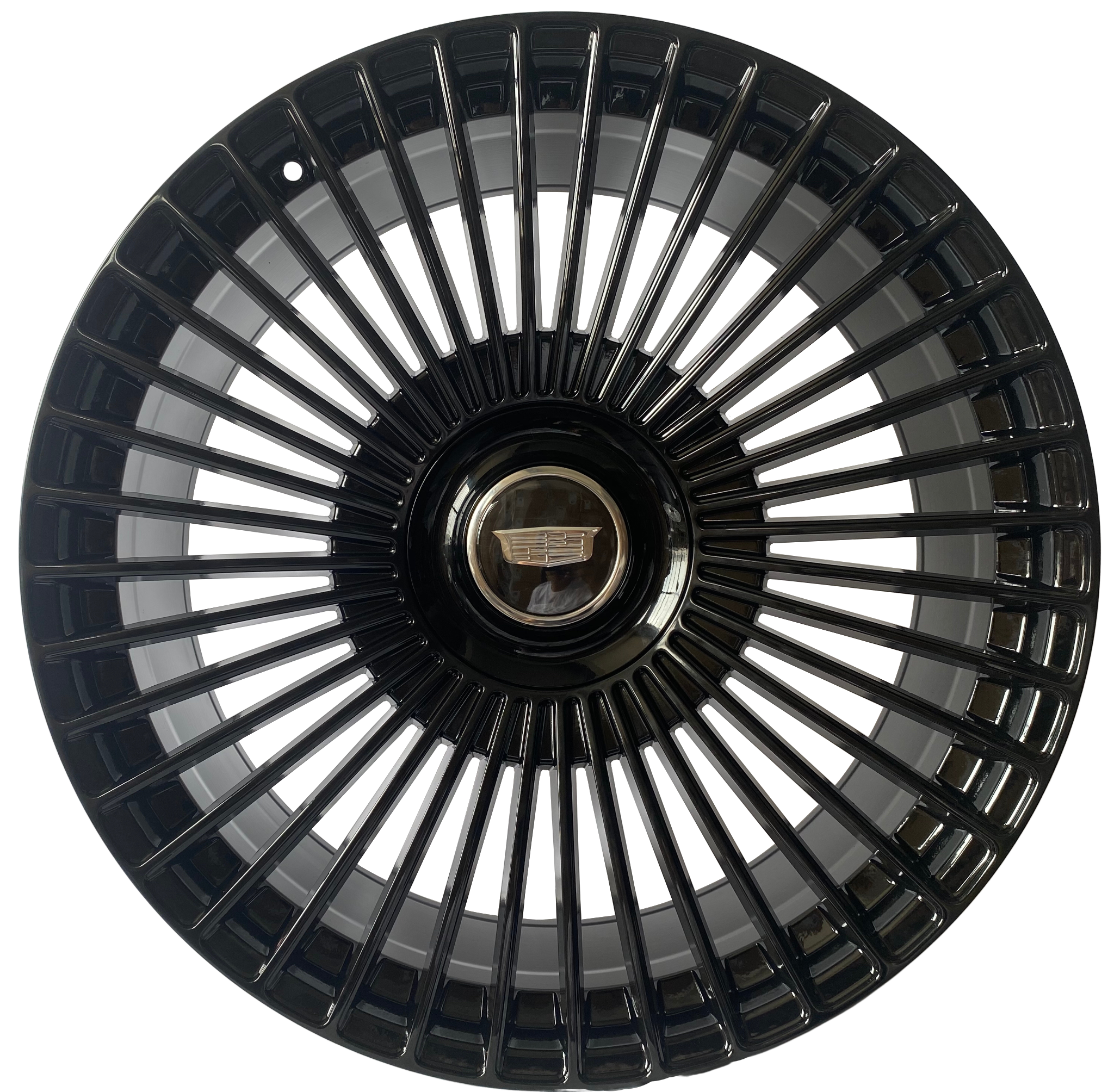
We focus exclusively on the elite. Names like Bentley, Lamborghini, and Rolls Royce are our standard, not our exception. A custom wheel is more than a part; it's an expression of individual status. It's the final piece of an automotive identity that refuses to be generic. You can see this philosophy in action with our custom wheels for Cadillac CT5-V, where performance engineering meets aggressive styling. We offer infinite finishing options to complete this transformation. Whether you demand brushed liquid smoke, high-polish gold, or a bespoke paint match to your interior, we deliver. Your vehicle is unique. Your wheels should be, too.
Elevate Your Automotive Identity
Forged wheels are more than a visual enhancement. They are a definitive statement of engineering superiority. You now understand how the forged wheel manufacturing process creates a molecularly dense structure that mass-produced cast rims simply cannot match. By choosing forged technology, you're investing in uncompromising safety, sharper handling, and a refined aesthetic that reflects your vehicle's true status. It's the difference between driving a compromise and piloting a masterpiece.
At ICON WHEELS, we bridge the gap between digital precision and physical excellence. Our rims are CAD-engineered for specific luxury VINs and crafted from 6061-T6 Aerospace-grade aluminium. Every design is FEA-tested for maximum load ratings, ensuring your Rolls Royce or Lamborghini remains as safe as it is striking. Don't let factory limitations dictate your performance. It's time to experience the pinnacle of custom craftsmanship.
Explore the ICON WHEELS Collection of Custom Forged Rims today. Your journey toward automotive perfection starts here.
Frequently Asked Questions
Are forged wheels really worth the higher price tag?
Forged wheels are an investment in both performance and safety. They offer a superior strength-to-weight ratio that mass-produced alternatives can't match. This translates to better fuel efficiency and sharper handling. Beyond the immediate driving benefits, they retain significant resale value on the secondary market. They're a permanent upgrade for your vehicle rather than a consumable part.
Do forged wheels crack more easily than cast wheels?
Forged wheels are much less likely to crack than cast wheels. The forged wheel manufacturing process creates a dense, directional grain structure that allows the metal to bend slightly under extreme impact rather than shattering. Cast wheels are brittle and often fail catastrophically when hitting deep potholes. Choosing forged technology provides a critical margin of safety for high-speed driving and heavy vehicles.
Can I use my factory centre caps with ICON forged wheels?
We engineer our wheels to accommodate your original factory centre caps. This is a core part of our bespoke design process for brands like Rolls Royce and Mercedes-Benz. You don't have to sacrifice your vehicle's iconic branding for aftermarket performance. Just specify your requirements during the design phase. We ensure the fitment is precise and seamless with your existing hardware.
How much weight can I expect to save with forged wheels?
You can expect to save up to 25% in weight compared to a cast wheel of the same size. This reduction in unsprung mass transforms your suspension's ability to react to the road. It makes a heavy SUV feel significantly more agile and responsive. For electric vehicles, this weight saving directly improves battery range by reducing rotational inertia. It's the most effective performance upgrade you can make.
What is the difference between monoblock and 3-piece forged wheels?
Monoblock wheels are carved from a single forged blank for maximum lightness and structural rigidity. They're the preferred choice for track-focused performance and clean, modern aesthetics. 3-piece wheels consist of a forged centre bolted to separate rim barrels. This configuration allows for deeper lips and complex, multi-tone finishes. Choose monoblock for pure performance and 3-piece for ultimate visual customization.
Do forged wheels require special maintenance or cleaning?
Forged wheels don't require specialized mechanical maintenance, but they deserve premium care. Use pH-neutral cleaners and soft microfiber towels to preserve the high-end finishes. Avoid automatic car washes with harsh brushes that can mar the surface. Because the forged wheel manufacturing process results in a non-porous surface, they're actually easier to keep clean. Brake dust doesn't pit the surface as easily as it does on cast rims.
Are forged wheels better for heavy luxury SUVs like the Escalade or Cullinan?
Forged wheels are a structural necessity for heavy luxury SUVs like the Cullinan or Escalade. These vehicles exert massive pressure on their wheels during cornering and braking. Cast wheels often lack the load rating required to handle these forces safely over time. Our forged options are FEA-tested to exceed these specific weight requirements. They provide the peace of mind that your wheels won't fail under heavy loads.
How long does the custom forging process take from design to delivery?
The timeline for custom forging varies based on the complexity of your design and finishing requirements. Every set undergoes a rigorous journey from CAD engineering and FEA testing to precision CNC machining. This isn't a rushed process; it's a meticulous craft. We prioritize perfection over speed to ensure your wheels meet our elite standards. Contact our advisors for a specific estimate based on your vehicle's requirements.
