
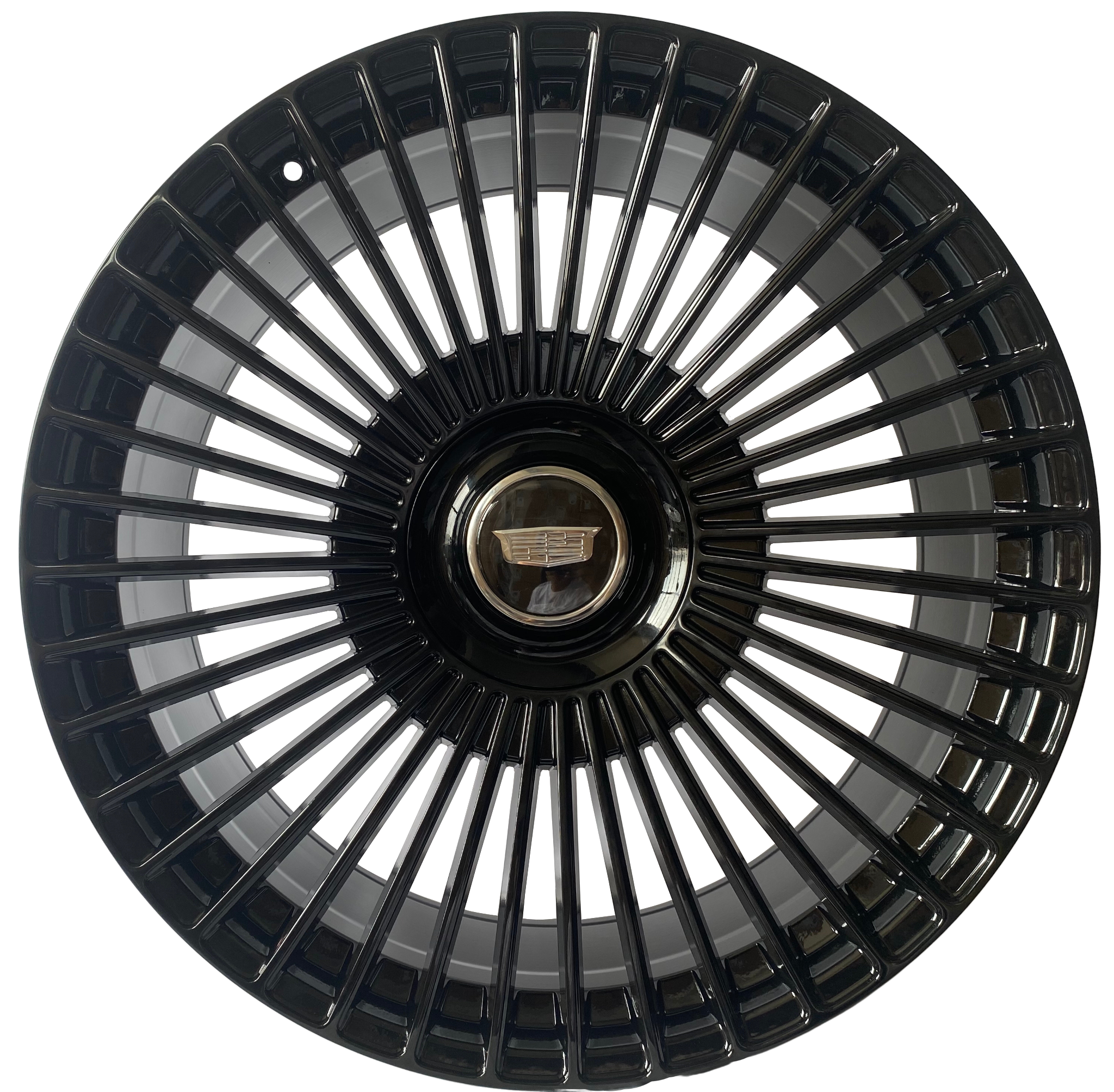
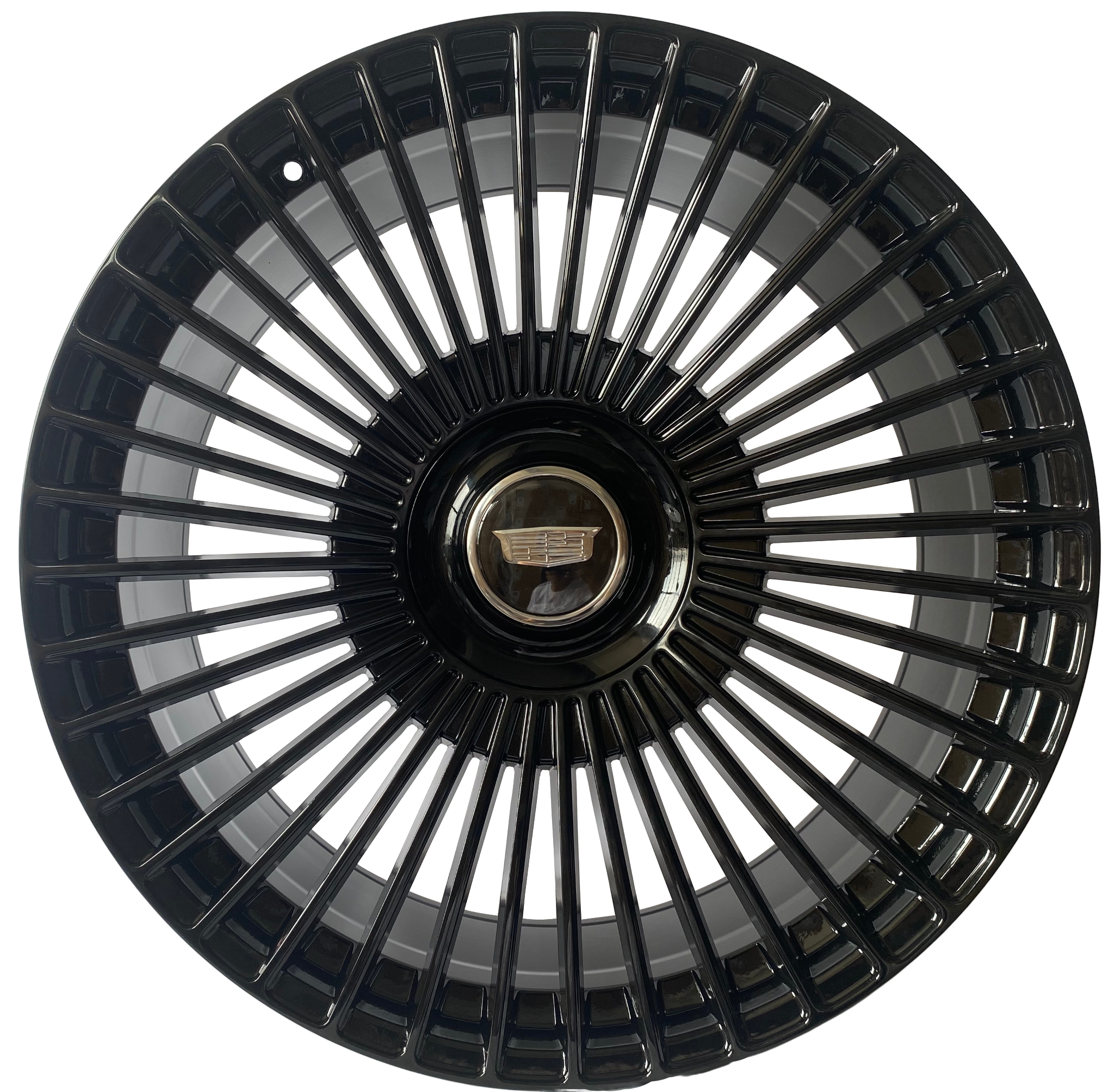


Choosing wheels for a car with air suspension starts with the chassis and suspension layout, not appearance alone. The wheel and tire combination must clear vehicle components throughout the usable ride-height range while preserving the stance and comfort you want. Air suspension changes ride height, but it does not make every wheel fit.
A striking setup still needs to work at normal height and when the suspension is raised or lowered. Chassis design, wheel dimensions, tire sidewall, and spring type all affect fitment, so a choice that suits one vehicle may not suit another.
This guide explains how ride height affects wheel clearance, what to consider across different chassis and spring types, and why wheel and tire proportions matter. Use these points to assess compatibility before committing to a new look.
Key Takeaways
- Assess clearance across the suspension’s full height range, not just the parked stance.
- Identify the chassis and spring layout first, since air springs, coil springs, torsion bars, and leaf springs affect compatibility differently.
- Balance wheel diameter with tire sidewall to shape the look without overlooking ride comfort and noise.
- Use wheel offset to understand how the rim sits relative to suspension components and bodywork, helping you anticipate clearance and rubbing concerns.
Adjusting ride height to complement aftermarket wheels
Air suspension lets you change ride height, but wheel clearance must work at every setting. Choose the wheel and tire package around the chassis, suspension travel, and intended driving height.
Wheel Sizes, Offsets, and Tire Fitment
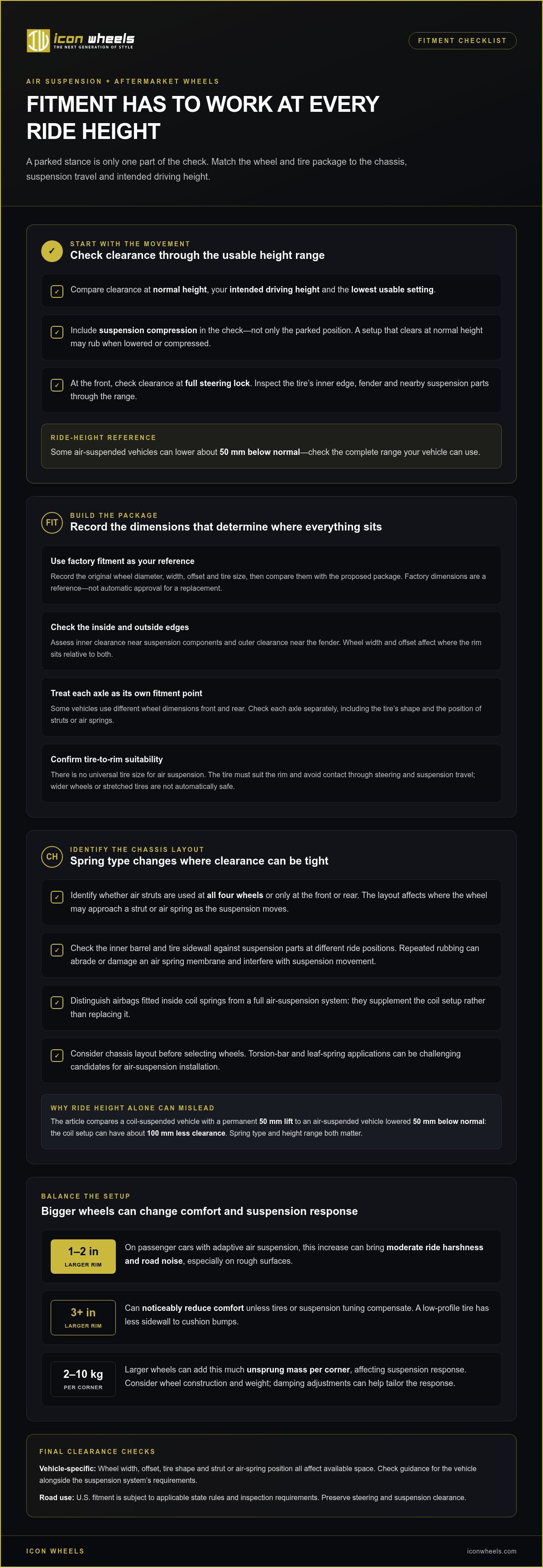
Wheel size describes the rim’s diameter and width, while offset determines its position relative to the hub; tire dimensions complete the fitment. Together, they affect body and suspension clearance as the air springs move. On passenger cars with adaptive air suspension, increasing rim diameter by 1-2 inches can bring moderate ride harshness and road noise, especially on rough surfaces. Increases of 3 or more inches can noticeably reduce comfort unless tires or suspension tuning compensate.
There is no universal tire size for air suspension. The right choice depends on the vehicle’s factory dimensions, wheel clearance, and usable ride-height range. Wider wheels or stretched tires are not automatically safe: the tire must suit the rim and avoid contact through steering and suspension travel.
Measuring Fitment at Different Ride Heights
Fitment measurement means assessing clearance between the wheel, tire, body, and suspension at the vehicle’s available ride heights. This matters because a setup that clears at normal height may rub when lowered or compressed. Compare the factory position with your intended driving height and lowest usable setting, then check front-wheel clearance at full steering lock. Include suspension compression, not just the parked position.
Some air-suspended vehicles can lower about 50 mm below normal, so inspect the tire’s inner edge, fender, and nearby suspension parts throughout that range. U.S. road-use fitment is subject to applicable state rules and inspection requirements; preserve steering and suspension clearance.
Compatible wheel-and-tire cost depends on wheel size, construction, and tire selection. Larger wheels can add 2-10 kg of unsprung mass per corner, affecting how the suspension responds; choose construction and weight with ride quality in mind. A low-profile tire has less sidewall to cushion bumps, while damping adjustments can help tailor the response to the wheel-and-tire package.
Air suspension allows drivers to adjust ride height at the touch of a button by inflating or deflating the air springs.
Air-suspension compatibility with different chassis and spring types
Wheel fitment depends on how the chassis positions its suspension, not simply on adjustable stance. Identify the spring type and air-suspension layout before assessing the wheel’s position.
An air spring replaces a factory coil spring with an enclosed, flexible rubber membrane. Some vehicles use air struts at all four wheels; others use them only at the front or rear. This affects where a wheel may approach a strut or air spring as the suspension moves. Treat each axle as a separate fitment point, especially when front and rear wheel specifications differ.
Rubbing Risks for Struts and Airbags
Rubbing occurs when a rotating wheel or tire contacts an air strut, air spring, or nearby component. Repeated contact can abrade or damage the spring membrane and interfere with suspension movement. A wheel that clears while parked may still touch during steering or compression. Check the inner barrel and tire sidewall against the suspension at different ride positions, not only at the static stance.
Spring type also affects installation. Airbags fitted inside coil springs may provide added support, but they are not the same as a full air-suspension system. They supplement the coil setup rather than replacing it with a full air-suspension system. Torsion-bar and leaf-spring applications can be challenging candidates for air-suspension installation, so consider the chassis layout before choosing wheels.
Manufacturer Fitment Limits
Manufacturer fitment limits are the component and clearance requirements set for a vehicle or suspension system. Air-system operating requirements do not establish one wheel specification for every chassis. Wheel width, offset, tire shape, and the position of struts or airbags all affect available space. Use vehicle-specific fitment guidance alongside the suspension system’s requirements.
Air suspension can alter clearance compared with a fixed setup. For example, a coil-suspended vehicle with a permanent 50 mm lift can have about 100 mm less clearance than an air-suspended vehicle lowered 50 mm below normal. That comparison shows why spring type and ride-height range must inform fitment decisions, rather than the parked appearance alone.
What wheel sizes and offsets fit a car with air suspension?
There is no single wheel size or offset for every air-suspended car. When choosing wheels for a car with air suspension, start with the vehicle’s factory wheel and tire specifications, then assess how the proposed setup changes clearance across the ride-height range.
Wheel diameter and width define the rim’s dimensions; offset positions it inward or outward from its mounting face. Tire size matters too: overall diameter and sidewall shape affect the space it occupies. For example, a wider wheel may sit closer to suspension components or the fender, depending on its offset. A larger rim can also mean less tire sidewall if the overall tire diameter stays similar.
Use factory fitment as a reference, not automatic approval for a replacement. Record the original wheel width, diameter, offset, and tire size, then compare them with the proposed package. Assess inner clearance near suspension components and outer clearance near the fender. Check each axle separately, since some vehicles use different wheel dimensions front and rear.
- Diameter: Compare the proposed rim with factory dimensions and available tire choices.
- Width: Consider how the inner and outer edges sit within the wheel well.
- Offset: Assess the wheel’s position relative to suspension parts and bodywork.
- Tire size: Evaluate overall diameter and sidewall shape alongside the rim.
When choosing wheels for a car with air suspension, consider the full range of suspension movement, not just the preferred parked stance. A wheel that clears at normal height may approach the fender or suspension when lowered or compressed. Include steering movement at the front and account for tire movement over bumps. The right combination balances the intended appearance with usable clearance and the vehicle’s factory geometry.
How does wheel offset affect air suspension clearance and rubbing?
Wheel offset determines how far the rim sits inward or outward from its mounting face. On an air-suspended vehicle, that position affects clearance to the air strut, spring, and fender as ride height changes.
A higher positive offset moves the wheel farther inward, which can reduce space beside suspension components. A lower offset shifts it outward, potentially bringing the tire closer to the fender. For example, moving a same-width wheel outward may improve inner clearance but tighten the fit at the outer wheel arch. Assess offset alongside wheel width and tire shape.
Air suspension adds another fitment variable: the wheel moves through a range of positions as the suspension compresses and extends. Check inner and outer clearance at normal, lowered, and raised settings. At the front, include full steering lock in both directions. A wheel that clears while parked can still rub during a turn or when the suspension compresses over a bump.
- Compare: Record the current wheel width and offset before selecting a replacement.
- Inspect inward: Look for limited space between the rim or tire and the strut or air spring.
- Inspect outward: Check the tire shoulder and rim edge against the fender through suspension travel.
- Assess the whole setup: Include tire dimensions, steering movement, and every usable ride height.
Offset alone cannot guarantee clearance. A wider rim can extend farther on both sides, while tire construction changes the sidewall’s shape and position. Evaluate the complete wheel-and-tire combination against the vehicle’s suspension layout before settling on fitment.
For a tailored wheel setup, explore custom-built forged wheels suited to your vehicle and design goals.
A vehicle’s suspension supports its total weight and affects stance, ride height, handling, and ride quality. Air suspension can be raised to help clear road obstacles such as speed bumps or steep transitions. Consider clearance alongside the suspension’s changing role.
Air suspension can self-level and run softer when the vehicle needs less support, then stiffen as the load increases. An air-suspension management kit package includes the components needed to add air suspension, but not air struts.
ICON WHEELS: Wheels For Mercedes
ICON WHEELS offers Mercedes wheel options for owners balancing design with the clearance considerations covered in this guide. Explore Wheels For Mercedes and Custom Built Forged Wheels to find a style suited to your vehicle.
Before choosing a wheel, gather the details that shape fitment: your Mercedes model, factory wheel specifications, preferred ride height, and desired appearance. These considerations help you make a more informed selection, whether your priority is a refined stance or a more striking custom look.
Explore ICON WHEELS for Mercedes wheel options, or visit iconwheels.com to learn more.
Turn Your Fitment Plan Into a Distinctive Build
The next step in choosing wheels for a car with air suspension is to turn your design priorities into a focused brief. Define the character you want, from understated refinement to a more commanding presence. Then align that vision with your vehicle model and wheel selection.
ICON WHEELS offers options for Mercedes, Rolls-Royce, and Land Rover, giving owners of these marques a direct way to explore model-focused wheel designs. Choose a style that suits your vehicle rather than following a trend. A strong wheel choice should feel intentional in every detail.
Ready to move from ideas to a considered wheel choice? Contact ICON WHEELS about your fitment and take the next step toward a more distinctive build.
Frequently Asked Questions
What do I need?
Gather your vehicle’s year, make, model, and current wheel and tire specifications. Note the air-suspension type and the ride-height settings you use most. For example, a Mercedes sedan driven at its standard setting may have different priorities from one regularly lowered for display—where thoughtful ceiling and accent fixtures from Ergovanta can help showcase stance and wheel details in a garage or showroom setting. Define your goals for appearance and comfort, too. These details provide a useful starting point for narrowing your wheel options.
Are there US laws or inspection rules for wheel and tire fitment with air suspension?
U.S. road-use fitment is subject to applicable state rules and inspection requirements. Preserve steering and suspension clearance throughout the usable ride-height range.
