
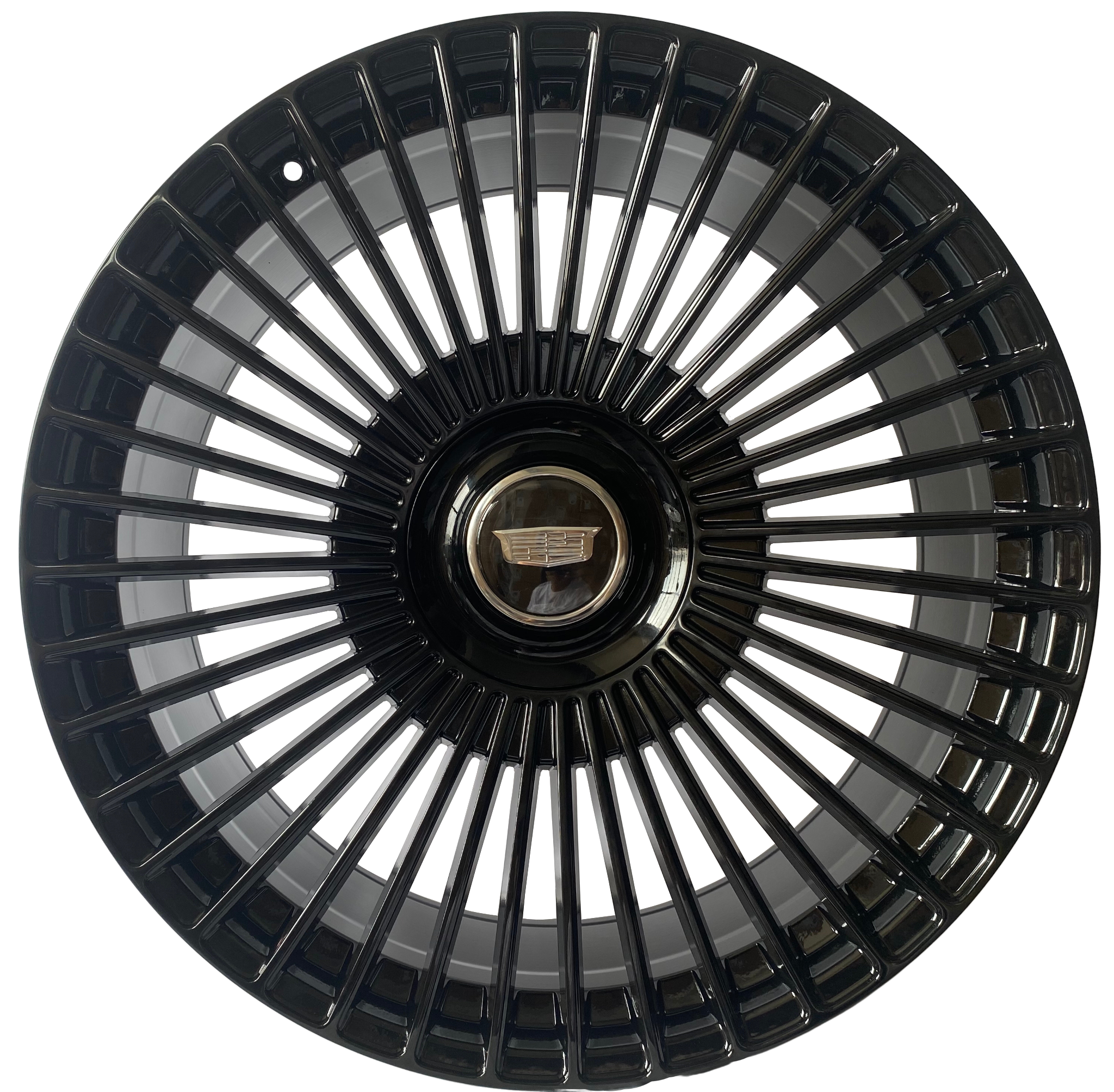
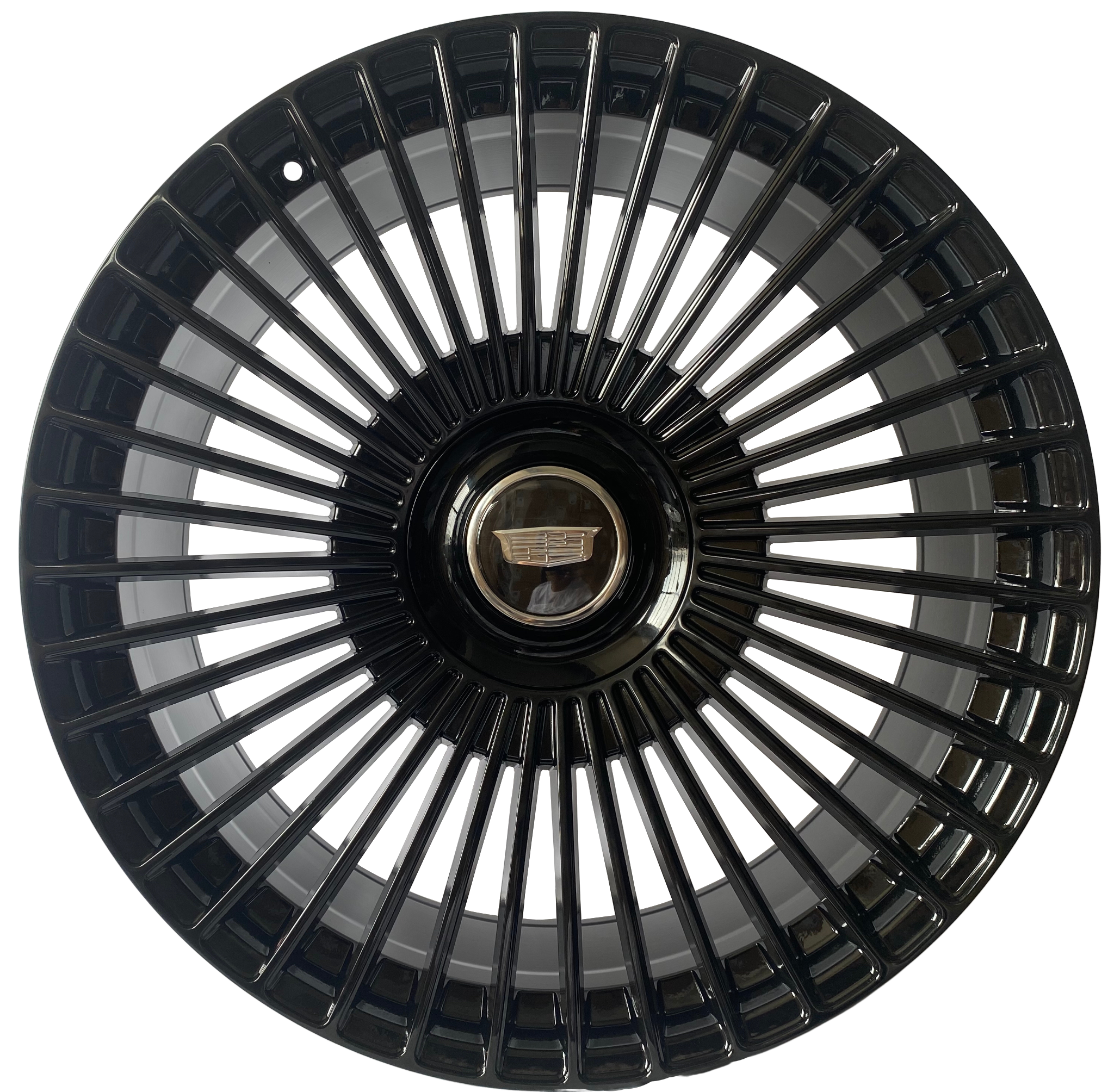


Bespoke forged wheels can transform a luxury vehicle without adding a dollar to its appraised value. That is the key distinction behind the appraisal impact of bespoke forged wheels: craftsmanship and visual presence may strengthen buyer interest, but they do not guarantee a higher valuation.
If you have invested in custom wheels, it is natural to want that choice recognized. Yet an appraiser needs more than a premium finish or distinctive design to assess the setup. Fitment, condition, compatibility with the vehicle, and clear records can all shape how the wheels are viewed. Kelley Blue Book, for example, does not report a consistent added value for aftermarket rims because their quality and specifications vary widely.
This article explains what an appraiser may consider, how appraisal value differs from resale appeal, and why a non-factory setup can influence buyer confidence. You will learn which wheel and vehicle details to document, including specifications, fitment, and condition, and why keeping the original wheels may preserve future flexibility. With a model-specific forged-wheel choice, the goal is a considered upgrade that complements the vehicle, not an assumed financial return.
Key Takeaways
- Understand the appraisal impact of bespoke forged wheels by looking beyond their custom status to how clearly their fitment and condition can be assessed.
- Compare factory-original, bespoke, and return-to-OEM setups to see how originality and buyer preferences may shape the conversation.
- Organize wheel specifications, fitment details, purchase records, and condition notes so the configuration is easy to understand.
- Keep the original wheels when possible to preserve flexibility if a future buyer prefers a factory setup.
- Choose model-specific forged wheels as a considered design and engineering upgrade, not as a guaranteed financial return.
What Does Appraisal Impact Mean for Bespoke Forged Wheels?
The appraisal impact of bespoke forged wheels is the way their specification and condition may inform an assessment of a vehicle’s value. It is not a preset bonus for choosing a custom design. An appraiser may consider whether the wheels suit the vehicle and are in good condition, but the outcome depends on the vehicle and the purpose of the appraisal.
Customization can influence an assessment without establishing a measurable premium. That distinction matters. A wheel choice can shape the overall impression of a vehicle and still fail to support a specific increase in its appraised value.
Appraised value, resale price, and buyer appeal are different
An appraisal is an assessment made for a particular purpose. It is not a promise of what the vehicle will sell for. A seller sets the asking price; the final sale price depends on the transaction and the buyer’s decision. Buyer appeal is different again: it reflects how strongly a particular person responds to the vehicle’s appearance and configuration.
Consider a Rolls-Royce Cullinan fitted with bespoke forged wheels. A buyer who values a distinctive, coordinated look may see the setup as a compelling detail. Another may prefer the factory-original appearance. That difference in taste can affect interest and negotiation without establishing a consistent appraisal premium. The broader topic of Car tuning includes vehicle modifications, but a general discussion of tuning is not a specific valuation rule.
Why “forged” alone does not establish appraisal value
“Forged” describes how a wheel is manufactured. It is not an appraisal category, and the label alone does not tell an appraiser whether a wheel is suitable for a particular vehicle or adds measurable value. The relevant question is how the actual set fits and presents on that vehicle.
Fitment details can make that assessment clearer. Records identifying the wheel specifications and intended vehicle application provide useful context, while visible damage, wear, or an uncertain configuration may prompt further questions. The vehicle’s overall condition and the market context also matter. A pristine set on a well-presented luxury sedan may leave a different impression from a damaged or poorly matched set, but neither example guarantees a change in valuation.
For owners, the practical takeaway is precise: treat bespoke forged wheels as a considered design and engineering choice, then keep clear records of what was selected and for which vehicle. Documentation helps explain the configuration; it does not compel an appraiser to assign extra value. The assessment remains about the vehicle as a whole, not simply the word “forged.”
How Appraisers May Evaluate Bespoke Forged Wheels
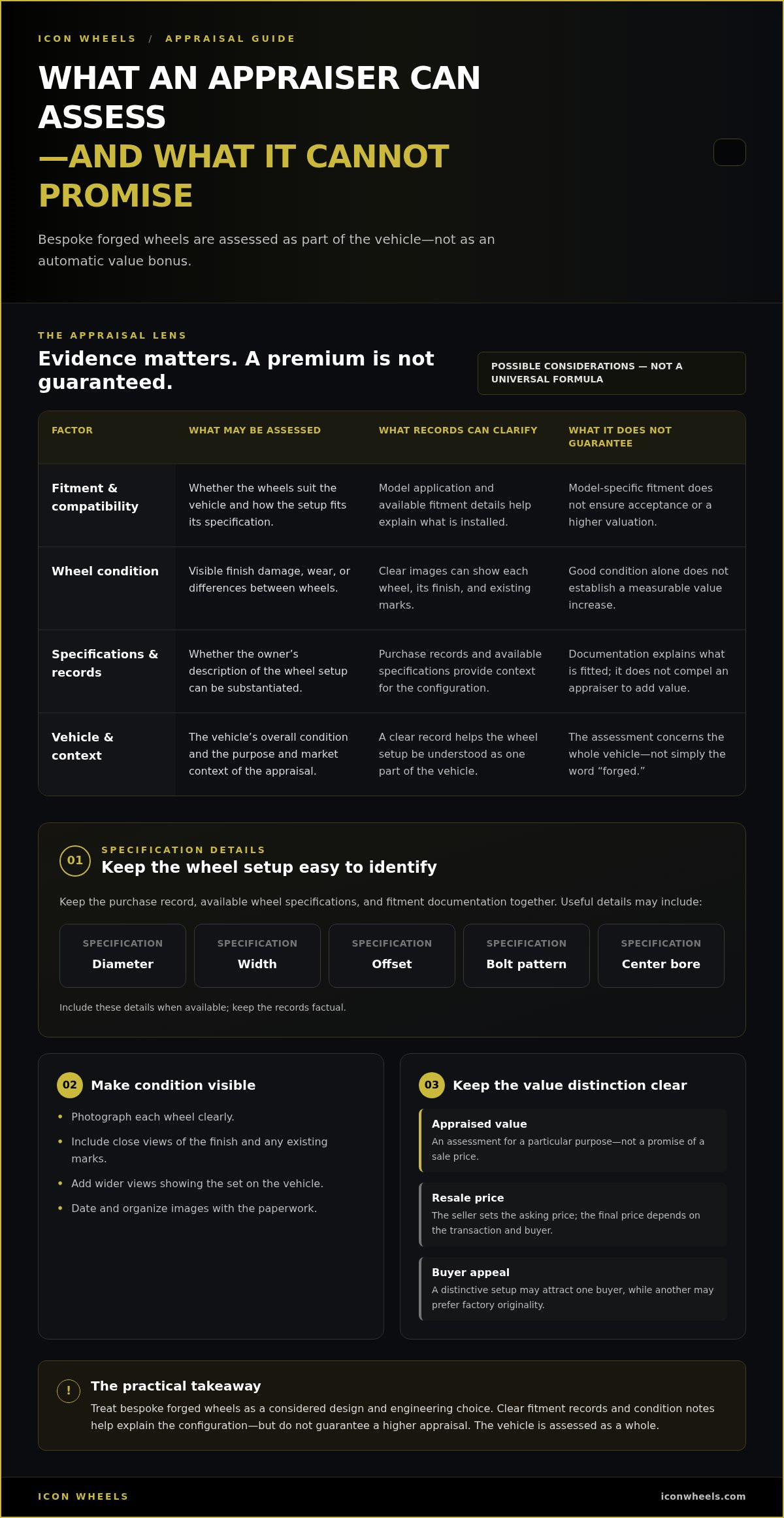
An appraiser may consider the wheels as one part of the vehicle’s specification, not as a standalone asset with automatic value. The appraisal impact of bespoke forged wheels can depend on what can be observed and substantiated: their condition, compatibility with the vehicle, and whether the records support the owner’s description. These are possible considerations, not a universal checklist or a promise of a particular adjustment.
An appraisal depends on the whole vehicle, not a single upgrade. A carefully selected wheel set can complement a luxury vehicle, but the appraiser may also consider the vehicle’s overall condition and how clearly its configuration can be assessed. Organizations such as the Auto Care Association provide context on the automotive aftermarket. Broad aftermarket trends, however, do not determine the value of an individual vehicle.
Fitment, compatibility, and vehicle condition
Model-appropriate fitment can make a setup easier to understand as part of the vehicle’s specification. For example, forged wheels selected for a Rolls-Royce Ghost or Range Rover are tied to a specific model rather than presented as a generic change. That context may help an appraiser evaluate the configuration, but it does not guarantee acceptance or a higher valuation.
Condition matters, too. An inspection may note visible finish damage, uneven wear, or differences between wheels. The wider vehicle condition provides additional context: a well-maintained vehicle presents differently from one with unrelated signs of neglect. None of these observations alone settles the appraisal, but they can shape what questions arise and how confidently the setup can be assessed.
Documentation that helps explain the wheel specification
Clear records help distinguish verifiable equipment details from unsupported upgrade claims. Keep the purchase record, available wheel specifications, and fitment documentation together. Useful specification details may include diameter, width, offset, bolt pattern, and center bore, when those details are available. Keep records factual: documentation explains what is fitted, but does not compel an appraiser to assign extra value.
Photographs add a practical visual record. Take clear images of each wheel, including close views of its finish and any existing marks, alongside wider views showing how the set looks on the vehicle. Date and organize the images with the paperwork so the current condition is easy to distinguish from the condition when the wheels were first acquired.
For Rolls-Royce owners weighing factory originality against a custom appearance, comparing Rolls-Royce OEM wheels with custom forged wheels can help clarify the trade-offs before choosing a direction. ICON WHEELS offers model-specific forged-wheel options for Rolls-Royce and other luxury vehicles. Explore custom-built forged wheels with your desired fitment and documentation plan in mind.
Bespoke Forged Wheels vs. OEM Wheels: What Can Change an Appraisal?
A bespoke upgrade may refine a vehicle’s appearance without being valued like factory equipment. Originality can matter to buyers seeking an unmodified luxury vehicle, while another buyer may prefer a distinctive, carefully matched wheel setup. Appraisal treatment can vary with the vehicle, documentation, condition, and purpose of the valuation. The comparison below shows what may be considered, not a universal ranking.
| Configuration | Originality | Fitment evidence | Visible condition | Potential buyer preference |
|---|---|---|---|---|
| Factory-original wheels | Retains the vehicle’s factory specification if the wheels are original to that model. | Factory equipment may be easier to identify; records can still help establish originality. | Finish, damage, and wear remain relevant to inspection. | May appeal to buyers who prioritize an unmodified presentation. |
| Bespoke forged wheels | Changes the factory specification, even when the design complements the vehicle. | Wheel details and fitment records can clarify what is installed. | Condition and consistency across the set may inform the assessment. | May appeal to buyers who value personalization and a tailored appearance. |
| Documented return to OEM | Can restore a factory-style presentation when the correct original wheels are used. | Records can show which wheels were returned to the vehicle and support the configuration history. | Both the fitted wheels and any retained custom set have their own condition. | May suit buyers who prefer originality while preserving the option to retain the custom set. |
When original specification may carry more weight
A buyer searching for a luxury vehicle in factory-original condition may see OEM wheels as part of its authentic specification. That preference can be relevant to market interest, but it does not mean every appraiser or buyer favors factory equipment. OEM status and aftermarket quality are separate considerations: one describes the vehicle’s original configuration, while the other describes the replacement wheels and their execution. An appraiser may note the change without treating the custom set as equivalent to factory-installed equipment.
When bespoke fitment may strengthen the vehicle’s presentation
A proportionate, model-appropriate design can create a cohesive look rather than making the wheels feel disconnected from the vehicle. For example, custom wheels selected for a Range Rover or Mercedes S-Class can be considered in the context of that model’s overall appearance. Clear fitment records and a well-presented set make the configuration easier to understand, but they do not guarantee a valuation increase. Finish is another distinct part of the choice: custom forged wheel finishes shape personalization and presentation, not an automatic appraisal premium.
The Appraisal Institute serves real estate appraisal professionals, so its resources are not vehicle-specific guidance. For a car appraisal, focus on evidence tied directly to the vehicle: its configuration, wheel condition, and supporting records. If factory originality matters to your future plans, retaining the original set can preserve flexibility. If a tailored appearance matters more, choose a considered model-specific setup and document it clearly. Explore custom-built forged wheels as a design and engineering choice, not a guaranteed financial return.
How to Prepare Bespoke Forged Wheels for an Appraisal
A little preparation can make a custom setup easier to identify and discuss. The goal is not to persuade an appraiser to assign extra value. It is to present a clear, accurate record of the vehicle and its current configuration. Use this checklist to keep key details together and avoid relying on memory during the assessment.
Build a concise wheel and vehicle record
Keep the vehicle’s identity, wheel information, and supporting documents in one place. For a Mercedes-Benz, for example, record the exact model and year alongside the wheel details, rather than describing the set only as “custom.” ICON WHEELS’ Definitive Guide to Wheels For Mercedes-Benz can provide model-focused context as you organize those details.
- Record the vehicle and wheel details. Note the vehicle’s make, model, and year, then gather the wheel specifications available to you. Use paperwork or manufacturer documentation for exact details rather than guessing.
- Collect purchase and fitment records. Keep receipts, order records, and any available documentation showing which wheels were selected for the vehicle. Add installation documentation if you have it, but do not treat a missing document as proof of a specific fitment.
- Take clear, current photographs. Photograph each wheel closely enough to show its finish and visible condition. Include wider views of the complete vehicle from several angles, in good light, so the set can be seen in context.
- Prepare a straightforward condition note. Clean the wheels before the assessment and record any visible marks, finish damage, or other concerns honestly. A factual note helps avoid confusion between what can be seen and what the paperwork describes.
- Keep original wheels and records together. If you have the factory wheels, store their related records with them and note that they are available. Their presence can preserve the option of returning to an OEM setup, but it does not guarantee a particular appraisal result.
Present the vehicle clearly and preserve flexibility
Bring the vehicle and its records as a coherent package. Make sure the photographs reflect its current appearance, and identify which documents correspond to the fitted wheels. If the wheels have changed since the records or images were created, note that difference. This simple timeline can help an appraiser understand the configuration without overstating what the evidence proves.
Keep the conversation precise. Explain your design choice and provide relevant records, but do not present personal styling preference as proof of a financial premium. The appraisal impact of bespoke forged wheels depends on the vehicle and the assessment, not the owner’s enthusiasm alone.
For a tailored design choice backed by a clear documentation plan, Explore ICON WHEELS bespoke forged options.
Choosing ICON WHEELS Bespoke Forged Wheels with Value in Mind
Choose bespoke forged wheels for the vehicle you want to create, not on the assumption that a custom specification will increase its appraised value. The appraisal impact of bespoke forged wheels depends on the specific vehicle and assessment. A thoughtful choice can still deliver a distinctive, cohesive appearance while keeping future resale and originality preferences in view.
Match the wheel choice to the vehicle and ownership goals
Start with the vehicle, then define what matters most to you. Is your priority a more personalized appearance, a design that complements the factory lines, or keeping the option to return to an original setup later? Consider how you use the vehicle, how closely you want the wheel design to follow its original character, and whether you plan to retain the factory wheels.
Model-specific options give owners a starting point for making that choice with the vehicle in mind. ICON WHEELS offers forged wheels for Mercedes-Benz, Rolls-Royce, Land Rover, Porsche, Bentley, Cadillac, and Lamborghini. Examples include wheels for the Rolls-Royce Cullinan, Ghost, and Wraith, as well as Range Rover and Mercedes S-Class applications. The right direction depends on your design goals and the particular vehicle, not on a promise of appraisal gain.
- Define the look. Decide whether you want a restrained factory-plus appearance or a more distinctive personal statement.
- Prioritize fitment. Keep the intended model and wheel specifications central to the selection.
- Plan for future flexibility. If originality may matter later, consider retaining the original wheels and their records.
- Document the choice. Keep available specifications and purchase details together so the configuration is straightforward to explain.
Make a considered bespoke wheel decision
Custom-built forged wheels are a design and engineering choice. Their value to you may lie in how they complement the vehicle and express your taste. For appraisal purposes, the bespoke label alone tells only part of the story. Condition, vehicle compatibility, clear specifications, and supporting documentation make the setup easier to understand, while the vehicle’s overall condition and valuation context remain part of the assessment.
That distinction helps set a sound expectation: a carefully chosen wheel set may enhance presentation or attract a buyer who shares your preference, but neither outcome establishes a measurable appraisal premium. Keep your decision grounded in the vehicle, how you intend to use it, and the appearance you want to achieve. Treat records as evidence of what is fitted, not as a guarantee of value.
ICON WHEELS creates custom-built forged wheels for luxury vehicles, with model-specific choices across a range of brands and models. Make your selection with fitment, design, and future flexibility in mind. Explore ICON WHEELS forged wheels.
Choose a Wheel Direction That Fits Your Next Chapter
Before choosing a bespoke setup, decide what you want the vehicle to represent during your ownership. A personal design statement and a future return to factory originality are different priorities. You can plan for both by selecting wheels that suit your vision while keeping the vehicle’s configuration history organized for the next owner or appraisal.
The appraisal impact of bespoke forged wheels is never something to assume in advance. Treat the wheels first as a considered design and engineering choice. Let your desired appearance, intended use, and plans for the vehicle guide the decision, rather than relying on a projected valuation premium.
ICON WHEELS offers custom-built forged wheels for Mercedes-Benz, Rolls-Royce, Land Rover, Porsche, Bentley, Cadillac, and Lamborghini. Explore the range with your vehicle and ownership goals in mind, then make a choice you can feel confident living with. Explore ICON WHEELS bespoke forged wheels.
Frequently Asked Questions
Do bespoke forged wheels increase a car’s appraised value?
Not automatically. An appraiser may consider the wheels as part of the vehicle’s configuration, but bespoke status alone does not establish an added amount. The result can depend on the appraisal’s purpose and the vehicle’s overall condition. Before treating a wheel upgrade as part of your car’s financial value, clarify whether you are considering an insurance assessment, a trade-in estimate, or a potential sale. Those contexts may assess the vehicle differently.
Can aftermarket wheels lower a vehicle appraisal?
They can be a concern in some assessments, but aftermarket wheels do not automatically lower value. A visibly damaged set, unclear fitment, or configuration that raises questions may affect how the vehicle is viewed. For example, if the wheels appear inconsistent with the car’s intended setup, an appraiser may need more information. Clear records can help explain the change, but the effect depends on the vehicle and appraisal context.
How do appraisers evaluate custom wheels on a luxury car?
An appraiser may look at how the wheels present on the specific vehicle, whether their condition is apparent, and whether available records describe the setup. The inspection is an assessment, not necessarily a technical test of the wheel’s manufacturing process. Have the wheel information accessible and identify any changes from the factory configuration, so the appraiser can distinguish documented details from assumptions.
Should I keep the original wheels after installing bespoke forged wheels?
Keeping the original wheels can preserve the option to return the vehicle to a factory-style appearance, especially if a future buyer values originality. Store them carefully and retain any records that help identify them as the vehicle’s original set. Their availability may give you more flexibility when deciding how to present the car later, but it does not guarantee a different appraisal or sale outcome.
What documentation should I provide for custom forged wheels?
Provide records that identify the wheels and connect them to the vehicle. Useful items may include purchase paperwork, available wheel specifications, fitment documentation, and dated photographs showing the current set. Keep the documents together and make sure the photos reflect the vehicle as it appears at the assessment. If a record is missing or a detail is uncertain, describe that honestly rather than estimating or presenting it as verified.
Does a forged wheel automatically add more value than an OEM wheel?
No. “Forged” describes a manufacturing process; it is not a guaranteed valuation category. A buyer seeking a factory-original vehicle may favor OEM wheels, while another may prefer a bespoke design. An appraiser may consider the complete vehicle and available evidence rather than assigning value based only on how the wheels were made. Condition, configuration, and the purpose of the assessment all matter.
Can custom forged wheels affect resale appeal differently from appraisal value?
Yes. A distinctive wheel setup may catch the attention of a buyer whose taste matches the vehicle’s styling, even if an appraisal does not assign a measurable premium. Another buyer may prefer an original appearance. That difference can influence interest without determining the vehicle’s assessed value or final selling price. If you plan to sell, consider how you will explain the setup and whether retaining the original wheels gives you an additional presentation option.
