
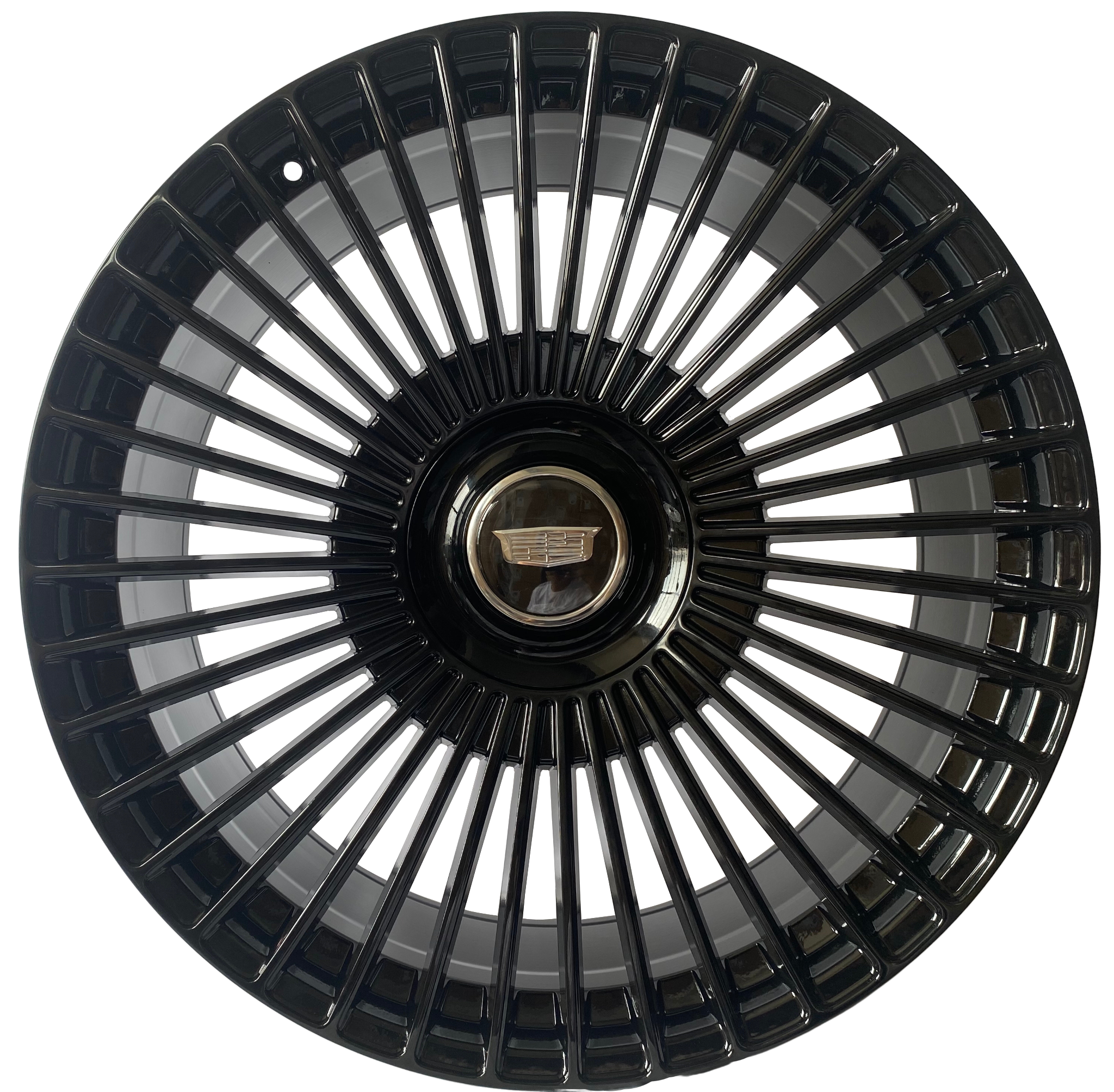
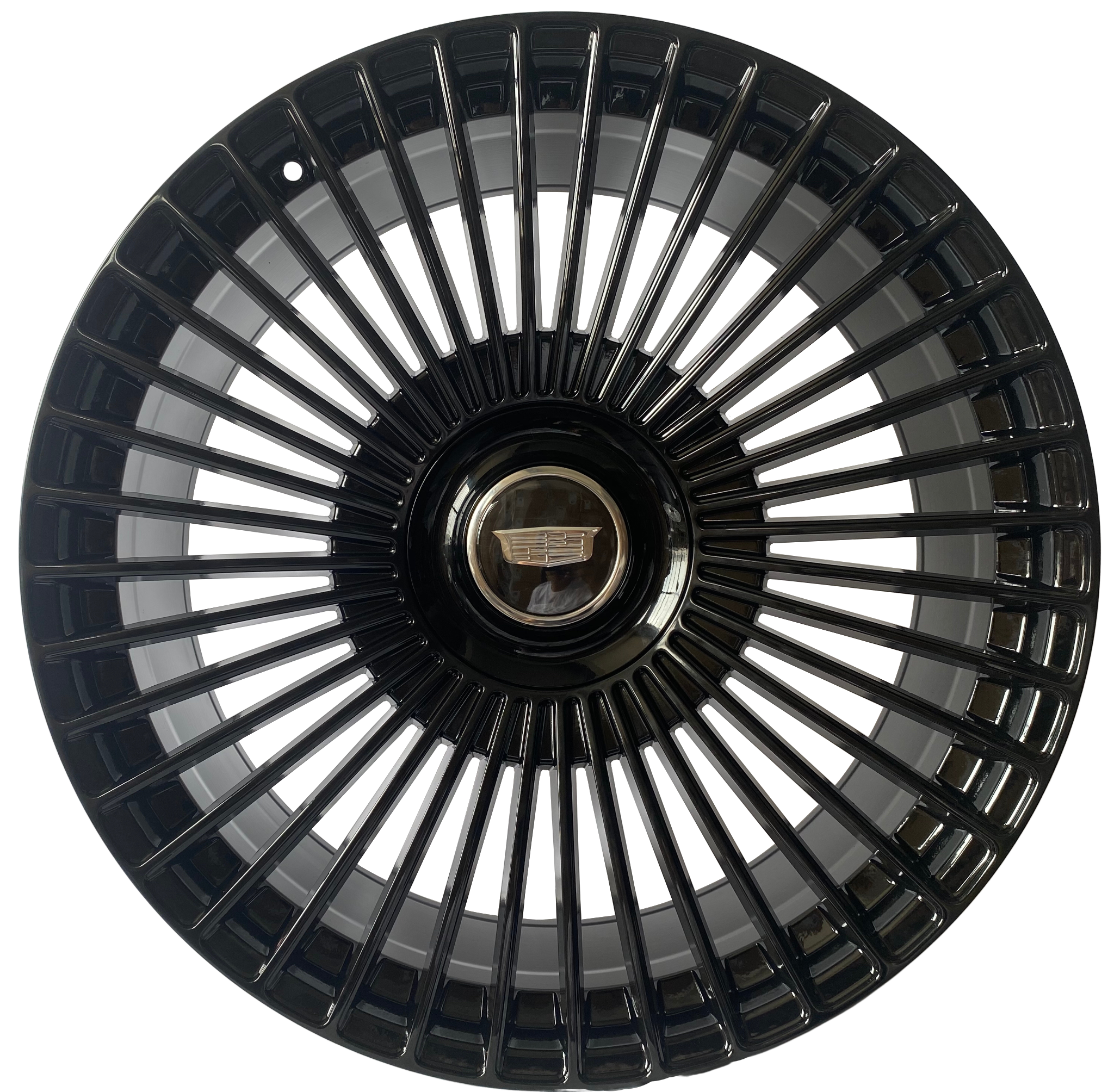


When comparing forgeline wheels vs custom aerospace billet forged wheels track durability, the more impressive sounding material or forging label does not identify the stronger track wheel. The key question is whether there is credible evidence for the exact wheel, vehicle, and intended use.
Construction details and motorsports reputation can be useful context, but neither a manufacturing description nor a brand’s racing history proves how a particular wheel will perform through repeated track use. A custom wheel described as “aerospace billet forged” should come with clear information about its alloy, manufacturing process, load rating, and testing. Fitment matters too: a wheel must suit the vehicle and its demands, not just look right on paper.
This comparison explains how to assess wheel construction without treating terminology as a durability guarantee. It covers the specifications and track use documentation to check, what safety certifications can and cannot establish, and the fitment questions to ask before choosing. ICON WHEELS designs custom built forged wheels for luxury vehicle applications. Verify track suitability for the specific vehicle and configuration.
Key Takeaways
- Compare documented alloy, manufacturing details, load ratings, and testing instead of relying on “forged” or “aerospace” labels alone.
- For forgeline wheels vs custom aerospace billet forged wheels track durability, look for equivalent evidence tied to the specific wheel and intended track use.
- Check how the wheel’s fitment matches your vehicle requirements and planned tire setup before making a durability decision.
- Treat certifications as a baseline, not proof that one wheel is more durable or suitable for every track application.
- Consider custom built forged wheels for luxury vehicle fitment and design, then verify specifications and track suitability for your exact configuration.
Forgeline Wheels vs. Custom Billet Forged Wheels: What Does Track Durability Mean?
Track durability is not a badge attached to a material or brand. It describes how well a wheel meets the demands of a particular vehicle and use, supported by relevant specifications and evidence. In forgeline wheels vs custom aerospace billet forged wheels track durability, a direct winner cannot be established from labels alone. The comparison needs data for the exact wheel and application.
A forging claim describes a manufacturing method. Verified durability evidence connects a particular wheel’s specifications and testing to its intended application. These are not interchangeable. Forging shapes metal through compressive forces, but that general description does not establish how a particular wheel performs in service. Design, dimensions, load, fitment, impact exposure, and maintenance all contribute to the assessment.
What does track durability require from a wheel?
Track use can expose wheels to repeated cornering forces, hard braking, heat cycles, and impacts from surface irregularities or curbing. The demands vary by circuit, vehicle, and driving conditions. Vehicle weight, tire choice, driving style, and setup also affect the load on a wheel. A configuration suitable for one car or use may not suit another. Start with published load and application guidance that matches the intended vehicle and use.
Durability means looking beyond whether a wheel appears intact after a session. Follow the manufacturer’s inspection and maintenance guidance, and have damage assessed rather than assuming it is harmless. A suitable load rating is an important specification, but it does not by itself demonstrate endurance under every track condition.
What do billet and aerospace grade labels actually tell you?
“Billet” describes stock form and often how a component is machined. It does not establish a wheel’s strength or track performance. “Forged billet” may refer to billet that was forged before machining, but the phrase alone does not confirm the exact alloy, process, design, or test results. General information about the forging process can clarify the method, but it cannot validate a specific wheel.
“Aerospace grade” also needs specifics. Ask for the named alloy and documentation supporting the claim. Do not assume either Forgeline or a custom wheel maker uses a particular alloy or process unless its documentation confirms it. For a meaningful comparison, request equivalent details for each option: load data, testing information, vehicle fitment, and stated track use guidance. If key details are unavailable, mark them unverified instead of filling gaps with reputation or terminology.
How Forging, Design, and Testing Shape Wheel Durability
Construction is one part of the engineering story. Material and forming influence the starting point, while machining, geometry, dimensions, and finishing determine how that material becomes a complete wheel. These factors work together, so a process label cannot stand in for evidence about the finished design.
Forged construction versus complete wheel design
Forging shapes metal under compressive force. It can influence the material’s structure, but forged wheels are not automatically identical in strength or performance. The design still matters. Spoke shape and thickness, the hub area, wheel dimensions, and the amount and placement of material all affect how a finished wheel responds to load. Consider machining choices and finishing alongside any alloy claim.
Manufacturing method alone cannot establish whether a wheel is suitable for track use. A useful forgeline wheels vs custom aerospace billet forged wheels track durability comparison needs specifications and testing information for the specific wheel, not assumptions based on a general description of forging or billet stock.
Which durability evidence should buyers request?
Ask for current manufacturer documentation that identifies the exact wheel and makes its application clear. Look for:
- Load rating: Confirm the rating and the vehicle or operating conditions it covers. Do not assume a rating for one configuration applies to another.
- Test method: Request the named standard or procedure and an explanation of what it evaluates. SAE J2530, for example, sets aftermarket wheel requirements for load capacity and impact testing. Passing a test establishes a baseline under that method, not a ranking against every other wheel or proof of suitability for every track.
- Traceable technical details: Match alloy, dimensions, and configuration claims to the specific wheel rather than relying on a retailer summary or marketing phrase.
- Application guidance: Check that the manufacturer’s stated fitment and intended use align with your vehicle and setup.
Regulatory references need context too. Cornell’s Wheel integrity requirements concern vehicles over 10,000 pounds. They are not a track wheel comparison or a substitute for application specific manufacturer evidence.
Keep the decision focused: compare equivalent documents, note what remains unverified, and do not treat a certification as a durability ranking. If you are evaluating custom built forged wheels for a luxury vehicle, share the vehicle and intended use with ICON WHEELS through its custom forged wheel offering, then confirm the relevant specifications and fitment before deciding.
Forgeline vs. Custom Aerospace Billet Forged Wheels: A Fair Track Comparison
A fair comparison uses equivalent evidence for the exact wheel configuration, not general brand reputation on one side and a broad manufacturing label on the other. The available information identifies Forgeline with forged wheels and a motorsports focus, but that context does not establish how a specific model performs on your vehicle. “Custom aerospace billet forged” is not one product or manufacturer, so specifications depend on the wheel being considered.
| Comparison point | Forgeline | Custom aerospace billet forged wheel |
|---|---|---|
| Construction documentation | Forged wheel construction is identified generally. Check current manufacturer documentation for exact alloy and process details for the selected wheel. | Unverified until the maker identifies the alloy, billet source, and manufacturing steps for the specific wheel. |
| Load data | Request the rating for the exact wheel and confirm its application. Brand reputation alone does not establish a model specific figure. | Unverified until the maker supplies a rating and states which vehicle and conditions it covers. |
| Testing | Motorsports heritage is relevant context, not a substitute for test methods and results tied to the wheel under review. | Unverified until the maker names applicable tests and provides supporting documentation. |
| Fitment | Confirm the selected diameter, width, offset, and vehicle application with current fitment information. | Confirm the same details for the custom configuration. Do not infer suitability from “custom” alone. |
| Intended use | Forgeline’s racing credentials inform its performance context. Suitability for a particular car and track use still requires confirmation. | Ask whether the specific wheel is intended and documented for the planned use. The category label does not answer that. |
How to compare without relying on marketing
Compare named materials, process descriptions, load data, and testing only when each maker substantiates them. Match every rating and test to the exact size and configuration, then check current official documentation. Apply the same standard to warranty or service terms, including them only when current manufacturer terms are available and relevant to the intended use.
Why track conditions and wheel configuration matter
Diameter, width, offset, tire pairing, and vehicle load work as a system. A setup for occasional track sessions may face different demands from one used frequently and intensively. Ask the manufacturer to confirm the intended application for your complete configuration. Do not treat lower weight or higher price as proof of greater durability. In forgeline wheels vs custom aerospace billet forged wheels track durability, the stronger case is the one supported by relevant, comparable evidence for your vehicle and use, not the more compelling label.
Choose Track Wheels by Matching Evidence to Your Vehicle and Use
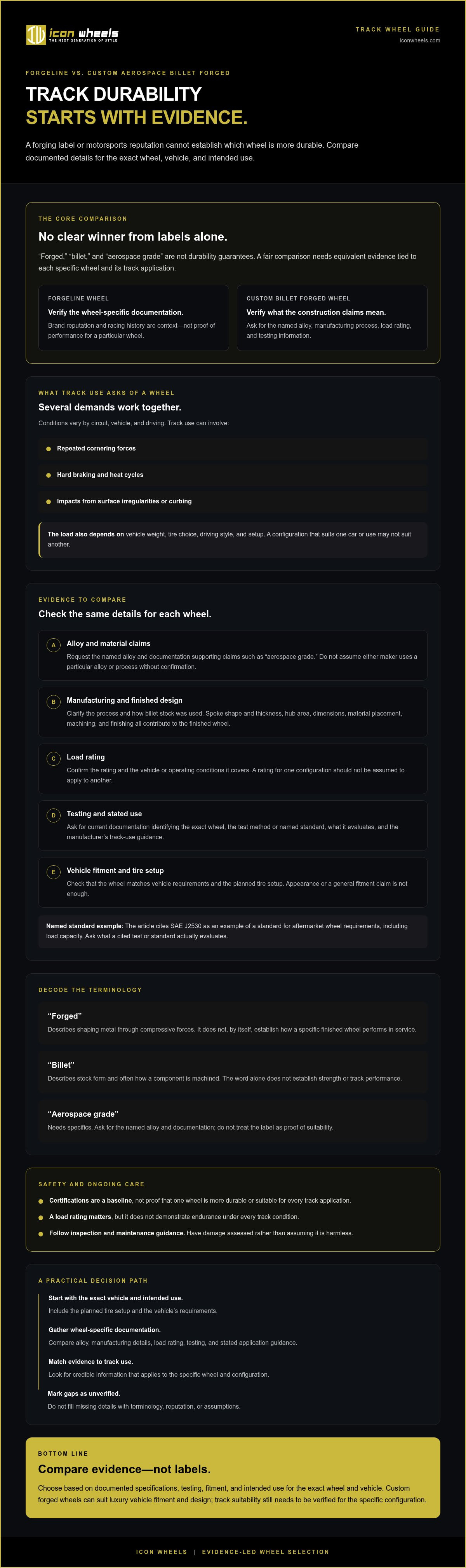
Work through the decision in order: define the vehicle and track demands, identify the exact wheel configuration, review its documentation, then confirm fitment before ordering. This keeps the comparison grounded in your application, whether you are weighing Forgeline against a custom option or considering another wheel.
A practical checklist before ordering track wheels
Gather the details a manufacturer or qualified fitment professional needs to assess your setup:
- Vehicle: Record the year, model, brake package, and axle loads. Include modifications that could affect clearance or load.
- Tire setup: Specify the intended tire dimensions and the wheel diameter and width you are considering.
- Wheel documentation: Request written confirmation of fitment, applicable load information, and any testing details for the exact configuration.
- Track use: Explain how often you expect to drive on track and the conditions you anticipate. Ask the manufacturer whether it supports that use pattern.
Do not rely on a model name alone. Brake clearance, offset, tire dimensions, and vehicle loading all matter to complete fitment. For a vehicle specific engineering example, review forged wheels for Porsche Cayenne, then confirm that any specifications discussed apply to your exact vehicle and configuration. A guide can help you frame questions, but it does not replace written fitment confirmation.
How to interpret missing or conflicting specifications
Missing test details are unknown, not proof that a wheel is weak or strong. If material, load, or application information conflicts across sources, ask the manufacturer to clarify it in writing and identify which document applies to the specific wheel. Do not fill gaps with assumptions based on brand, price, or a broad “forged” description.
Use the same standard in forgeline wheels vs custom aerospace billet forged wheels track durability: compare evidence that matches your vehicle, tire setup, and planned track use. If a manufacturer cannot confirm a key fitment or application detail, pause before ordering rather than treating uncertainty as approval.
Once you have defined your vehicle, tire dimensions, and intended use, explore ICON WHEELS custom forged wheel options and discuss the fitment requirements for your vehicle.
When Custom Forged Wheels Make Sense and What to Confirm with ICON WHEELS
A custom built forged wheel can be worth considering when your vehicle or design brief calls for a specific fitment. ICON WHEELS designs and sells custom forged wheels for luxury vehicles, including model specific fitments. Customization is a fitment and design consideration, not proof of greater strength or longer track life.
When a custom forged wheel deserves consideration
A vehicle specific option may help address requirements such as brake clearance, wheel dimensions, or a particular visual direction. The benefit depends on whether the proposed configuration is engineered and documented for your vehicle and intended use. Do not assume “custom” means tested for track driving, or that an aerospace or billet description establishes an automatic durability advantage. For a vehicle specific example, see custom forged wheels for Porsche Cayenne, then verify that any fitment information applies to your exact model and setup.
That distinction matters in forgeline wheels vs custom aerospace billet forged wheels track durability. Compare evidence for the wheel you are actually considering. A custom option may suit your requirements, but material descriptions and design flexibility cannot replace confirmed specifications or application guidance.
Questions to ask before choosing a wheel
Before placing an order, ask for clear answers tied to the proposed wheel configuration:
- What exact material and manufacturing details are documented for this wheel?
- What is its applicable load rating, and which vehicle or conditions does it cover?
- Which tests have been documented, and what do they assess?
- Is fitment confirmed for the vehicle, brake package, wheel dimensions, and intended tire setup?
- Does the manufacturer support the planned track use, including its expected frequency and conditions?
Request written clarification if a specification is missing or unclear. ICON WHEELS’ offering is custom built forged wheels for luxury vehicle applications. Aerospace grade materials or specific track testing are not established here, so confirm the relevant details for your vehicle and intended use rather than assuming them.
Once you have defined your fitment requirements, discuss a custom forged wheel fitment with ICON WHEELS. Bring your vehicle details and planned use, and confirm the specifications that matter before making your decision.
Make Your Next Wheel Decision with Confidence
The takeaway from forgeline wheels vs custom aerospace billet forged wheels track durability is straightforward: a forging or material label alone cannot prove track suitability. Compare documented load ratings, testing, and manufacturing details for the exact wheel, then confirm that its fitment matches your vehicle, brakes, tire setup, and planned use.
There is no universal winner without equivalent evidence and a defined application. Track frequency and conditions matter, as does the specific wheel configuration. Treat missing specifications as unverified and ask the manufacturer to clarify them before ordering.
ICON WHEELS offers custom built forged wheels for luxury vehicle applications, with model specific fitments among its offerings. For your vehicle, discuss the requirements and verify the relevant specifications before deciding. Discuss your vehicle and custom forged wheel requirements with ICON WHEELS.
Choose based on clear evidence and fitment matched to your goals. The right questions make the decision more confident.
Frequently Asked Questions
Are Forgeline wheels suitable for track use?
Some Forgeline wheels may be intended for performance or motorsports applications, but suitability depends on the specific wheel and vehicle. Check current manufacturer documentation for its load rating, applicable testing, fitment, and stated use. Racing heritage can provide useful context, but it does not prove that every model is appropriate for every car, tire setup, or track condition. Confirm the exact configuration before choosing.
Are custom billet forged wheels more durable than Forgeline wheels?
Not based on the category name alone. A fair comparison needs equivalent, wheel specific information about construction, material, load rating, testing, fitment, and intended use. “Custom,” “billet,” and “forged” do not establish how a wheel will perform under repeated track demands. Compare documentation for the exact configurations, and treat missing information as unknown rather than evidence that either option is stronger or weaker.
What does aerospace grade billet mean for a wheel?
“Billet” generally describes stock material machined into a component, while “aerospace grade” is a broad material claim that needs specifics. Ask for the named alloy and supporting manufacturer documentation. The phrase alone does not verify the wheel’s complete manufacturing process, design, load capacity, or track suitability. A material designation is one part of the assessment, not proof that a finished wheel has a particular durability advantage.
Does a forged wheel guarantee better track durability?
No. Forging describes a manufacturing process, not a guarantee of track life or suitability. The finished wheel’s design, dimensions, machining, load rating, fitment, and use all matter. Testing can help establish performance under specific conditions, but its relevance depends on the method and configuration. Review current documentation for the exact wheel, and confirm it matches your vehicle, tire setup, and planned track use.
How can I verify a wheel’s track use load rating?
Request the applicable load rating from the wheel manufacturer and confirm in writing that it covers the exact wheel configuration and intended vehicle. Ask what conditions the rating addresses and whether named testing, such as SAE J2530 load capacity and impact testing, applies to that wheel. A test or rating provides defined evidence, not proof of suitability for every track application. Do not rely only on retailer summaries or slogans.
What wheel specifications matter most for track durability?
Start with the exact wheel’s load rating, dimensions, material and manufacturing documentation, and applicable test information. Then confirm diameter, width, and offset work with the vehicle’s brakes, tire dimensions, and load requirements. Intended use matters too: describe how often you expect to drive on track and under what conditions. No single specification settles durability; assess the complete configuration against manufacturer guidance.
Can custom forged wheels be designed for my luxury vehicle’s track setup?
Custom built forged wheels and model specific fitments are part of ICON WHEELS’ luxury vehicle offering. Whether a particular configuration suits track use must be verified for your vehicle. Provide the year, model, brake package, axle loads, and intended tire dimensions, then ask for written fitment and load information, testing details, and confirmation of intended use. Do not assume custom construction alone guarantees track suitability.
