
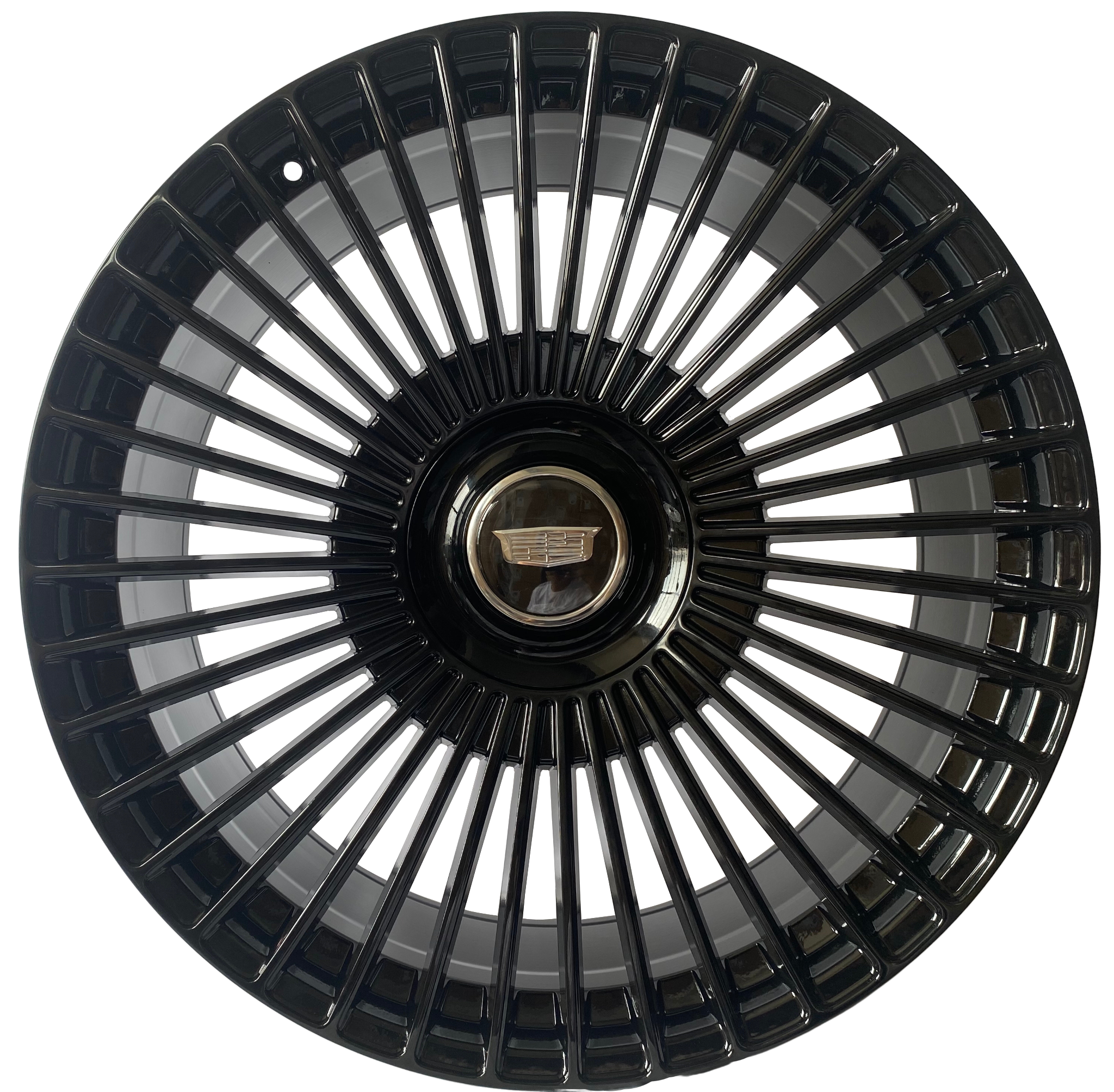
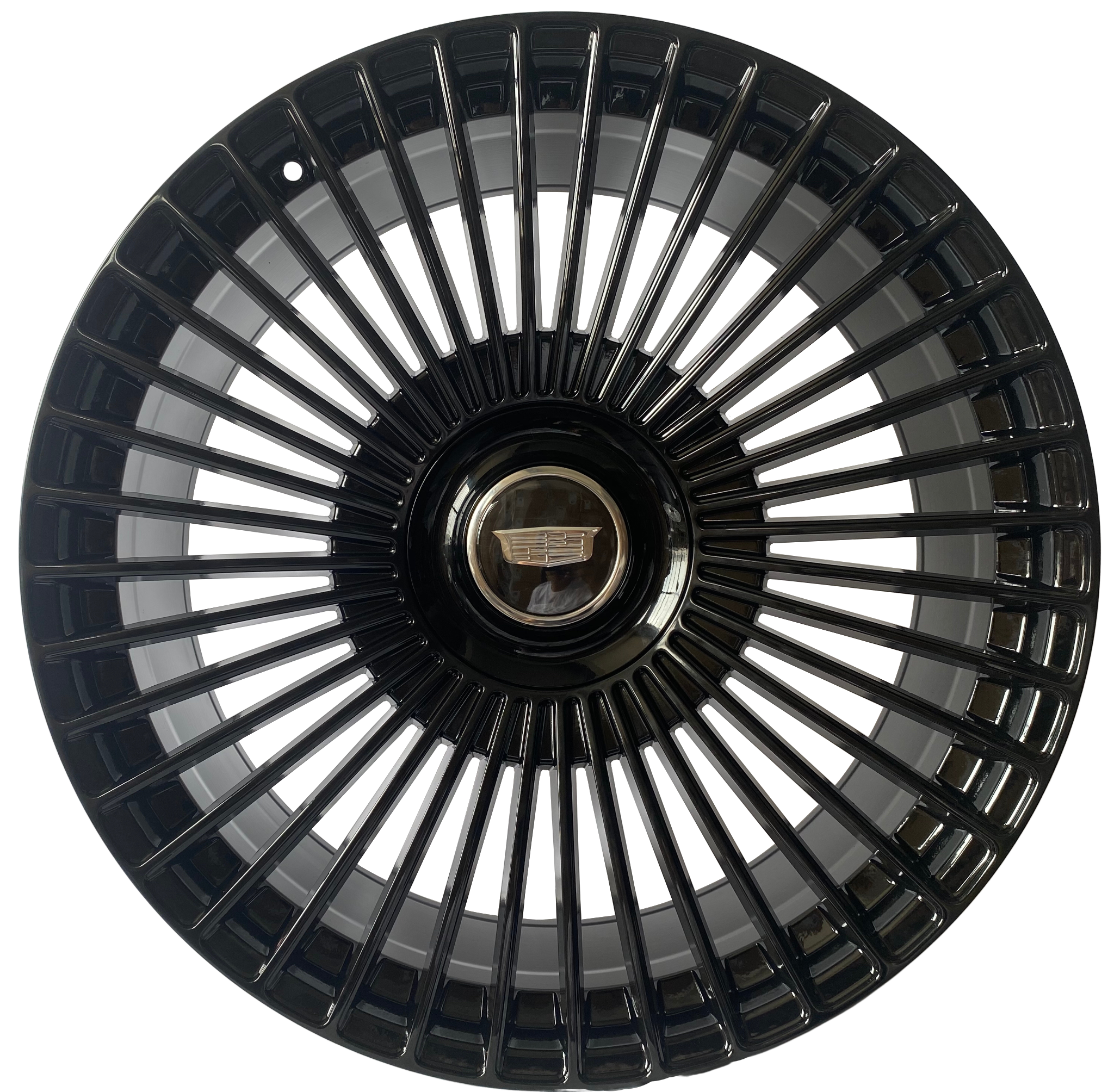


Prestige alone can’t tell you whether a wheel is right for your vehicle. The anrky wheels vs bespoke custom forged wheels structural engineering comparison starts with a more useful question: what evidence supports the exact wheel you’re considering? A respected name and the word “forged” may catch your eye, but neither replaces a documented load rating, confirmed fitment, and relevant technical information.
It’s reasonable to expect a luxury wheel to deliver both distinction and confidence. Bespoke options can vary by supplier, design, and vehicle application, so the details matter. This comparison will help you evaluate product-specific information instead of relying on broad brand claims, and identify what to ask about fitment, load, testing, and available documentation before you buy.
We’ll look at how to assess a branded wheel alongside a bespoke option, then consider vehicle-specific fitment and independent verification. You’ll leave with a practical framework for evaluating custom forged wheels, including options for luxury vehicles such as Mercedes, Rolls-Royce, Porsche, and Bentley.
Key Takeaways
- Compare a specific ANRKY wheel configuration with a specific bespoke option, not brand names in isolation.
- Provide the vehicle details and wheel dimensions needed to check fitment and brake clearance.
- The anrky wheels vs bespoke custom forged wheels structural engineering comparison should focus on documented load ratings, construction, testing, and fitment, not broad marketing claims.
- Use a practical checklist to request written specifications and supporting documentation before committing to a custom wheel.
- ICON WHEELS sells custom-built forged wheels for luxury vehicle applications. Confirm the exact configuration and vehicle application before purchase.
ANRKY Wheels vs. Bespoke Forged Wheels: What Is Actually Being Compared?
ANRKY is a wheel brand. “Bespoke custom forged wheels” describes a product category: forged wheels configured or personalized for a buyer’s requirements. These aren’t direct opposites. A branded wheel may be configured for a particular vehicle, while bespoke wheels can come from different makers with different designs, materials, and production methods.
In brief: A brand identifies who supplies a wheel; bespoke describes its degree of customization; engineering evidence shows what a specific wheel is designed and documented to do. The anrky wheels vs bespoke custom forged wheels structural engineering comparison is meaningful only when it compares defined wheel configurations, not labels alone.
What does bespoke mean when ordering forged wheels?
Customization may cover dimensions, vehicle fitment, and appearance, but available options depend on the supplier and order. Confirm which choices are available for the wheel you want. A personalized finish or design does not, by itself, establish that the finished configuration has been validated for your vehicle or intended use.
Likewise, “forged” describes a manufacturing category, not a complete performance specification. Wheel construction can involve different methods and materials; the Alloy wheel manufacturing methods overview provides background on forging, casting, and alloy materials. For a purchase decision, ask for documentation tied to the exact wheel rather than assuming every bespoke forged wheel has the same construction or engineering basis.
What does the ANRKY name tell a buyer, and what does it not?
ANRKY tells you which brand you’re evaluating. It does not, by itself, confirm the specification of a particular wheel or its suitability for a particular vehicle. Check product details against the exact model and configuration being quoted. Don’t infer a material, test result, standard, load capacity, or fitment approval from the brand name alone.
Before comparing offers, make sure each describes a defined product. At minimum, establish the wheel’s size and configuration, the vehicle application, and which technical documents support the claims. If one quote describes a specific branded wheel and another describes a custom-built option, compare the evidence available for each exact setup.
This keeps the decision focused. A distinctive design may meet your style preferences, but structural confidence depends on product-specific information. Treat brand identity, customization, and engineering validation as separate questions, then compare the answers side by side.
How Structural Engineering Shapes a Forged Wheel’s Strength and Fit
A wheel must do more than carry the vehicle’s weight while parked. Its design has to account for forces generated during acceleration, braking, cornering, and impacts. Geometry, material specifications, and the vehicle’s intended load all influence wheel design. Forging describes a production process: as the process of creating forged wheels illustrates, heat and pressure shape metal. That process alone doesn’t confirm the capacity or suitability of an individual wheel.
Which engineering details should buyers compare?
Request information for the exact model and configuration, not a general statement about a brand or product range. Useful details include the specified material, construction, dimensions, load rating, and any design analysis or physical testing relevant to the intended application. A load rating states the maximum load a wheel is specified to support under the conditions described in its documentation. Compare that figure with the vehicle’s requirements, and ask the supplier to confirm the match in writing.
For an anrky wheels vs bespoke custom forged wheels structural engineering comparison, apply the same questions to both options. If a specification or test record isn’t supplied, treat it as unconfirmed rather than assuming the word “forged” or premium positioning fills the gap.
Why vehicle-specific fitment belongs in a structural comparison
Strength isn’t the whole decision. Fitment dimensions determine how the wheel sits on the vehicle and whether it clears nearby components. Width affects the wheel’s position and tire fit; offset influences how far the wheel sits inward or outward. The center bore must suit the hub, while brake clearance depends on the wheel’s shape and the vehicle’s brake configuration.
A wheel can have a stated load rating and still be unsuitable if its dimensions or shape create interference. Confirm clearance for the exact vehicle year, model, trim, and brake setup. Check the space around the brakes, suspension, and body, and request fitment documentation or confirmation from a qualified professional. A vehicle badge alone isn’t enough, because specifications can vary across trims and configurations.
Suitability depends on documented specifications for the exact vehicle and wheel, including verified load capacity and confirmed clearance. Keep the written response with the product details, and resolve missing or unclear information before ordering. Buyers considering custom-built forged wheels for luxury vehicles can ask about the proposed configuration and its vehicle application using these same criteria.
ANRKY vs. Bespoke Custom Forged Wheels: Compare the Evidence Side by Side
A useful comparison starts with two exact wheel proposals, not a brand reputation on one side and a broad promise of customization on the other. The anrky wheels vs bespoke custom forged wheels structural engineering comparison should separate documented specifications from supplier statements and buyer assumptions. If a detail isn’t confirmed for the specific wheel configuration, mark it “not confirmed” and ask for evidence.
What should the side-by-side comparison table include?
Use the same evidence standard for both candidates. Fill in each entry from product documentation or written supplier confirmation, and note who provided the information and when.
| Comparison point | ANRKY candidate | Bespoke candidate |
|---|---|---|
| Exact model and configuration | Not confirmed until the specific wheel is identified | Not confirmed until the proposed configuration is identified |
| Material and construction | Verify against documentation for that configuration | Request the supplier’s written specification |
| Dimensions and load rating | Request exact dimensions and documented rating | Request exact dimensions and documented rating |
| Testing and fitment evidence | Ask for relevant records and vehicle-specific confirmation | Ask for relevant records and vehicle-specific confirmation |
| Customization scope | Confirm options for the selected model and order | Confirm which choices the supplier can provide |
| Documentation and after-sale support | Confirm what records and support apply to the purchase | Confirm what records and support apply to the purchase |
This is a comparison framework, not a claim that either option lacks these details. It identifies what still needs verification before the proposals can be compared fairly. For each entry, record the document or representative that supports it, along with the date. That makes it easier to distinguish a written specification from an informal assurance.
How to interpret differences without overclaiming
Customization is an advantage only if the supplier confirms the available choices for your specific order. A bespoke label doesn’t guarantee broader options, just as a brand name doesn’t establish the performance of a particular configuration. Neither branding nor personalization alone proves superior structural performance.
If comparable load, fitment, construction, or test information isn’t available, don’t declare a winner. Mark the gap, ask the supplier to clarify it, and compare again when both candidates have evidence at the same level. For a related discussion of factory and custom options, see the Rolls-Royce OEM wheels versus custom forged engineering guide.
How to Verify a Custom Forged Wheel Before You Buy
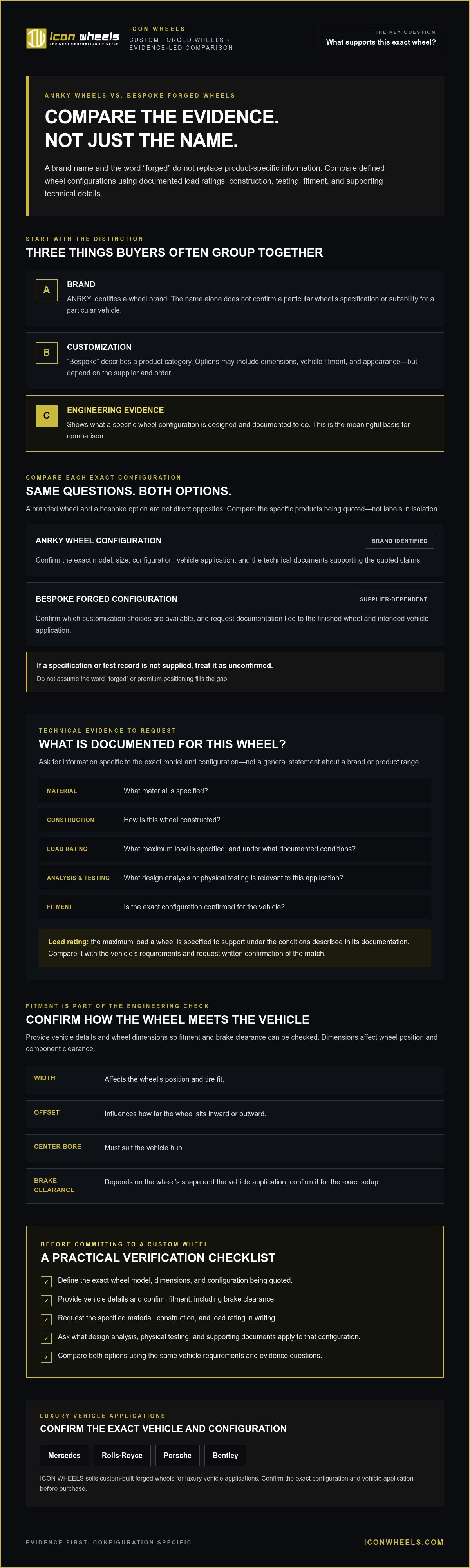
Before comparing finishes or approving a design, establish exactly what the wheel needs to fit. Use this checklist to turn a sales discussion into a documented specification review. The anrky wheels vs bespoke custom forged wheels structural engineering comparison is useful only if both candidates are assessed against the same vehicle details and evidence.
- Identify the vehicle. Provide its exact year, model, trim, and brake configuration. Include relevant modifications that could affect wheel clearance.
- Request the complete wheel dimensions. Ask for diameter, width, offset, bolt pattern, and center bore for the proposed configuration.
- Confirm the load rating. Request the documented rating for that exact wheel and written confirmation that it suits the vehicle’s requirements.
- Ask for supporting engineering documents. Request product-specific material and construction details, plus any design analysis, test records, or other documentation used to support the application.
- Get fitment confirmation in writing. Ask the supplier to confirm the proposed setup for your vehicle and relevant brake, suspension, and body clearances.
- Review tire compatibility separately. Have the tire dimensions checked against the wheel and vehicle requirements. Wheel sales do not necessarily include tire installation.
- Request clarification for gaps. If a supplier can’t substantiate a specification immediately, ask what document or written confirmation can verify it before purchase.
What questions should you ask the wheel supplier?
Ask which records apply to the exact model, size, and configuration being quoted. Who issued each document, and what does it verify? Does the stated load capacity apply to this wheel, and what testing or analysis supports the intended application? Request written answers. General assurances or statements about a product range aren’t substitutes for configuration-specific evidence.
Which fitment details must be confirmed before ordering?
Check every dimension, then confirm clearance on the exact vehicle. Diameter and width affect the wheel and tire package; offset affects the wheel’s installed position; bolt pattern and center bore must match the vehicle interface. Brake clearance also needs confirmation for the actual brake setup. If original wheel dimensions are changing, have a qualified professional review the proposed fitment before purchase. For a model-specific example, see this Porsche Cayenne forged wheel engineering guide.
Use this rule: Treat dimensions, load ratings, fitment approvals, and test records as verified only when supported by applicable documentation. Treat appearance, customization, and marketing language as design or sales claims until confirmed. To explore custom-built forged wheels for your luxury vehicle, ask for the exact configuration and supporting fitment information before deciding.
Choosing Between ANRKY and ICON WHEELS for Bespoke Forged Wheels
The right choice depends on the specific wheel and the evidence supplied for your vehicle, not on a brand label alone. A particular ANRKY offering may suit you if its design and documented configuration meet your needs. A bespoke option may suit someone who needs confirmed dimensions, a particular vehicle application, or personalization the supplier can provide. Apply the same standard to both: verify fitment, load information, supporting documents, and what assistance is available after purchase.
When does a bespoke supplier make sense?
A bespoke route is worth considering when a standard configuration doesn’t match your requirements, or when you want design choices within a confirmed vehicle application. First, establish exactly which options are available for your order. Then request the same product-specific documentation you’d expect from an established brand. Compare supplier responses using consistent questions, not the confidence or polish of the sales language.
ICON WHEELS sells custom-built forged wheels for luxury vehicle applications, including Mercedes, Rolls-Royce, Land Rover, Porsche, Bentley, Cadillac, and Lamborghini. It’s an option to consider if you’re seeking custom forged wheels for a luxury vehicle. Confirm the exact configuration, application, and supporting specifications directly before making a decision. The Mercedes-Benz wheel engineering and fitment guide offers additional model-focused context.
What to prepare before contacting ICON WHEELS
Gather precise vehicle information before discussing options: year, make, model, trim, and brake details, along with preferred wheel dimensions or other specifications if known. Describe the intended driving use and any constraints, such as required brake clearance or a desired installed position. If you’re considering a Mercedes application, include the exact model and trim rather than relying on the make alone.
Use the same evidence-led questions from your anrky wheels vs bespoke custom forged wheels structural engineering comparison: What is confirmed for this exact wheel? Which documents support the material, load rating, and fitment? What remains unverified? Clear answers make proposals easier to compare and help prevent appearance preferences from being mistaken for engineering proof.
Bring your vehicle details and wheel requirements to the conversation. Discuss custom forged wheel options for your luxury vehicle with ICON WHEELS, and confirm the proposed configuration and its specifications before purchase.
Make Your Next Wheel Decision With Confidence
The anrky wheels vs bespoke custom forged wheels structural engineering comparison comes down to the exact wheel, the exact vehicle, and the evidence behind the proposed fitment. Compare documented load ratings, dimensions, construction details, and testing where available. Treat unverified claims as questions to resolve, not proof of capability.
A branded option may suit your needs, while a bespoke configuration may offer relevant choices if the supplier confirms them for your application. Either way, request written fitment confirmation and supporting specifications before committing. The right choice is the one that meets your vehicle’s requirements with clear, product-specific information.
ICON WHEELS sells custom-built forged wheels for luxury vehicle applications, including Mercedes, Rolls-Royce, Land Rover, Porsche, Bentley, Cadillac, and Lamborghini. Share your vehicle details and wheel requirements to discuss options. Discuss your luxury vehicle’s custom forged wheel requirements with ICON WHEELS, then confirm the proposed configuration and specifications before purchase.
Frequently Asked Questions
Are ANRKY wheels forged?
Yes. ANRKY offers custom forged wheels, but confirm the details for the specific model and configuration you’re considering. Ask for written information about its construction, dimensions, load rating, fitment, and supporting test documentation. A brand-level description identifies the product category, but it doesn’t answer every engineering question about an individual wheel. Review applicable documentation before deciding whether that wheel suits your vehicle.
Are bespoke custom forged wheels stronger than ANRKY wheels?
Not necessarily. “Bespoke” describes a customized product category, not a guaranteed strength advantage over a branded wheel. Structural performance depends on the exact wheel’s design, material, dimensions, load rating, and supporting validation. Compare product-specific evidence for both candidates. If one supplier can’t provide comparable specifications or test information, the available evidence may be insufficient to declare either option stronger. Don’t treat customization or brand reputation as proof of superior performance.
How can I compare the structural engineering of two forged wheels?
Compare the exact configurations using the same criteria: material and construction details, dimensions, documented load rating, vehicle-specific fitment, relevant testing, and available technical support. Record who supplied each fact and whether it’s confirmed in writing. The anrky wheels vs bespoke custom forged wheels structural engineering comparison should distinguish verified documentation from supplier statements and assumptions. If comparable evidence is missing, mark that detail as unconfirmed rather than guessing or declaring a winner.
Can custom forged wheels fit my luxury vehicle without modifications?
Possibly, but fitment must be confirmed for the exact vehicle and wheel combination. Year, model, trim, brake configuration, diameter, width, offset, bolt pattern, and center bore can all affect compatibility and clearance. Ask the supplier to confirm fitment in writing, including brake, suspension, and body clearance. If you’re changing the original wheel dimensions, have the proposed setup reviewed by a qualified fitment professional before ordering. Don’t assume a vehicle badge guarantees compatibility.
What wheel specifications should I verify before ordering?
Confirm the exact model or configuration, diameter, width, offset, bolt pattern, center bore, material and construction details, and documented load rating. Request written fitment confirmation for your vehicle’s year, model, trim, and brake setup. Ask what product-specific documents support any stated testing or engineering claims. Check tire compatibility separately with an appropriate professional. If a supplier can’t substantiate a specification, ask for written clarification before placing the order.
Does a forged wheel label prove that a wheel is safe for my vehicle?
No. “Forged” identifies a manufacturing category; it doesn’t confirm that a particular wheel has the correct load capacity, dimensions, or clearances for your vehicle. Suitability requires product-specific specifications and confirmed fitment. Request the load rating and relevant supporting documentation for the exact wheel configuration, then compare them with your vehicle’s requirements. If key details aren’t documented, treat them as unverified and resolve the gap before purchasing.
Is ANRKY or a bespoke forged wheel the better choice?
Neither is automatically better for every buyer or vehicle. A specific ANRKY offering may suit you if its design, fitment, and documented specifications meet your requirements. A bespoke configuration may be worth considering if the supplier confirms the choices and application you need, with product-specific evidence to support the wheel. Compare both using the same criteria. ICON WHEELS sells custom-built forged wheels for luxury vehicle applications, with offerings for brands including Mercedes, Rolls-Royce, and Porsche.
