
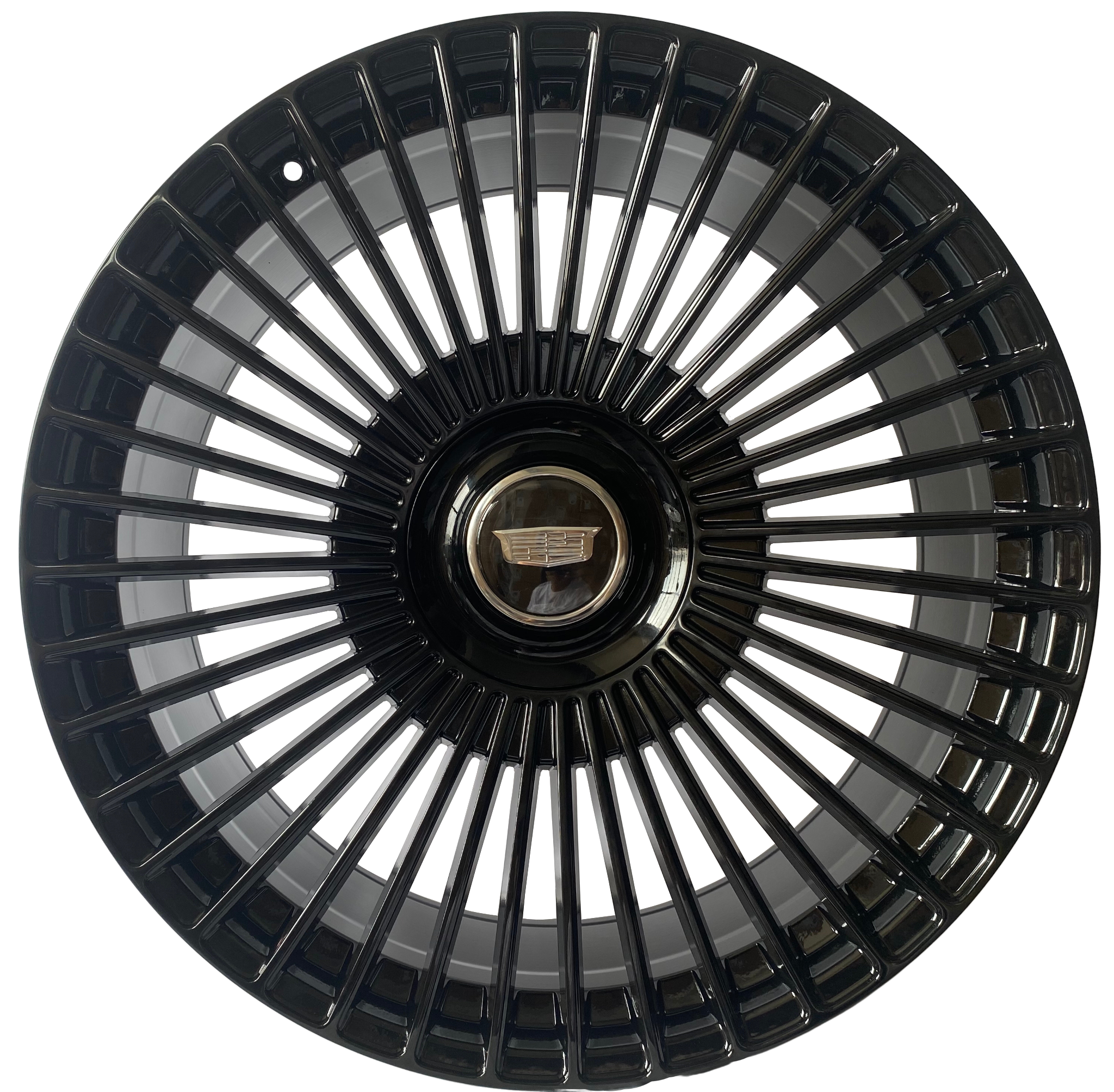
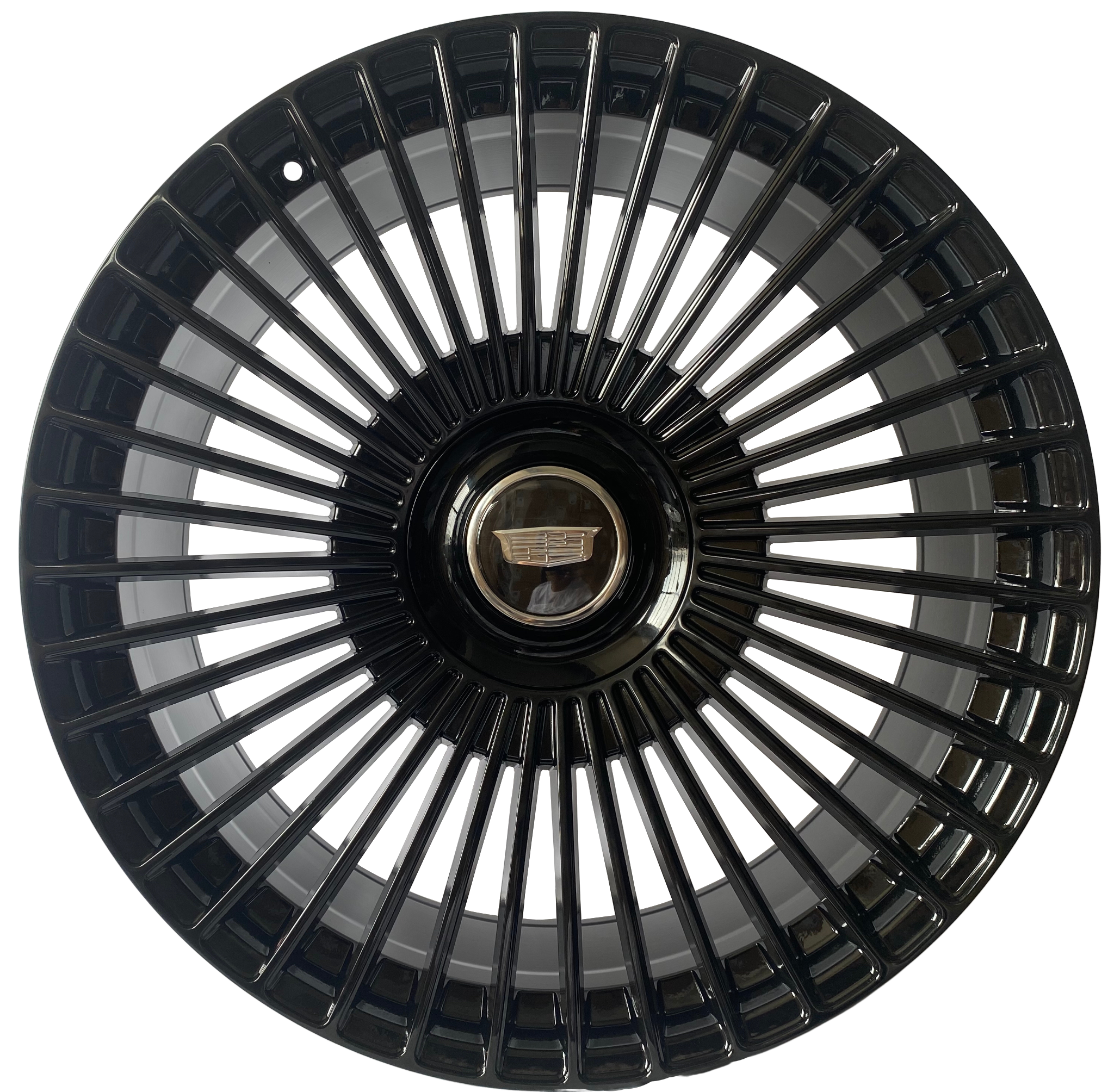


When comparing premium forged wheels vs custom CNC machined 6061-T6 wheels, you’re not necessarily choosing between two different kinds of wheel. The key is to compare the exact models, their documented specifications, and their fitment for your vehicle.
Brand names represent specific labels, while CNC machining describes how material is cut to shape a wheel, and 6061-T6 identifies an aluminum alloy and its heat-treated condition. A forged wheel can also be CNC-machined, so these terms can describe different parts of the same manufacturing process. The practical question is how each manufacturer makes its specific wheel and documents its construction and fitment.
A premium name alone doesn’t establish that a wheel suits your vehicle or how you plan to use it. This guide explains what forging, CNC machining, and 6061-T6 mean, then offers a practical way to compare specifications and vehicle-specific fitment. It also explains how a custom-built forged option from ICON WHEELS may fit into your decision.
Key Takeaways
- In brixton forged wheels vs custom CNC machined 6061-T6 wheels, compare a named brand with specific manufacturers’ documented construction and specifications, not as inherently different wheel categories.
- Assess forging, CNC machining, alloy designation, and finished-wheel specifications separately. A material label alone doesn’t establish how a wheel will perform.
- Start with your vehicle’s exact requirements and intended use. Verify fitment and documented load requirements before prioritizing design or finish.
- Compare technical documentation and buyer support directly. Treat unverified claims as unknown rather than as engineering proof.
- Explore ICON WHEELS’ custom-built forged options for Mercedes-Benz, Rolls-Royce, Land Rover, Porsche, Bentley, Cadillac, and Lamborghini.
Brixton Forged vs. CNC-Machined 6061-T6 Wheels: Are They Different Categories?
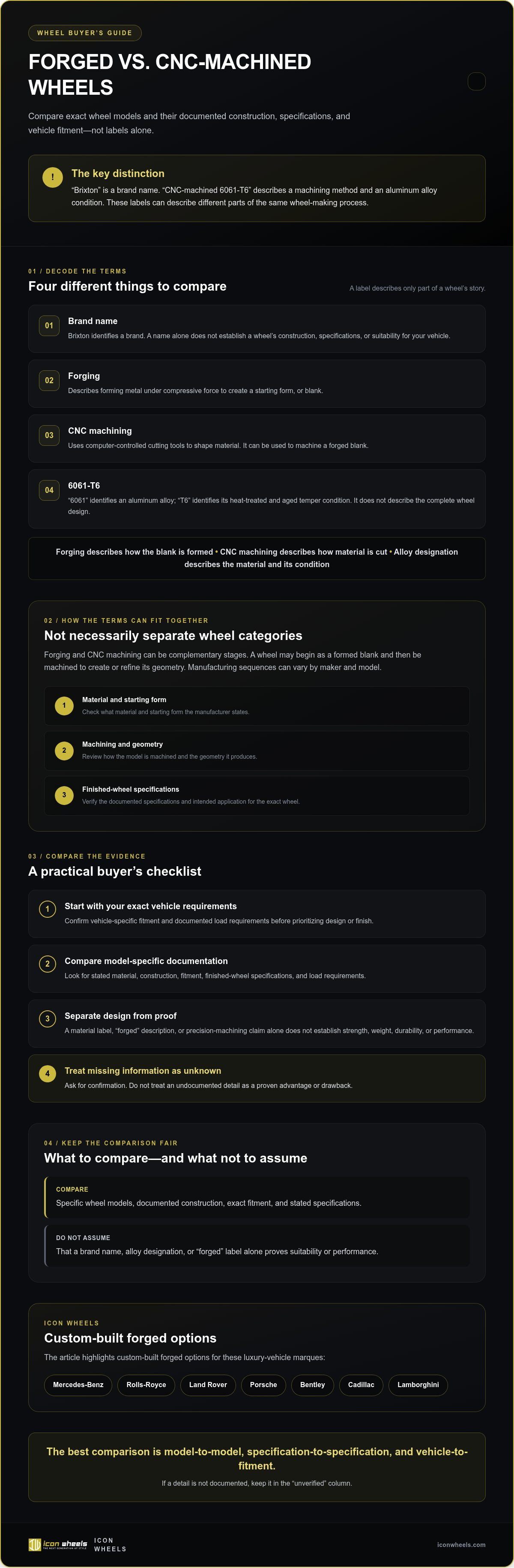
No. Brixton is a brand name; “CNC-machined 6061-T6” describes a manufacturing method and an aluminum alloy condition. Those labels can apply to the same wheel. That means brixton forged wheels vs custom CNC machined 6061-T6 wheels is not automatically a comparison between different engineering categories. Compare specific wheel models and the information available about their construction, fitment, and specifications.
Keep the terms distinct. A forged wheel starts with metal formed under compressive force. CNC machining uses computer-controlled cutting tools to shape material, which may include a forged blank. 6061-T6 identifies an aluminum alloy and its temper, or heat-treated condition. None of these terms alone establishes a wheel’s final design, load rating, or suitability for a particular vehicle.
Manufacturing details can vary by model and maker. Check product-specific documentation for the stated material and starting form, the machining process, and the finished-wheel specifications. A brand name, alloy designation, or “forged” label is not a substitute for those details.
What does 6061-T6 mean in a wheel description?
“6061” is the designation for an aluminum alloy. “T6” identifies a temper condition produced through heat treatment and aging. These terms describe the alloy and its condition, not the complete wheel design. The 6061-T6 aluminum alloy reference explains the alloy and temper designations. For a particular wheel, confirm the manufacturer’s stated material and check its technical documents. The designation by itself doesn’t establish the finished wheel’s strength or performance.
Can a forged wheel also be CNC-machined?
Yes. Forging and machining can be complementary stages. Forging describes how the starting form is shaped, while CNC machining describes how material is cut to create or refine the final geometry. A manufacturer’s process may differ by model, so check its description rather than assuming every forged wheel follows the same sequence.
“Forging describes how the wheel blank is formed; CNC machining describes how material is precisely cut from it.”
For a fair comparison, examine model-specific specifications and documentation from each manufacturer. Look for clearly stated material, construction, fitment, and load requirements. If a detail isn’t documented, treat it as unverified, not as a proven advantage or drawback.
How Forging, CNC Machining, and Alloy Specifications Shape a Wheel
A wheel reflects several decisions, not one process label. A typical sequence may begin with a selected alloy and a formed blank, continue through machining to create the wheel’s geometry, and finish with inspection and application-specific specifications. Manufacturers may use different sequences, so ask for documentation on the exact model instead of assuming every forged wheel is made the same way.
Forging forms metal under pressure, while CNC machining removes material according to programmed designs. In wheel production, machining can shape the spokes, hub, mounting surfaces, and other features, as well as establish final dimensions. The forging process for aluminum alloys offers background on how forging works. Neither a forging label nor precision machining alone proves a wheel’s strength, weight, or durability. Those outcomes depend on the complete design, material, process, and verification.
Separate the material, geometry, and specifications
An alloy designation identifies a material, but it doesn’t describe the wheel’s shape or confirm that it suits a particular vehicle. Geometry covers features such as spoke profile, width, and offset. Finished-wheel specifications describe what was built and the application it is intended for. Keep these categories distinct when comparing brixton forged wheels vs custom CNC machined 6061-T6 wheels. Similar material language doesn’t establish identical designs or capabilities.
“A material label identifies an alloy condition; it cannot establish a finished wheel’s load rating, weight, or vehicle fitment.”
Which wheel specifications deserve scrutiny?
Check the documentation for the exact wheel and intended vehicle. Prioritize load requirements and compatibility before appearance. If information is missing, mark it as unverified and ask for confirmation instead of filling the gap with an assumption.
- Construction and material: Confirm the stated alloy and whether the wheel is one-piece or modular.
- Load and weight: Verify the documented load rating and wheel weight for the specific size and configuration.
- Dimensions: Check diameter, width, and offset against the vehicle’s requirements.
- Mounting and clearance: Confirm bolt pattern, center bore, and brake clearance.
- Application: Ensure the manufacturer identifies the wheel as compatible with the exact vehicle, not just its make.
A large diameter or distinctive spoke design may match your vision, but neither confirms compatibility. For a vehicle-specific starting point, review custom-built forged wheel options and verify the specifications for your application.
Brixton Forged vs. Custom CNC-Machined Wheels: A Buyer’s Comparison
A useful comparison starts with evidence, not shorthand. “Brixton” identifies a brand; “custom CNC-machined” describes a broad category of wheels that may vary by manufacturer, design, material, and production details. The phrase brixton forged wheels vs custom CNC machined 6061-T6 wheels doesn’t tell you whether two specific models share the same construction or fit your vehicle. Compare documentation for the exact wheel configuration you’re considering.
Compare verified specifications, not marketing shorthand
Use this checklist as a starting point. Confirm each detail against current, model-specific manufacturer documentation. Record where the information came from and when you checked it so you can compare the options clearly.
| Comparison point | Brixton wheel | ICON WHEELS or another custom CNC wheel |
|---|---|---|
| Construction and alloy | Verify for the specific model; don’t infer from the brand name. | Verify for the specific model. ICON WHEELS offers custom-built forged wheels; confirm alloy and CNC details for the wheel you’re considering. |
| Dimensions and load rating | Check the exact configuration and vehicle application. | Request the relevant specifications for the chosen wheel and vehicle. |
| Design and finish options | Confirm current options with the seller for the model. | Ask which design details and finishes can be specified; don’t assume every option is available. |
| Documentation and support | Confirm what technical documents and fitment guidance are provided. | Ask what model-specific documentation and fitment guidance are available. |
For evidence behind performance or durability claims, ask what testing applies to that exact wheel and configuration. The SAE J2530 aftermarket wheel standards provide a reference for aftermarket wheel testing. Mentioning a standard isn’t proof that a particular model was tested, so ask for applicable records. For a broader look at custom alternatives, see this guide to Rolls-Royce OEM wheels versus custom forged wheels.
Compare design freedom and vehicle-specific fitment
Customization matters only if the finished wheel suits the vehicle. Confirm diameter, width, offset, bolt pattern, center bore, brake clearance, and load requirements for the exact model and configuration. Appearance matters, but it can’t replace fitment verification. Mercedes-Benz owners can consult this Mercedes-Benz forged wheel guide for additional model-specific context.
Pricing isn’t compared here because quotes depend on the specific wheel and configuration. Contact the relevant seller for current, product-specific details, and compare like-for-like specifications instead of relying on a broad starting figure.
How to Choose Wheels for Your Vehicle, Driving, and Design Priorities
The right choice in brixton forged wheels vs custom CNC machined 6061-T6 wheels depends on the exact wheel and vehicle, not the label alone. Follow a clear sequence: record your vehicle details, define how you’ll use it, verify the specifications, then compare customization and seller support. Fitment and documented load requirements come first. Appearance follows.
- Record the vehicle configuration. Note the year, make, model, trim, brake configuration, and current wheel specifications. Don’t rely on a broad make-and-model match. Different configurations can affect fitment and clearance.
- Define intended use and priorities. Consider whether the vehicle is primarily for daily road use or another purpose, and describe the conditions it will encounter. Rank priorities such as fit, appearance, weight, or design flexibility. Don’t assume a construction label guarantees suitability for your use.
- Verify specifications before comparing looks. Ask the seller to confirm wheel dimensions, offset, bolt pattern, center bore, brake clearance, and documented load requirements for your exact configuration. Keep the specifications and confirmation in writing. If a detail is missing, resolve it before ordering.
- Compare customization and support. Identify which dimensions and design details are essential, then confirm what is available for the selected wheel. Ask what finish options and finish-care guidance the seller provides. Review the custom forged wheel finishes guide for considerations when selecting a finish.
Make fitment the decision gate
A wheel can look right and still fail to meet the vehicle’s requirements. Treat written, vehicle-specific fitment confirmation as a decision gate, not a detail to resolve after choosing a design. If the brake configuration, intended use, or another vehicle detail is uncertain, clarify it with the seller before placing an order.
Once fitment and specifications are established, choose a design that matches your preferences and the requirements you’ve documented. To review a custom-built forged option, explore ICON WHEELS custom forged wheels.
Explore ICON WHEELS Custom Forged Options for Luxury Vehicles
After separating brand claims from manufacturing descriptions, consider what matters most for your vehicle. ICON WHEELS designs and sells custom-built forged wheels for Mercedes-Benz, Rolls-Royce, Land Rover, Porsche, Bentley, Cadillac, and Lamborghini. Its focus is tailored forged-wheel options for luxury vehicles. Confirm alloy, machining, testing, and certification details for the specific wheel you’re considering rather than assuming them from the word “forged.”
That distinction matters in the brixton forged wheels vs custom CNC machined 6061-T6 wheels comparison. ICON WHEELS is a custom-forged alternative, but that doesn’t mean every wheel shares the same alloy or manufacturing sequence. Judge each option by its specifications, documented fitment, and the details the seller can confirm for the exact configuration.
When a custom forged wheel is the right direction
A custom-built option may suit buyers who want a wheel selected around their vehicle and design preferences rather than choosing by appearance alone. Begin with the vehicle’s year, make, model, trim, and brake configuration. Then establish the dimensions and design you want. Before settling on a configuration, confirm that its dimensions, documented load rating, and brake clearance suit the exact vehicle. Ask which technical details are available in writing.
Keep your priorities in order: vehicle compatibility first, then the visual details that make the result your own. A finish or spoke design can shape the vehicle’s character, but it doesn’t verify load suitability or clearance. The label “6061-T6” alone doesn’t establish that a particular wheel is right for your application either. Confirm the actual specifications for the model and configuration.
Take the next step with ICON WHEELS
Prepare your vehicle details and a concise description of your preferred design before reviewing options. If you have the existing wheel specifications, include them as a reference, but ask for confirmation rather than assuming they settle fitment. Request the proposed dimensions, load rating, and clearance, and note any construction or material claims that still need documentation.
Ready to explore a custom-built forged option for your luxury vehicle? Explore ICON WHEELS custom forged wheels, then confirm the exact fitment and specifications before choosing a configuration.
Choose the Wheel That Fits Your Vehicle and Priorities
The central lesson in brixton forged wheels vs custom CNC machined 6061-T6 wheels is that the labels describe different things: one identifies a brand, while the others refer to material and manufacturing. Make the decision by comparing specific wheel configurations, documented specifications, and confirmed fitment. Choose on evidence, not on a label alone.
Start with what your vehicle requires, then weigh design preferences against details the seller can verify. ICON WHEELS offers custom-built forged wheels for luxury vehicles, including options for Rolls-Royce, Range Rover, and Mercedes-Benz applications. Review the available options with your vehicle details in hand, and confirm the exact fitment before selecting a configuration.
Explore ICON WHEELS custom forged wheels and take the next step toward a wheel choice shaped around your vehicle and design preferences. Confirm the details before choosing.
Frequently Asked Questions
Are Brixton Forged wheels made from 6061-T6 aluminum?
Some Brixton forged wheels are described as forged 6061-T6 aluminum, but don’t assume that specification applies to every wheel the brand offers. Brixton also lists other construction options, including magnesium and carbon-fiber configurations. Check current manufacturer documentation for the exact model and configuration you’re considering. Confirm the stated material and construction directly instead of relying on a general brand description or a retailer’s shorthand.
Are CNC-machined wheels the same as forged wheels?
No. Forging describes how metal is formed under pressure; CNC machining describes how computer-controlled tools remove material to create wheel features and dimensions. A wheel can be forged and then CNC-machined, so the terms can describe complementary stages rather than competing categories. Ask the manufacturer how the specific model is made. Neither label alone establishes the finished wheel’s load rating, weight, or suitability for your vehicle.
Is 6061-T6 a good material for custom wheels?
6061-T6 is an aluminum alloy and temper used in custom wheel descriptions, but the designation alone can’t tell you whether a particular wheel suits your needs. The finished design, dimensions, documented load rating, and vehicle fitment all matter. Check that the manufacturer identifies the alloy for the exact wheel configuration, then assess its specifications for your intended use. Don’t treat a material label as proof of performance or compatibility.
What should I compare when choosing Brixton Forged or custom wheels?
In the brixton forged wheels vs custom CNC machined 6061-T6 wheels comparison, assess the exact model’s documented material, construction, dimensions, load rating, finish options, and fitment information. Confirm bolt pattern, center bore, and brake clearance for your vehicle. Compare what each seller can substantiate in writing, and note unknowns rather than filling gaps with assumptions. Request current, product-specific information before deciding.
Do custom CNC-machined wheels fit any luxury vehicle?
No. “Custom” doesn’t mean universal fitment. Wheel compatibility depends on the vehicle’s configuration and the wheel’s dimensions, bolt pattern, center bore, offset, brake clearance, and load rating. Confirm fitment for the exact year, make, model, trim, and brake setup before ordering. A wheel intended for one luxury vehicle may not suit another, even if both come from the same manufacturer or share a broad vehicle category.
Can I customize the design and finish of custom forged wheels?
Customization may include design or finish choices, but available options depend on the seller and specific wheel configuration. Ask which details can be selected, and request confirmation of the final finish, dimensions, and fitment in writing. ICON WHEELS sells custom-built forged wheels for luxury vehicles, but confirm available design and finish choices for the particular option you’re considering. Make sure the desired appearance works with the vehicle’s verified requirements.
