
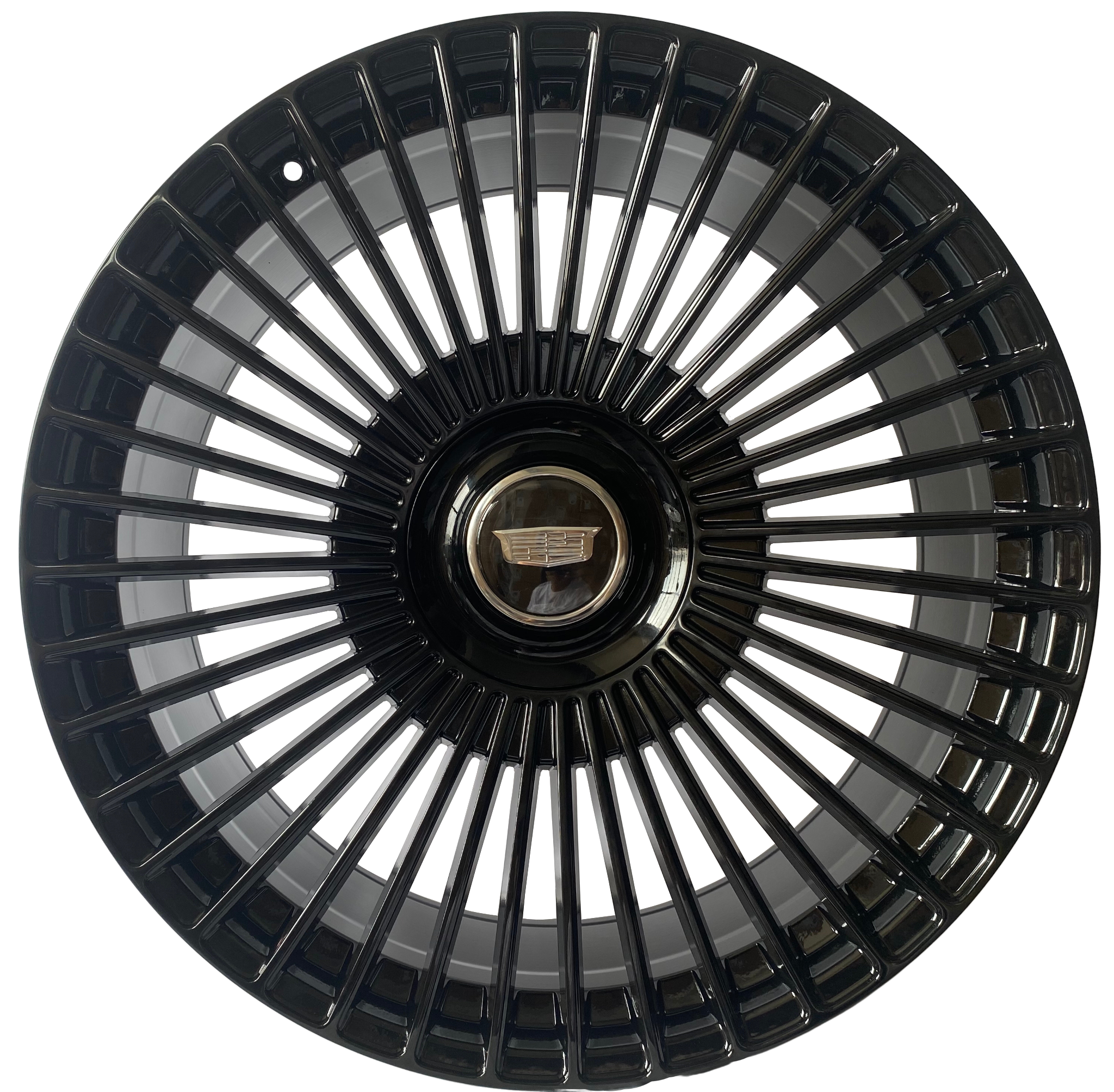
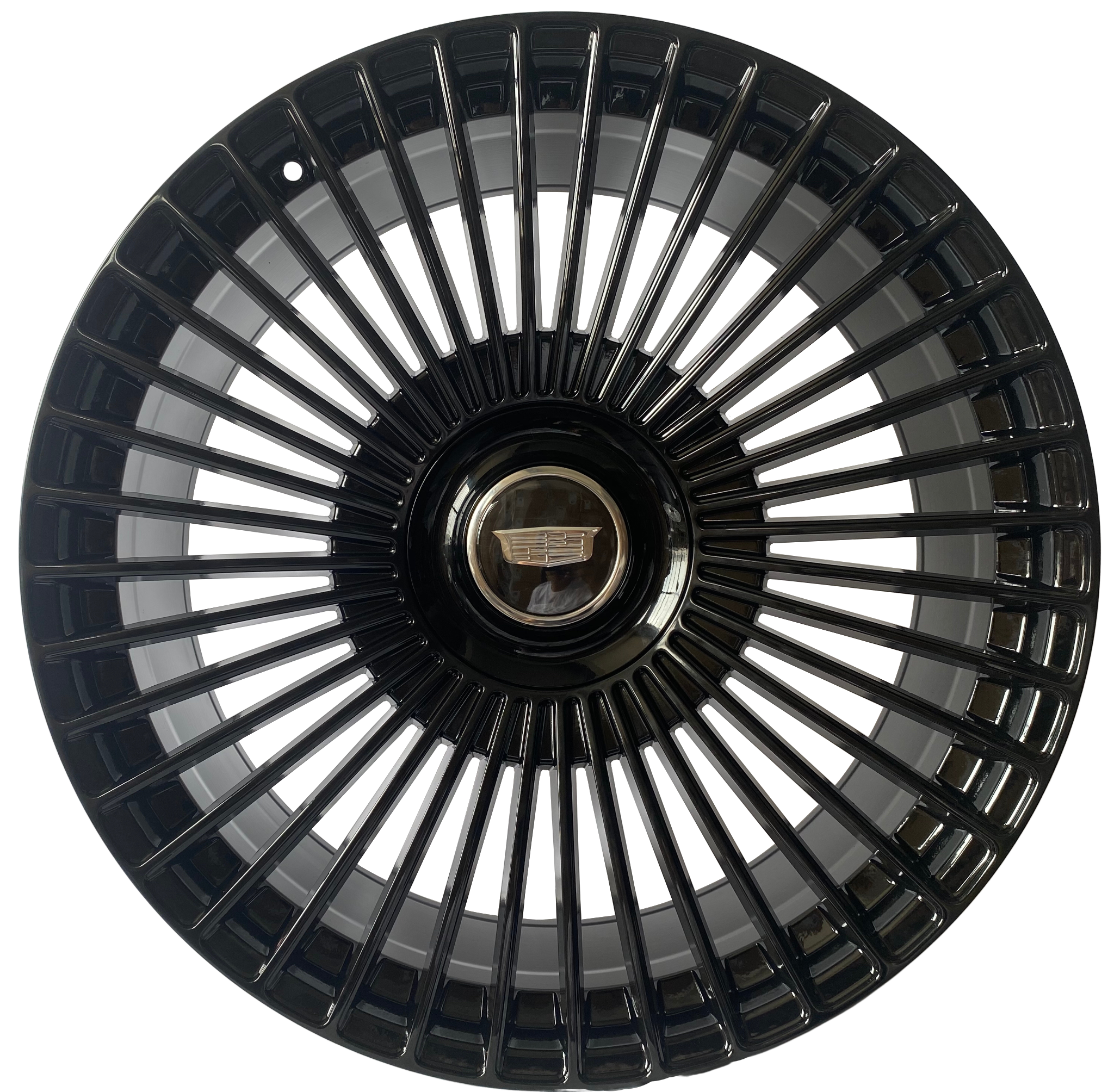


The most impressive forged-wheel label doesn’t guarantee the best match for your vehicle. In the klassen id forged wheels vs bespoke CNC custom forged rims comparison, the real distinction is what each term describes: forging shapes the wheel’s material, while CNC machining precisely cuts or finishes its form. They’re related processes, not interchangeable claims.
It’s easy to see why the choice can feel unclear. Premium imagery may make two options look equally compelling, while details that affect compatibility and customization are harder to compare. The right decision depends on more than appearance. Look for evidence of construction, vehicle-specific fitment, design options, and documented specifications.
This guide explains what to verify, how to compare fitment and design flexibility, and which measurements and ratings to confirm before requesting a custom build. Use the same criteria to define your vehicle and design requirements before considering custom-built forged wheels.
Key Takeaways
- Separate the manufacturing process from the marketing label: forging and CNC machining describe different parts of wheel production.
- In the klassen id forged wheels vs bespoke CNC custom forged rims comparison, rely on documented specifications rather than styling images or broad claims.
- Check whether fitment information matches your vehicle’s exact year, make, model, trim, and brake configuration.
- Use a side-by-side comparison to identify which construction details, design choices, and customization options are confirmed and which need verification.
- Consider ICON WHEELS’ custom-built forged wheels for luxury vehicles, and clarify fitment and design requirements before choosing.
Klassen ID Forged Wheels vs. Bespoke CNC Rims: What Is Actually Being Compared?
A buyer comparing Klassen ID with a bespoke wheel is weighing two different things: a specific named design and a wheel specified around a vehicle and design brief. The phrase klassen id forged wheels vs bespoke CNC custom forged rims can make the options sound like competing manufacturing methods, but they aren’t necessarily. First identify the exact Klassen ID model and request its current specifications. A brand or design name alone doesn’t confirm how a particular wheel is made, which fitments are offered, or what can be customized.
What does “forged” mean in a custom wheel?
Forging is a material-forming process in which compressive force shapes metal. This differs from machining, which removes material to create or refine shapes. For a concise overview, see the forging process. The term describes how material is formed, not a wheel’s styling, finish, dimensions, or compatibility with a specific vehicle.
For any specific wheel, ask the seller or manufacturer for authoritative documentation identifying its construction and material. Don’t infer a particular forging method for a Klassen ID model from a photograph, a general brand description, or the word “forged” in a listing. Confirm the exact model and the specifications that apply to it.
What does CNC machining add to bespoke rims?
CNC means computer numerical control. It describes machining guided by programmed instructions, allowing equipment to cut or finish components to specified shapes. CNC machining and forging aren’t alternatives: a forged wheel may also be CNC-machined during production. So “CNC” alone doesn’t establish whether a wheel is forged, what material it uses, or how it performs.
Bespoke means made or specified for an individual brief. For a wheel order, that could include dimensions, fitment details, or design elements, but the seller must confirm the actual scope. The word isn’t evidence of superior strength, lower weight, durability, or vehicle suitability.
Keep the terms distinct: forging describes how material is formed, CNC describes a machining method, and bespoke describes the degree of tailoring. For each option, request model-specific documentation and separate confirmed details from those that still need manufacturer verification. This gives you a sound basis for comparing a named wheel with a custom specification, without letting terminology decide for you.
How Forging, CNC Machining, and Wheel Specifications Affect the Comparison
Once the terminology is clear, compare evidence tied to the exact wheel and vehicle. A construction label describes a manufacturing step, but it can’t establish a wheel’s strength, weight, durability, or suitability on its own. Those depend on product-specific details and documentation. If information about a Klassen ID model or a bespoke option isn’t published, treat it as unverified and ask the manufacturer or seller to confirm it.
Which engineering details should buyers verify?
Request technical documents for the exact model or proposed build. Check that the material designation and manufacturing description are explicit, then compare the wheel’s load rating with the vehicle’s requirements. Don’t assume an option has a higher rating or is suitable because it is described as forged or custom-made.
Fitment details should also match the specific application. Confirm:
- Diameter and width
- Offset
- Bolt pattern and center bore
- Load rating and compatibility with the vehicle
Compare those figures with the requirements for the exact vehicle, including year, make, model, trim, and brake configuration. A dimension that appears close doesn’t prove fitment. Ask for confirmation if any measurement or application detail is missing.
What can appearance and manufacturing labels not tell you?
Photos can help you judge styling and visible finish. They can’t show internal construction, verify material, or establish load capacity. CNC machining describes computer-controlled cutting or finishing. CNC machining alone does not prove that a wheel is forged. A wheel may be forged and then CNC-machined, but claims about its process and material should be supported by documentation for that specific product.
Separate marketing language from verifiable evidence. Ask for a product-specific specification sheet and written confirmation of any performance, testing, or certification claims you plan to rely on. Don’t infer a Klassen ID wheel’s process, weight, strength, certification, or testing from its brand name or image. Apply the same standard to a bespoke proposal.
This evidence-first approach makes klassen id forged wheels vs bespoke CNC custom forged rims a practical comparison rather than a contest between labels. For a tailored option, ICON WHEELS offers custom-built forged wheels. Clarify the vehicle, fitment, and design requirements before assessing a proposed specification.
Klassen ID or Bespoke Forged Rims: Compare Fitment, Design, and Ownership Priorities
Start with your priorities rather than assumptions about either option. You may want a recognizable design, an appearance tailored to your vehicle, documented fitment, or a combination of these. The klassen id forged wheels vs bespoke CNC custom forged rims decision becomes useful once you can compare the exact wheel and vehicle-specific information.
| Comparison point | Klassen ID option | Bespoke forged rims |
|---|---|---|
| Specifications | Confirm the exact model and request current product documentation. Details not verified here. | Request the proposed build’s material, construction, dimensions, and ratings. Application-specific details require confirmation. |
| Fitment documentation | Confirm documentation covers your exact vehicle and configuration. Unverified until supplied. | Ask for fitment confirmation against your vehicle details. Feasibility depends on the application. |
| Design choices | Review the specific design, finish, and available configuration. Don’t assume options without confirmation. | Describe the visual direction you want, then confirm which choices can be produced. |
| Customization scope | Ask which specifications can be changed for the exact model. | Define the brief and confirm which dimensions and design details are feasible. |
When might a named wheel option suit the brief?
A named option may suit your brief if its documented design matches your taste and its confirmed specifications suit your vehicle and intended use. Ask for the exact model information, fitment details, and available configuration. If anything is missing, treat it as an open question, not an advantage or drawback.
When might bespoke custom forged rims make more sense?
A custom brief can help you specify preferred dimensions, fitment needs, and visual direction. The available choices and engineering feasibility still need confirmation for the specific vehicle. ICON WHEELS offers custom-built forged wheels, including model-specific fitments for luxury vehicles. That makes it an option to explore, not a reason to assume it is superior to another brand.
For Rolls-Royce owners weighing factory and aftermarket approaches, this Rolls-Royce OEM wheels versus custom forged guide offers a related perspective. Whichever route you consider, compare confirmed specifications and fitment with your exact vehicle before settling on a design.
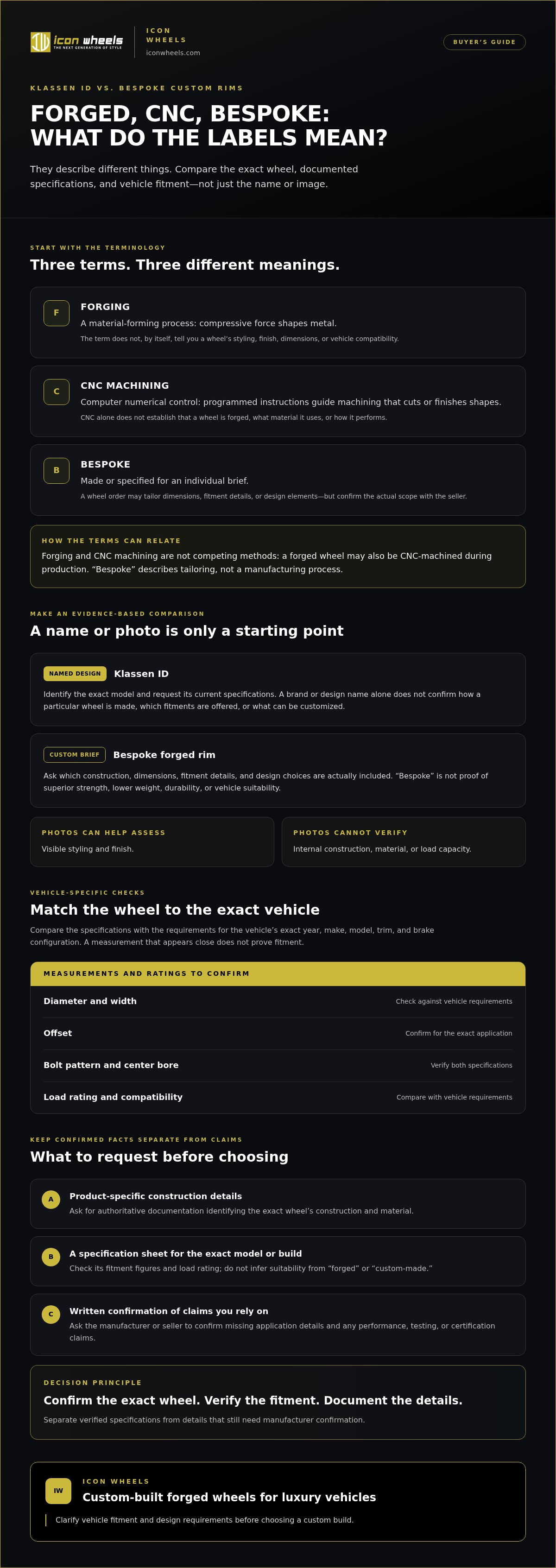
A Buyer’s Checklist for Comparing Klassen ID and Custom Forged Wheels
Use the same verification sequence for both options. It helps keep an appealing design from outranking the details that determine whether a wheel suits your vehicle.
- Identify the vehicle. Record the exact year, make, model, and trim. Include brake configuration and any relevant brake or suspension modifications.
- Define the use. Explain how you intend to drive the vehicle and note any requirements that should guide your wheel choice.
- Verify fitment. Confirm diameter, width, offset, bolt pattern, and center bore against reliable information for your exact configuration. Ask how clearance and any required hardware will be checked.
- Compare documentation. Request written, product-specific details about construction, material, load capacity, and intended vehicle application. Treat missing or unconfirmed information as an open question.
- Confirm the design. After addressing fitment and specifications, verify which design and finish choices are available for that exact configuration.
What fitment information should you gather first?
Start with the vehicle’s full identity, not just its model family. Brake and suspension changes can affect fitment, so disclose them when requesting guidance. Ask the seller to confirm the wheel dimensions and explain how clearance will be assessed for your specific setup. A listing for a similar vehicle doesn’t confirm fitment for yours.
Compatibility check: Before ordering, match the exact vehicle year, make, model, trim, and brake configuration with written confirmation of the wheel’s dimensions, load capacity, application, and clearance.
What questions should you ask before choosing?
Ask for written specifications and direct answers about construction, load capacity, and vehicle application. Confirm which design and finish choices are available for the proposed configuration. Clarify the order process, expected lead time, available support, and applicable warranty terms with the seller. These details vary, so don’t assume them from a product label or previous purchase.
Finish can shape a custom wheel’s character, but settle the fitment brief first. Explore the custom forged wheel finishes guide for ideas to discuss. This makes the klassen id forged wheels vs bespoke CNC custom forged rims choice more precise: compare what’s documented for your vehicle, then decide which design fits your priorities.
For an overview of custom options, see ICON WHEELS custom-built forged wheels for luxury vehicles.
Choosing Bespoke Custom Forged Rims with ICON WHEELS
The right choice comes down to evidence and priorities. A recognized brand name or striking image can suggest a direction, but neither confirms that a wheel suits your vehicle. In the klassen id forged wheels vs bespoke CNC custom forged rims comparison, put written specifications, verified fitment, and your design brief ahead of assumptions.
ICON WHEELS offers custom-built forged wheels for luxury vehicles, with model-specific fitments in its catalog. If you’re considering a tailored option, a product-specific discussion can help clarify what may suit your vehicle and which details still need confirmation. Confirm fitment and specifications for the exact application before deciding.
How to begin a custom wheel enquiry
Prepare a specific brief. Include your vehicle’s year, make, model, and trim, along with brake details and relevant modifications. Describe your preferred dimensions, appearance, finish, and intended driving use. Clear details make it easier to identify what still needs to be checked.
Ask ICON WHEELS to confirm application-specific feasibility and provide the relevant specifications before making a decision. Treat any unconfirmed detail as unresolved. A custom request starts a conversation; it isn’t, by itself, proof that a proposed configuration will fit.
How to make the final decision with confidence
Compare written specifications and fitment confirmation, not assumptions based on brand recognition. Review finish examples for inspiration, then confirm which finishes are available for the intended wheel configuration. For a Mercedes-Benz, consult the Mercedes-Benz forged-wheel engineering guide as a further reference.
Bring your vehicle details and design priorities into the discussion. Confirm what’s documented, what remains to be verified, and whether the proposed specifications address your requirements. That’s the basis of a considered choice, whether you’re assessing a named wheel or a custom brief.
View ICON WHEELS custom-built forged wheels as you compare options for your vehicle.
Choose Your Wheels with Confidence
The klassen id forged wheels vs bespoke CNC custom forged rims decision isn’t settled by a label or a striking image. Forging and CNC machining describe different processes, so compare documented construction and specifications for the exact wheel. Then confirm vehicle-specific fitment, including the details that matter to your configuration, before deciding whether a named design or a tailored brief best suits your priorities.
ICON WHEELS offers custom-built forged wheels for luxury vehicles, with model-specific wheel offerings in its catalog. Bring your vehicle details and design priorities to your research, and confirm application-specific fitment and specifications before choosing. A considered decision lets you pursue a distinctive appearance without losing sight of compatibility.
Explore ICON WHEELS custom forged wheels and start with your vehicle and design requirements.
Frequently Asked Questions
Are Klassen ID wheels forged?
Some Klassen ID wheels are described as forged, but not every line uses the same construction. Available information identifies forged monoblock and multi-piece wheels, as well as a Form+ line described as flow-formed. Check the exact model and request its current technical documentation before deciding what applies. A brand name or general product-page claim isn’t enough to confirm the construction of a specific wheel.
Is CNC machining the same as forging for custom rims?
No. Forging forms metal using compressive force, while CNC machining uses computer-controlled tools to cut or finish a component. They can be stages in the same wheel’s production: a forged wheel may also be CNC-machined. A CNC description alone doesn’t confirm that a rim is forged. Ask for the specific wheel’s material and manufacturing documentation rather than treating the terms as interchangeable.
Are bespoke CNC custom forged rims stronger than Klassen ID wheels?
Not automatically. The terms bespoke, CNC, and forged don’t establish that one wheel is stronger than another. In the klassen id forged wheels vs bespoke CNC custom forged rims comparison, evaluate the exact products using documented material, construction, load rating, and relevant testing information. Request evidence for each performance claim. If either seller can’t provide product-specific details, treat the claim as unverified rather than assuming an advantage.
Can bespoke forged rims be made to fit my luxury car?
They may be specified for a particular vehicle, but fitment and feasibility must be confirmed for your exact application. Provide the year, make, model, trim, brake configuration, and relevant modifications. ICON WHEELS sells custom-built forged wheels and lists model-specific luxury-vehicle offerings, including wheels for Mercedes, Rolls-Royce, Land Rover, Porsche, Bentley, Cadillac, and Lamborghini. Confirm the proposed specifications and fitment before making a decision.
What should I compare before buying custom forged wheels?
Compare documented construction and material, load capacity, vehicle application, and fitment dimensions. Confirm diameter, width, offset, bolt pattern, and center bore against reliable information for your exact vehicle. Then review available design and finish choices, along with order details, lead-time expectations, support, and applicable warranty terms. Ask for written answers where possible. Don’t let styling images or broad marketing language substitute for information about the specific wheel.
Do CNC-machined wheels have a custom design?
Not necessarily. CNC machining describes how equipment shapes or finishes a component; it doesn’t tell you whether the design was customized for a buyer. A CNC-machined wheel may follow a standard design or be made to a specific brief. Confirm which design elements, dimensions, and finishes can be selected for the exact configuration. Ask the seller to distinguish available customization from features shown only in product images.
How do I confirm that custom forged rims will clear my brakes?
Ask the wheel seller or manufacturer to confirm brake clearance for your exact vehicle and configuration before ordering. Share the year, make, model, trim, brake details, and relevant modifications. Request confirmation tied to the proposed wheel’s dimensions and fitment, and ask what information or measurements are needed to assess clearance. Don’t rely on a similar model, a photograph, or a general statement that the wheel fits your vehicle brand.
