
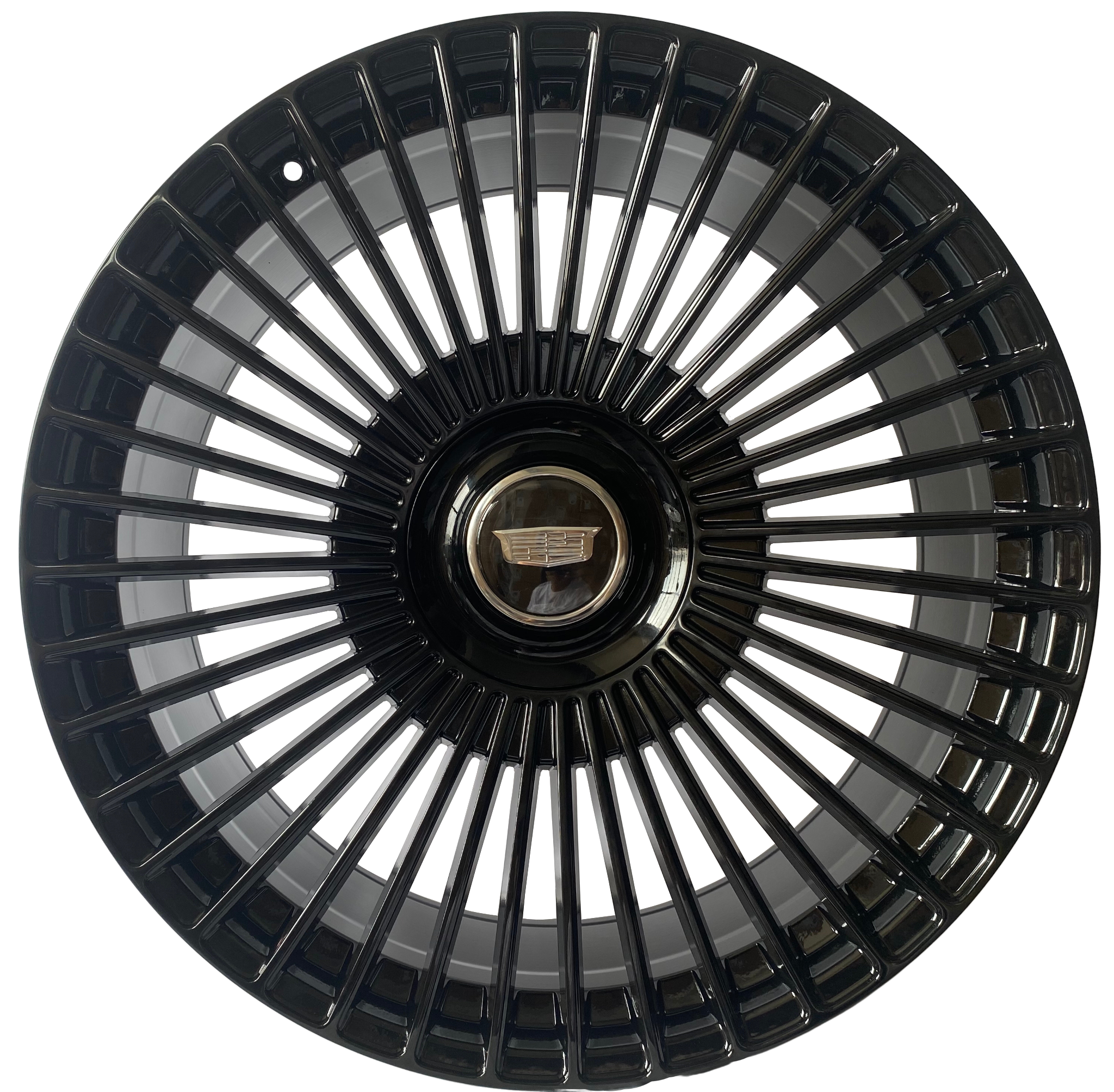
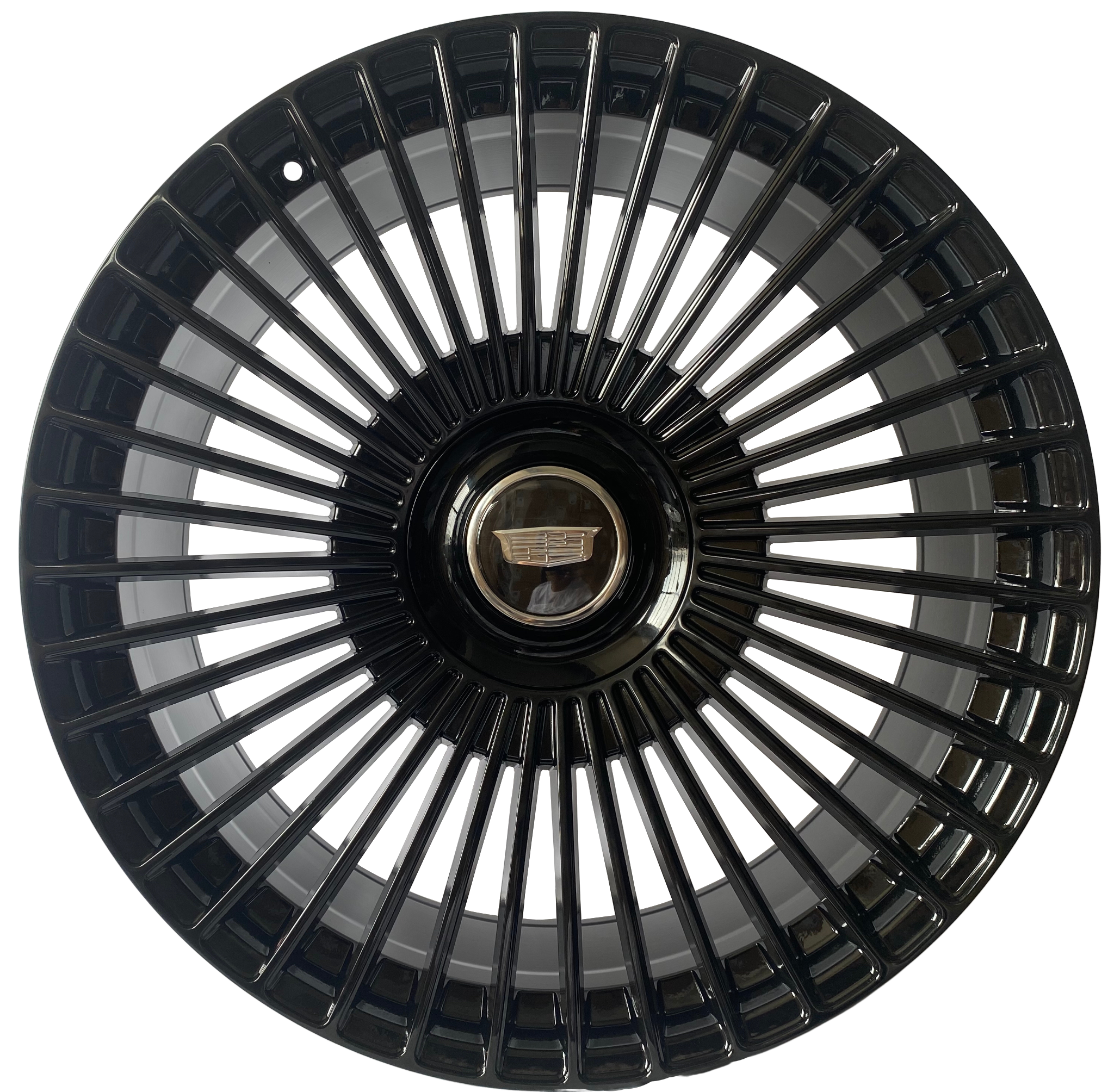


A striking wheel design can still be the wrong choice for a Mercedes. The right custom forged wheels for Mercedes should complement the car’s proportions and meet its fitment and clearance requirements. Appearance matters, but so do brake clearance, everyday practicality, and clarity about the wheel’s brand.
Choosing a set takes more than matching a finish to the paintwork. Model, year, trim, wheel dimensions, offset, and brake setup all affect fitment. Your design should work with those details, not compete with them. A Mercedes S-Class, for example, needs a model-specific approach rather than a one-size-fits-all upgrade.
This guide explains how to compare custom forged options using practical engineering and design criteria. Learn which fitment details to review, how wheel construction types differ, and how to distinguish genuine branded wheels from similar-looking designs. Then use those checks to narrow your choices to a style that suits your Mercedes and the way you drive it.
Key Takeaways
- Start with your Mercedes model, year, trim, and current wheel setup to narrow down suitable options.
- Compare diameter, width, offset, bolt pattern, and center bore as separate fitment factors, not interchangeable details.
- When weighing BRABUS against custom forged wheels for Mercedes, distinguish brand identity and design direction from vehicle-specific fitment requirements.
- Prioritize compatibility and intended use before choosing a finish or spoke design.
- Review your vehicle, priorities, fitment, design, and final specifications in sequence to build a confident custom wheel direction.
Why choose custom forged wheels for a Mercedes?
Custom forged wheels are selected or configured around a specific vehicle’s fitment, intended use, and design direction. For a Mercedes, that means considering the wheel as part of the car’s overall character rather than choosing by appearance alone. The right combination should suit the model and its requirements while reflecting your preferences.
A standard configuration may not deliver the distinctive stance or visual detail you want. Custom forged wheels for Mercedes let you shape that direction through proportions, spoke design, and finish, while keeping vehicle-specific fitment at the center of the decision. Fitment involves several related measurements. This overview of wheel fitment details explains common terms such as diameter, width, offset, bolt pattern, and center bore.
Keep wheel selection distinct from tire installation. Focus first on choosing a wheel that suits your vehicle and design priorities.
What makes forged wheels a distinct custom-wheel option?
Forging shapes metal under pressure, while casting forms a wheel by pouring molten material into a mold. The construction method can influence design possibilities and wheel properties, but it doesn’t guarantee that every forged wheel will be lighter or stronger in every size and application. Dimensions, design, and vehicle requirements matter. Compare the actual wheel specifications instead of treating “forged” as a promise of a particular performance result.
Which Mercedes owners consider a custom wheel upgrade?
Custom wheels may suit drivers who want a more individual appearance without losing sight of model-appropriate fitment. A sedan owner might prefer a refined, understated look, while an SUV owner may want a bolder visual presence. These are design directions, not universal fitment recipes: the right wheel depends on the specific vehicle and its configuration. Mercedes S-Class owners can explore the Mercedes-Benz forged wheel guide for model-focused context.
The strongest choice balances personal style with practical requirements. Start with what the vehicle can accommodate, then select a design that makes the Mercedes feel unmistakably yours.
Which Mercedes fitment details determine the right forged wheels?
Begin with the exact vehicle: model, model year, trim, and current wheel configuration. A C-Class and an S-Class may share brand styling cues, but their wheel requirements aren’t necessarily interchangeable. Trim and brake packages can affect clearance, so identify the car before narrowing down a design.
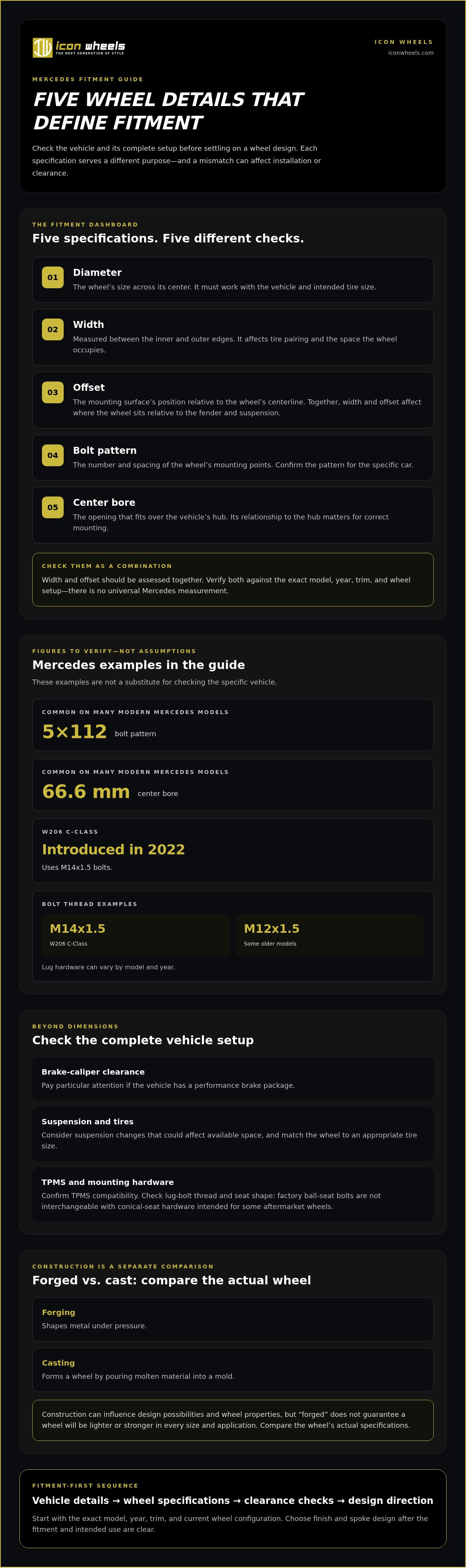
Wheel fitment depends on the vehicle and the combined specifications of the wheel, mounting hardware, brakes, suspension, and tires. Diameter, width, offset, bolt pattern, and center bore each serve a different purpose. A mismatch in any one of them can prevent proper installation or create clearance issues.
- Diameter is the wheel’s size across its center. It must work with the vehicle and intended tire size.
- Width measures the wheel between its inner and outer edges. It affects tire pairing and the space the wheel occupies.
- Offset describes the position of the wheel’s mounting surface relative to its centerline.
- Bolt pattern specifies the number and spacing of the mounting points.
- Center bore is the opening that fits over the vehicle’s hub. Its relationship to the hub matters for correct mounting.
Many modern Mercedes models use a 5x112 bolt pattern and a 66.6 mm center bore, but these figures aren’t a substitute for checking the specific car. Lug hardware can vary by model and year, too. For example, the W206 C-Class introduced in 2022 uses M14x1.5 bolts, while some older models use M12x1.5. Seat shape matters as well: factory ball-seat bolts aren’t interchangeable with conical-seat hardware intended for some aftermarket wheels.
How do wheel offset and width affect Mercedes fitment?
Offset determines how far the wheel sits inward or outward from its mounting point. Changing offset shifts the wheel relative to the fender and suspension. Width affects how much space the wheel occupies, so assess width and offset together. Choosing either in isolation can result in poor positioning or inadequate clearance. There’s no universal Mercedes measurement. Verify both against the exact model, year, trim, and wheel setup.
What should buyers check beyond the wheel dimensions?
Account for brake-caliper clearance, particularly if the vehicle has a performance brake package, and consider suspension changes that could affect available space. Match the wheel to an appropriate tire size and confirm TPMS compatibility with the vehicle’s system. Check the complete configuration, not just a specification listed for a model name. The manufacturing process of forged wheels is separate from these vehicle-specific measurements.
Use these checks to define the right direction for custom forged wheels for Mercedes. A tailored selection starts with the car’s actual specifications, then brings your preferred design into that fitment framework.
BRABUS wheels or custom forged Mercedes wheels: what should you compare?
First, clarify what you’re looking for. BRABUS is a distinct tuning brand with its own wheel identity. A custom wheel designed around a similar visual brief isn’t automatically a BRABUS product, and resemblance doesn’t establish branding, authorization, or affiliation. ICON WHEELS offers custom forged wheels for Mercedes, not BRABUS-branded wheels.
The choice comes down to your priorities: do you want a wheel with a specific brand identity, or a tailored design direction for your Mercedes? Compare documented product details rather than relying on appearance alone.
| Comparison point | Branded wheel | Custom forged wheel |
|---|---|---|
| Brand identity | Look for clear, verifiable branding and product documentation. | Assess the design and maker on their own merits. Don’t assume visual similarity means BRABUS branding. |
| Vehicle fitment | Check the exact Mercedes model, year, trim, and wheel specifications. | Evaluate fitment against the same vehicle-specific information. |
| Construction | Confirm the construction details through reliable product documentation. | Review the stated construction and specifications for the particular wheel. Don’t infer them from appearance. |
| Design direction | Consider whether the brand’s established aesthetic suits your car. | Choose a visual brief, finish, and spoke design that complement the vehicle’s proportions. |
| Ownership priorities | Brand recognition may be central to the choice. | Personalization and a design tailored to the car may matter more. |
What does a buyer mean by ‘BRABUS wheels’?
Sometimes the phrase means an authentic, branded wheel. Sometimes it describes a desired look: assertive, modern, or aligned with a particular tuning aesthetic. Keep those intentions separate. If authenticity is your priority, rely on verifiable branding and product documentation. If you want a similar design direction, describe the features you like without presenting a custom wheel as a genuine BRABUS product.
How can custom forged wheels meet a specific Mercedes design brief?
Begin with the car’s character. An OEM-adjacent direction might emphasize restraint and clean proportions; a more assertive brief could use a bolder spoke pattern or stronger finish contrast. Neither is automatically better. Consider how the wheel design looks alongside the body shape, trim, and overall stance. Explore finish ideas in the custom forged wheel finish guide, then keep fitment and documented construction details in view as you refine the brief.
Product evaluation is separate from safe wheel handling. OSHA’s guidance addresses workplace servicing procedures, not brand authenticity or vehicle fitment. See its information on wheel safety and evaluation for that specific context.
Choose based on evidence and priorities, not resemblance alone. For a Mercedes-specific direction, explore custom forged Mercedes wheels as a tailored alternative to a branded aesthetic.
How to evaluate custom forged wheels for your Mercedes before choosing
A clear process helps balance personal style with your vehicle’s requirements. Separate what you want the wheels to look like from what they need to meet: correct fitment, appropriate load capacity, brake and suspension clearance, and compatibility with your intended use. Treat the technical checks as essential, then refine the visual brief around them.
Which questions should guide the wheel comparison?
Use the same criteria for every option so dramatic styling doesn’t distract from practical differences. Ask yourself:
- What visual change do I want? Decide whether you prefer a subtle update, a stronger stance, or a more distinctive design.
- How do I primarily drive the car? Consider its regular use and the conditions it encounters, not just how it looks while parked.
- Does the construction suit my priorities? Compare documented construction details without assuming a category guarantees a particular result.
- Does the wheel fit this exact Mercedes? Assess the complete configuration, including clearance and load requirements, rather than relying on the model name alone.
Compare design, construction, intended use, and vehicle-specific fitment side by side. Finish and spoke pattern are preferences. Adequate clearance and suitable load capacity are technical requirements.
What information should buyers prepare for a fitment review?
Gather the vehicle details and current setup before evaluating options. This makes it easier to compare specifications against the car you actually own, including any changes that affect fitment.
- Exact Mercedes model, model year, and trim
- Current wheel diameter, width, offset, bolt pattern, and center bore, if available
- Brake-package details and any relevant brake modifications
- Suspension changes that could affect wheel position or clearance
- Current tire size and TPMS details
- How you use the vehicle and the design direction you prefer
Use this information to narrow your choices, not to guess a final specification. The right dimensions depend on the complete vehicle configuration, so compare proposed specifications against that setup before choosing. A careful review can preserve the design you want while keeping compatibility in focus.
Ready to explore a tailored direction? Explore custom forged wheels for Mercedes and bring your fitment details and design priorities into the decision.
Make your Mercedes wheel vision a precisely fitted custom build
A distinctive wheel direction should begin with the car itself. Establish the exact Mercedes model, year, trim, current setup, and relevant modifications first. Then define what you want the wheels to express. That order gives design choices a clear foundation and helps align appearance with fitment, proportions, and intended use.
ICON WHEELS offers custom forged wheels for Mercedes, including model-specific options such as Mercedes S-Class wheels. The goal is a tailored upgrade, not a one-size-fits-all accessory. Consider the vehicle’s requirements first, then refine construction and visual direction around them. A composed, understated design and a more assertive look can both work when the overall choice suits the car.
How does a tailored wheel project come together?
Start by gathering the vehicle details and identifying your priorities. Do you want a subtle change or a more individual presence? Is everyday practicality central to the decision, or is visual distinction your leading goal? These preferences help shape the design brief, but they don’t replace fitment checks. Wheel dimensions, brake and suspension clearance, tire pairing, and vehicle use all belong in the same evaluation.
With that foundation, compare construction details and design features as parts of one considered choice. Spoke pattern and finish influence the wheel’s character; proportions determine how naturally it complements the Mercedes. Neither visual appeal nor a specification should be judged in isolation. The strongest direction brings them together.
What makes the final choice feel right?
A well-considered choice feels personal without appearing disconnected from the vehicle. Revisit the model-specific details, confirm the complete wheel specification for your configuration, and weigh your design preferences against practical requirements. Keep essential checks separate from the elements you can personalize. This approach helps prevent an appealing image or familiar style reference from outweighing compatibility.
Review your Mercedes, intended use, and preferred look before moving forward. Then explore custom forged wheels from ICON WHEELS as the next step toward a distinctive, carefully considered upgrade.
Choose a Mercedes wheel upgrade with precision
The right wheel choice starts with your exact Mercedes configuration. Confirm model-specific fitment and clearance first, then compare construction and design against your priorities. Keep brand identity clear, too: a custom design inspired by a particular look isn’t the same as a genuine branded wheel.
With custom forged wheels for Mercedes, personalization should complement the vehicle, not come at the expense of compatibility or practicality. ICON WHEELS offers custom-engineered forged wheels for Mercedes vehicles, including model-specific options for the Mercedes S-Class. That tailored approach brings your car’s requirements and design vision into the same decision.
Ready to move from research to a considered wheel direction? Explore custom forged wheels for Mercedes and take the next step toward an upgrade that feels distinctly yours. Let precision guide the choice, and let the final design express your Mercedes with confidence.
Frequently Asked Questions
Are custom forged wheels compatible with every Mercedes model?
No. Compatibility depends on the specific Mercedes and wheel configuration. Model year, trim, brake package, and suspension changes can affect fitment and clearance. A wheel suitable for one Mercedes may not suit another, even within the same model line. Start with your exact vehicle details, then assess the wheel’s dimensions and mounting specifications. ICON WHEELS offers custom-engineered forged wheels for Mercedes, including model-specific options for the S-Class.
What specifications do I need to choose forged wheels for my Mercedes?
Gather your exact model, year, trim, and current wheel specifications before comparing options. Key details include wheel diameter and width, offset, bolt pattern, and center bore. Also account for brake-caliper clearance, suspension setup, tire size, and TPMS compatibility. These factors work together, so a familiar bolt pattern alone doesn’t establish fitment. Use your vehicle’s actual configuration to guide your comparison rather than relying on a general Mercedes specification.
What is the difference between BRABUS wheels and custom forged wheels?
BRABUS wheels are associated with a specific tuning brand; custom forged wheels describe a broader category selected or designed around a buyer’s vehicle and preferences. A custom wheel with a similar visual direction isn’t automatically a genuine BRABUS product or affiliated with the brand. Compare verified branding, documented construction, model-specific fitment, and design priorities. The right choice depends on whether brand identity or a tailored look matters more to your Mercedes build.
Do forged wheels affect ride quality or handling on a Mercedes?
They can, but the result depends on the wheel’s actual specifications and the complete setup. Wheel weight, diameter, width, tire choice, and fitment can all influence how the vehicle feels. Forged construction alone doesn’t guarantee a lighter wheel or a particular handling improvement. Consider how you use your Mercedes, and assess the wheel and tire combination as a whole. Avoid choosing dimensions for appearance without accounting for comfort and everyday practicality.
Can custom forged wheels clear Mercedes brake calipers?
Yes, a custom forged wheel can be selected for brake clearance, but compatibility depends on its design and the vehicle’s brake configuration. Diameter alone doesn’t prove a wheel will clear the caliper; the inner profile and spoke shape matter too. Identify your exact model, trim, and brake package, including any upgrades. Evaluate the complete wheel specification against the vehicle rather than assuming that a wheel advertised for Mercedes will clear every Mercedes brake setup.
How do I choose the right wheel offset for my Mercedes?
Choose offset based on the exact vehicle, wheel width, and desired wheel position. Offset is the distance between the wheel’s mounting surface and its centerline; it affects how far the wheel sits inward or outward. Because width changes the wheel’s overall position too, assess both measurements together. Check suspension and fender clearance for your Mercedes configuration. There’s no universal offset suitable for every model, trim, or wheel setup.
Can I keep my Mercedes TPMS when changing wheels?
Often, yes, if the replacement wheels and sensors are compatible with the vehicle’s tire-pressure monitoring system. Confirm which TPMS setup your Mercedes uses and whether the selected wheels accommodate the sensors correctly. Sensor fit and system compatibility are separate from basic wheel dimensions, so include both in your fitment review. If retaining the existing sensors, account for their condition and compatibility with the new configuration before finalizing the wheel and tire setup.
