
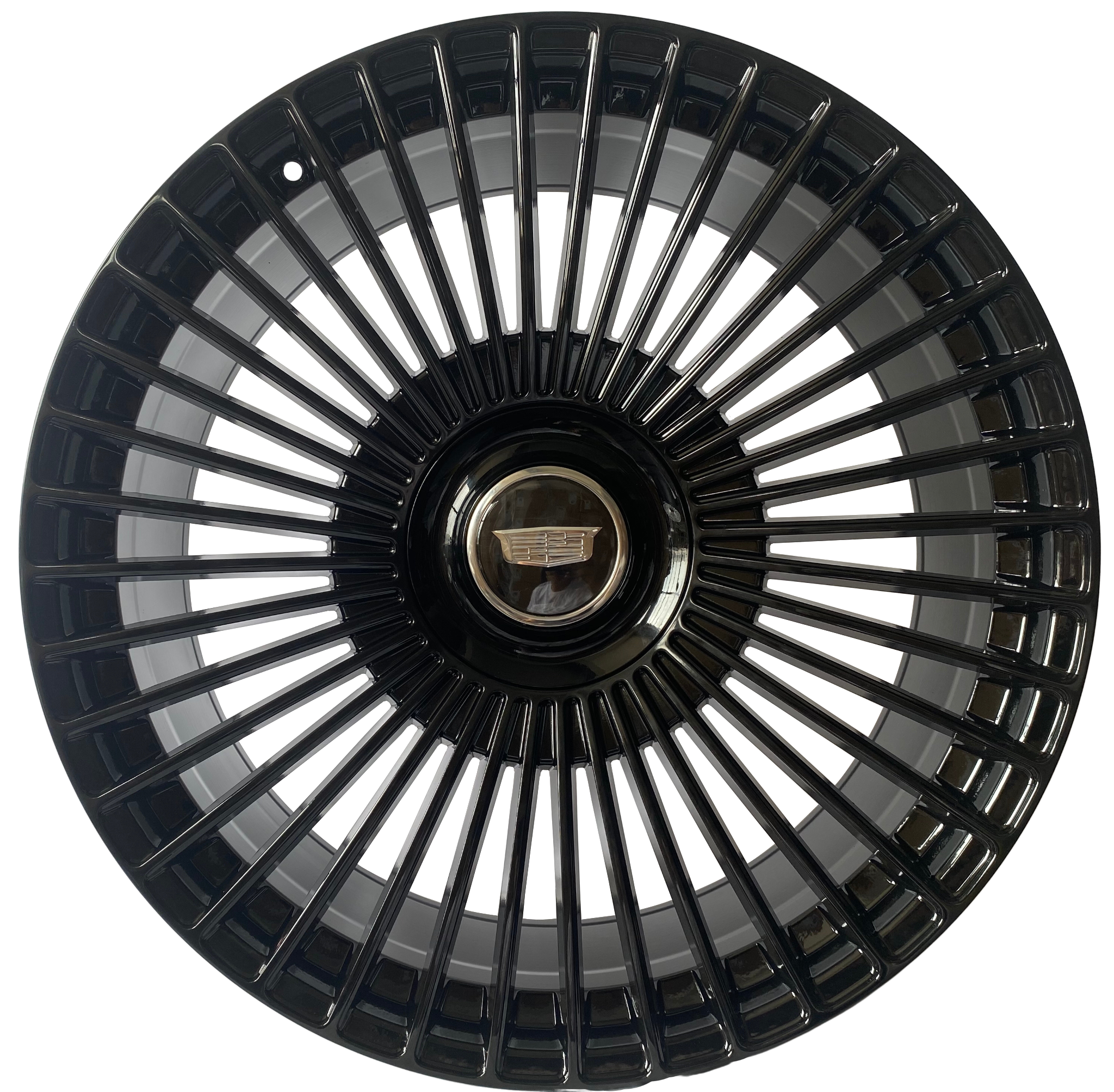
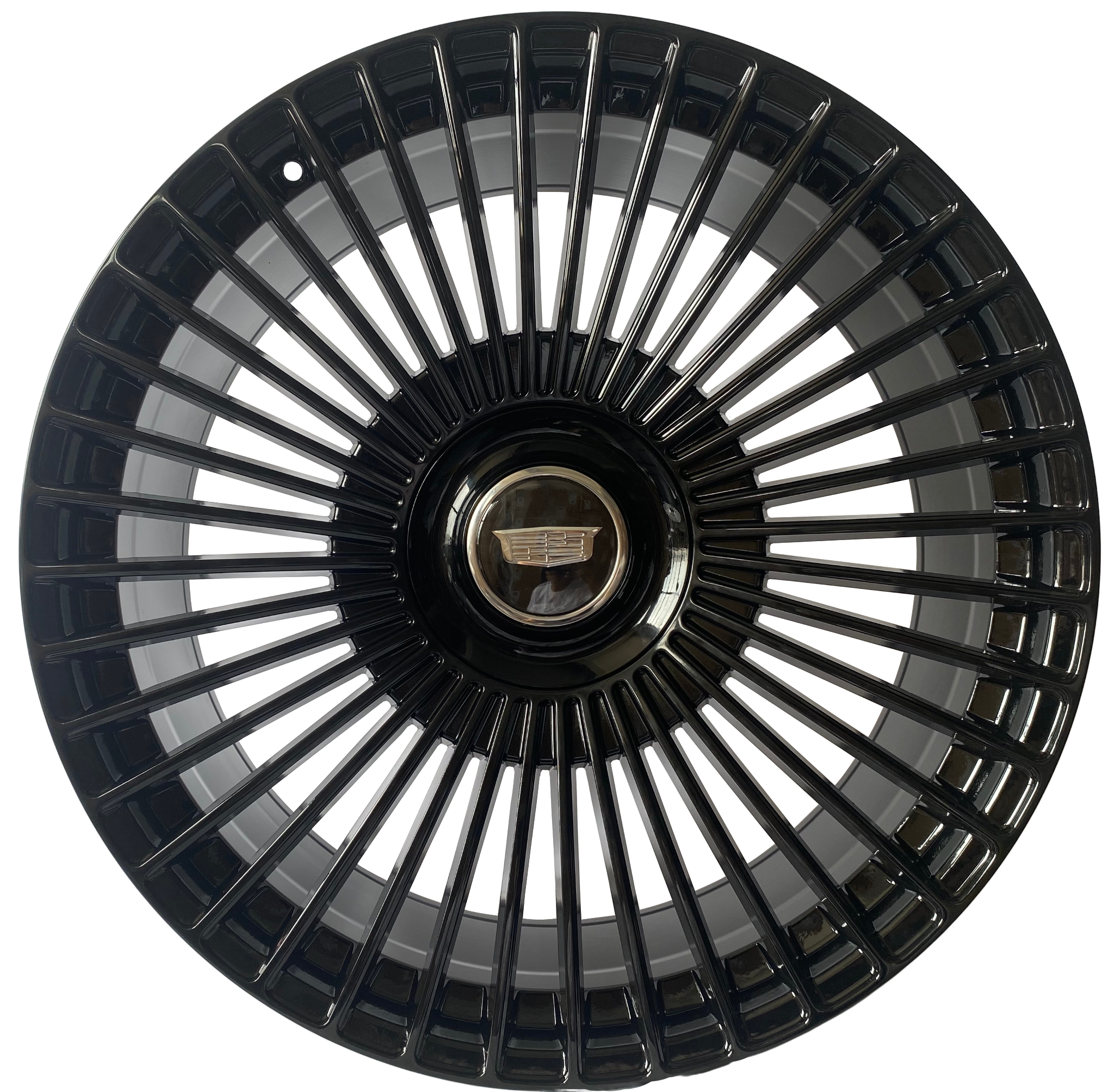


A larger wheel can sharpen steering response, but it can also make road imperfections feel more pronounced. The impact of wheel size on ride quality and handling depends largely on the tire paired with the wheel: a shorter sidewall flexes less in corners, while a taller sidewall generally cushions bumps more effectively.
That trade-off is why wheel diameter alone doesn’t tell the whole story. Wheel and tire weight also affects how readily the suspension responds to uneven pavement, and tire width can change grip, road noise, and steering feel. You’ll learn how these factors influence comfort and handling, what changes when you increase wheel size, and how to weigh responsiveness against a composed ride. The result is a clearer basis for choosing a setup that fits your vehicle and the way you drive.
Key Takeaways
- Choose wheel and tire combinations together: sidewall height shapes how well the setup cushions bumps and responds through corners.
- For rough pavement, a taller sidewall can soften impacts; a shorter sidewall can make steering feel more immediate.
- Consider wheel-and-tire weight as well as diameter, since added unsprung mass can make suspension response less composed over bumps.
- Balance appearance and responsiveness with the ride you want, keeping the vehicle’s recommended fitment in view.
Does wheel size change handling as well as comfort?
Yes. Wheel diameter, tire sidewall height, width, and total package weight can all shift the balance between ride comfort and steering response.
Comfort and Performance Tradeoffs
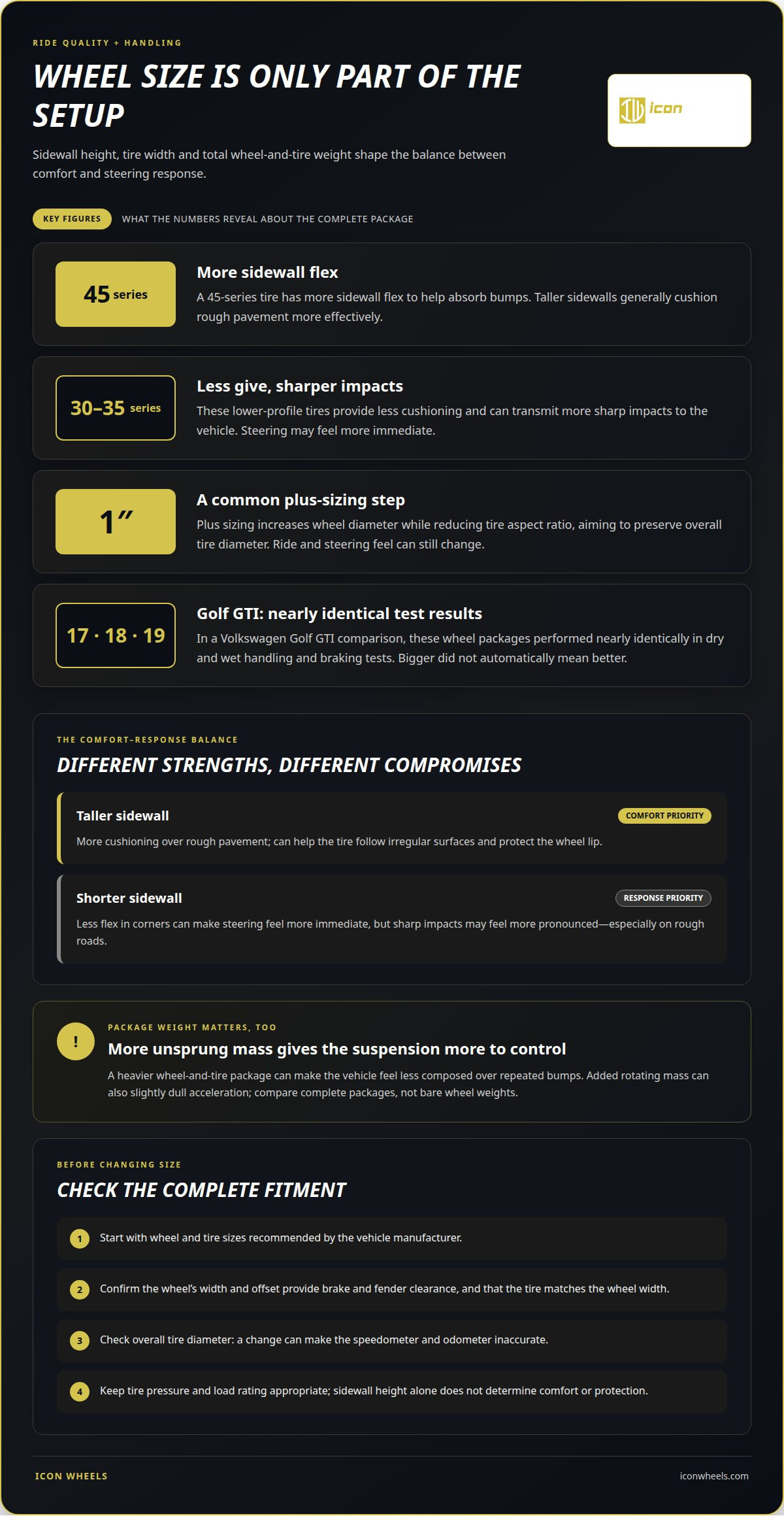
This tradeoff is the balance between a tire’s cushioning and its steering precision. A shorter tire sidewall flexes less during cornering, which can make steering feel more immediate, while a taller sidewall can help the tire follow rough pavement. In a Volkswagen Golf GTI comparison, 17-, 18-, and 19-inch packages performed nearly identically in dry and wet handling and braking tests, showing that a larger wheel doesn’t automatically deliver better results. The choice matters because comfort, road noise, and acceleration can change alongside appearance.
Sidewall Height and Impact Harshness
Sidewall height is the amount of tire between the rim and the road, and it affects how much impact cushioning the tire provides. A 45-series tire has more sidewall flex to absorb bumps, while 30- or 35-series tires provide less give, transmitting more sharp impacts to the vehicle. On rough roads, smaller wheels paired with taller sidewalls can make the ride feel smoother and help protect the wheel lip. The tire’s load rating and air pressure still need to suit the vehicle.
Wheel offset and width matter, too. Width can change steering feel and encourage tramlining, when tires follow grooves in the pavement. The chosen offset and width must provide clearance from the brakes and fenders, and the tire must be suited to the wheel’s width.
Begin with the wheel and tire sizes recommended by the vehicle manufacturer. For a larger option, confirm that the chosen width and offset provide brake and fender clearance, and that the tire is correctly matched to the wheel.
A change in overall tire diameter can make the speedometer and odometer inaccurate. Incorrect clearance or fitment can compromise safe operation. Warranty coverage depends on the vehicle’s applicable terms and the circumstances of a claim. Assess overall tire diameter and fitment together, not wheel diameter alone.
How Does Wheel Size Affect Ride Quality?
Wheel diameter affects the space available for a tire’s sidewall, which influences how the vehicle absorbs bumps. To compare ride and handling, consider the complete wheel-and-tire package, not rim size alone.
Wheel Diameter and Sidewall Height
Wheel diameter and sidewall height work together: a larger rim usually pairs with a shorter sidewall when overall tire diameter remains similar. Plus sizing increases wheel diameter while reducing tire aspect ratio, aiming to preserve overall diameter. A one-inch increase is one common plus-sizing step. The change can affect cushioning and steering feel as well as appearance.
Compare the complete package before choosing a larger wheel. A shorter sidewall flexes less, which can make steering feel more immediate, but leaves less tire material to cushion road impacts. Tire width and construction also affect comfort, so diameter alone cannot predict the ride. Use the vehicle’s recommended fitment as your reference when comparing options.
Sidewall Flex and Bump Absorption
A tire sidewall flexes over uneven pavement, helping absorb bumps before they reach the vehicle. Taller sidewalls generally provide more cushioning, while shorter sidewalls can transmit sharper impacts. On rough roads, a low-profile setup may therefore feel busier in the cabin.
Sidewall flex also affects how a tire responds to broken pavement. A taller sidewall can help the tire maintain contact over irregular surfaces, while a shorter one may feel more precise on smooth roads. Keep tire pressure and load rating appropriate, since sidewall height alone does not determine comfort or protection.
Wheel Size, Ride, and Pothole Damage
Across 17-inch, 18-inch, and 20-inch setups, ride and handling depend on the tire and total package, not diameter in isolation. In a Volkswagen Golf GTI comparison, the smallest wheels delivered the best ride, with slightly reduced perceived stability. A car on 20-inch wheels can feel harsher and busier than the same car on 19-inch wheels when both packages share the same overall diameter.
Low-profile tires are more susceptible to damage from potholes and debris because their shorter sidewalls provide less cushioning. A taller sidewall can also help protect the wheel lip. If you regularly drive on rough pavement, weigh sidewall height alongside wheel diameter and your handling priorities.
Unsprung weight and suspension response
Unsprung weight is the mass supported directly by the suspension, including the wheels and tires. A heavier wheel-and-tire package gives the suspension more mass to control as it keeps the tires planted over uneven pavement. On roads with repeated bumps, that extra weight can make the vehicle feel less composed as each wheel moves.
Wheel construction contributes to total package weight. A wheel’s material, shape, and design affect its mass, as do tire size and construction. Compare complete wheel-and-tire packages, not bare wheel weights. A larger wheel paired with a heavier tire, for example, can add mass even if the wheel itself is light.
As unsprung mass increases, shocks and struts must manage more energy during impacts. Sharp bumps may feel more pronounced, and suspension components may wear faster over time. Regular driving on broken pavement places repeated demands on these components, so package weight matters beyond the first impression on smooth roads.
Wheel weight also affects rotation. Reducing rotating mass helps a vehicle accelerate and slow more efficiently, while a heavier package can slightly dull acceleration because the drivetrain must turn more mass. Steering response can change as well: a shorter tire profile flexes less, but added wheel-and-tire weight makes the suspension work harder over rough surfaces.
Assess tire profile and package weight together. For a daily-driven vehicle, a lighter package within the manufacturer’s recommended fitment can help preserve suspension response while retaining the sidewall needed for uneven roads. If a new wheel size changes the suspension’s operating conditions, the setup may need adjustment. Compare total weight, tire profile, and the pavement you encounter most often.
Wheel size and handling responsiveness
The impact of wheel size on ride quality and handling is especially noticeable when steering inputs meet the road. A shorter tire sidewall flexes less in a corner, so turn-in can feel more immediate. But responsiveness also depends on tire compound, tread design, and wheel fitment. A quick steering feel may suit a smooth, winding road, but it does not prove that a setup will provide more grip in every condition.
Tire width also shapes steering response. A wider tire can add grip in some dry conditions when its compound and tread support it, but it may also follow pavement grooves, a behavior called tramlining, making the steering feel busier. In heavy rain, tread design and speed influence hydroplaning risk. Larger wheels may be needed to clear some high-performance brake calipers and rotors, so brake clearance is part of fitment.
Weight and diameter affect the drivetrain as well as steering. A heavier wheel-and-tire package can slightly reduce acceleration because the engine must turn more mass. Wider tires can increase rolling resistance and affect fuel economy. A larger overall tire diameter changes effective gearing, potentially making acceleration feel softer while lowering engine RPM at a given speed.
A useful way to judge the impact of wheel size on ride quality and handling is to consider your driving conditions first. Smooth roads and dry cornering may favor sharper response; frequent rain, grooved pavement, or rough routes can make predictability more valuable. Keep the vehicle’s recommended fitment in view, match wheel width to the tire’s recommended range, and account for brake and fender clearance. Explore wheel options for your driving priorities as you weigh those tradeoffs.
ICON WHEELS
ICON WHEELS offers custom-built forged wheels for luxury vehicles, including Mercedes, Rolls-Royce, and Land Rover. If you’re balancing steering response against comfort, consider the wheel alongside the tire setup you plan to use. Diameter, width, offset, and total package weight all affect the result, so weigh them together rather than choosing by appearance alone.
Explore Custom Built Forged Wheels alongside vehicle-specific options to find a direction that suits your priorities. A considered wheel choice can bring a distinctive finish while keeping ride and handling factors in view.
Contact ICON WHEELS to explore wheel options for your vehicle.
Choose the Feel That Fits Your Drive
Your next wheel choice can shape how your vehicle feels every day, not just how it looks. Use the impact of wheel size on ride quality and handling as a decision framework: start with the roads you drive, then consider whether immediate steering response or a more composed ride matters more. Keep your vehicle’s recommended fitment at the center of the decision.
Before settling on a design, consider the complete wheel-and-tire combination as part of your vehicle’s character. ICON WHEELS offers options for luxury vehicles, including Mercedes, Rolls-Royce, and Land Rover, so you can explore a setup that reflects your priorities and style.
Take the next step with a clear sense of the driving feel you want. Contact ICON WHEELS for wheel advice and move toward a choice that feels considered, distinctive, and right for your vehicle.
Frequently Asked Questions
How much bigger can I go safely?
Use the wheel and tire sizes recommended for your vehicle as the safe baseline. There is no universal increase that fits every car: brake and fender clearance, wheel width, offset, and overall tire diameter all matter. A setup that clears one trim, for example, may interfere with another brake package. A larger change may also require suspension work to maintain proper fitment.
Why do bigger wheels ride firmer?
Bigger wheels often use tires with less sidewall, leaving less flexible tire material between the rim and the road. Sharp impacts can therefore reach the chassis more directly, especially over potholes or broken pavement. Tire construction and pressure also affect the result. A touring tire can feel more compliant than a stiff performance tire, even at the same wheel diameter.
Will bigger wheels hurt my fuel economy or acceleration?
They can, particularly if the complete wheel-and-tire package is heavier or the tires are wider. Extra rotating mass asks the engine to work harder during acceleration, while wider tires can increase rolling resistance. Overall tire diameter matters, too: a taller tire can make acceleration feel softer by changing effective gearing. Compare package weight and tire specifications, not diameter alone.
How does wheel size affect ride comfort and road noise?
A shorter sidewall can transmit more vibration, while wider tires may produce more road noise and follow pavement grooves. The tire’s tread design and the road surface also shape what you hear inside the vehicle. In one Volkswagen Golf GTI comparison, the 18-inch package was the quietest tested. That result illustrates why the tire and wheel combination matters more than diameter alone.
How do larger wheels affect handling, cornering, and steering response?
Shorter sidewalls flex less in corners, which can make steering feel sharper and more immediate. In a Volkswagen Golf GTI comparison, the 19-inch setup felt sharper in dry conditions, while the 17-inch setup offered easier, more predictable wet handling. Wider tires may add dry-weather grip when their compound and tread suit the conditions, but can also increase tramlining.
How does wheel diameter affect tire sidewall height and impact absorption?
With a similar overall tire diameter, increasing rim diameter generally means a lower-profile tire and shorter sidewall. The sidewall has less room to flex over road imperfections, so sharp impacts can feel stronger. A tire’s aspect ratio describes sidewall height relative to its width, not a fixed measurement. Compare the complete tire dimensions when assessing cushioning and fitment.
