
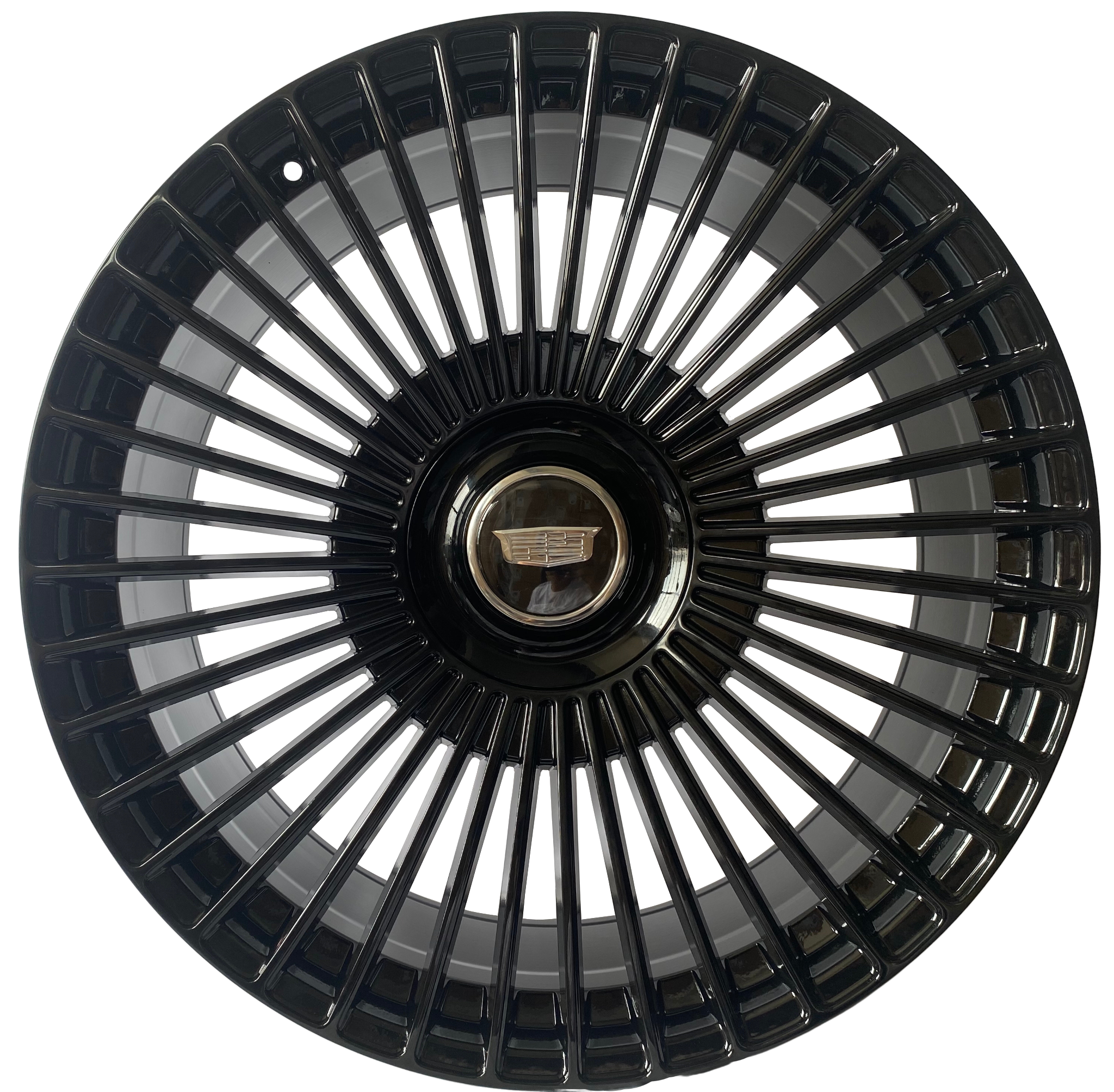


The wheel that suits your vehicle in summer may not be the best winter choice. If you’re asking, should I downsize wheels for winter tires, a smaller diameter can make sense with a low-profile setup: reducing the wheel size by an inch or two may allow a taller tire while preserving the correct overall rolling diameter. The smaller wheel must still clear the brakes and fit your vehicle.
Keeping your current wheels is also a valid option. It avoids buying a dedicated set, but seasonal tire changes require removing and remounting the tires twice a year. With a second set of wheels, each changeover is a wheel swap, and downsizing may offer more practical winter tire sizes.
This guide compares downsizing, buying dedicated winter rims, and remounting tires on your existing wheels. You’ll see how fitment, brake clearance, tire width, rolling diameter, and seasonal convenience shape the decision, so you can choose a winter setup that suits your vehicle and priorities.
Key Takeaways
- Choose a winter wheel size that preserves the correct overall tire diameter and clears the brakes, while meeting your vehicle’s fitment requirements.
- Narrower winter tires can be better suited to loose snow, but the right tire size depends on what your vehicle can safely accommodate.
- Dedicated winter rims simplify seasonal changeovers; reusing your current wheels avoids a second set but requires seasonal tire remounting.
- Compare compatible tire-and-wheel sizes before choosing a minus-one or minus-two setup, and use the decision guide to weigh fit, convenience, and winter performance.
AWD, ABS, and stability-control considerations
Winter wheel sizing is vehicle-specific, so use the manufacturer’s approved fitments. State requirements are a separate legal matter; this section focuses on vehicle fit and doesn’t set state-specific rules.
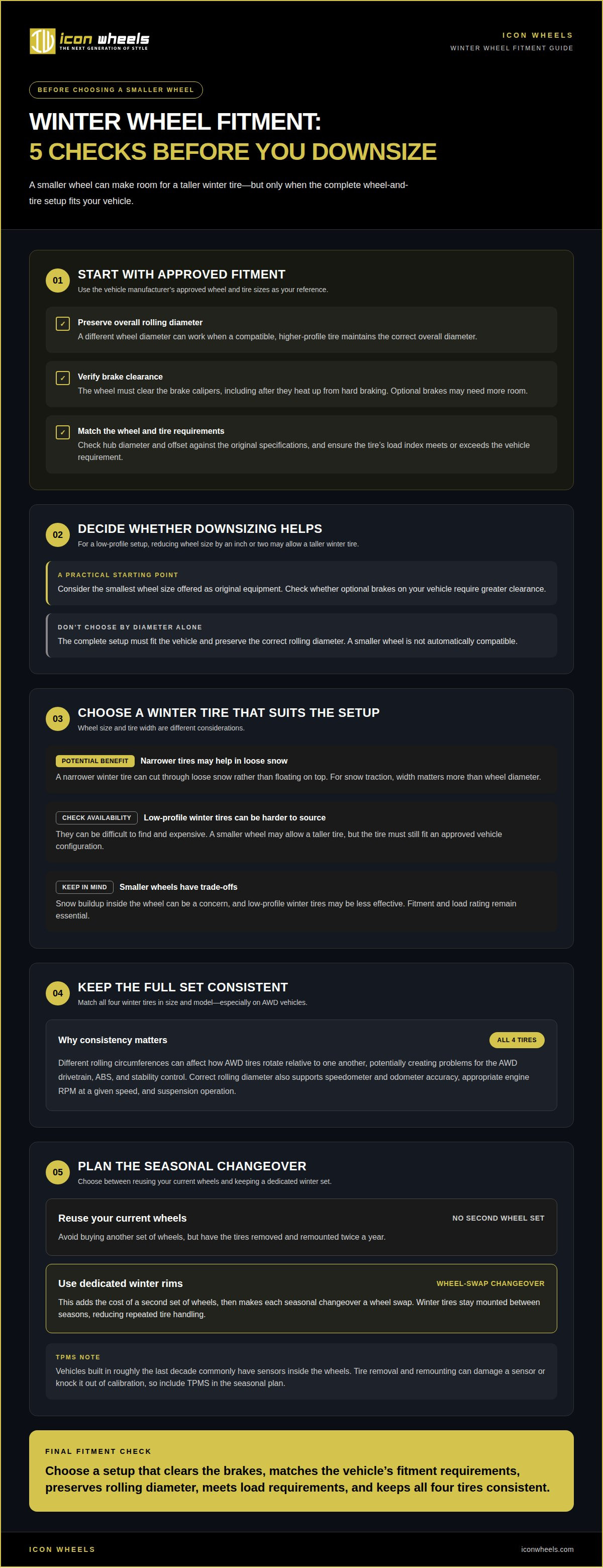
For AWD vehicles, all four winter tires should match in size and model. Different rolling circumferences can affect how the tires rotate relative to one another, potentially creating problems for the AWD drivetrain, ABS, and stability control. Keep the full set consistent rather than mixing winter tire sizes or models across axles.
Correct rolling diameter matters beyond AWD. It helps maintain speedometer and odometer accuracy, supports appropriate engine RPM at a given speed, and avoids adverse effects on suspension operation. A different wheel diameter can work if a higher-profile tire maintains the correct overall diameter, but wheel diameter alone doesn’t determine fitment.
Brake clearance is essential when choosing smaller wheels. The wheel must clear the brake calipers, including when they heat up after hard braking. Compare the replacement wheel’s hub diameter and offset with the original specifications, and ensure the tire’s load index meets or exceeds the vehicle’s requirement.
| Fitment criterion | Original-size wheels | Downsized wheels |
|---|---|---|
| Rolling diameter | Match the approved tire size | Use a compatible tire profile |
| Brake clearance | Preserve required clearance | Confirm caliper clearance |
| Wheel fit | Retain original hub and offset | Match hub diameter and offset |
| Tires | Match all four in size and model | Keep all four consistent |
TPMS also deserves attention. Vehicles built in roughly the last decade commonly have sensors inside their wheels. Tire removal and remounting can damage a sensor or knock it out of calibration, so account for the sensors when planning seasonal changes.
- Compare proposed sizes with the vehicle manufacturer’s approved fitments.
- Confirm brake clearance, hub diameter, offset, and required load index.
- Keep all four tires matched and preserve the correct rolling diameter.
Choose an option that meets every fitment criterion, not simply the smallest wheel that clears the brakes.
Use wheel and tire sizes included in the manufacturer’s approved fitments. Any choice must preserve the correct rolling diameter, clear the brake calipers, match the required hub diameter and offset, and meet the vehicle’s load-index requirement. All four tires should match in size and model.
Should You Downsize Your Winter Tires?
For a low-profile setup, downsizing the wheel by an inch or two may allow a taller winter tire. Compare the proposed wheel with the brakes to check clearance; the smallest factory-original size is a practical starting point, unless optional brakes require more room.
Your choice also depends on winter traction, available tire sizes, and whether the complete setup fits your vehicle.
Benefits of Narrower Winter Tires
A narrower winter tire can cut through loose snow instead of floating on top like a wide performance tire. For snow traction, width matters more than wheel diameter, so a narrower tire may help even when the wheel size stays the same. The key is to choose a tire that fits an approved wheel and vehicle configuration.
Downsizing can make winter tires easier to find for cars with low-profile summer setups. Low-profile winter tires can be difficult to source and expensive, while a smaller wheel allows a higher-profile tire. The smallest wheel offered as original equipment is often the simplest size to consider.
Downsizing Disadvantages
A smaller wheel isn’t automatically compatible. It must clear the brakes, and optional brake equipment can rule out a size that fits a vehicle without those brakes. An improperly fitted wheel can cause mechanical problems and create an accident risk, so start with the original-equipment fitment.
Downsizing also requires a compatible tire size that maintains the correct overall rolling diameter. A narrower tire may suit loose snow, but its load rating and fitment must still meet the vehicle’s requirements. Smaller wheels can also make snow buildup inside the wheel a concern, while low-profile winter tires may be less effective.
Use this sequence to narrow the choice:
- Identify the smallest wheel size offered for the vehicle as original equipment.
- Account for optional brakes that may need greater clearance.
- Compare narrower winter tire options that preserve the correct overall diameter.
- Keep all four winter tires matched in size and model.
If the vehicle came with the smaller size as standard and doesn’t have optional brakes, that size may suit a winter setup. Otherwise, retain a compatible wheel diameter and prioritize a properly matched winter tire.
Dedicated winter rims versus remounting tires
Keeping your existing wheels avoids buying a second set, but the winter tires must be mounted on them seasonally. That means tire removal and remounting twice a year. A dedicated winter set adds the cost of another set of wheels, then makes each changeover a bolt-on swap instead.
The difference goes beyond convenience. Repeatedly unmounting and remounting tires can wear their beads, damage a TPMS sensor, or knock it out of calibration. Dedicated rims keep winter tires mounted between seasons, reducing repeated tire handling at each changeover.
A second set also lets you choose winter wheel sizing separately from your summer setup, provided the fitment works for your vehicle. That may be useful if the winter package uses a smaller wheel and a compatible taller tire. The wheel must still fit correctly, and the tires must suit the vehicle.
There’s no single price comparison that applies to every vehicle. A dedicated package requires purchasing wheels as well as winter tires; remounting keeps your existing wheels but involves repeated seasonal tire work. The difference depends on the wheels and tires selected, the required fitment, and sensor handling.
Compare the two approaches across these practical points:
- Dedicated winter rims: A second wheel set requires more upfront spending, but changeovers become bolt-on swaps.
- Remounting on existing wheels: Avoids purchasing another wheel set, but requires tire removal and remounting twice a year.
- TPMS and tire wear: Repeated mounting can wear tire beads and may affect sensor calibration.
- Seasonal storage: A dedicated set means storing the unused wheel-and-tire assembly between seasons.
Choose remounting if avoiding a second wheel set matters most and repeated tire work suits your plans. Choose dedicated rims if you value bolt-on seasonal changes or want a separate winter wheel size. Either way, maintain a compatible fitment and account for TPMS sensors.
A smaller winter package doesn’t have a fixed cost advantage over keeping the original wheel size. The cost depends on the wheels and tires selected, fitment, and sensor handling; a dedicated set also requires buying another set of wheels.
Examples of downsized tire sizes
A minus-one conversion pairs a wheel one inch smaller in diameter with a higher-profile tire. A minus-two conversion uses a wheel two inches smaller and a higher-profile tire. In both cases, the aim is to maintain the correct rolling diameter while changing wheel size.
For example, a vehicle with 235/55R18 summer tires may use 215/60R17 winter tires, if that fitment suits the vehicle. This example combines a narrower tire with a one-inch-smaller wheel. The tire size alone doesn’t establish compatibility; the vehicle must support the complete wheel-and-tire combination.
Another comparison involves a vehicle originally using all-season tires on 21-inch wheels, with 20-inch wheels considered for winter. In that specific comparison, the aspect ratio changed by 5 points between the two options. That illustrates why a smaller wheel is paired with a tire profile chosen to preserve overall diameter, rather than simply fitting a shorter tire.
Use these examples as starting points, not universal fitments:
- Minus-one: Reduce wheel diameter by one inch and choose a higher-profile tire.
- Minus-two: Reduce wheel diameter by two inches and choose a higher-profile tire.
- Example fitment: 235/55R18 summer tires may convert to 215/60R17 winter tires when supported.
- 21-inch to 20-inch comparison: The aspect ratio changed by 5 points in the example discussed.
To find compatible sizes, start with the vehicle manufacturer’s approved wheel and tire fitments. Compare the proposed tire’s overall diameter with the original, then account for brake and suspension clearance, wheel offset, hub diameter, and required load index. The wheel must clear the brakes and suspension through their operating range, not merely appear to fit while parked.
Use the smallest original-equipment wheel size as a starting point, then assess the exact brake package and vehicle configuration. A size offered on one version may not fit another with different brakes. Keep the winter set consistent across all four wheels, and choose only a combination the vehicle supports.
ICON WHEELS
ICON WHEELS helps drivers explore wheel options with vehicle fitment in mind. Its custom-built forged wheels and offerings for Mercedes, Rolls-Royce, and Land Rover give owners options tailored to luxury vehicle brands.
Consider ICON WHEELS when assessing wheel options for a vehicle-specific setup. The key requirements remain the same: the wheel must fit the vehicle, clear its brakes, and work with a compatible tire size. Your choice should support your priorities without compromising those requirements.
Explore ICON WHEELS’ options for a wheel setup suited to your vehicle.
Choose a Winter Setup That Fits Your Plans
Your winter wheel choice shapes how you use and present your vehicle through the season. Before deciding whether to downsize wheels for winter tires, consider the complete setup: vehicle fitment, your preferred seasonal routine, and the look you want to retain. Start with compatibility, then balance convenience and personal priorities.
For owners of Mercedes, Rolls-Royce, and Land Rover vehicles, ICON WHEELS offers options tailored to those marques. Narrow your priorities, then explore a wheel style suited to your vehicle.
Contact ICON WHEELS about winter wheel options and move toward a winter setup chosen with intention. Your vehicle deserves a considered fit for every season.
Frequently Asked Questions
New Rims, or Swap Tires on Your Existing Wheels?
Choose new rims for a separate winter set, or keep your current wheels and remount tires seasonally. A dedicated set makes each changeover a wheel swap, while remounting avoids storing another set of wheels. Consider storage space, repeated tire handling, and whether a different wheel size suits your winter setup.
What are the benefits of downsizing wheels for winter tires?
Downsizing can make room for a taller-profile winter tire and broaden practical tire-size choices for vehicles with low-profile summer setups. A narrower winter tire can also cut through loose snow instead of riding over it. If you’re weighing whether you should downsize wheels for winter tires, treat these as potential advantages, then let fitment and brake clearance guide your decision.
How does a smaller wheel with a taller tire affect winter traction and handling?
A smaller wheel paired with a taller tire changes the sidewall, but not necessarily the tire’s overall diameter. For loose snow, tire width can matter more than wheel diameter, and a narrower winter tire may cut through snow more effectively. Handling still depends on the tire, its fitment, and the vehicle. Keep the full set consistent for predictable system responses.
How do I choose a winter tire size with the same overall diameter as my original tires?
Start with the original tire size and compare its nominal overall diameter with candidate winter sizes. Tire-size markings show width, aspect ratio, and wheel diameter; the aspect ratio helps indicate sidewall height. A taller sidewall can compensate for a smaller wheel. Choose a size supported for your vehicle, then account for brakes, suspension clearance, wheel fit, and load requirements.
Do smaller winter wheels improve ride comfort or reduce the risk of pothole damage?
A smaller wheel can allow a taller tire sidewall, providing more tire between the road and rim. That extra sidewall can soften the feel of sharp road edges compared with a low-profile setup, but it doesn’t make a wheel or tire immune to pothole damage. Tire pressure, impact severity, vehicle load, and tire construction also affect protection.
Does downsizing winter wheels affect speedometer accuracy, ABS, or stability control?
It can if replacement tires change the overall rolling diameter or differ across the vehicle. Rolling diameter affects speedometer and odometer readings, while mismatched tires can interfere with ABS, stability control, and AWD operation. Select a vehicle-supported tire size that preserves the intended diameter, and keep all four tires matched. Wheel diameter alone doesn’t determine the result.
