


What if the biggest value of forged wheels isn’t the number on a resale listing? The question “how much value do forged wheels add to a car” has no fixed-dollar answer. A premium upgrade may appeal to some buyers and put off others who prefer a factory-original car.
The return may be felt every time you drive: in the wheel’s engineering, its fit with your vehicle, and the presence it brings to the overall design. Whether those benefits translate into resale appeal depends on the car, the wheels’ condition and fitment, and the next buyer’s taste. There’s no guaranteed premium.
This guide explains the kinds of value forged wheels can deliver, what to consider before upgrading, and how to present the change if you sell. Keeping the original wheels and documenting your upgrade can help preserve your options. ICON WHEELS sells custom-built forged wheels tailored to luxury vehicles from brands including Rolls-Royce, Mercedes-Benz, Land Rover, Porsche, and Bentley.
Key Takeaways
- Forged wheels can add value through design, engineering, and ownership experience, but they don’t promise a higher resale price.
- Manufacturing and vehicle-specific fitment matter when weighing an upgrade. Not every forged wheel delivers the same benefits.
- Buyer preferences shape the answer to “how much value do forged wheels add to a car.”
- Use a practical decision process to assess your driving priorities, compatibility, preferred design, wheel condition, and future sale plans.
- Custom-built forged wheels from ICON WHEELS offer a model-specific upgrade option for luxury vehicles.
Forged Wheels: Ownership Benefits vs Resale Value
Forged wheels can deliver value through the way your car looks, feels, and suits your priorities. A higher resale price is never guaranteed. The question “how much value do forged wheels add to a car” has no universal dollar answer because owner enjoyment, buyer interest, and the final sale price are different measures.
Think of added value in three ways:
- Functional value: A wheel upgrade can provide a considered fit for your vehicle and intended use. Forging is a manufacturing process, not a promise that every wheel has identical properties. A general overview of the Forging process helps explain how the method shapes a metal part.
- Visual value: A distinctive design can sharpen a vehicle’s presence and create a more cohesive look.
- Ownership satisfaction: The upgrade may feel worthwhile simply because you enjoy seeing and driving your car with a setup chosen to suit your taste.
Which kind of value matters most depends on how you use the vehicle. A driver who values a tailored appearance may appreciate the design every day. Someone focused on keeping a car close to factory specification may place more importance on originality. Appeal also depends on individual taste and the vehicle. A custom look that suits one luxury SUV may not appeal to every buyer of that model.
What does added value mean when upgrading a car's wheels?
Ownership value is personal and immediate; resale value is what a future buyer is willing to pay. The two can overlap, but one doesn’t prove the other. A wheel set may make a car more desirable to a particular shopper without producing a verifiable increase in its sale price. Treat appearance and enjoyment as real benefits, but don’t count them as guaranteed financial returns.
Do forged wheels automatically increase resale value?
No. Forged construction alone doesn’t establish a higher resale price. Appeal depends on the full upgrade: its condition, fitment, design, documentation, and whether a buyer likes the change. Clear records can explain what’s fitted to the car, while well-kept wheels make a stronger impression than damaged or poorly presented ones. Neither guarantees a premium.
Aftermarket wheels can attract buyers who want a distinctive vehicle, but they may narrow interest among those who prefer the factory setup. Keeping the original wheels, when practical, preserves flexibility at sale time.
There is no fixed resale premium for forged wheels. Their value depends on the car, the condition and fit of the upgrade, and the buyer who sees it.
How Forged Wheels Create Ownership Value Through Engineering and Design
A wheel is more than a finishing detail. Its manufacturing method, dimensions, design, and fitment all shape the result. The word “forged” alone doesn’t tell you exactly how a wheel will perform or feel on a specific car.
What makes forged wheels different from cast wheels?
Forged wheels begin with solid metal shaped under pressure. Cast wheels are made by pouring molten metal into a mold. These are different manufacturing routes, but the process name alone doesn’t determine the quality of the finished wheel. Materials, engineering, specifications, and manufacturing standards matter too. J.D. Power explains the benefits and drawbacks of forged aluminum wheels, including why construction is only one part of the comparison.
Fitment is equally specific. A wheel should be designed for the vehicle’s requirements, not selected by appearance alone. Its dimensions and position affect how it sits with the car, while its design determines whether it complements the vehicle’s proportions. For a model-specific example, see this guide to forged-wheel engineering for the Porsche Cayenne.
Which ownership benefits may matter beyond resale?
Personalization is one of the clearest benefits. A carefully chosen wheel design can emphasize a vehicle’s character, whether you want an understated profile or a distinctive custom look. That appeal is real for the owner, even though style is subjective and doesn’t prove a higher resale price.
Weight and handling are more complex. A wheel’s effect depends on its specific design, dimensions, construction, and the vehicle it’s fitted to. Without verified evidence for that exact combination, don’t assume a forged wheel will make every car lighter or improve its handling. Instead, focus on considered engineering and appropriate fitment.
- Design: Does the wheel complement the car’s lines and your preferred appearance?
- Fitment: Is it engineered for the specific vehicle, rather than chosen on looks alone?
- Ownership: Will the tailored appearance and wheel choice matter to you throughout your time with the car?
That’s a more useful way to assess how much value do forged wheels add to a car: judge the engineering and design by how well they suit your vehicle and priorities, not by an assumed resale gain. Explore custom-built forged wheels for luxury models when a precise, vehicle-specific upgrade is the goal.
Why Forged Wheels May Not Add a Predictable Resale Premium
Premium construction doesn’t guarantee a matching increase in resale price. A forged wheel may represent a considered engineering choice, but a future buyer evaluates the whole vehicle, not just how its wheels were made. The upgrade can strengthen appeal for someone seeking a distinctive specification. Another buyer may prefer the familiar look and reassurance of factory-original equipment.
That’s why there’s no reliable formula for how much value do forged wheels add to a car. Their resale effect depends on the vehicle and the person considering it. A custom design may feel perfectly suited to one luxury-car shopper and too personal for another. A balanced overview of the pros and cons of forged wheels can help put the upgrade in perspective without treating any single benefit as a guaranteed return.
How do buyer preferences affect a modified car's value?
Some buyers actively seek personalization and may appreciate a distinctive wheel design that complements a vehicle’s proportions. Others want a car close to its original specification, especially if they value a factory look or want to choose their own modifications. Neither preference applies to every shopper or vehicle. The result is variable appeal, not a universal rise or fall in resale value.
For a Rolls-Royce, for example, one buyer may welcome a tailored appearance, while another may prefer the original visual character. The best choice depends on the intended owner, not simply the wheel’s construction.
Why do condition, fitment, and OEM wheels matter?
Buyers notice the details. Visible damage can distract from the upgrade, while unsuitable fitment or work that appears poorly executed may raise questions about how the car was modified. Clear documentation and a well-presented set help explain what’s on the vehicle, but they can’t guarantee a particular offer.
- Keep the original wheels when practical. They give a future buyer another choice and let you present the car closer to its factory configuration.
- Preserve useful records. Retain wheel specifications and purchase documentation so the setup is easier to understand.
For resale, condition and correct fitment can matter more than the word “forged” on its own. Weigh the trade-offs against your ownership priorities, and explore this Rolls-Royce OEM wheels versus custom forged comparison for a focused look at the choices.
How to Judge Whether Forged Wheels Are Worth It for Your Car
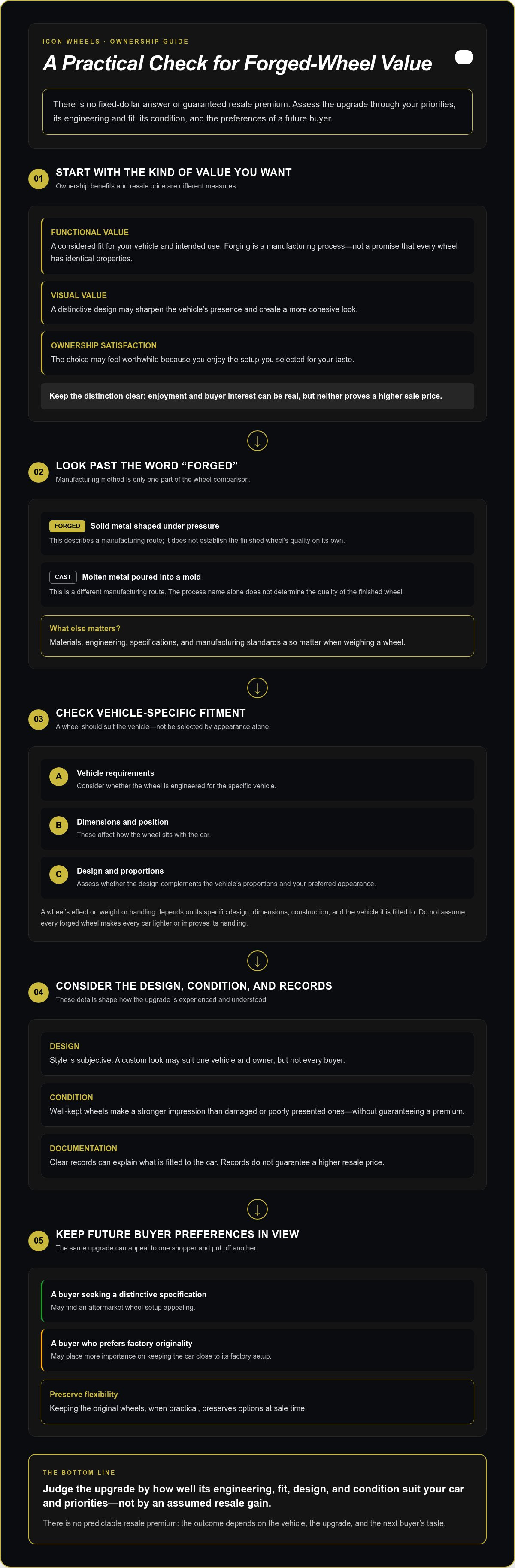
A good decision starts with your priorities, not an assumed resale return. Use this process to decide whether a forged-wheel upgrade makes sense for your vehicle and the way you plan to own it.
- Start with intended use. Decide what you want from the upgrade. Is your priority a more distinctive appearance, vehicle-specific fitment, or greater enjoyment of the car? Be specific. “I want the wheels to complement the vehicle’s design” is a clearer goal than expecting an undefined performance improvement.
- Consider how long you’ll keep the car. If you expect to enjoy it for years, personal satisfaction may carry more weight in your decision. If a sale is likely soon, consider whether a custom look will suit buyers who prefer a modified vehicle. Don’t treat resale gains as certain.
- Prioritize exact-vehicle compatibility. Wheel specifications should suit your vehicle’s particular configuration. Compare the proposed fitment with your car’s model and setup before deciding. A design that looks right in isolation still needs to be appropriate for the vehicle.
- Choose a design you’ll continue to value. Finishes and visual details shape the car’s character, but taste can change. Browse this guide to custom forged wheel finishes to consider how different finishes influence the look and personal appeal of an upgrade.
- Separate personal value from resale assumptions. Ask whether you’d still want the wheels if they added nothing to the eventual sale price. If your answer is yes, your decision can rest on benefits you’ll experience directly rather than a return you can’t count on.
How can owners protect the value of a wheel upgrade?
Good records won’t set a future price, but they make the upgrade easier to understand and present. Keep the purchase details, fitment specifications, and related documentation together. Note the wheels’ condition and keep them clean and cared for. If practical, retain the original wheels as another option for a future sale.
These steps help you make a considered choice and explain it clearly later. They don’t guarantee that a buyer will pay more. The answer to “how much value do forged wheels add to a car” depends first on what you value as the owner, then on how well the upgrade suits the vehicle and the next buyer’s preferences.
For a model-specific upgrade shaped around your vehicle, explore custom-built forged wheels from ICON WHEELS.
Choosing Custom Forged Wheels: Turn Personal Value into a Considered Upgrade
A forged-wheel upgrade makes the most sense when it answers a clear ownership priority. Choose a design you’ll enjoy, a considered fit for your vehicle, and the character you want the car to express. Don’t base the decision on an assumed resale return. A future buyer may value the upgrade, but no construction method can guarantee a higher sale price.
What should a considered luxury-wheel upgrade prioritize?
Start with the vehicle itself. The wheel’s fitment should suit the specific model and configuration, and its design should complement the car’s proportions rather than compete with them. Then weigh construction and customization against your priorities. If personalizing the vehicle matters most, a distinctive look may be worth choosing for your own enjoyment. If originality is central, a more restrained direction may feel like a better match.
Ask yourself one final question: would I still want this upgrade if it added nothing to the car’s eventual resale price? That answer keeps personal value separate from uncertain market appeal. It also gives you a practical way to assess how much value do forged wheels add to a car: consider what you’ll appreciate during ownership, then treat any resale interest as a possibility, not a promise.
How can ICON WHEELS support a personalized direction?
ICON WHEELS sells custom-built forged wheels engineered for luxury vehicles, including Rolls-Royce, Mercedes-Benz, Land Rover, Porsche, Bentley, Cadillac, and Lamborghini models. A model-specific approach lets owners consider fitment and design together, with the vehicle’s character and their own preferences in view. The right choice is personal, and its value should be judged by how well it serves those priorities, not by an unverified performance or resale claim.
Explore custom forged wheels for luxury vehicles to consider an upgrade tailored to your vehicle and ownership goals.
Choose Wheels That Deliver Value Every Day
So, how much value do forged wheels add to a car? There’s no guaranteed resale premium. Their clearest value may be the ownership experience: a design that suits your taste, thoughtful engineering, and fitment tailored to your vehicle. Resale appeal depends on the wheels’ condition and specifications, as well as what a future buyer prefers.
Make the decision around the car you own and how you want to enjoy it. Consider your priorities first, keep the relevant wheel documentation, and retain the original wheels if practical. That way, your upgrade can express your vision without relying on an uncertain return.
ICON WHEELS offers custom-built forged wheels for luxury vehicles, including Rolls-Royce, Mercedes-Benz, Land Rover, Porsche, Bentley, Cadillac, and Lamborghini models. Explore custom forged wheels for your luxury vehicle and consider a model-specific direction that reflects your priorities.
Choose with intention, and make every detail feel like it belongs to your car.
Frequently Asked Questions
How much value do forged wheels add to a car?
There’s no fixed amount that forged wheels add to a car. Their value may come from the owner’s experience, the vehicle’s appearance, and appeal to a buyer who likes the modification. Those benefits don’t automatically translate into a higher sale price. To judge the upgrade, consider its fitment, condition, design, and documentation, then separate the enjoyment you expect during ownership from any possible resale interest.
Do forged wheels increase a car's resale value?
Forged wheels don’t reliably increase a car’s resale value. Their construction may appeal to a buyer looking for a tailored vehicle, but another buyer may prefer factory-original wheels. Resale appeal depends on the complete setup, including condition, fitment, design, and the preferences of the person considering the car. Treat a higher offer as a possibility, not an expected return on the upgrade.
Are forged wheels worth it if I plan to sell my car?
They can be worth it if you’ll enjoy the upgrade while you own the car, but don’t count on recovering the full cost at sale. Consider how soon you expect to sell and whether the design will suit buyers who prefer a modified vehicle. Keep purchase and fitment records, and retain the factory wheels if practical. That gives you more flexibility when presenting the car.
Can aftermarket forged wheels lower a car's value?
Yes, they may narrow the pool of interested buyers, particularly if someone wants an unmodified, factory-original car. Damage, unsuitable fitment, or a design that clashes with the vehicle can also weaken buyer confidence. That doesn’t mean aftermarket wheels always reduce value. A well-kept, appropriately fitted set may appeal to buyers who appreciate personalization. The effect depends on the car and the buyer, not on the word “forged” alone.
Are forged wheels better than OEM wheels?
Not in every respect. Forged wheels are made through a different manufacturing process, while OEM wheels are designed for the vehicle’s original specification and appearance. Whether one is better depends on your priorities, the particular wheel’s engineering and quality, and its compatibility with the vehicle. Forged construction alone doesn’t guarantee superior results, just as an aftermarket wheel isn’t automatically inferior to an OEM option.
What matters most when valuing a car with forged wheels?
Look beyond the manufacturing label. A car’s overall condition and maintenance history remain important, while the wheels’ condition, vehicle-specific fitment, design, and documentation can shape how the modification is received. Buyer preference matters too. Records that identify the wheel setup can make it easier to explain the change. None of these details guarantees a premium, but they help a buyer assess the upgrade clearly.
Should I keep the original wheels after upgrading to forged wheels?
Yes, keep the original wheels if you have the space and can do so practically. They let you offer a future buyer a factory-style option or return the car closer to its original appearance. Store them carefully and keep any related records together. Retaining OEM wheels doesn’t guarantee a higher sale price, but it preserves choice and may make the car more appealing to buyers who prefer the original specification.
