
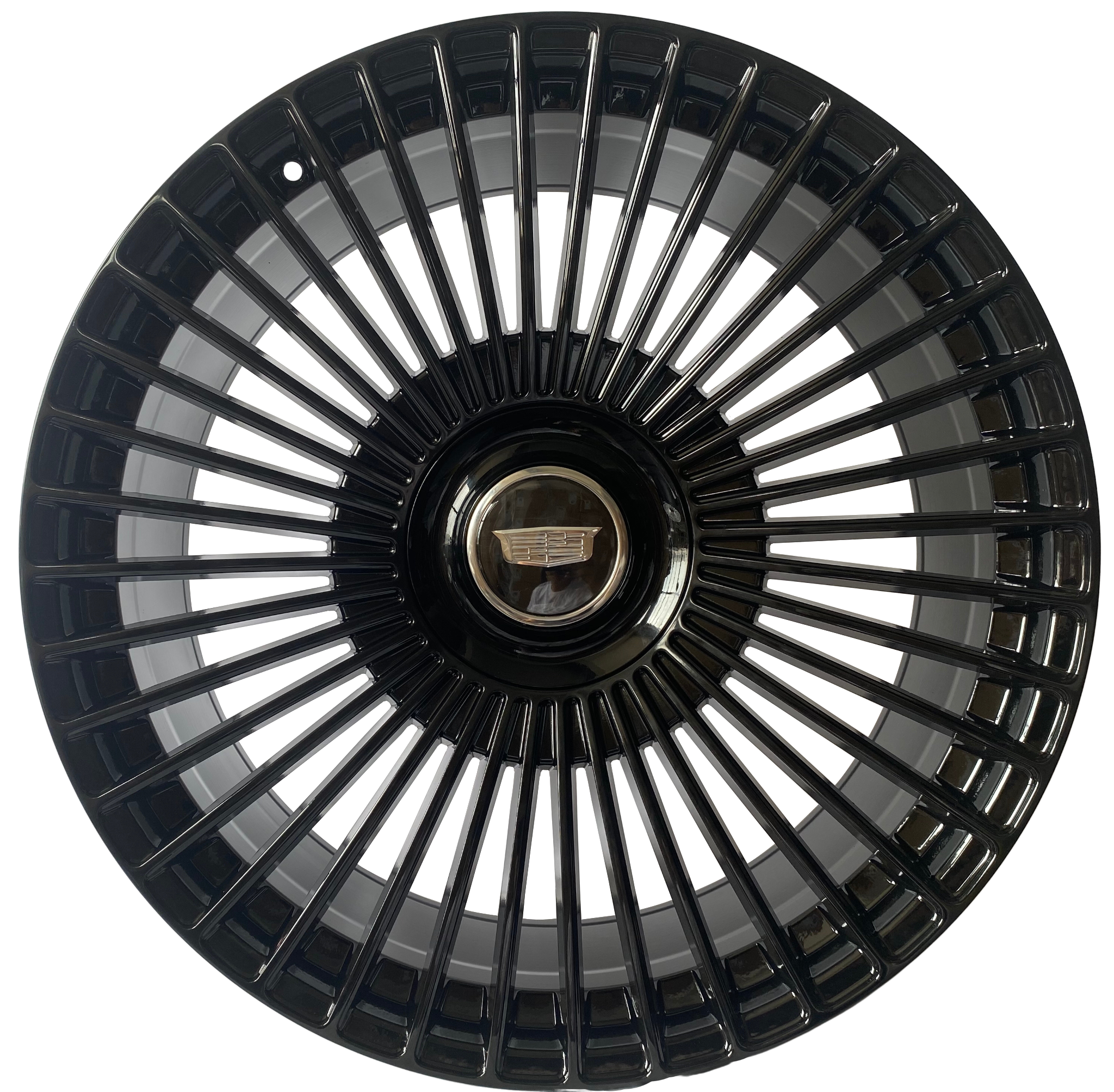
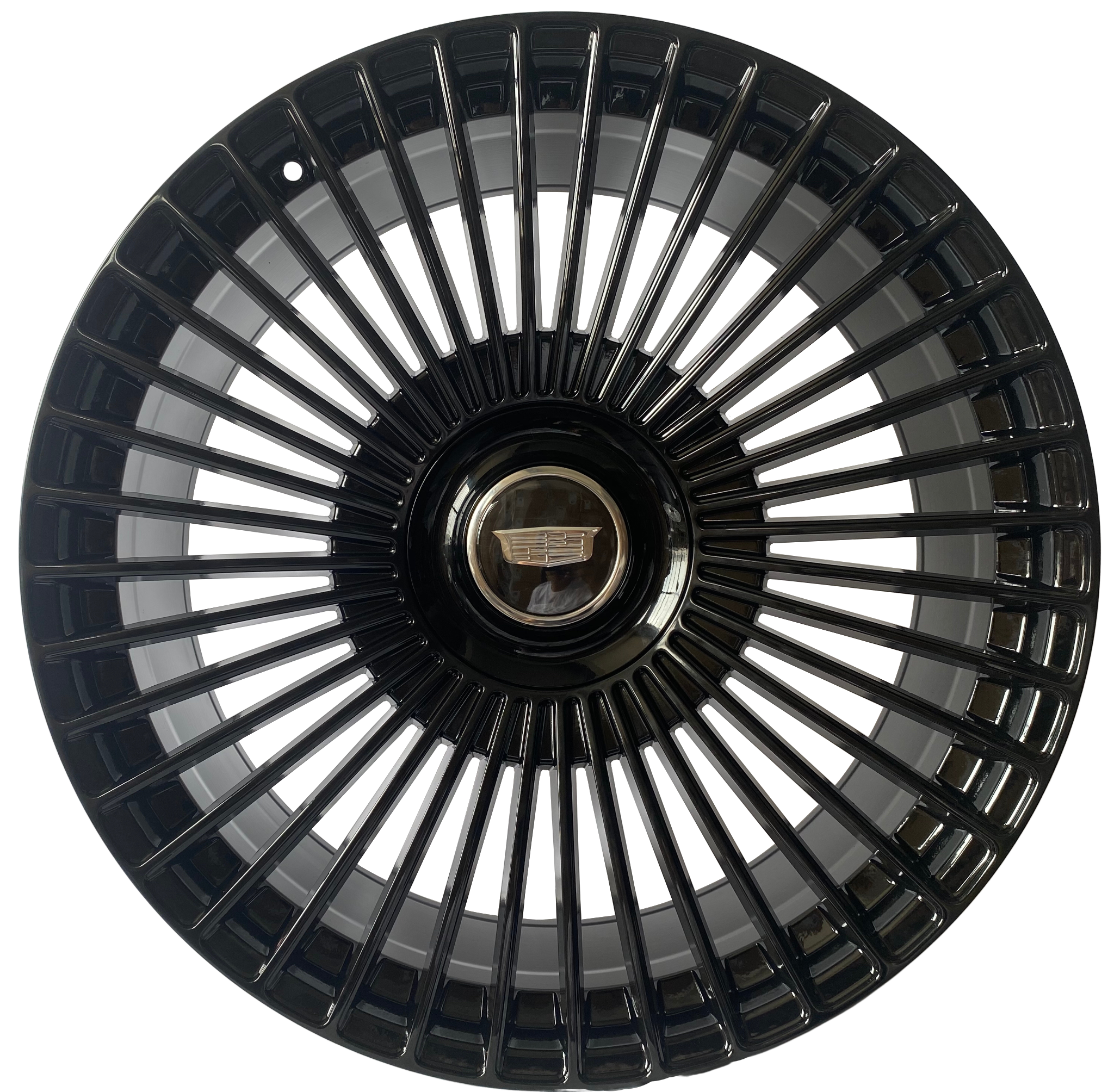


The most compelling alternative to a celebrated wheel isn’t necessarily another famous badge. For a powerful grand tourer, the better choice is the wheel that suits the car’s fitment, load requirements, brake package, and intended use. That’s the standard to apply when comparing forgeline forged monoblock alternatives for high horsepower grand tourers.
Forgeline’s reputation may make it a natural benchmark, but brand recognition alone can’t tell you whether a wheel suits your specific vehicle. Compare construction, dimensions, offset, brake clearance, and design, then consider how the setup aligns with the refined driving experience you want from a grand tourer.
This guide explains the criteria that matter, how to compare forged options, and why a vehicle-specific approach can be more useful than a one-size-fits-all model comparison. ICON WHEELS designs and sells custom-built forged wheels for luxury vehicles, offering a tailored direction for drivers who want their wheel choice to reflect both the car and its intended use.
Key Takeaways
- Compare forgeline forged monoblock alternatives for high horsepower grand tourers by how well they match your vehicle and driving priorities, not by name recognition alone.
- Separate construction from suitability. Forged monoblock design is one consideration, while vehicle-specific fitment and requirements also matter.
- Use a consistent framework to assess fitment, design choices, technical documentation, and intended use.
- Start with your exact vehicle and its fitment requirements, then review proposed dimensions and design against them.
- Consider custom-built forged wheels as a tailored option for luxury vehicles, with the specific model guiding the fitment discussion.
Why Grand Tourer Owners Consider Forgeline Forged Monoblock Alternatives
A recognized forged-wheel name offers a clear starting point. But a grand tourer may need a more specific match, one that accounts for the car’s fitment, intended use, and visual character. That’s why comparing forgeline forged monoblock alternatives for high horsepower grand tourers should begin with the vehicle, not the badge.
Grand tourers pair strong performance with the comfort and composure expected on longer drives. Their wheels need to suit more than power delivery. Vehicle weight, brake clearance, fitment, and driving conditions all influence the choice. A setup for spirited road use may have different priorities from one used for frequent track sessions. Horsepower and construction type alone can’t settle the question.
This is a practical comparison framework, not a verdict on one brand. The goal is to judge how well a wheel suits the build, rather than rely on promotional claims or declare a universal winner.
What makes a high-horsepower grand tourer a distinct fitment case?
A Bentley Continental GT, Mercedes-Benz SL, or Porsche 911 can represent a different balance of performance, refinement, and design. Identify the exact vehicle and configuration before comparing wheels. Then review the factors that directly affect fit: vehicle requirements, brake-package clearance, and wheel dimensions and position. Horsepower describes engine output. It doesn’t establish whether a wheel clears the brakes or meets the vehicle’s fitment requirements.
For long-distance use, appearance and performance aren’t the only priorities. The wheel choice should also suit the car’s intended driving and preserve the refined character its owner wants.
What does an alternative to a Forgeline monoblock mean?
A forged monoblock is a wheel made as one piece using a forging process, unlike a multi-piece design. But “alternative” doesn’t necessarily mean another wheel with identical construction. Options can differ in manufacturing method, customization, design, and how closely the fit is tailored to a specific vehicle. Alloy wheels provides background on common materials and manufacturing approaches, including forging and casting.
Compare the options against the build: vehicle-specific fitment, brake clearance, design preferences, and intended driving. A custom-built forged wheel offers a tailored direction beyond choosing from a model range, but its final specifications still need to suit the car. The sections ahead apply these criteria to make the comparison more useful.
How Forged Monoblock Construction Relates to Grand-Touring Performance
A forged monoblock is a wheel formed from one piece of material through a forging process, then shaped to its intended design. “Monoblock” describes the one-piece construction; “forged” describes a manufacturing method. Neither term identifies a brand or proves that a wheel suits a particular grand tourer.
Manufacturing labels can inform a comparison, but they don’t replace vehicle-specific fitment data or establish how a wheel will perform on the road. A material reference such as MIT’s overview of the material properties of aluminum can provide context. It can’t verify the composition, finished properties, or performance of a specific wheel. Treat strength and weight claims as product-specific claims that need supporting documentation.
Which engineering details matter beyond the monoblock label?
Start with the wheel specification for the exact vehicle and configuration. Review each factor separately:
- Diameter and width: Check that the dimensions suit the vehicle’s requirements and intended setup.
- Offset: Confirm the wheel’s position relative to the hub and surrounding components.
- Brake clearance: Make sure the wheel design clears the vehicle’s brake package.
- Load rating: Compare the wheel’s stated rating with the vehicle’s requirements.
- Wheel mass: Consider it as one specification among several, not as a stand-alone promise of improved handling or ride quality.
These checks depend on the specific vehicle, its configuration, and the wheel being considered. Generic sizing rules or a monoblock label can’t settle them. Likewise, don’t assume a particular material or construction method guarantees a specific strength-to-weight ratio or driving benefit without reliable documentation for that wheel.
How can a wheel preserve grand-touring refinement?
Evaluate the whole driving experience. Ride quality, steering response, and road noise matter in a car designed for more than short, spirited drives. Visual proportion matters too: the selected diameter, width, and design should complement the vehicle rather than overwhelm its lines. Tire choice also affects ride and performance, so assess it as a separate part of the setup.
Construction describes how a wheel is made; fitment determines whether its specification suits the car. Keep both questions in view. A forged design may align with your priorities, but an alternative still needs to meet the vehicle’s requirements and your intended use. For a tailored direction, explore custom-built forged wheels for luxury vehicles with the specific grand tourer and design goals in mind.
Forgeline Monoblock vs. Custom Forged Alternatives: A Buyer Comparison
A useful comparison puts the same questions to every option. For a Forgeline monoblock or a custom-built forged wheel, assess the documented construction, fitment details, design choices, and relevance to the car’s intended use. Don’t fill gaps with assumed benefits. If a specification depends on the vehicle or configuration, treat it as vehicle-dependent.
What does a useful Forgeline alternative comparison include?
Separate measurable requirements from personal preference. Diameter, width, offset, load requirements, and brake clearance need to suit the exact vehicle and selected configuration. Customization and visual character are different questions. They help determine whether the wheel’s design complements the grand tourer, but they don’t establish fitment or technical suitability.
Comparison point
Brand-led model selection
Custom-built wheel approach
Fitment flexibility
Review the model’s documented dimensions and vehicle application. Exact suitability depends on the vehicle.
Consider how the design and specification can be tailored to the specific vehicle. Confirm fit against its requirements.
Design choice
Choose from the designs and finishes offered for the selected model. Styling fit is subjective.
Use the vehicle’s proportions and your design goals to guide a more individualized direction.
Technical documentation
Compare available documentation for construction, dimensions, load requirements, and clearance. Don’t infer missing details.
Evaluate the stated specifications and supporting fitment information. Unspecified details remain vehicle-dependent.
Intended-use alignment
Match the selected model’s verified application and specifications to how the car will be driven.
Relate design and fitment decisions to the car and its intended use, rather than choosing by appearance alone.
Keep objective evidence and personal taste separate, mentally or on paper. A finish or spoke pattern can be judged visually. Construction, dimensions, load requirements, and clearance call for verifiable information. Neither brand reputation nor a custom brief replaces those checks.
When is a custom forged direction worth considering?
A catalog model can be a strong fit for an owner with clear preferences who finds a documented option that suits the car. A custom direction is worth considering when vehicle-specific fitment and a distinctive design are central priorities. It offers another route beyond choosing among preset models, while exact technical suitability remains tied to the vehicle’s requirements and project specifications.
The strongest comparison starts with verified fitment, not brand reputation. Apply that standard consistently as you assess forgeline forged monoblock alternatives for high horsepower grand tourers. The right choice is the one whose documented details and design direction align with the specific build.
How to Select Forgeline Alternatives for Your Grand Tourer
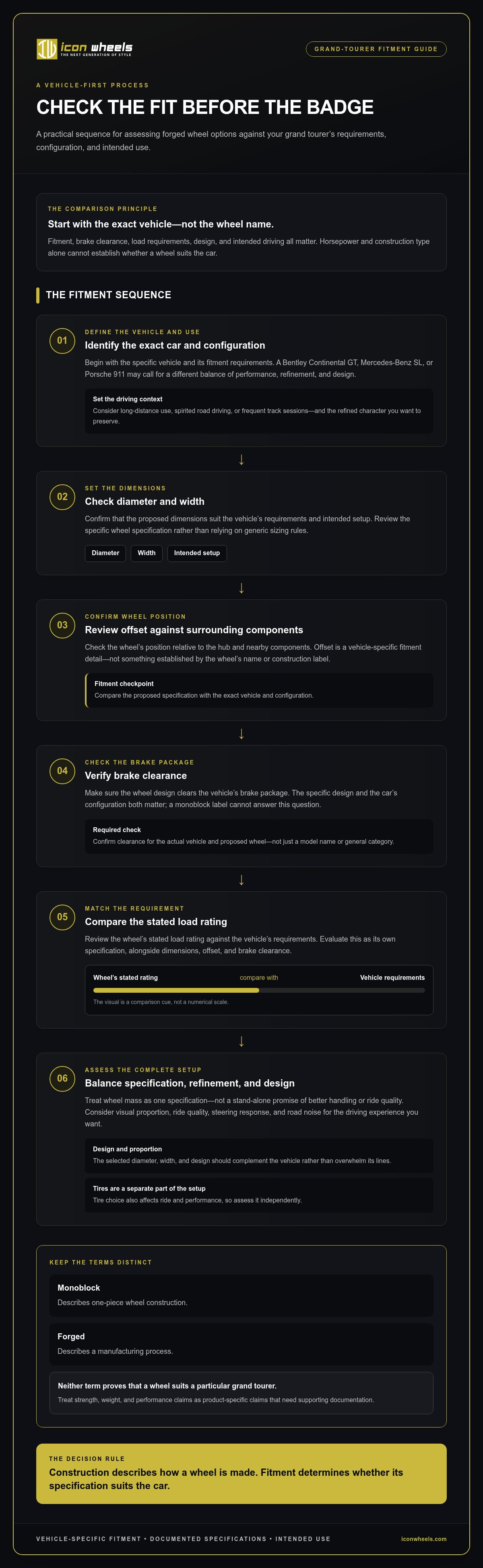
Build your shortlist from the car outward. A methodical fitment process helps separate suitable options from wheels that only look right in a catalog image. Use vehicle-specific requirements as your baseline, not generic sizing rules.
Which vehicle and fitment details should buyers establish first?
Record the exact make, model, and model year. Note the brake package and any relevant suspension changes, since these can affect clearance and fitment. Then use vehicle-specific information to establish the required wheel dimensions, offset, load capacity, and clearance. Don’t assume a specification that suits one version of a car will suit another.
For Mercedes-Benz owners comparing luxury-sedan applications, a dedicated Mercedes-Benz wheel guide can help frame the vehicle-specific questions. Treat general guidance as a starting point, then assess the requirements for your exact configuration.
How should buyers balance performance, comfort, and design?
Define the car’s primary use before choosing a wheel direction. Daily driving and long tours may place a premium on ride comfort and a composed feel. Occasional spirited driving may make performance priorities more prominent. Decide which qualities matter most, then compare candidate specifications against that use instead of treating horsepower as a shortcut.
Once the technical shortlist is sound, consider appearance. Assess how the wheel’s design and finish complement the car’s proportions, paint, and interior character. A custom forged wheel can complete the look, but visual appeal alone can’t establish fitment or technical suitability. A guide to custom forged wheel finishes can help you organize personalization preferences separately from fitment decisions.
- Identify: Record the exact vehicle, model year, brakes, and relevant suspension configuration.
- Establish: Use vehicle-specific information to define dimensions, offset, load capacity, and clearance.
- Prioritize: Decide how the car will be driven and which comfort or performance qualities matter.
- Refine: Compare design and finish after technical requirements shape the shortlist.
- Review: Check the final specification against the vehicle’s requirements before settling on a direction.
Apply this sequence to forgeline forged monoblock alternatives for high horsepower grand tourers, whether you’re assessing a familiar model or a custom direction. ICON WHEELS offers custom-built forged wheels for luxury vehicles, including model-specific options. Explore custom forged wheel options to consider a direction that reflects your grand tourer and design priorities.
Explore ICON WHEELS as a Custom Forged Alternative
With the comparison criteria in place, a custom-built option offers a different route from selecting a wheel by brand and catalog model alone. ICON WHEELS designs and sells custom-built forged wheels for luxury vehicles, including model-specific options. Start with the car and your priorities, rather than assuming one wheel direction is right for every grand tourer.
What does a custom-built ICON WHEELS approach offer?
A custom direction can bring the vehicle, fitment needs, intended use, and design preferences into the same decision. That’s relevant for owners of luxury marques such as Mercedes-Benz, Porsche, Bentley, and Lamborghini, where the desired visual character may be as distinctive as the car itself. Consider the wheel as part of the complete build while keeping the vehicle’s requirements central.
Customization doesn’t replace technical review. Exact dimensions, brake clearance, load requirements, and other fitment details depend on the vehicle and its configuration. Treat them as essential design inputs alongside your preferred style. Keep documented specifications distinct from aesthetic choices, and evaluate both before deciding on a direction.
What is the next step toward a vehicle-specific wheel direction?
Begin with a clear brief. Identify the vehicle and model year, note relevant brake or suspension configuration, and describe how you use the car. Daily driving, long-distance touring, and occasional spirited use can lead to different priorities. Then define your preferred design direction, including the visual balance you want the wheels to bring to the car.
Review fitment and design together. A wheel may suit the vehicle visually but still need careful assessment against its technical requirements. A considered custom approach keeps the car’s configuration, driving priorities, and appearance in view at once. That’s a practical way to assess forgeline forged monoblock alternatives for high horsepower grand tourers without assuming every alternative shares the same construction or specifications.
Ready to explore a tailored direction for your vehicle? Explore custom forged wheels from ICON WHEELS.
Choose the Wheel Direction That Fits Your Grand Tourer
The right wheel choice is more than a brand decision. Compare construction and documented specifications, then prioritize the fitment details that matter to your exact vehicle, including brake clearance, load requirements, and intended use. A grand tourer also deserves a design that complements its character without losing sight of comfort and refinement.
That’s the practical lens for assessing forgeline forged monoblock alternatives for high horsepower grand tourers: start with verified vehicle requirements, weigh customization against your design priorities, and choose a direction that suits how you drive. ICON WHEELS offers custom-built forged wheels for luxury vehicles, with model-specific options across premium brands.
Ready to shape a wheel direction around your vehicle and goals? Explore custom forged wheels from ICON WHEELS. Make your next choice with clarity and a design that feels distinctly yours.
Frequently Asked Questions
What are the best alternatives to Forgeline forged monoblock wheels for a grand tourer?
The best choice among forgeline forged monoblock alternatives for high horsepower grand tourers depends on the exact vehicle, its fitment requirements, intended use, and design priorities. Compare verified dimensions, load capacity, brake clearance, and documented construction, then assess customization options. ICON WHEELS offers custom-built forged wheels for luxury vehicles, including model-specific options. No single brand or wheel is a universal winner; the right match suits the specific build.
Are forged monoblock wheels suitable for high-horsepower grand tourers?
They may be suitable, but horsepower alone can’t determine whether a particular wheel is right for a car. Evaluate the exact vehicle and configuration, wheel dimensions, load requirements, brake clearance, and intended driving conditions. A forged monoblock describes a construction type, not a guarantee of fit or suitability. Base the decision on reliable, vehicle-specific fitment information and verified specifications for the wheel being considered.
Is a custom forged wheel better than a Forgeline monoblock?
Neither option is universally better. A catalog monoblock may suit an owner whose vehicle and preferences align with its verified specifications. A custom-built direction may better match specific fitment or design priorities. Compare documented vehicle compatibility, customization scope, and intended use before deciding. Customization doesn’t automatically improve performance, and a familiar brand name doesn’t replace checking whether the wheel’s specifications suit the car.
How do I check whether an alternative wheel fits my grand tourer?
Start by identifying the exact model year and noting the brake and suspension configuration. Then compare wheel diameter, width, offset, load capacity, and brake clearance with reliable information for that specific vehicle. Generic sizing assumptions or guidance for a broad model family can be misleading because configurations differ. Review the complete wheel specification against the car’s requirements before purchase, rather than relying on appearance or a single dimension.
Does a forged monoblock guarantee better ride quality?
No. Construction alone doesn’t guarantee a quieter or more comfortable ride. Wheel dimensions, tire selection, vehicle setup, road conditions, and the specific wheel specification all contribute to the experience. Evaluate the complete wheel-and-tire setup in the context of how the grand tourer is driven. Separate claims about construction from evidence about ride quality, and don’t assume a particular improvement without information relevant to the exact vehicle and setup.
What should I compare when choosing a forged wheel for a luxury GT?
Compare vehicle-specific fitment, load requirements, brake clearance, documented construction details, customization scope, intended driving use, and design. Brand heritage can provide context for research, but it can’t replace verifying compatibility with the car. Build a shortlist around the vehicle and your priorities first. Then assess each wheel against the same criteria, distinguishing technical evidence from subjective preferences such as spoke design or finish.
Can ICON WHEELS create custom forged wheels for luxury grand tourers?
ICON WHEELS sells custom-built forged wheels for luxury vehicles, including wheels for Mercedes-Benz, Porsche, and Bentley. A useful starting point is to define the exact vehicle, how you intend to drive it, its fitment requirements, and your preferred design direction. Evaluate fitment and aesthetics together before choosing a wheel. Explore ICON WHEELS custom forged options to consider a vehicle-specific direction.
