
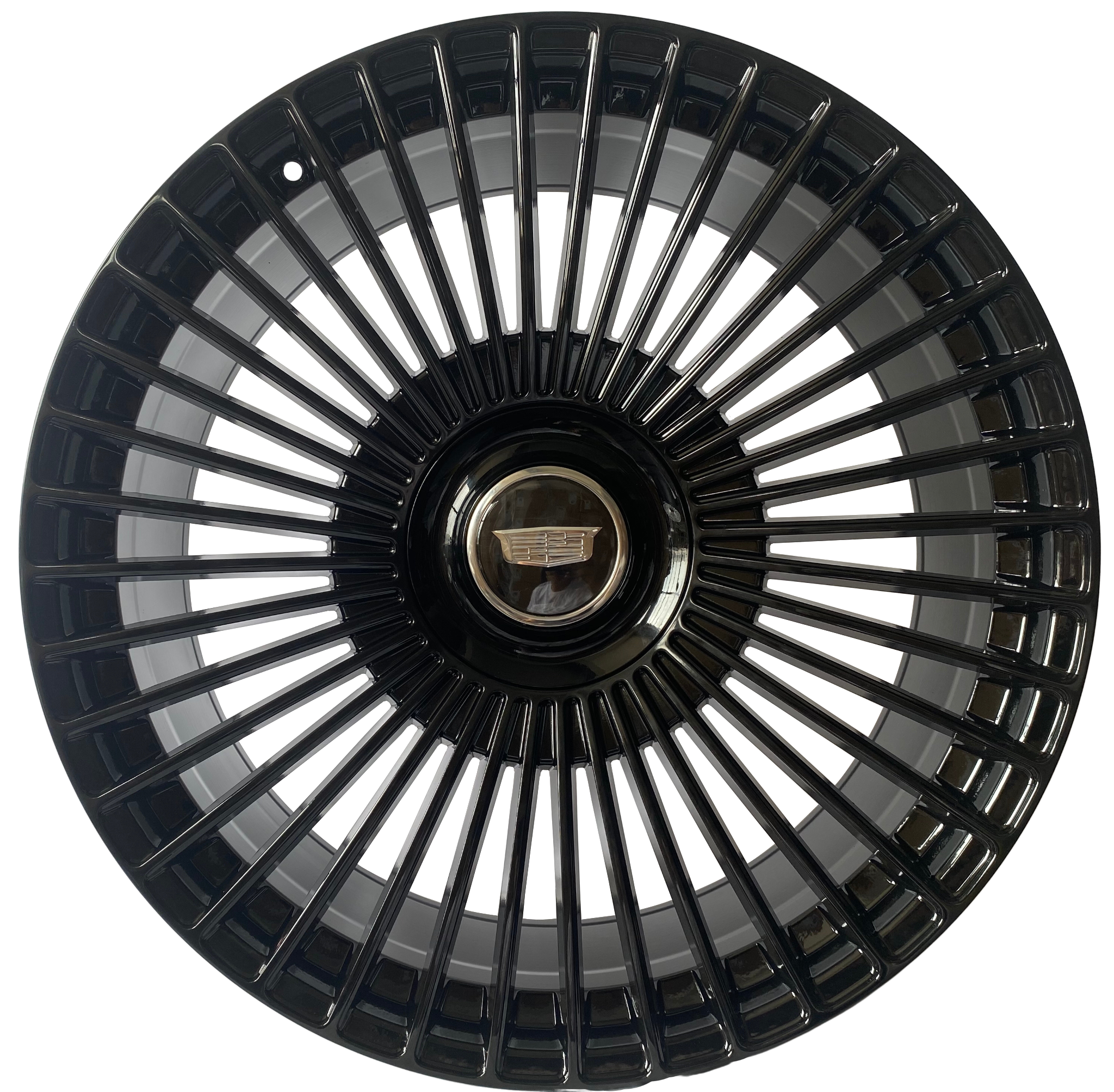
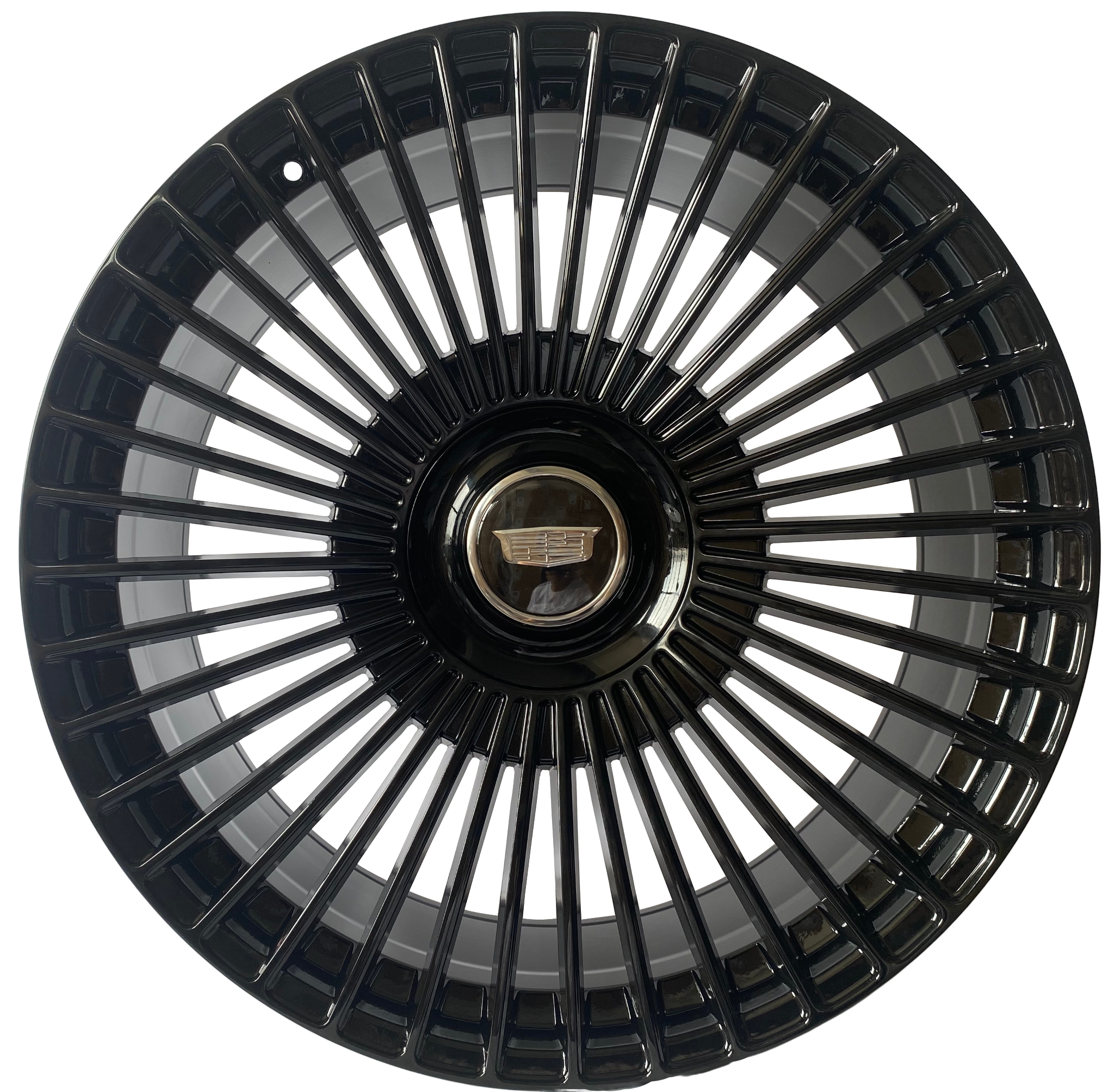


What if the most compelling G-Class wheel upgrade gets the engineering right before it gets noticed? Choosing custom forged wheels for mercedes g-class means balancing a stronger visual presence with the details that keep fitment front and center. A striking finish matters, but so do the specifications behind the design.
This guide explains how to assess fitment, understand forged construction, and compare wheel styles. You’ll learn how dimensions, offset, centre bore, and clearance factor into a fitment decision, and why appearance alone can’t establish that a wheel suits your vehicle.
We’ll also look at ICON WHEELS’ forged 6061-T6 alloy construction, its stated weight and strength comparisons, and the design choices that shape a wheel’s appearance. ICON WHEELS offers custom forged wheels for Mercedes and other luxury vehicle brands, with a 100% Fitment Guarantee based on direct OEM bolt-pattern, offset, and centre-bore matching. Use the guidance below to make a considered choice, then explore the collection with your vehicle’s requirements in mind.
Key Takeaways
- Choose custom forged wheels for mercedes g-class by balancing appearance with vehicle-specific fitment requirements.
- Understand ICON WHEELS’ forged 6061-T6 alloy construction and its stated comparisons with cast wheels.
- Compare restrained, high-contrast, and bold designs by finish, spoke character, and visual weight.
- Use the exact year, model, and configuration when researching fitment, and assess bolt pattern, offset, and centre bore together.
- ICON WHEELS’ 100% Fitment Guarantee is based on direct OEM bolt-pattern, offset, and centre-bore matching for aftermarket wheels.
Why Custom Forged Wheels for a Mercedes G-Class Demand More Than a Visual Upgrade
A G-Class makes a strong impression before it moves. Its upright shape, broad stance, and unmistakable profile give every wheel choice a visible role. Choosing custom forged wheels for mercedes g-class is therefore a balance: create the presence you want while giving engineering and precise, vehicle-specific fitment equal weight.
A gallery can help you picture a finish or spoke pattern, but a photograph can’t establish whether a particular wheel suits your vehicle. The exact year, model, and configuration matter, as do the wheel’s specifications and clearance requirements. Treat images as inspiration, not proof of fitment.
“Forged” describes how a wheel is constructed; styling describes its visible features, such as finish, spoke layout, and overall shape. These are related but separate decisions. A design that suits your taste still needs to meet the vehicle’s requirements.
Evaluate fitment and construction alongside appearance.
What makes the G-Class a distinctive wheel-design challenge?
The G-Class’s proportions make wheel design especially prominent. A delicate pattern can create a refined contrast with its substantial body, while a bolder spoke face can emphasize an assertive stance. Finish changes the effect, too: a restrained surface can preserve a formal look, while a high-contrast finish draws attention to the wheels. The model’s long design history is outlined in the Mercedes-Benz G-Class Wikipedia article, which provides context for its recognizable visual identity.
Scale matters as much as pattern. A design that looks balanced in a close-up image may read differently on the full vehicle. Compare concepts using similar viewing angles, then consider how the wheel face, finish, and spoke spacing relate to the G-Class’s squared profile. This keeps the decision focused on proportion rather than a striking image in isolation.
Which goals should guide a custom wheel decision?
Separate what you want the wheel to express from what the vehicle requires. Start by ranking visual presence, everyday use, and weight considerations. You might want a commanding look without an intricate pattern, or a clean design that suits your care preferences. A short priority list makes it easier to compare options consistently instead of letting each new image reset your preferences.
- Visual presence: Decide whether you prefer a restrained, high-contrast, or bold direction.
- Everyday use: Consider how the finish and design fit your routine and care preferences.
- Weight considerations: Include wheel weight in the engineering discussion alongside the visual brief.
Keep fitment requirements separate from styling preferences. First define the look you want; then assess the specifications for the exact vehicle and wheel. This order makes comparisons clearer and helps preserve the G-Class’s distinctive character without treating appearance as evidence of compatibility.
How Forged Construction Changes the Engineering Conversation
Forged describes how a wheel is formed, not how it looks on the vehicle. In broad terms, forging shapes metal under pressure. It’s a construction detail to evaluate alongside design, finish, and vehicle-specific fitment, rather than a style category by itself. A forged wheel can have many visual treatments, and its appearance alone doesn’t reveal how it was made.
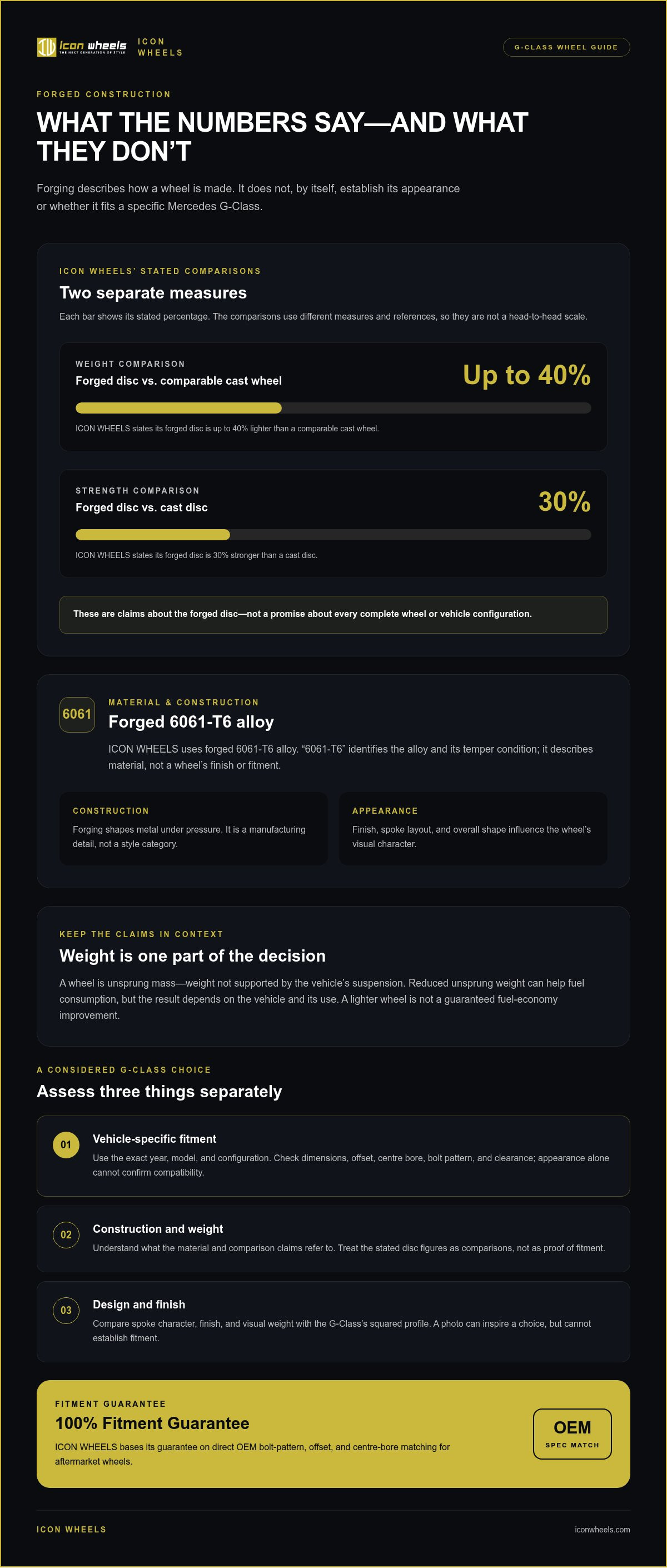
ICON WHEELS uses forged 6061-T6 alloy. The alloy designation identifies the material, while T6 refers to its temper condition. These details describe construction, not a wheel’s finish or its fitment for a particular vehicle. The Forged Wheel Manufacturing Process offers further context on how forging differs from casting.
That distinction makes technical comparisons more useful. A polished or dark finish can influence visual impact, but it doesn’t establish strength or weight. Similarly, material and construction claims don’t replace a fitment assessment. Consider those questions separately as you compare options.
What do 6061-T6 alloy and forged construction mean?
Think of 6061-T6 as a specific alloy and material condition, not a guarantee of how a finished wheel will look or fit. ICON WHEELS combines this alloy with forged construction. This gives you a concrete basis for understanding the material claim without assuming that it establishes fitment for a particular vehicle.
How should readers interpret weight and strength claims?
ICON WHEELS states that its forged disc is up to 40% lighter than a comparable cast wheel and 30% stronger than a cast disc. These figures compare the forged disc with cast alternatives. They are not a promise about every complete wheel or vehicle configuration, and the weight figure is an “up to” comparison.
Weight also matters because a wheel is unsprung mass, meaning weight not supported by the vehicle’s suspension. Reduced unsprung weight can help fuel consumption, but the result depends on the vehicle and its use. Don’t treat a lighter wheel as a guaranteed fuel-economy improvement or as a substitute for careful fitment assessment.
ICON WHEELS’ stated comparison is specific: its forged disc is up to 40% lighter than a comparable cast wheel and 30% stronger than a cast disc. The figures explain the engineering case for forged construction while leaving appearance and vehicle compatibility as separate decisions. For readers weighing material alongside design, ICON WHEELS’ custom forged wheel approach provides a reference point for considering construction and style.
How to Compare Custom Forged Wheel Designs for the G-Class
With custom forged wheels for mercedes g-class, a considered design choice complements the vehicle as a whole. Compare the wheel face, finish, spoke pattern, and visual weight together. A finish that looks subtle on its own may feel much more prominent when paired with a dense spoke layout or a sharply contrasting face.
Which design direction complements the G-Class?
An understated finish can preserve a composed, refined appearance. High contrast makes the wheel stand out against the vehicle, while a bold spoke pattern or substantial-looking face creates a more assertive statement. Neither approach is automatically right. Consider how the complete design works with the G-Class’s proportions, then compare finishes in the context of spoke character and overall scale.
Use this framework to narrow your preferences before comparing specific designs:
| Design direction | Finish | Spoke character | Visual weight |
|---|---|---|---|
| Restrained | Subtle, low-contrast appearance | Clean and visually simple | Composed, with the vehicle’s shape leading |
| High-contrast | Distinct separation from the vehicle’s body color | Defined lines that draw attention | Noticeable without making finish the only focal point |
| Bold | Strong, attention-commanding appearance | Prominent pattern or substantial-looking face | Assertive and wheel-led |
These are style directions, not product names. They give you a consistent vocabulary for comparing options and help prevent a striking finish from overshadowing the complete design. For more context on choosing a finish, explore this guide to custom forged wheel finishes.
How can a gallery support a more informed comparison?
Use galleries to study appearance, not to establish compatibility. When available, compare complete-vehicle images from multiple angles. A close-up reveals finish and spoke details; a full-vehicle view shows how the wheel’s visual weight relates to the G-Class’s proportions. Keep comparisons consistent by looking at similar angles and noting the same design features each time.
Then separate visual inspiration from technical research. A photo can’t establish fitment, even if it shows a similar vehicle. As you move from style preferences to wheel specifications, the Wheel and Tire Fitment Guide can serve as a reference for fitment information. Treat gallery images as design cues, and assess fitment for the exact vehicle separately.
Make a short comparison note for each candidate: finish, spoke character, visual weight, and intended style direction. This turns browsing into a deliberate selection process. It also keeps engineering questions visible as you refine the look, so an appealing image doesn’t become a substitute for vehicle-specific evaluation.
A Practical Fitment Checklist Before Choosing G-Class Wheels
For custom forged wheels for mercedes g-class, fitment starts with the vehicle, not a photo or a general model label. Differences in year or configuration can affect which specifications are relevant. Work through the details in order, and treat bolt pattern, offset, and centre bore as a connected set rather than isolated numbers.
Which fitment details belong on the checklist?
Bolt pattern describes the arrangement of a wheel’s mounting points. Offset is the position of the mounting surface relative to the wheel’s centreline. Centre bore is the opening that fits over the vehicle’s hub. Each describes a different part of the interface, so a sound match depends on comparing the wheel and vehicle specifications together.
- Record the exact vehicle year, model, and configuration. Start with the specific G-Class details, not just the model family. This gives you a clear reference for researching the vehicle’s wheel requirements.
- Gather the vehicle’s reference specifications. Use reliable documentation for the exact vehicle. Keep the details together so you can compare wheel information against the same configuration throughout your search.
- Compare the bolt pattern. Confirm that the wheel’s mounting-point arrangement matches the vehicle specification. A similar appearance or a close-looking listing isn’t evidence of a match.
- Review offset and centre bore with the pattern. Offset affects where the wheel sits relative to the vehicle, while centre bore relates to how it fits over the hub. Don’t assess either in isolation from the other fitment details.
- Keep the full specification set together. Before deciding, compare the vehicle and wheel information as a whole. If a key value is missing, the fitment picture is incomplete.
For broader Mercedes context, ICON WHEELS’ Mercedes-Benz wheel engineering guide discusses precision and wheel engineering across the marque. Use general brand context to inform your research, while tying the fitment assessment to the exact vehicle and wheel specifications.
How does a fitment guarantee support confident selection?
ICON WHEELS’ 100% Fitment Guarantee is based on a direct OEM match for bolt pattern, offset, and centre bore. It describes fitment for aftermarket wheels, not OEM wheels. Use the guarantee as a clear statement of the matching criteria, and assess the specifications for the particular vehicle and wheel together.
Keep the checklist beside you as you compare aftermarket options. Explore ICON WHEELS’ custom forged wheel solutions as you consider the engineering details behind your selection.
Explore ICON WHEELS’ Custom Forged Wheel Approach
ICON WHEELS brings a premium, engineering-led approach to custom forged wheels for luxury vehicles, including Mercedes. For G-Class owners, the useful takeaway is a way to assess construction, fitment principles, and ownership terms without confusing a brand promise with a vehicle-specific fitment assessment. Researching custom forged wheels for mercedes g-class still calls for the exact vehicle and wheel specifications; a general product description isn’t a substitute for those details.
What verified ICON WHEELS promises can readers evaluate?
ICON WHEELS’ confirmed wheel material is forged 6061-T6 alloy. Its stated comparison is specific: the forged disc is up to 40% lighter than a comparable cast wheel and 30% stronger than a cast disc. These figures describe the disc comparisons, not a guaranteed result for every complete wheel or vehicle. They offer a clear basis for understanding ICON WHEELS’ construction priorities while keeping material claims distinct from appearance and application.
ICON WHEELS’ 100% Fitment Guarantee is based on a direct OEM match for bolt pattern, offset, and centre bore. It is a fitment promise for aftermarket wheels, not a claim that ICON WHEELS products are OEM. Use the guarantee alongside the specifications for the particular vehicle and wheel, keeping construction, fitment, and manufacturer status distinct.
Warranty terms are another practical part of the decision. ICON WHEELS provides a 12-month warranty for finish and structural defects. Corrosion caused by road salt or chemicals is excluded. Consider the duration and exclusion together when comparing the protections that accompany a wheel purchase.
What is the next step toward a considered wheel choice?
Bring your design preferences and vehicle details into the same decision process. Note whether you favor a restrained or more assertive appearance, then keep the exact year, model, and configuration at hand when assessing fitment information. This separates the visual direction you want from the technical details needed to evaluate an application.
ICON WHEELS’ custom-forged offering provides a premium reference point for material and engineering priorities. Explore its Mercedes wheel collection as you consider forged construction and design, and use the fitment specifications to guide your vehicle-specific evaluation.
For a closer look at the brand’s forged-wheel offering, explore custom forged wheels from ICON WHEELS.
Make Your Next Wheel Choice With Confidence
Turn your preferred design direction into a considered shortlist. Keep the exact vehicle details beside your choices, and treat visual appeal and vehicle-specific fitment as separate decisions. For owners researching custom forged wheels for mercedes g-class, that distinction keeps the search focused without relying on appearance alone.
ICON WHEELS’ premium forged wheel approach uses 6061-T6 alloy. Its 100% Fitment Guarantee refers to direct OEM bolt-pattern, offset, and centre-bore matching for aftermarket wheels. The 12-month warranty covers finish and structural defects, excluding corrosion from road salt or chemicals.
Use these details to evaluate the brand, then explore its forged offering with your style priorities in mind. Explore custom forged wheels from ICON WHEELS and take the next step toward a wheel choice that reflects your vision.
Frequently Asked Questions
Are forged wheels stronger than cast wheels?
ICON WHEELS states that its forged disc is 30% stronger than a cast disc. That figure describes the disc comparison, not necessarily every complete wheel or its performance on every vehicle. Consider the construction and strength information for the specific wheel alongside its fitment details. “Forged” alone doesn’t tell you whether a wheel suits a particular application.
Can custom forged wheels improve fuel economy?
Reduced unsprung weight can help fuel consumption, but there’s no guaranteed fuel-economy result. The effect depends on factors beyond the wheel, including the vehicle and its use. Treat weight as one consideration, not a promise of lower fuel use. Compare the actual wheel weight alongside its construction and fitment information instead of assuming all forged wheels weigh the same.
How do I know whether a wheel fits my Mercedes G-Class?
Use the exact year, model, and configuration to compare the vehicle’s specifications with the wheel’s complete fitment details. Don’t rely on a listing that says only “G-Class” if your vehicle details are more specific. Check bolt pattern, offset, and centre bore as a set, and account for the wheel’s other application requirements. The keyword custom forged wheels for mercedes g-class describes a search, not proof that a particular wheel fits.
Does forged construction mean a wheel is an OEM wheel?
No. “Forged” refers to the wheel’s construction, not whether it was made by the vehicle manufacturer. ICON WHEELS offers aftermarket forged wheels. Its Fitment Guarantee refers to direct OEM matching of bolt pattern, offset, and centre bore; it doesn’t make an aftermarket wheel an OEM product. Keep those terms distinct, since manufacturing method and fitment relationship describe different things.
What does ICON WHEELS’ warranty cover?
ICON WHEELS’ warranty lasts 12 months and covers finish and structural defects. Corrosion caused by road salt or chemicals is excluded. Consider both the covered issues and the stated exclusion together. The warranty doesn’t mean every type of damage is covered or extend beyond the 12-month period.
Can road salt or chemicals cause corrosion on forged wheels?
Road salt or chemicals can cause corrosion, and ICON WHEELS specifically excludes corrosion from these sources from its warranty. Forged construction doesn’t remove that exclusion. Care and cleaning are practical considerations, but they don’t change the stated warranty terms: coverage lasts 12 months for finish and structural defects, excluding corrosion from road salt or chemicals.
Does a wheel gallery prove that a wheel will fit my vehicle?
No. A gallery can show a wheel’s appearance on a vehicle, but an image can’t verify the specifications for your exact model year and configuration. The pictured vehicle may have different fitment details, and an attractive visual match isn’t technical evidence. Use gallery photos to compare design, finish, and proportions. Make the fitment decision using vehicle-specific and wheel-specific information, with the relevant specifications assessed together.
