
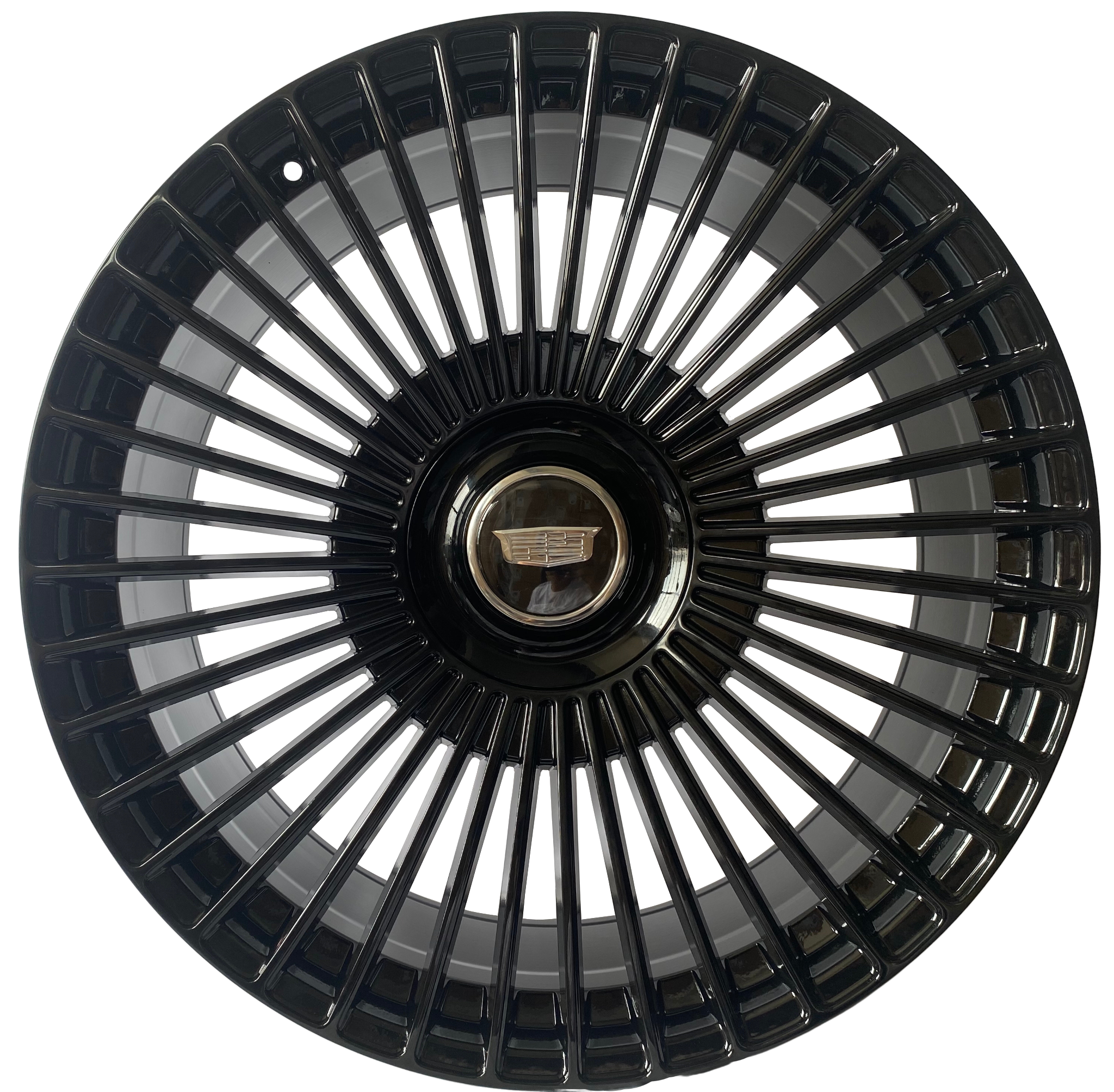
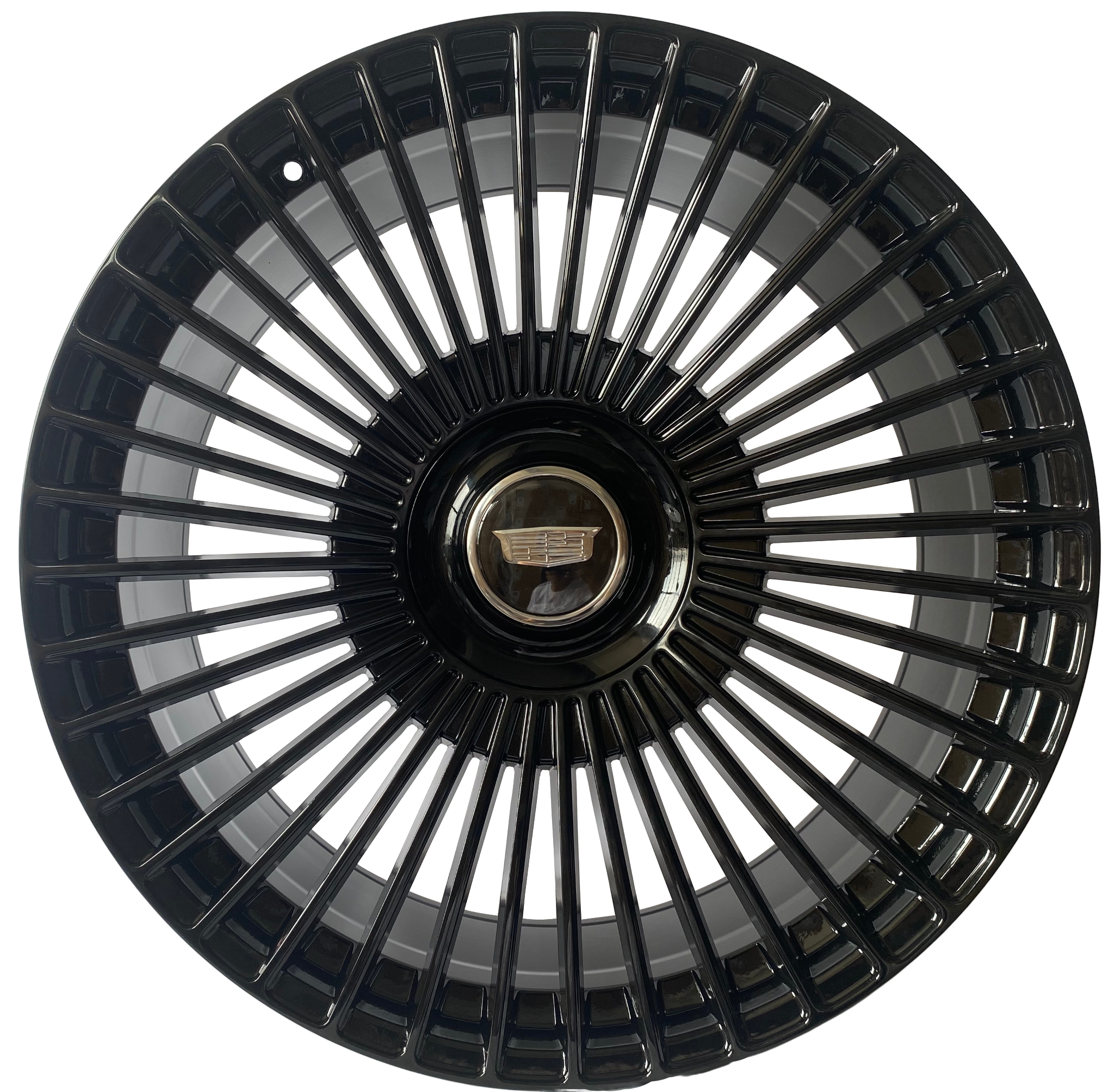


A 24-inch wheel doesn’t automatically ruin ride quality. Whether 24-inch rims will ruin my ride quality depends largely on the tire’s sidewall and the wheel-and-tire package’s weight. When the overall tire diameter stays roughly the same, a larger wheel usually leaves less sidewall to cushion bumps.
It’s a valid concern: less tire cushioning can make sharp impacts feel harsher, especially on rough roads. But wheel diameter alone doesn’t tell the whole story. Tire choice and wheel construction also affect ride quality.
This guide explains what to expect from 24-inch rims, from comfort over bumps to road feel and handling. You’ll see how tire sidewall, width, weight, and forged versus cast construction influence the result, so you can weigh the visual impact against the ride you want.
Key Takeaways
- Compare tire sidewall height, not just rim diameter, to understand how much cushioning your setup may retain.
- Consider how low-profile tires respond to potholes and sharp impacts before choosing a 24-inch setup.
- Balance the look of a wider wheel-and-tire package against possible changes in road noise and tracking.
- Account for wheel construction and weight, since a lighter forged wheel can help limit added unsprung mass.
Do Bigger Wheels Affect Ride Quality?
Yes. A larger rim often leaves less tire sidewall when the overall wheel-and-tire diameter stays roughly constant, reducing the tire’s cushioning over bumps. The result depends on the complete setup, not rim diameter alone.
Plus Sizing and Shorter Sidewalls
Plus sizing means increasing rim diameter while choosing a lower-profile tire to keep the overall rolling diameter roughly constant. The shorter sidewall leaves less tire between the road and the wheel to absorb impacts.
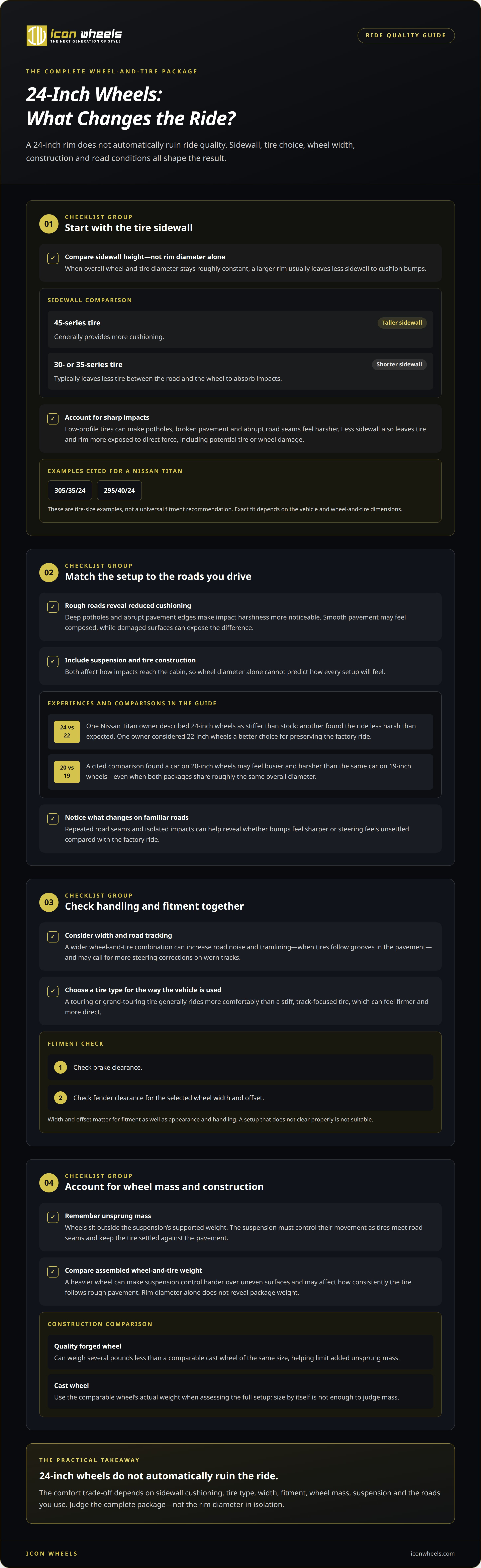
For example, a 45-series tire has a taller sidewall than a 30- or 35-series tire, generally giving more cushioning. A 24-inch rim paired with a low-profile tire can therefore feel firmer than a smaller rim with a taller-sidewall tire. Tire size examples considered for a Nissan Titan include 305/35/24 and 295/40/24. The exact fit depends on the vehicle and wheel-and-tire dimensions.
Pothole Damage Risks
Low-profile tires on 24-inch wheels can be vulnerable to pothole damage, including tire ruptures. With less sidewall to absorb a sharp impact, the tire and rim can face more direct force.
The risk matters most on roads with deep potholes or abrupt pavement edges. A hard impact can damage a tire or wheel, while a taller sidewall generally provides more cushioning. Both the tire profile and road conditions affect the risk.
Are 24-inch rims legal under U.S. vehicle regulations? Rim diameter alone doesn’t determine whether a setup is appropriate for a vehicle. Brake and fender clearance at the selected wheel width and offset are important fitment considerations.
How much do 24-inch rims and compatible tires cost? There’s no single price for every setup. Cost varies with the wheel and tire specifications, construction, and vehicle fitment.
Do 24-inch rims affect speedometer accuracy or vehicle warranties? A larger wheel setup usually keeps roughly the same overall diameter to help preserve speedometer accuracy. Warranty effects depend on the vehicle’s terms and the circumstances of a claim.
Ride comfort and impact harshness
A 24-inch setup can make a vehicle feel stiffer than its factory configuration, but the change varies by vehicle and tire package. One Nissan Titan owner described the ride on 24-inch wheels as stiffer than stock, yet still acceptable. Another Titan owner who rode in a truck with 24s said the ride felt less harsh than expected. These experiences show why wheel diameter alone can’t predict how every setup will feel.
Sharp impacts are often the clearest difference. Potholes, broken pavement, and abrupt road seams can feel more pronounced when the tire has less sidewall to cushion them. The effect won’t be equally noticeable on every road: smooth pavement may feel composed, while damaged surfaces expose the reduced cushioning. Suspension tuning and tire construction also affect how impacts reach the cabin.
So, will 24 inch rims ruin my ride quality? Not automatically. One Nissan Titan owner considered 22-inch wheels a better choice than 24s for preserving the factory ride. That trade-off reflects the balance between wheel appearance and comfort. A separate comparison found that a car on 20-inch wheels may feel busier and harsher than the same car on 19-inch wheels, even when both packages share the same overall diameter.
If you’re still asking, “Will 24 inch rims ruin my ride quality?” consider the roads you use most. Frequent potholes and rough pavement make impact harshness more relevant; smoother routes may make the change less noticeable. A drive over familiar roads can reveal whether steering feels unsettled or bumps feel sharper. Compare the proposed setup with the factory ride, paying attention to repeated road seams and isolated impacts. The goal is a balance that suits your daily driving.
Does wheel size change handling as well as comfort?
Yes. A larger wheel can change steering feel, but the tire and fitment determine much of the result. The practical question, “Will 24 inch rims ruin my ride quality?” needs more than a diameter-only answer. Tire width, construction, and the wheel’s position all influence how the vehicle responds on the road.
A wider wheel-and-tire combination can increase road noise and tramlining, when tires follow grooves in the pavement. On roads with worn tracks, you may need to make steering corrections more often. Width and offset also affect clearance around brakes and fenders, so fitment matters for handling as well as appearance. A wheel that does not clear properly is not a suitable choice.
Tire type also matters. A touring or grand-touring tire on a larger wheel will generally ride more comfortably than a stiff, track-focused tire, which can feel firmer and more direct. For everyday driving, the tire’s intended use matters as much as the rim’s appearance.
“Will 24 inch rims ruin my ride quality?” is best considered alongside how you want the vehicle to behave. A setup designed for smooth daily travel calls for different tire priorities than one aimed at a sharper performance character. Keep the complete package in view, including tire choice, width, offset, and clearance. This makes the trade-offs easier to understand before choosing a style, and helps preserve handling that feels suited to your usual roads.
Unsprung weight and wheel construction
A 24-inch wheel’s mass matters because wheels sit outside the suspension’s supported weight. This is called unsprung mass. As the tire meets a road seam, the suspension must control the wheel’s movement and keep the tire settled against the pavement. A heavier wheel can make that task harder, affecting how composed the vehicle feels over uneven surfaces.
Wheel weight also affects grip. A heavy wheel may respond less readily to suspension movement, making it harder for the tire to follow rough pavement consistently. That can reduce tire contact, especially over repeated bumps. The effect depends on the whole setup, including the dampers, tire, and wheel mass. Rim diameter alone does not tell you how heavy the assembled package will be.
Construction offers one way to manage mass. A quality forged wheel can weigh several pounds less than a comparable cast wheel of the same size. That difference can matter on a 24-inch setup, where added diameter may otherwise bring additional weight. Forging describes how the wheel is made, but it doesn’t mean every forged wheel weighs the same. Design and dimensions still influence the finished wheel’s mass.
Added mass can affect more than bumps. A heavier wheel requires more energy to spin up, so a larger package that adds rotational and unsprung weight can slightly reduce acceleration or fuel economy. These effects are connected: more mass to move and rotate increases the effort required from the vehicle. The change depends on the actual wheel-and-tire package, not a label alone.
Compare complete wheel-and-tire weights when assessing a 24-inch design. Consider construction alongside fitment and appearance. For a tailored forged-wheel direction, explore wheel construction options with the intended vehicle and driving priorities in mind.
ICON WHEELS
ICON WHEELS offers custom built forged wheels for drivers weighing appearance, fitment, and ride priorities together. When a 24-inch setup is under consideration, wheel construction and vehicle fitment matter alongside rim diameter. The right choice should suit the vehicle and the way it is driven, not just its stance.
ICON WHEELS offers forged wheels for Mercedes, Rolls-Royce, and Land Rover, tailored to luxury vehicles. Explore distinctive designs while considering how the complete setup will suit your driving priorities. Contact ICON WHEELS to discuss wheel options for your vehicle.
Choose the Setup That Fits Your Drive
Let your daily roads and driving priorities guide your choice, not appearance alone. A striking setup should also feel composed on the routes you travel most. Decide what matters most: a more commanding look, a softer response over rough pavement, or a balance between the two.
If you’re still weighing whether 24-inch rims will ruin your ride quality, focus on the complete wheel-and-tire setup rather than the rim measurement by itself. The right direction depends on how you want your vehicle to look and feel in everyday use. A considered choice brings those priorities together without treating comfort and style as opposing goals.
For a tailored next step, explore your wheel setup with ICON WHEELS. Move forward with a design that reflects your taste and suits the way you drive.
Frequently Asked Questions
How much bigger can I go safely?
There is no universal safe increase: your vehicle’s fitment limits set the boundary. As a starting point, compare the proposed package with the factory setup and preserve the overall tire diameter. The wheel’s width and offset must also provide brake and fender clearance. A setup that clears while parked still needs appropriate clearance through steering and suspension movement.
Will bigger wheels hurt my fuel economy or acceleration?
They can if the complete wheel-and-tire package adds rotational weight. More mass takes more energy to spin, which can affect acceleration and fuel use. The outcome depends on the package’s weight, not diameter alone. For example, two 24-inch designs can differ in construction and mass, so comparing complete setups gives a clearer picture than comparing rim sizes.
How do 24-inch rims affect ride comfort compared with smaller wheels?
A 24-inch setup can feel firmer over broken pavement, while a smaller-wheel package can leave more tire between the road and rim. The difference is most apparent over sharp joints or pothole edges. If daily routes include rough surfaces, prioritize a tire setup suited to comfort, then consider whether the larger wheel’s appearance is worth a firmer response.
What tire sidewall height is typical with 24-inch rims?
There isn’t one typical sidewall height for every 24-inch rim. Sidewall height depends on the tire’s width and aspect ratio, along with the vehicle’s required overall diameter. The aspect-ratio number describes sidewall height as a proportion of tire width, so the same ratio can produce different sidewall heights across different tire widths. Check the complete tire size, not the rim diameter alone.
How do 24-inch rims affect handling, braking, and road noise?
Handling depends on the complete tire-and-wheel combination. A wider tire can increase road noise and tramlining, when the vehicle follows grooves in the pavement. Rim diameter alone does not determine braking performance; tire grip, vehicle setup, and proper fitment matter. For a practical comparison, pay attention to steering behavior and braking feel on familiar roads.
Do 24-inch wheels reduce fuel economy or acceleration?
They can if the 24-inch wheel-and-tire package is heavier than the one it replaces. Added rotational weight requires more energy to bring the wheels up to speed, which can slightly affect acceleration or fuel economy. A lighter construction can help limit that added mass. Compare package weight and construction rather than assuming every 24-inch setup has the same effect.
