
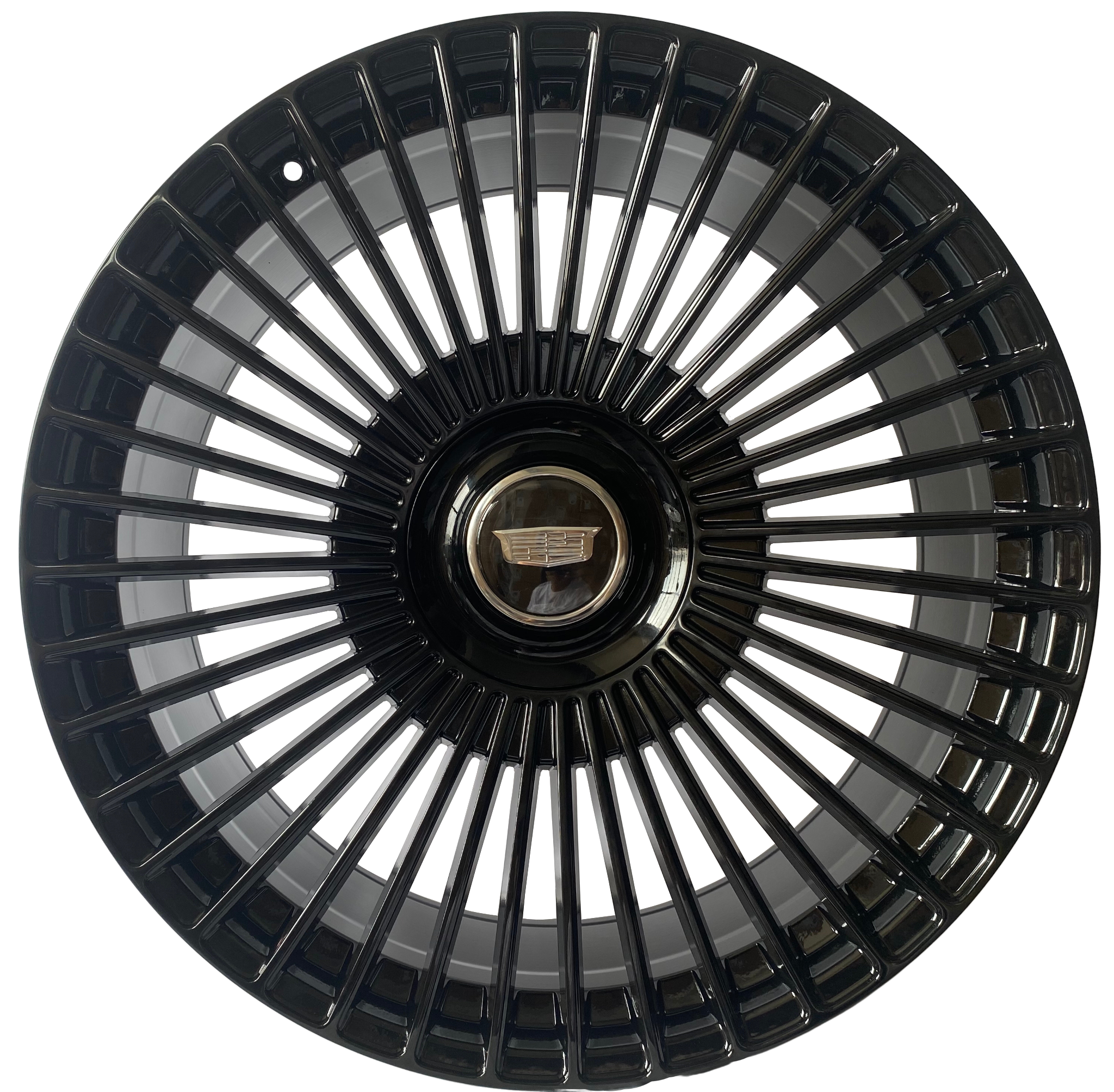
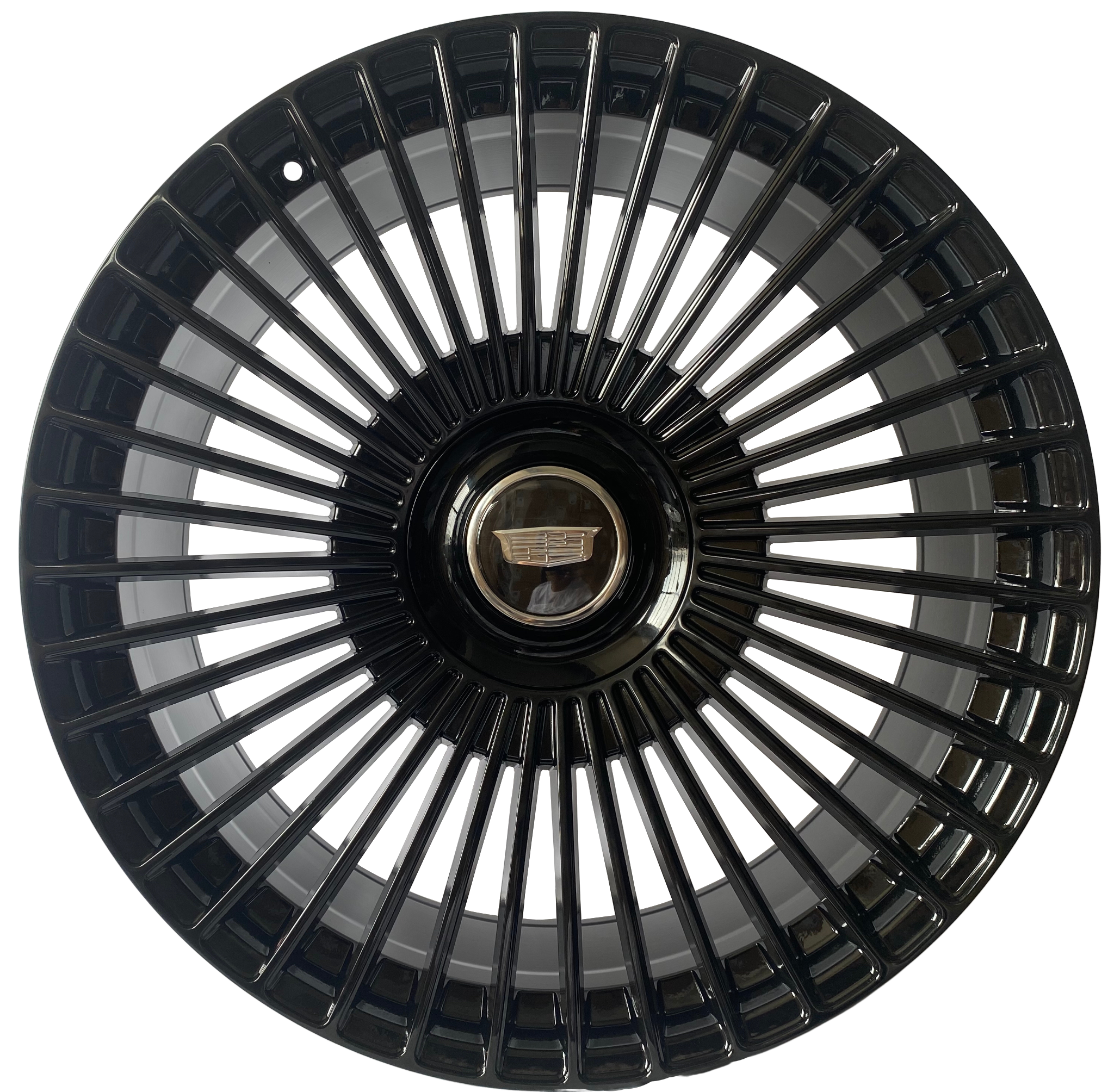


For owners searching “vossen forged vs bespoke cnc custom forged rims mercedes amg g63,” the key question is not simply which wheel looks bolder. It’s whether an established design or a tailored specification better suits the G 63’s appearance and vehicle-specific requirements. “Forged” and “CNC” are not necessarily competing wheel types: they describe different parts of production, while “bespoke” refers to a tailored approach to the design and specification.
Fitment deserves as much attention as finish. Wheel dimensions, offset, brake clearance, and load requirements all matter, and exact requirements can vary by model year and configuration. This comparison explains the terminology, outlines the practical differences between an established design and a bespoke direction, and gives you a checklist for assessing a wheel before choosing one.
Key Takeaways
- Forging describes wheel construction, while CNC machining is a manufacturing process. A forged wheel can also be CNC-machined.
- Compare established forged designs with bespoke CNC custom forged rims for the Mercedes-AMG G 63 by weighing design references against flexibility in the specification.
- Use product galleries to assess visual details, but not to confirm fitment for your specific G 63.
- Start with your exact model year and configuration, then assess dimensions, offset, brake clearance, and load requirements.
- ICON WHEELS offers custom-built forged wheels for luxury vehicles, including Mercedes models.
Forged vs. Bespoke CNC Custom Forged Rims for the Mercedes-AMG G 63
The useful comparison is between starting with an established wheel design and developing a specification around your own design priorities and vehicle configuration. Manufacturing terms alone don’t make that distinction. “Forged” describes how material is formed, “CNC” describes a machining method, and “bespoke” indicates a tailored approach to the design or specification.
Forging forms material, while CNC machining uses computer-controlled tools to cut and shape components. A forged wheel may also be CNC-machined, so these terms do not automatically refer to separate wheel categories. Production details can vary. For a general overview of the forging process, consider how forming differs from machining, then focus on the finished wheel’s construction and intended application.
For a G 63, a brand name or design image can’t establish fitment. The exact model year and configuration matter, along with the wheel’s dimensions, offset, brake clearance, and load requirements. Keep visual preferences separate from technical suitability as you compare designs and specifications.
What does bespoke CNC custom forged mean?
In this phrase, “forged” refers to forming the material, “CNC” refers to computer-controlled machining, and “bespoke” signals a tailored specification. CNC machining can be part of producing a forged wheel; it does not necessarily describe a competing wheel type. The label alone does not establish suitability or a particular performance result. Assess the design, final specification, and vehicle application together.
This distinction separates three questions: how the wheel is constructed, how its shape is machined, and which choices are tailored to the owner’s brief. An established design gives you a defined visual reference. A bespoke direction puts more emphasis on individual choices. Either way, the wheel must still be assessed for the specific vehicle.
Why does the G 63 need a vehicle-specific comparison?
Wheel and brake requirements depend on the vehicle’s configuration. Don’t assume that a wheel suitable for another Mercedes, or for a similar-looking G 63, will fit your vehicle. Check the proposed dimensions, offset, brake clearance, and load requirements against the exact model year and configuration.
Keep visual preference and technical suitability distinct. Product galleries can help you compare proportions and design character, but they can’t confirm whether a specific wheel fits your G 63. The sections below compare established design references with tailored specifications and outline the fitment details to assess.
How Forged Construction and CNC Machining Shape the Wheel
Wheel terminology is easier to understand when you separate three considerations: how the wheel is constructed, how it is machined, and how its final specification is customized. These are related but distinct parts of the process. The words “forged” and “CNC” alone don’t tell you whether a wheel suits a Mercedes-AMG G 63. Suitability depends on the design, dimensions, and intended vehicle application.
In plain language, forging forms the material, while CNC machining cuts and shapes it using computer-controlled tools. CNC describes a machining method, not necessarily a separate wheel category. A forged wheel can be CNC-machined, and production sequences can vary. Rather than treating the terms as rival choices, ask what design you’re considering, how it is specified, and whether that specification suits your vehicle.
Forged wheel construction versus CNC finishing
Forging forms material into a wheel blank or shape. Machining can then remove material to create features and final geometry. That’s why “CNC forged” can describe production stages that work together, rather than two competing wheel types. The label alone does not establish a particular alloy, process sequence, or performance result. Compare the finished wheel and its intended application instead of drawing conclusions from terminology alone.
Manufacturing and design choices can involve tradeoffs, but those depend on the application. Don’t assume a CNC-machined design is automatically superior or that all forged wheels have the same characteristics. For a G 63, the important question is whether the complete specification aligns with the vehicle and your priorities.
What customization can change on a G 63
Customization can address distinct choices. Design determines the wheel’s visual character, finish affects its appearance, and dimensions and fitment describe how it relates to the vehicle. Consider these choices together, but don’t confuse them: a preferred finish can’t make an unsuitable dimension appropriate, and a distinctive design doesn’t establish brake clearance or load suitability.
Build the specification in two layers. First, define the visual direction, including the spoke layout and finish you want on the G 63. Then assess the vehicle requirements, including dimensions, offset, brake clearance, and load requirements. Your design brief guides the appearance; the engineering requirements set the boundaries for what suits the exact vehicle. Model year and configuration matter, so don’t rely on a general G-Class reference.
For owners weighing the vossen forged vs bespoke cnc custom forged rims mercedes amg g63 choice, this separation makes the comparison more precise. An established design offers a clear visual reference. A bespoke specification gives greater emphasis to tailoring design choices around personal priorities. Neither removes the need to assess fitment separately.
Owners considering a tailored direction can view ICON WHEELS’ custom-built forged wheels for luxury vehicles, including Mercedes models. Make the brief specific: describe the look you want, identify the exact G 63 configuration, and distinguish appearance preferences from fitment requirements.
Comparing Vossen and Bespoke Forged Rims for G 63 Priorities
The main difference is the starting point. Standard catalog categories offer existing designs to explore. A bespoke route starts with the owner’s priorities and shapes a wheel specification around them. Neither approach automatically means better fitment or a better result. Compare the design options and specification choices, then assess the final wheel against your exact G 63.
| Decision point | Catalog forged direction | Bespoke forged direction |
|---|---|---|
| Design choice | Explore designs shown in standard catalog and hybrid-forged categories. | Develop a design brief around the owner’s desired visual character. |
| Specification flexibility | Begin with a defined product reference; assess the selected wheel’s available specification. | Tailor the specification to project priorities, within vehicle requirements. |
| Fitment process | Evaluate the specific wheel against the G 63’s model year and configuration. | Build fitment requirements into the tailored specification and verify them for the vehicle. |
| Visual reference | Use product galleries to compare visible design details. | Use a clear design brief and reference material to communicate the intended look. |
Brand recognition and customization address different priorities: one starts with an established design language, while the other centers the process on a tailored brief. That distinction can help narrow your options, but it doesn’t settle fitment. In either case, assess dimensions, offset, brake clearance, and load requirements for the exact vehicle. A gallery image or custom label is not proof of compatibility.
When a catalog forged design may fit your brief
A standard catalog direction may suit an owner who values an established maker and wants to begin with existing design references. Its forged and hybrid-forged categories provide a starting point, while product galleries make it easier to compare spoke patterns, proportions, and overall character. Use images to judge appearance, not to confirm that a pictured wheel fits your G 63’s model year and configuration.
When a bespoke forged direction may fit your brief
A bespoke approach may appeal if you want to shape a distinctive wheel specification around your vehicle and design intent. Set out the look you’re after, then keep fitment requirements central as the specification takes shape. Customization isn’t a technical advantage by itself; the finished design still needs to be assessed for the specific G 63.
For owners leaning toward a tailored direction, explore custom forged wheel options for luxury vehicles, including Mercedes models. A useful brief covers both the visual details that matter to you and the vehicle requirements the final specification must meet.
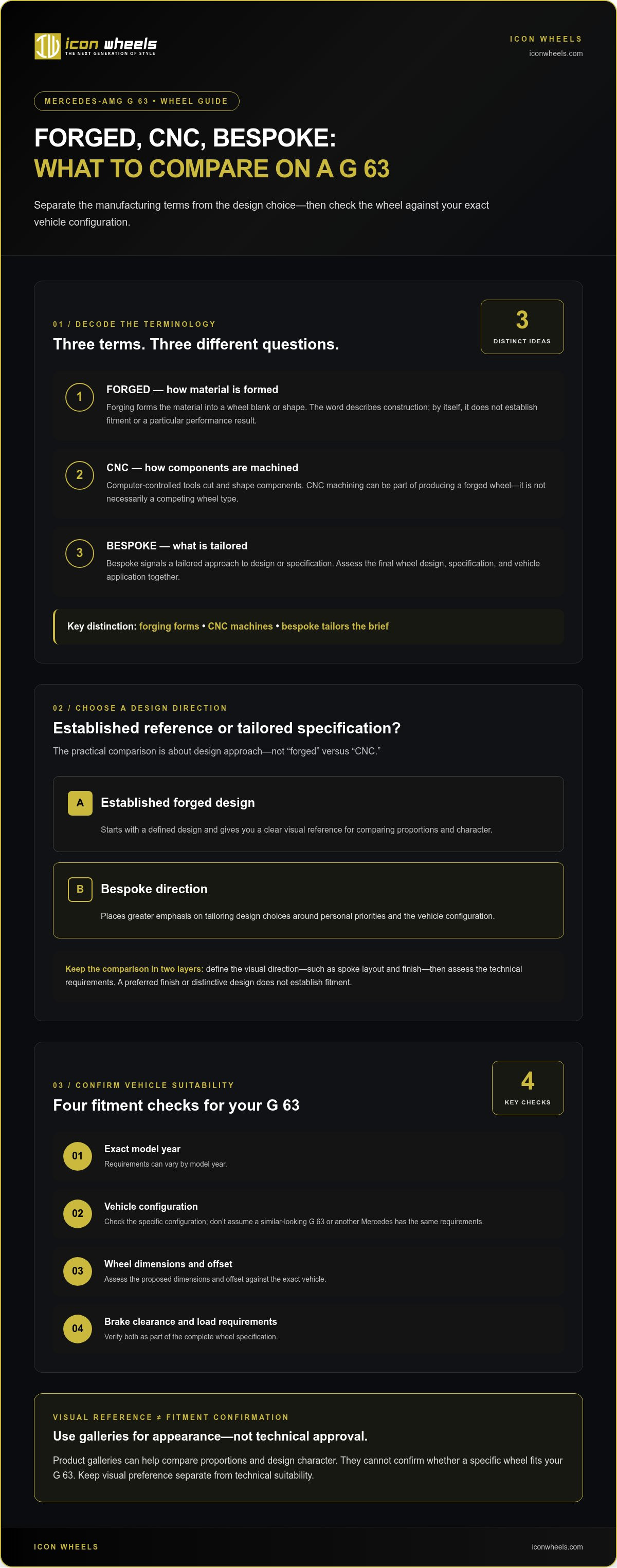
A G 63 Wheel-Fitment Checklist Before You Choose
A wheel can look right in a product image and still be unsuitable for a specific G 63. Before comparing designs, build a fitment brief around the vehicle. For the vossen forged vs bespoke cnc custom forged rims mercedes amg g63 decision, a clear brief keeps appearance goals separate from requirements that need to be assessed for your exact vehicle.
- Record the exact vehicle. Note the model year, G 63 trim or configuration, and relevant factory or aftermarket modifications. Don’t assume similar-looking variants have identical fitment requirements.
- Document the current setup. Record the existing wheel specifications and tire size, if known. Include changes that could affect clearance or the intended fitment.
- Assess wheel dimensions and offset. Compare the specific wheel specification with the vehicle’s requirements. A dimension suitable for one G 63 year or configuration may not suit another.
- Check brake clearance. Assess clearance for the exact vehicle and wheel design. A gallery image can show appearance, but it can’t establish clearance for a particular setup.
- Account for load requirements. The wheel’s suitability needs to be considered against the G 63’s requirements. A general product description is not vehicle-specific verification.
- Include tires and monitoring. Consider tire size alongside the wheel specification, and account for TPMS compatibility as part of the complete setup.
- Define intended use. Describe how you use the vehicle, then weigh the desired appearance against your priorities for comfort and everyday driving.
Which vehicle details should guide fitment?
Start with the vehicle record, not a wheel image. The model year, exact G 63 configuration, existing wheel specifications, and relevant modifications provide context for assessing fitment. Brake clearance and load requirements also need to be considered for the vehicle. Two G 63 variants may look similar yet differ in details that matter to wheel fitment, so don’t transfer an assumption from one vehicle to another.
How should design and daily use affect the decision?
Consider the stance you want alongside how you drive the vehicle. A preferred wheel-and-tire proportion should be weighed against everyday comfort priorities and intended use. Think about finish maintenance, too: wheel exposure and the care you’re prepared to give the chosen finish can inform your decision. Don’t treat a finish description as a promise of durability.
Use this checklist for an established design or a custom specification. The make and style may differ, but the vehicle-specific checks remain central. For a Mercedes-focused wheel direction shaped around your priorities, explore custom-built forged wheels from ICON WHEELS.
Choose Your Mercedes-AMG G 63 Forged Wheel Direction with ICON WHEELS
The right direction depends on what matters most to you: an established design reference, more room to shape an individual look, or a clear way to assess fitment. The vossen forged vs bespoke cnc custom forged rims mercedes amg g63 comparison is not a verdict that one route is always better. It helps you identify which approach matches your priorities, then focus on a specification suited to your exact vehicle.
Use three filters. First, decide how much design flexibility you want. Next, identify the vehicle details needed to assess fitment. Finally, consider how you use the G 63 and how you want it to look. Keeping these filters distinct helps prevent a striking appearance or familiar name from standing in for fitment confidence.
Match the wheel route to your priorities
If recognizable styling and existing visual references lead your decision, an established design may be the natural starting point. If individual design intent matters more, a custom-built direction gives your brief a different focus. Either way, preference is only one part of the choice. Assess the wheel’s dimensions, offset, brake clearance, and load requirements for the exact G 63 year and configuration.
- Prioritize established references: Compare available designs and the visual details that define their character.
- Prioritize individual expression: Set out the design choices you want a custom-built wheel to reflect.
- Keep fitment central: Let the vehicle’s requirements guide the final specification, whichever design route you prefer.
ICON WHEELS offers custom-built forged wheels for luxury vehicles, including Mercedes models. This tailored direction can suit G 63 owners whose brief begins with a particular design intent. The goal is not customization for its own sake, but a considered wheel choice that takes both the visual brief and vehicle requirements into account.
Take the next step with ICON WHEELS
Prepare a concise brief before exploring options. Include your G 63’s model year and configuration, note relevant modifications or existing wheel specifications, and describe your preferred design direction. If finish matters to your vision, include that too. These details help frame the project without treating a visual reference as proof of fitment.
Be clear about how much design flexibility you want, what matters most in the finished appearance, and which vehicle details should guide fitment. ICON WHEELS offers custom-forged wheels for luxury-vehicle owners, including Mercedes owners. To explore a tailored direction, explore custom forged wheels for your Mercedes.
Give Your G 63 a Wheel Direction That Feels Distinctly Yours
The right wheel choice should feel intentional, not simply impressive in a photograph. The vossen forged vs bespoke cnc custom forged rims mercedes amg g63 decision gives you a way to define what you want your G 63 to express, then consider that vision alongside the vehicle’s requirements. Let your priorities guide the design while keeping the specification grounded in the needs of your exact vehicle.
ICON WHEELS offers custom-built forged wheels for luxury vehicles, including Mercedes models. For G 63 owners with a specific design direction in mind, a clear brief can help bring together the intended look and the vehicle details that matter to the wheel specification.
Explore custom forged wheels for your Mercedes from ICON WHEELS and start defining a wheel direction for your G 63.
Frequently Asked Questions
Is CNC machining the same as forging?
No. Forging describes how material is formed, while CNC machining describes controlled cutting used to shape a component. A forged wheel may also be CNC-machined during production, so the terms refer to different manufacturing stages rather than automatically competing wheel types. Seeing “CNC” in a description doesn’t tell you the wheel’s full construction or suitability for your vehicle. Compare its stated construction, complete specification, and intended application.
Can Vossen forged wheels and bespoke forged rims both fit a Mercedes-AMG G 63?
Either route can be considered, but compatibility depends on the specific wheel and G 63. In the vossen forged vs bespoke cnc custom forged rims mercedes amg g63 comparison, neither a familiar brand nor a custom design establishes fitment on its own. Assess the vehicle year and configuration alongside the proposed dimensions, offset, brake clearance, and load requirements. A gallery image or broad Mercedes fitment description is not enough to verify a particular G 63 setup.
What happens if the wheel offset is wrong on a G 63?
An unsuitable offset changes how far the wheel sits inward or outward and can create clearance or handling concerns. The result depends on the complete vehicle and wheel setup, so don’t choose an offset from a photo or generic recommendation. A wheel that appears to achieve your preferred stance still needs to be assessed alongside its dimensions, tire pairing, brake clearance, and the G 63’s load requirements.
Do custom forged rims affect the Mercedes-AMG G 63 ride?
They can influence the overall setup, but forged construction alone doesn’t determine ride quality or handling. The result depends on the selected wheel dimensions, tire choice, vehicle configuration, and how you use the G 63. Assess the proposed wheel-and-tire combination as a whole rather than assuming a construction label guarantees a particular feel. Photos of another vehicle can’t establish how its setup will behave on yours.
Can I keep the factory TPMS when changing G 63 wheels?
Possibly, but compatibility depends on the vehicle’s sensors, replacement wheel design, and installation setup. Don’t assume the sensors transfer automatically or that every wheel accommodates the same components. Include TPMS in the specification discussion before settling on a wheel-and-tire combination. Sensor compatibility is a practical detail to resolve alongside fitment, not something an attractive gallery image can answer.
How do I compare wheel galleries with a bespoke design consultation?
Galleries help you identify visual preferences; a bespoke design discussion focuses on turning those preferences into a specification for your vehicle. Use images to note details such as spoke character, finish, and preferred stance. Keep those visual references separate from fitment evidence: a gallery can inspire a design direction, but it can’t verify dimensions or clearance for your exact Mercedes-AMG G 63.
