


A low price alone doesn't tell you whether a forged wheel is a smart buy. So, how much do custom forged wheels cost? The answer depends on the build: construction, material, size, finish, brake clearance, and the vehicle’s load requirements all shape the final price. A lower-priced set can make sense when its specifications suit the vehicle and your priorities. The price by itself isn't enough to judge its value.
Comparing prices closely makes sense, especially when products use different materials or construction methods. If you’re asking how much do custom forged wheels cost, this guide explains what influences the price and how manufacturing methods compare. It also covers what to consider before choosing a lower-priced option, so you can assess the trade-offs and find a build that suits your vehicle and priorities.
Key Takeaways
- Judge a lower-priced forged set by its specifications and fit, not by the price alone.
- Compare square and staggered builds by how their different wheel sizes shape the setup you want.
- Use construction and manufacturing method to understand the trade-offs between monoblock, multi-piece, cast, flow-formed, and forged wheels.
- For a luxury vehicle-specific or custom forged build, explore ICON WHEELS’ options for Mercedes, Rolls-Royce, and Land Rover.
Is a cheap forged wheel worth it?
A low price is meaningful only when considered alongside the wheel’s material, construction, diameter, width, and finish. Compare those specifications first; otherwise, you may be comparing different builds.
Prices by Material and Construction
Material and construction shape the price differently. Carbon fiber and three-piece forged builds occupy the high-cost end of the market, while simpler forged constructions can start lower. Diameter and width also matter: larger or wider wheels require a different build, while a complex finish adds another cost factor. The average price per custom forged wheel has no single useful figure; specifications determine the comparison.
Before buying, review the warranty terms, the wheel’s load rating against your vehicle’s requirements, and fitment details such as diameter, width, and brake clearance. These checks help determine whether a lower-priced set suits your vehicle and intended use.
| Option | Material | Construction | Price factors |
|---|---|---|---|
| Forged wheel | Forged material | One-piece or multi-piece | Diameter, width, finish |
| Carbon fiber wheel | Carbon fiber | Custom build | Material and specification |
| Three-piece forged wheel | Forged components | Face, lip, and barrel | Construction and finish |
Match the wheel’s construction and dimensions to your vehicle, then compare options with equivalent finishes and materials.
Reported Prices for Wheel Sets
Reported market prices span a broad range, so a starting figure alone can mislead. Lower-priced custom forged models sit apart from premium or exotic builds, while carbon fiber and three-piece sets can reach substantially higher price tiers. The difference reflects more than a label: diameter, width, finish complexity, and construction all affect the final specification.
For a useful comparison, evaluate complete sets with matching materials, wheel counts, and build styles. A price for one wheel cannot be compared directly with a four-wheel set. The same applies to trucks: their load requirements and fitment needs can shape the build. A cheap set is worthwhile only when its fitment, load rating, and warranty terms suit the vehicle.
Example costs for square and staggered wheel sets
A square setup uses matching wheel dimensions at all four corners. A staggered setup uses different front and rear dimensions, so each pair may need distinct specifications. This can change engineering and manufacturing requirements, but it does not create one universal price premium.
These examples are not fixed prices for every vehicle or aftermarket wheel. The vehicle, diameter, width, and construction all affect the product and its price.
Custom engineering and machining account for a wheel’s dimensions and design. A staggered setup may require different front and rear measurements, and a distinctive finish can add production work. Consider the wheel price separately from tires, mounting, and other costs of a complete road-ready setup.
Shipping adds another line item. Taxes also affect the final purchase total, with the amount depending on the transaction’s location. Tires and mounting are separate from the wheel set; tire choice and shop labor determine those additional costs.
Order-to-delivery time depends on design approval, machining, production scheduling, and shipping distance. Complex finishes or unusual dimensions add production steps, while transit follows completion—a stage in manufacturing logistics where protective wrapping and pallet handling systems, like those supplied by Phoenix Handling Solutions Limited, ensure heavy components remain protected during transport. The sequence is design, manufacture, then delivery; each stage shapes the overall wait.
Before selecting an aftermarket wheel, compare the complete front-and-rear specifications and total purchase costs. For a vehicle-specific direction, consider custom wheel fitment options alongside your chosen setup.
There is no single average price; cost varies by product, vehicle, wheel dimensions, and construction.
Are 2-piece wheels more expensive than monoblock?
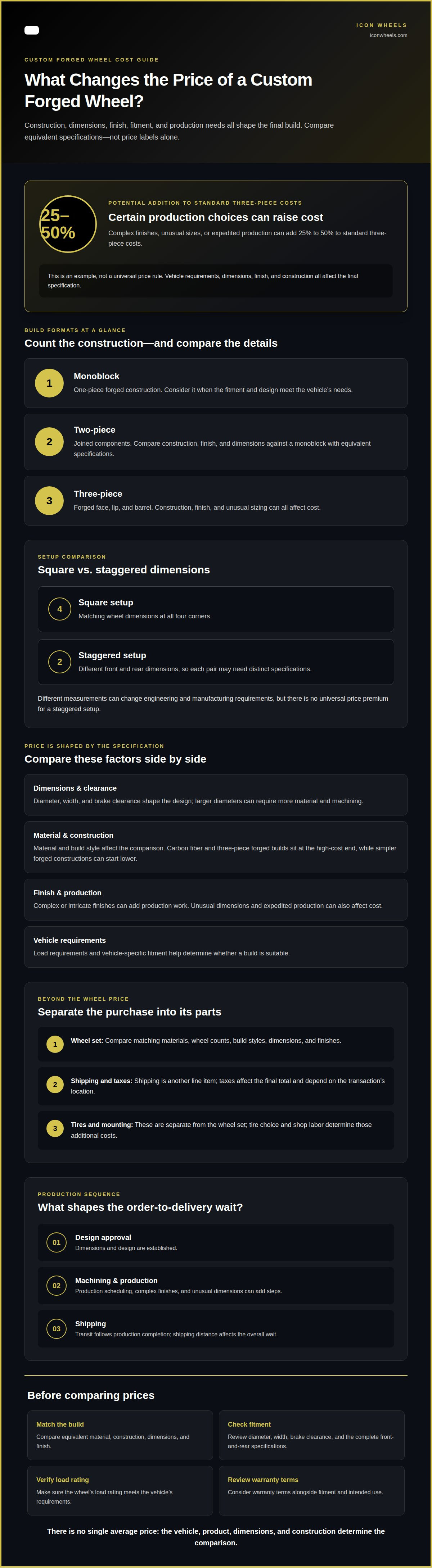
Not automatically. A monoblock forged wheel uses one-piece construction, while a two-piece build joins components. Three-piece wheels assemble forged faces, lips, and barrels. The number of components affects engineering and assembly, but price also depends on dimensions, finish, and vehicle requirements.
Diameter affects material use and machining, so larger sizes can change the price. Width and brake clearance also shape the design. For a Corsa monoblock comparison, match the diameter and other specifications before judging the price. A different size or finish can make two otherwise similar listings poor comparisons.
These figures describe different construction and pricing examples, not a rule that one type always costs more. Complex finishes, unusual sizes, or expedited production can add 25% to 50% to standard three-piece costs.
Use this selection guide to compare the builds:
- Monoblock: Consider it when a one-piece forged construction meets the vehicle’s fitment and design needs.
- Two-piece: Compare component construction, finish, and dimensions against a monoblock with equivalent specifications.
- Three-piece: Account for the forged face, lip, and barrel, plus any custom finish or unusual sizing.
Colors and finishes can distinguish a custom build, but intricate surface treatments may add cost. Compare options with the same diameter, width, finish, and load requirements. This keeps the comparison focused on construction rather than mismatched specifications.
So, how do custom forged wheel prices vary by size and diameter? Larger diameters can require more material and machining, while width, finish, brake clearance, and vehicle load requirements also shape the final price. Compare equivalent dimensions first, then consider differences in construction.
Cast, flow-formed, and forged manufacturing methods
Manufacturing methods change how aluminum becomes a wheel. Casting pours molten aluminum into a mold. Flow forming starts with a cast wheel, then rollers shape and compress its barrel. Forging presses aluminum under high force before the wheel is machined. These processes result in different constructions, affecting weight, design options, and price.
Typical 18-inch cast wheels weigh 23 to 29 lb; flow-formed examples weigh 19 to 23 lb. Flow forming is also called rotary forging, though it differs from forging a wheel from a solid billet.
Forged construction begins with a pressed aluminum blank, which is then machined into the finished profile. This process allows for detailed spoke designs and custom fitment. Two- and three-piece forged wheels can combine forged faces, lips, and barrels. Their components and specifications shape the manufacturing process.
Use these distinctions to assess what matters for your vehicle:
- Cast: Compare the lower manufacturing cost with the greater weight shown by typical 18-inch examples.
- Flow-formed: Consider the middle ground in the listed prices and weights.
- Forged: Prioritize custom design, fitment, and construction when those requirements matter most.
A brushed finish is a surface choice, not a manufacturing method. It can be applied to different wheel constructions, so compare the finish separately from how the aluminum was formed. Match the manufacturing method to your priorities, then evaluate the exact dimensions and vehicle fitment.
Explore custom built forged wheels to shape a forged design around your vehicle’s fitment and style.
ICON WHEELS: Wheels For Mercedes
ICON WHEELS offers Mercedes wheels designed for specific vehicle fitments and styles. If you’re comparing forged wheels with other manufacturing methods, focus on the specifications that shape fitment, construction, and finish.
For Mercedes, Rolls-Royce, and Land Rover vehicles, ICON WHEELS offers model-focused wheel options, alongside Custom Built Forged Wheels. This is a natural next step when you’ve clarified your priorities and want a wheel choice tailored to your vehicle rather than a generic comparison.
Consider your vehicle model and preferred design direction when choosing wheels. ICON WHEELS offers custom forged wheel options for luxury vehicles. Contact ICON WHEELS to discuss your wheel requirements.
Turn Your Wheel Brief Into a Clear Build
Turn your preferences into a defined wheel brief. Decide which design direction suits your vehicle, then focus on the dimensions, construction, and finish that matter most. Before choosing, ask: how much do custom forged wheels cost for the build I have in mind? Comparing options with matching requirements gives you a more useful basis for that decision.
ICON WHEELS offers Wheels For Mercedes, Wheels For Rolls Royce, and Wheels For Land Rover. Each provides a vehicle-focused starting point, while a custom build creates room for a more individual direction. As you refine your preferences, ask: how much do custom forged wheels cost for the configuration that suits my vehicle and style? Bring your vehicle and design goals into the conversation.
Contact ICON WHEELS about your build and take the next step toward wheels that express your vision with precision.
Frequently Asked Questions
How Much Do Wheels Cost in the US?
These figures describe different manufacturing categories, not forged wheels. Compare whether a listing covers a complete set or individual wheels, and whether tires are included. Diameter, finish, and construction also affect whether two options are comparable.
How much does a set of custom forged wheels cost in the US?
Custom forged wheel prices vary by product and specifications. These are specific product listings, not a universal set price. Match the selected listing to the vehicle and wheel configuration.
How do monoblock, two-piece, and three-piece forged wheel prices compare?
There’s no fixed rule that makes every two-piece wheel more expensive than every monoblock. Compare options with the same diameter, width, finish, and fitment requirements. A multi-piece design involves separate components and assembly, while a monoblock uses one-piece construction. The meaningful comparison is the complete specification and included components, not the construction label alone.
What factors affect the price of custom forged wheels, such as finish, offset, and bolt pattern?
Finish, offset, bolt pattern, diameter, width, brake clearance, and vehicle load requirements all shape a custom wheel specification. Offset affects the wheel’s position relative to the hub, while the bolt pattern must match the vehicle’s mounting points. A brushed or complex finish can also change the work required. Compare these details together, since mismatched specifications make prices difficult to compare.
How much do custom forged wheels cost for popular cars and trucks?
There isn’t one price for every popular car or truck; the required build determines the cost. Mercedes S-Class, Range Rover, and Cadillac Escalade wheels require model-specific fitment. For trucks, load requirements also shape wheel specifications. Compare the exact vehicle, dimensions, and construction instead of relying on a broad model category to predict a custom wheel price.
What extra costs should I budget for, including tires, shipping, installation, and mounting hardware?
Budget separately for tires, mounting, and any required mounting hardware; their costs depend on the parts and work involved. ICON WHEELS offers free shipping to the lower 48 contiguous United States and internationally, and orders ship within 2 business days. A valid contact number is required for shipping purposes. Wheel purchases do not include tire installation or general auto repair.
