
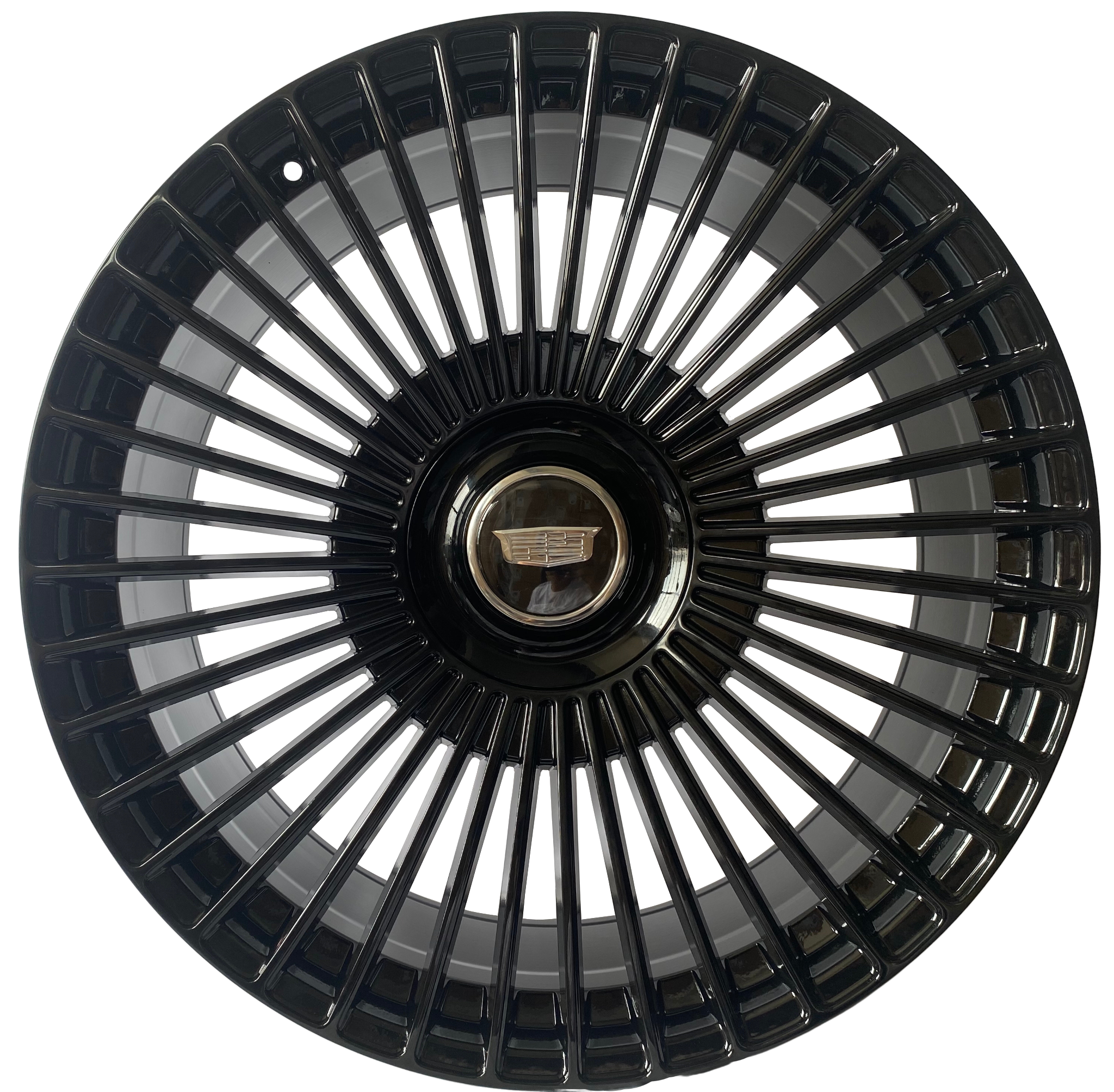
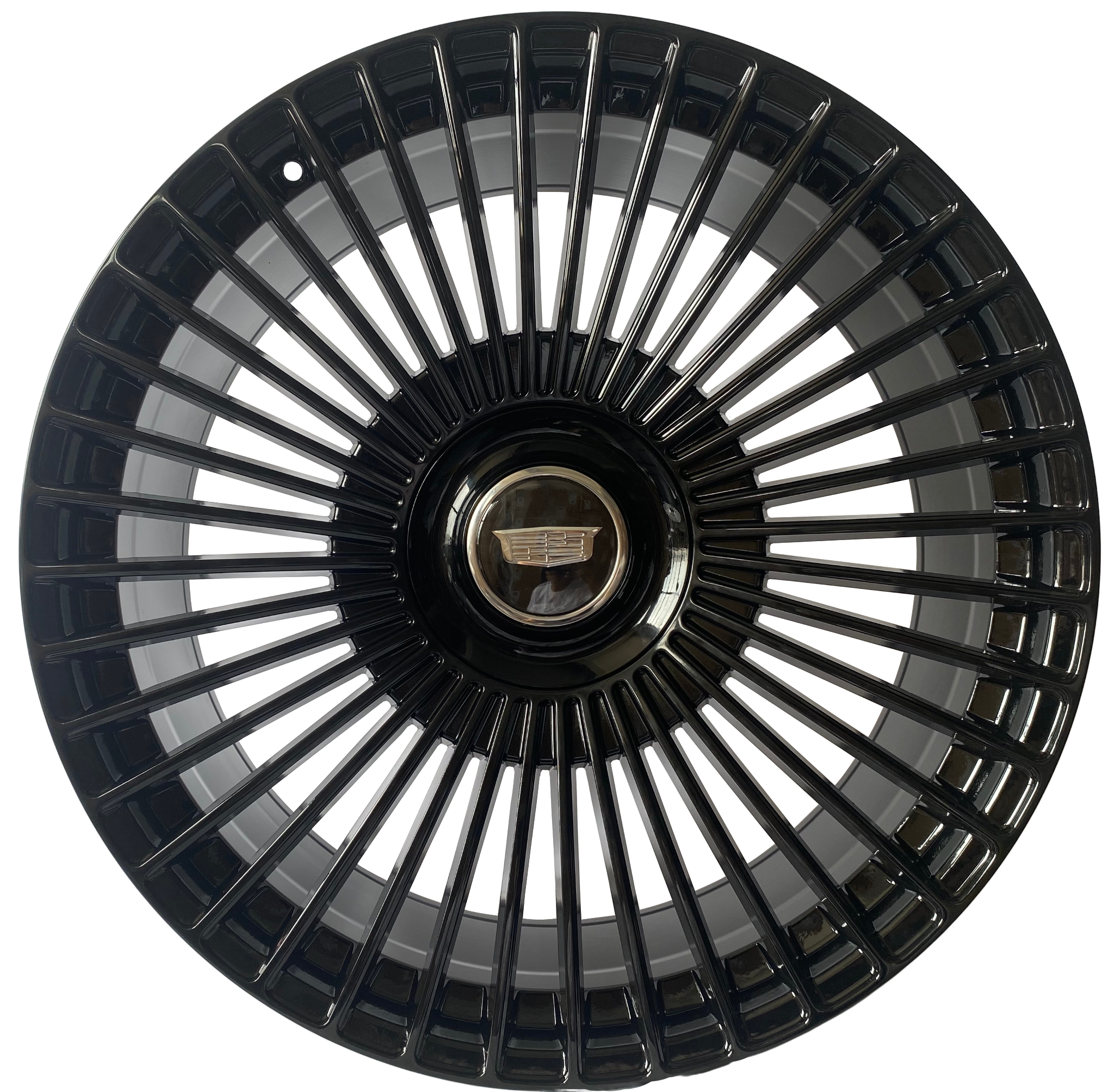


Tasteful wheel upgrades for luxury cars balance visual impact with precise fitment. Finish and spoke design shape the look, but diameter, bolt pattern, center bore, and offset determine whether a wheel suits the vehicle. A larger wheel can create a sportier profile, but may also bring a firmer ride and less sidewall cushioning.
That balance matters: the right design should complement the car without compromising fit or the driving feel you value. Black, chrome, gloss, matte, and two-tone finishes each create a distinct impression, while spoke patterns can make the overall design feel more refined or futuristic.
This guide explains the elements that shape luxury wheel design and how to assess key fitment measurements. You’ll also learn what to consider when choosing wheel diameter, including how tire selection and clearance affect the result. The aim is a composed upgrade that looks intentional and works with your vehicle.
Key Takeaways
- Learn how offset affects a wheel’s position relative to the fender, and why clearance matters through steering and suspension movement.
- Understand why matching the bolt pattern is only part of fitment, and how a hub-centric design or centering ring can address center-bore differences.
- See how tire ratings, rim-width compatibility, and brake-caliper clearance shape a suitable wheel-and-tire combination.
- Explore how custom-built forged wheels from ICON WHEELS can bring a tailored look to select luxury vehicles.
What Influences 2025 Luxury Wheel Design Trends?
Luxury wheel design in 2025 pairs distinctive finishes with deliberate restraint. Tasteful styles include black or silver surfaces, measured chrome accents, and balanced spokes rather than competing details.
Finish Types and Textures
A wheel finish is its visible surface treatment, from black alloy to chrome, two-tone, or textured effects. Black alloy gives a modern, assertive presence; chrome adds a brighter, more conspicuous flash. Gloss and matte finishes change the visual character of the same color, while two-tone designs contrast surfaces such as black and silver. Textured details add depth. A custom combination can make spoke geometry feel more individual without extra ornament, creating a distinctive profile with a controlled finish palette.
Finish, Appearance, and Maintenance
Finish maintenance means caring for a wheel’s surface to preserve its appearance. Gloss can emphasize reflections and visible residue, while matte surfaces create a quieter, less reflective effect. Chrome draws attention with a bright, polished look; textured or two-tone surfaces add detail around the spokes. Wash cool wheels with pH-neutral cleaner, a soft brush, and tools reserved for wheels. Inspect the finish with each wash. Heat and drying chemicals can leave marks, so avoid cleaning wheels while hot.
Tasteful Wheel Styling
Tasteful styling uses finish and spoke design to complement the vehicle, not compete with it. On a formal sedan, silver or gloss black with balanced spokes creates a composed look. On a sport-focused model, distinctive spokes add a futuristic edge without layering chrome, contrast, and texture. Choose one feature, such as a matte finish or two-tone spokes, then keep other details quiet. That restraint gives the wheels custom character without visual excess and helps the design suit the vehicle’s overall presence.
Gloss, matte, and two-tone combinations give you ways to customize a wheel’s finish. Chrome adds a brighter, more noticeable touch. Each option shapes the wheel’s presence differently: a restrained finish keeps attention on the overall form, while a more conspicuous treatment makes the surface a stronger visual feature. Decide how much contrast or shine suits the intended character, then avoid combinations that make every detail compete.
Wheel fitment, size, bolt pattern, and offset
Fitment depends on matching the wheel to the vehicle, not appearance alone. Diameter, bolt pattern, center bore, and offset must work together.
Factory and Aftermarket Fitment
Factory wheels are designed around a vehicle’s original dimensions and clearances; aftermarket fitment can change those dimensions. This distinction matters because a wheel that bolts on may still sit incorrectly or interfere with steering, suspension, or brakes. For example, Audi wheels with a 5x112 bolt pattern illustrate why matching the vehicle’s exact pattern matters. Correct fitment also accounts for tire size and available clearance.
Fitment Safety and Local Requirements
Fitment safety means selecting wheels and tires that match the vehicle’s dimensions and use requirements. The National Highway Traffic Safety Administration offers guidance on tire sizing, ratings, and reading tire-sidewall information. Compare the tire’s load index and speed rating, along with its approved rim-width range. Local rules for tire protrusion and vehicle inspections depend on the jurisdiction; there is no single nationwide answer. A certification label alone cannot establish whether a particular wheel clears the vehicle’s brakes or suspension.
Wheel Sizes and Offsets by Model
Wheel size and offset are vehicle-specific measurements, so no single size or offset fits every luxury model. Offset determines how far the wheel sits inward or outward relative to the fender. Many modern luxury cars use positive offset to keep wheels tucked for aerodynamics and suspension clearance. An incorrect offset can cause rubbing, stress components, or push the tire beyond the fender. Clearance needs to be assessed through steering lock and normal suspension travel.
Ride comfort, handling, and road noise depend on the complete wheel-and-tire combination. Larger wheels can bring shorter tire sidewalls, a firmer ride, and more road texture in the cabin; diameter, width, weight, and offset also affect acceleration and turning. Quality aftermarket wheel costs vary with wheel and tire choices and installation, so there is no single price. Warranty, lease, and insurance effects depend on the applicable contract and policy terms.
Bolt patterns and center bore
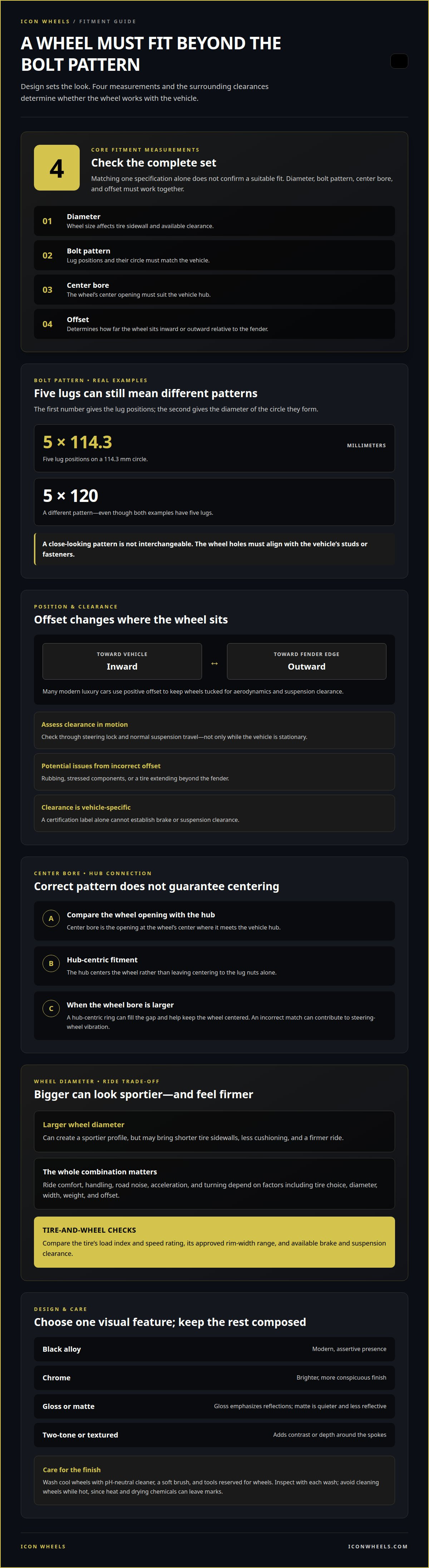
A wheel can match a vehicle’s diameter and still fail to center or fasten correctly. Bolt pattern and center bore are separate measurements, and both affect how the wheel meets the hub. When choosing replacement wheels, check each measurement against the specific vehicle instead of relying on appearance or diameter alone.
Bolt pattern describes the number of lug positions and the diameter of the circle they form. In the notation 5x114.3, five lug positions sit on a 114.3 mm circle. A 5x120 pattern is different, even though both examples have five lugs. Matching the pattern matters because the wheel’s holes must align with the vehicle’s studs or fasteners. A close-looking pattern is not an interchangeable fit.
The center bore is the opening at the wheel’s center, where it meets the vehicle hub. Hub-centric fitment means the hub centers the wheel rather than leaving centering to the lug nuts alone. A hub-centric ring can fill the gap when a wheel’s center bore is larger than the hub. This helps keep the wheel centered while driving; an incorrect match can contribute to steering-wheel vibration.
Check these details together, not in isolation. A correct bolt pattern does not establish a matching center bore, and neither measurement confirms brake clearance or offset. The full combination must suit the vehicle’s hub and surrounding components. That precision matters on a luxury car, where a small fitment mismatch can disrupt a composed drive.
Tire-pressure monitoring also belongs in the fitment plan. Some wheels include sensors that monitor tire pressure and temperature, and original sensors may transfer to new wheels. Account for sensor compatibility alongside the bolt pattern and center bore. A wheel choice is complete only when its mounting dimensions and tire-monitoring setup work together as intended.
The guide recommends hub-centric wheels, centered by the vehicle hub rather than only by the lug nuts. Hub-centric rings can fill the gap when a wheel’s center bore is larger than the vehicle hub.
Choosing wheel diameters for luxury vehicles
Wheel diameter changes a luxury vehicle’s proportions, tire sidewall, and driving character. The best choice balances visual presence with the tire size and clearance the vehicle can accommodate.
Large wheels are increasingly seen on full-size SUVs. Sizes of 22, 24, and even 26 inches appear on luxury SUVs and sedans; 24- and 26-inch wheels are growing choices for full-size SUVs such as the Cadillac Escalade. Their larger faces can make a vehicle look sportier and give spoke designs more visual space. But a dramatic diameter alone doesn’t make a well-matched upgrade.
Consider the tire at the same time as the wheel. A larger wheel typically leaves less room for tire sidewall when overall tire diameter stays close to its factory measurement. That shorter sidewall can transmit more road texture and create a firmer ride over uneven pavement. Keeping overall tire diameter close to the factory measurement also helps preserve speedometer readings and electronic driver-aid function.
Diameter, width, weight, and offset all influence how a vehicle accelerates, turns, and absorbs road imperfections. A heavier wheel adds unsprung mass, making suspension response more demanding over broken pavement. A lighter quality wheel may feel more responsive when its strength and load rating suit the vehicle. Fuel economy and braking response depend on the complete wheel, tire, and vehicle combination, not diameter alone.
Set a clear priority: preserve the vehicle’s intended tire diameter and fitment before choosing a larger visual statement. Check tire load index, speed rating, and approved rim-width range together. Staggered tire sizing may prevent front-to-rear rotation, and its compatibility with the drivetrain matters. For premium comfort, drivers who prefer a smooth ride may favor a moderate diameter and more sidewall. Choose a larger size when the styling gain suits the vehicle and the complete setup remains compatible.
ICON WHEELS
ICON WHEELS offers custom-built forged wheels engineered for luxury vehicle brands. For drivers balancing distinctive design with vehicle-specific fitment, its range includes wheels for Mercedes, Rolls Royce, and Land Rover. Start with your vehicle, preferred appearance, and the fitment details covered in this guide. Those priorities help narrow the choice between restrained refinement and a more pronounced custom look.
Explore options that pair considered design with your vehicle’s needs. Contact ICON WHEELS to discuss your wheel preferences.
Shape a Wheel Upgrade That Feels Like Yours
Let the finished vehicle guide the final design choice. Picture its overall character in motion and at rest, then decide whether the wheels should quietly refine its presence or make a bolder statement. A coherent palette and deliberate spoke design can give tasteful wheel upgrades for luxury cars a personal feel without making every detail compete for attention.
Before choosing, set your priorities: the visual impression you want, the driving feel you value, and the balance between both. That clear direction turns a broad range of possibilities into a more considered choice. ICON WHEELS offers custom-built forged wheels for luxury vehicles, giving you a focused path from personal style to a wheel design suited to your vehicle. Make the next move with intention and contact ICON WHEELS about your upgrade.
Frequently Asked Questions
What Makes Custom Wheels Truly Luxury?
Luxury custom wheels combine tailored design with specified materials and construction. For tasteful wheel upgrades for luxury cars, material and vehicle-specific design matter as much as appearance. ICON WHEELS uses Alloy 6061-T6 for its forged wheels, which are up to 40 % lighter than cast wheels of the same design and ≈ 30 % stronger than cast wheels. These qualities distinguish bespoke wheels from a one-size-fits-all look.
What are the best lightweight forged wheel brands for luxury cars?
There isn’t one best brand for every luxury car; fitment and specifications matter. ICON WHEELS offers custom-built forged wheels for luxury vehicles, including options for Porsche, Mercedes, and Rolls Royce. Compare a wheel’s stated construction and vehicle fitment, then consider whether its design suits your driving priorities. Tasteful wheel upgrades for luxury cars begin with a considered match, not brand recognition alone.
How to choose wheel width, diameter, offset, and bolt pattern for a luxury car?
Choose all four dimensions as a matched fitment for your vehicle and tire setup. For example, ICON WHEELS lists a 22-inch staggered setup for the Porsche Cayenne and Panamera, sized 22×9.5 front and 22×11.5 rear, with offsets of +45 and +58, a 5×130 bolt pattern, and a 71.6 mm center bore. These are product-specific specifications, not universal Porsche measurements.
