


The right wheel finish does more than match your paint; it completes the car’s design. Whether wheels should be lighter or darker than the car depends on the contrast you want and how the finish works with the vehicle’s trim, shape, and character. Choose lighter wheels to make them stand out, or darker ones for a more unified, grounded look.
It’s easy to focus on paint color alone. But a finish that looks striking on one car can feel out of place on another if it clashes with the trim or proportions. The goal is a coherent design, not contrast for its own sake.
This guide explains how wheel color and finish affect a car’s appearance, and how size and design shape the result. You’ll see what tends to suit different paint colors and body types, from bold contrast on a dark coupe to a subtle finish on a luxury SUV. Weigh these details together to choose wheels that look intentional and suited to your car.
Key Takeaways
- Choose lighter wheels when you want their shape and finish to stand out; darker finishes create a quieter, more unified effect.
- Coordinate the finish with details such as the grille, badges, and trim so the wheels feel integrated with the car.
- Keep wheel size proportional to the vehicle’s body, and consider how a larger size can affect ride comfort and overall balance.
- Match the wheel design to the car’s character: sharper styles can suit sporty vehicles, while classic designs complement a more refined look.
- View finish options in both daylight and shade, since lighting can change how wheel and paint colors appear together.
Considering wheel design, size, and finish together
Treat wheel color as part of a complete design decision. Consider the finish, spoke shape, wheel size, and the car’s trim together.
Wheel Finish Types
A wheel finish describes how its surface reflects light and reads visually. Glossy finishes amplify color in sunlight, while matte finishes create a subdued, modern effect. Brushed or textured surfaces add depth and draw attention to the design. Finish matters because it can change the car’s overall character, even when the wheel color stays the same.
Finish Coordination with Exterior Trim
Finish coordination means relating the wheels’ surface and color to details such as the grille, badges, and exhaust tips. It matters because repeated finishes can make separate design elements feel intentional. For example, chrome trim pairs naturally with chrome wheels, while black trim can work with black wheels. Red accents on black wheels can also echo red exterior detailing.
Finish Customization
Wheel customization can combine painted, polished, and machined finishes on alloy wheels. A single finish creates a cleaner look; contrasting surfaces can emphasize spoke shapes and add visual detail. Gloss black, for instance, can balance an unusual paint color, while a brushed surface adds texture without relying on a bright color. View finishes in daylight and shade, since sunlight can change how paint and wheel colors appear.
Wheel Colors and Car Paint
Wheel colors work best when they complement rather than compete with the paint. Bright or chrome wheels create strong contrast against dark paint, while gloss black wheels can give a white car a sharp, modern look. Gold wheels add warmth to blue, gray, or silver paint. For a quieter combination, choose a wheel close to the body color, perhaps slightly lighter or darker.
Size and design also shape the result. Match wheel proportions to the car’s body: larger SUVs can carry bolder wheels, while compact cars often suit more refined designs. Open spokes can improve airflow to the brakes and help cool them. Finish color alone doesn’t determine braking or driving performance; wheel construction, weight, and design matter more.
In the United States, wheel color is generally a styling choice. Keep vehicle lighting and reflective equipment unobstructed when customizing.
Popular preferences are close. In a forum poll, 57 respondents, or 53.27%, preferred lighter wheels; 50 respondents, or 46.73%, preferred darker wheels. For upkeep, clean dusty finishes with gentle, pH-balanced soap and a soft wheel brush or microfiber towel. Chrome shows dirt specks readily, while white wheels can be difficult to keep clean.
Choosing wheels for a car’s style and body type
A wheel should suit the vehicle’s shape and personality, not just its paint color. Body type guides visual scale, while spoke design and finish help the wheels feel purposeful. Consider whether the car should look athletic, composed, or commanding before choosing a style.
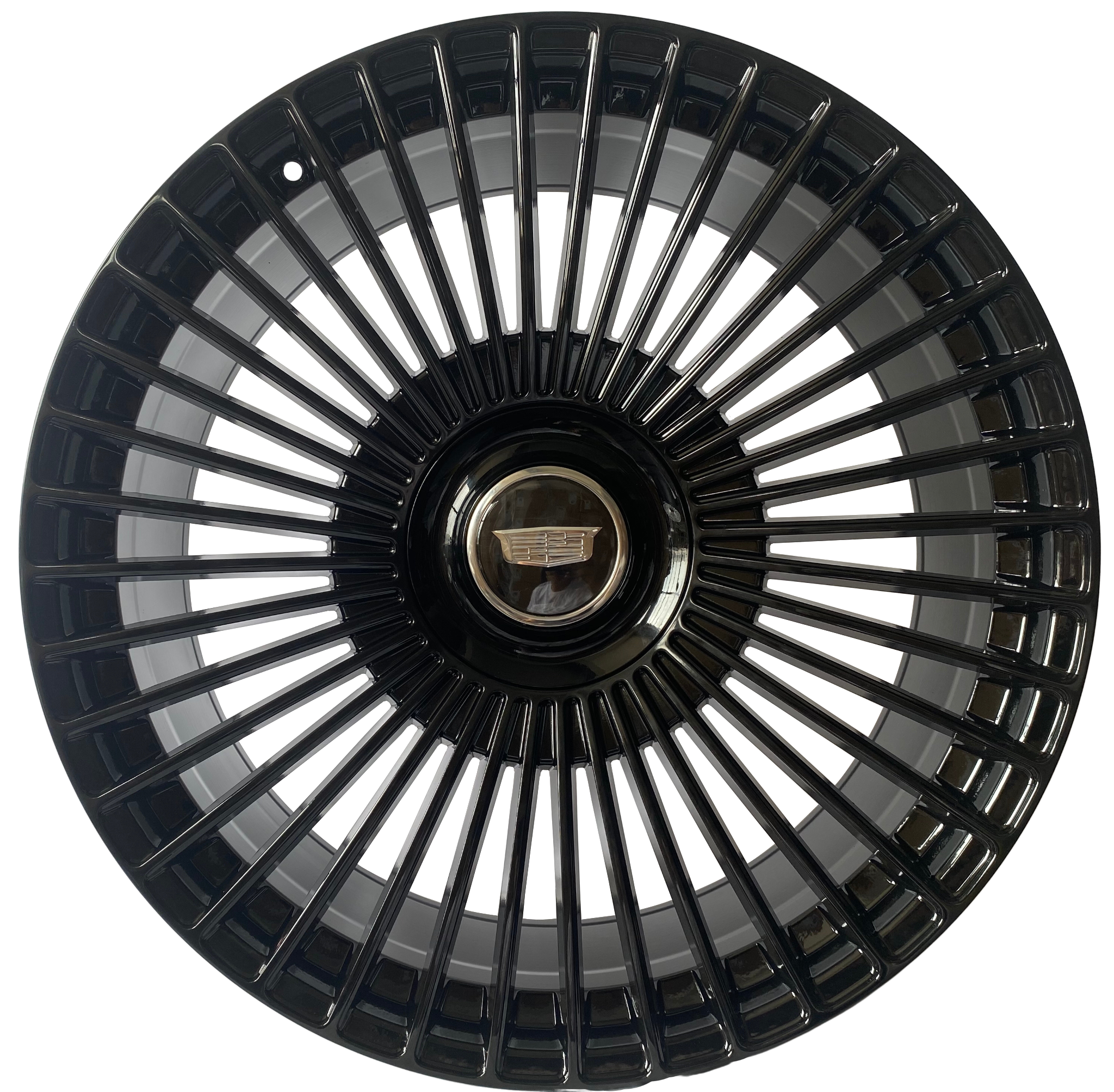
On a large SUV, a bolder wheel design can balance the substantial body. Gloss black milled wheels can reinforce a rugged look, especially when the SUV already has dark exterior details. A bright finish creates a more prominent focal point. Keep the wheel face proportional so it complements, rather than overwhelms, the body.
Compact cars usually benefit from more restrained designs. Fine spokes or a simple face can suit their smaller proportions without making the wheels appear oversized. A bright finish can still add definition, while a darker finish keeps attention on the car’s overall silhouette. Compare the wheel’s visual weight with the roofline, windows, and body-color panels.
Sporty vehicles often suit dynamic, sharp-edged spokes that echo their angular styling. A coupe with sculpted bodywork, for example, can carry a more expressive wheel face than a formal luxury sedan. Chrome can complement a stylish coupe when its reflective surface matches the car’s polished details. The goal is to extend the vehicle’s design language, not introduce a competing one.
Luxury vehicles tend to look cohesive with understated, classic wheel designs. A restrained spoke pattern can complement smooth body lines and refined trim without demanding attention. On a long-wheelbase sedan, an intricate, aggressive design may distract from the vehicle’s calm proportions. Consider how the spokes reflect light, too: silver surfaces make their pattern easier to see, while dark finishes visually soften small details.
Design also has a functional side. Wider wheels can accommodate wider tires for greater traction, and wider setups may improve grip and handling, particularly on sports cars. They can also increase road noise and reduce fuel efficiency through greater rolling resistance. Open wheel designs can improve airflow to the brakes. Consider these trade-offs alongside appearance, especially when the car’s character depends on both comfort and performance.
For a distinctive result, coordinate the wheel’s shape, finish, and scale as one decision. Custom built forged wheels can support a tailored look for luxury vehicles, including a Mercedes, Rolls-Royce, or Land Rover. Explore custom built forged wheels as an option when standard styling doesn’t express the car’s character.
Consistency with the vehicle’s overall design
A coherent wheel choice repeats or deliberately contrasts with details already on the car. Compare the wheel’s finish and shape with the grille, badges, trim, and exhaust tips. A black grille and black window trim, for example, can make dark wheels feel integrated. Chrome details can support a brighter finish. The aim is visual balance, not an exact match for every part.
Color can create contrast without disrupting that balance. Gold wheels add warmth to gray or silver paint, while gold against blue creates a more dramatic combination. The blue-and-bronze look became familiar through rally cars such as the Subaru Impreza WRX STI. That example works because the wheel color connects with the car’s performance character rather than appearing as an unrelated accent.
Repeat accent colors with intention. Red lines on black wheels can echo red exterior details, such as a stripe or badge. Keep the accent limited to colors already visible on the body; adding a new color without another reference point can make the design feel disconnected. For a more understated appearance, choose a single dark finish instead of a contrasting accent.
Finish also changes how a design reads. Chrome reflects more light than black, so a chrome wheel can become the most noticeable feature. Black absorbs light and can make spoke details less distinct. Silver reflects light across the spokes, keeping the wheel pattern visible. Consider this when choosing a complex design: a detailed face may read more clearly in silver than in black.
Use the whole vehicle as your reference, not just its paint. On a silver sedan with bright trim, a polished or silver wheel can reinforce a crisp, unified theme. On a dark vehicle with black trim, a dark finish creates a quieter effect. A large bright wheel can dominate more than a black one, so choose a level of contrast that suits the body’s proportions and the look you want.
Before choosing, compare the car’s visual cues in daylight and shade. Check whether the wheel finish echoes at least one existing detail, then decide whether its contrast feels deliberate. A flashy chrome finish can suit a design built around bright trim, but may compete with a restrained, dark theme. Brushed or textured finishes offer another option, adding depth while keeping the overall palette controlled.
Keep wheel designs consistent with the vehicle’s overall theme, since contrasting styles can clash and detract from its appearance. Use the car’s existing character to guide your decision: a wheel should feel part of the same visual idea, even when it introduces contrast. If its shape, finish, or accent seems to belong to a different style, consider whether that difference is intentional and balanced by details already on the vehicle.
As a final check, view the wheel choice as one element of the complete design, not a separate feature. Consider whether it supports the impression the car already gives or draws attention away from it. When several options appeal, favor the one that maintains a clear relationship with the vehicle’s theme. Deliberate contrast can work, but it shouldn’t make the overall appearance feel divided.
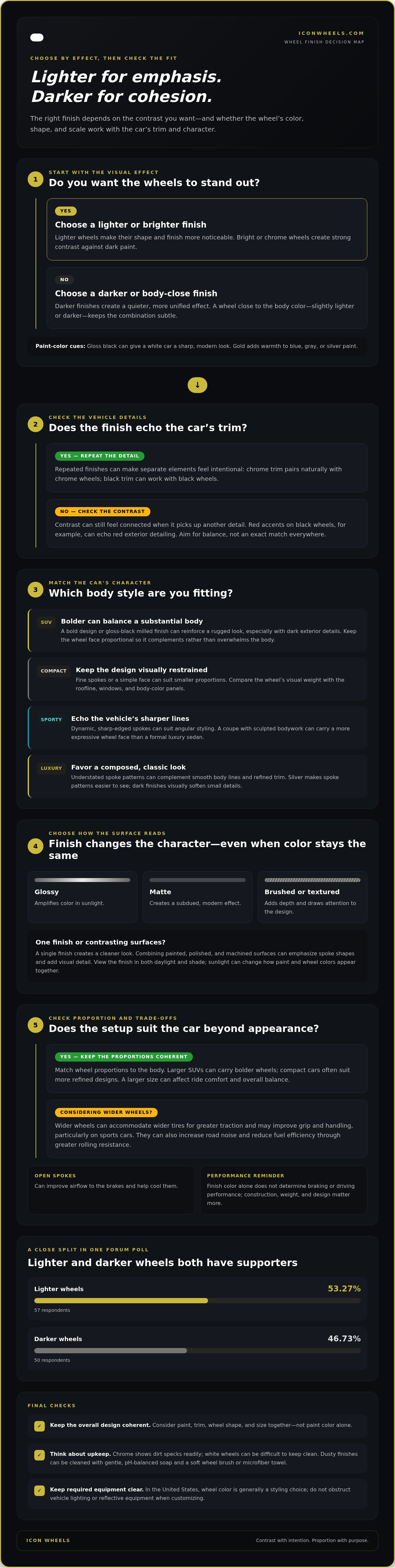
How wheel-finish contrast changes a car’s appearance
Contrast determines a wheel’s visual weight against the body. A bright finish attracts the eye; a dark finish recedes and can make the car feel more unified. The right level depends on whether you want the wheels to anchor the design or become its focal point.
On a dark-painted vehicle, a bright wheel creates a clear break between tire and body. That separation makes the wheel shape easier to notice and gives the car a more expressive presence. High contrast can also feel aggressive, especially with angular spokes. On a light-painted vehicle, dark wheels create the reverse effect, grounding the lower body and emphasizing its outline.
Contrast also changes with wheel size. A large, bright wheel can dominate the vehicle because its broad reflective surface catches attention. The same wheel in black generally appears quieter. Consider how much of the car’s design you want the wheels to command: a subtle sedan may benefit from lower contrast, while a bold custom build can carry a more striking combination.
Spoke visibility is another factor. Silver surfaces reflect light across the wheel face, revealing intricate patterns as the car moves through changing light. Black finishes absorb more light, so fine spoke details can appear less distinct. If the wheel has a complex design, a lighter finish can showcase its structure; a simpler design can remain crisp in a darker tone.
Finish also affects how contrast looks throughout the day. A glossy surface can intensify color in direct sunlight, while a matte finish keeps reflections subdued. Compare the car outdoors and in shade before deciding. For example, vivid paint may look more balanced beside gloss black wheels, while a satin body can suit a quieter matte finish.
Buyer appeal depends on the complete presentation. A distinctive wheel color can make a vehicle feel personal, but a highly individual combination may not suit every buyer’s taste. Neutral-colored cars are associated with strong resale value, but that does not establish a specific resale effect for wheel color. A restrained finish can preserve broad visual appeal, while bolder contrast makes a clearer style statement.
Choose contrast with the car’s intended character in mind. For a composed look, keep the wheels close to the body color. For a more dramatic result, use a brighter finish against dark paint or a darker finish against light paint. Check the wheel’s visual weight from several angles, not only in a close-up photograph.
Should wheels be lighter or darker than the car for the best overall look?
Neither finish is automatically better. The right choice depends on whether you want the wheels to stand out or blend visually with the body. So, should wheels be lighter or darker than the car? Choose lighter wheels for definition and contrast, or darker wheels for a cohesive, grounded appearance. Let the car’s design and your preferred effect guide the decision.
On a light-colored car, darker wheels can anchor the lower body and sharpen its outline. A white SUV with gloss black wheels, for example, gains crisp, modern contrast. On a dark vehicle, silver or chrome wheels create a brighter focal point. That contrast can make the wheel design more noticeable, especially when its spokes have intricate shapes.
For a subtle finish, keep the wheel color close to the paint. A gray sedan with silver wheels can look composed without losing definition. A shade slightly lighter or darker than the body adds a small visual difference while preserving a unified palette. This approach suits drivers who want the wheels to complement the car rather than command attention.
Think about the whole vehicle, not only the paint. Black wheels can connect with dark trim on an SUV, while chrome wheels can echo bright details on a sedan. A red accent on a black wheel can also repeat a matching stripe or badge. These links make contrast feel intentional rather than unrelated.
Finish further shapes the effect. Gloss black can temper an unusually vivid paint color, while polished silver draws attention to the spokes. A large chrome wheel can feel more dominant than a black wheel of the same size. For a restrained look, choose a finish that reflects less light or stays close to the body color.
Use a simple visual test before deciding: compare the wheel with the car in daylight and shade, then view the combination from the side and front. Sunlight can make paint appear brighter, changing the perceived contrast. Check how the finish relates to the grille, badges, and trim. If the wheel becomes the only feature you notice, reduce the contrast or simplify the finish.
Ultimately, lighter wheels suit a standout look; darker wheels suit a quieter one. Neither choice guarantees broader buyer appeal, so prioritize a design that complements the car’s proportions and existing details. For a tailored finish and fit, explore custom wheel options that align with your vehicle’s style.
For light paint, black or darker wheels can create a sleek, grounded look; choose between black and bright finishes based on whether you want them to blend in or stand out.
ICON WHEELS: Wheels For Mercedes
ICON WHEELS offers Wheels For Mercedes for owners choosing a finish that complements their car’s paint, trim, and proportions. Custom Built Forged Wheels provide another way to shape the vehicle’s overall look. Use the contrast principles above to define your preference: lighter wheels for a brighter focal point, or darker wheels for a more unified appearance.
Turn to ICON WHEELS when you’re ready to explore wheel options for your Mercedes and align the design with your chosen style. Share your vehicle details and preferred look as you consider your options. Contact ICON WHEELS to discuss your wheel choice.
Make Your Wheel Choice a Signature Detail
Your wheel finish can do more than complete a color scheme. It can express the character you want your car to project every time it arrives. If you’re still deciding whether wheels should be lighter or darker than the car, focus on the impression you want to own: understated, distinctive, or unmistakably bold. The right direction is the one that feels deliberate and true to your taste.
For a next step, consider wheel options made for your vehicle rather than treating the finish as an isolated choice. ICON WHEELS offers wheels for Mercedes, Rolls-Royce, and Land Rover, along with custom built forged wheels for luxury vehicles.
Bring your preferred look and vehicle into the decision. Contact ICON WHEELS about your wheel options, then move forward with a finish that makes the car feel unmistakably yours.
Frequently Asked Questions
How do wheel colors affect a car’s appearance and perceived size?
Bright wheels draw the eye and can make the wheel face seem more prominent, while dark wheels tend to recede visually. On a compact car, a bright finish can emphasize the wheels and create a more striking look. On a large SUV, dark wheels can make the lower body appear grounded. Spoke design and wheel size also influence the effect, so compare the full vehicle rather than judging color alone.
Do lighter or darker wheels show brake dust, dirt, and scratches more easily?
Visibility depends on the color and type of residue, as well as the finish. Chrome can reveal small dirt specks, and white wheels can take more effort to keep looking clean. Brake dust may stand out against a contrasting wheel color, while scratches depend more on their depth and the finish beneath the surface. Inspect the wheel in daylight: angled light can reveal marks that are difficult to see straight on.
Are black wheels harder to maintain than silver or lighter wheels?
Black wheels aren’t automatically harder to maintain, but dust can be conspicuous against a dark surface. Silver finishes make spoke patterns easier to see and may disguise some dust, while polished or chrome surfaces can show specks readily. Cleaning frequency also depends on driving conditions and how quickly residue builds up. Choose based on the appearance you prefer between cleanings, not color alone.
