
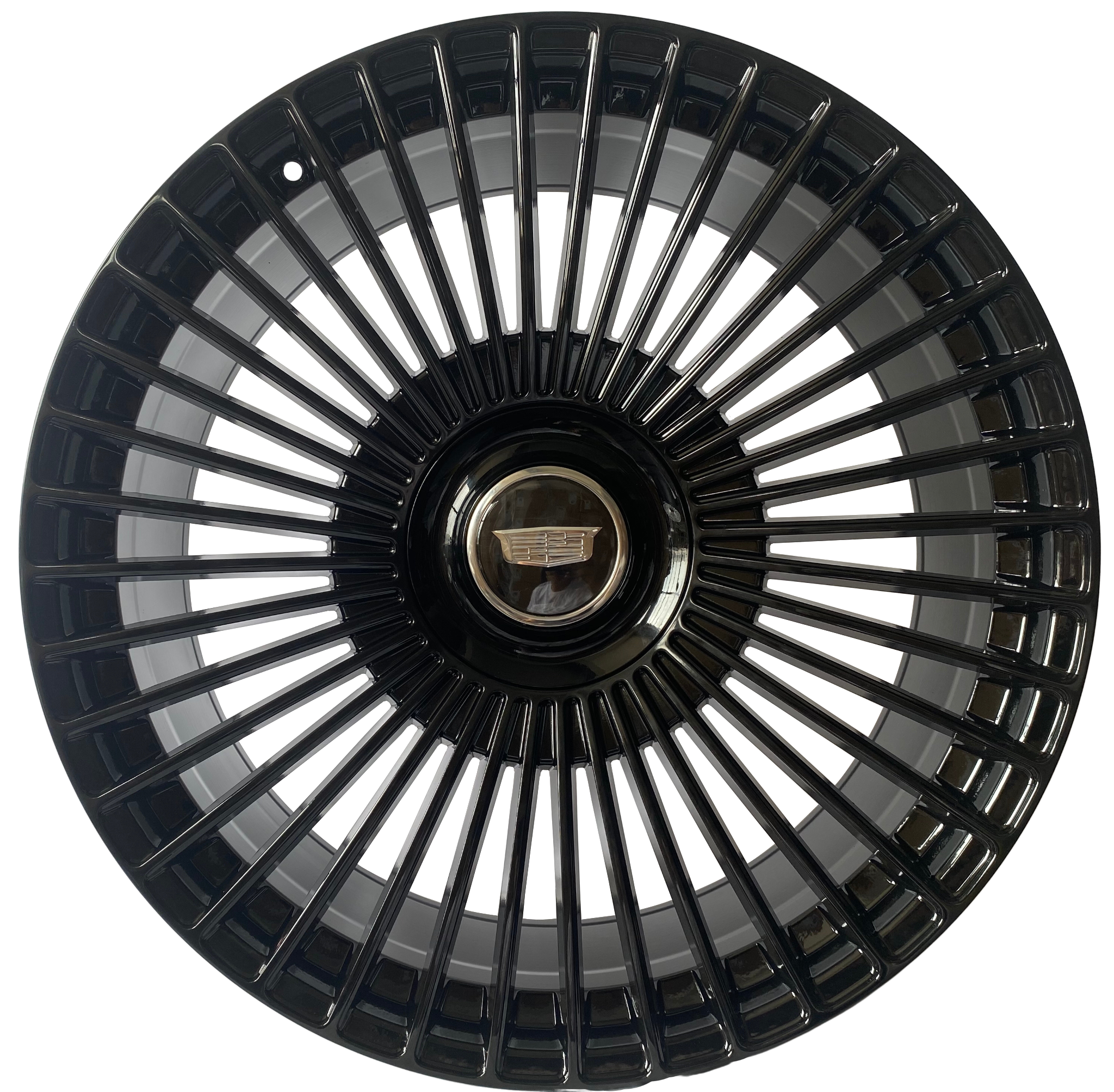
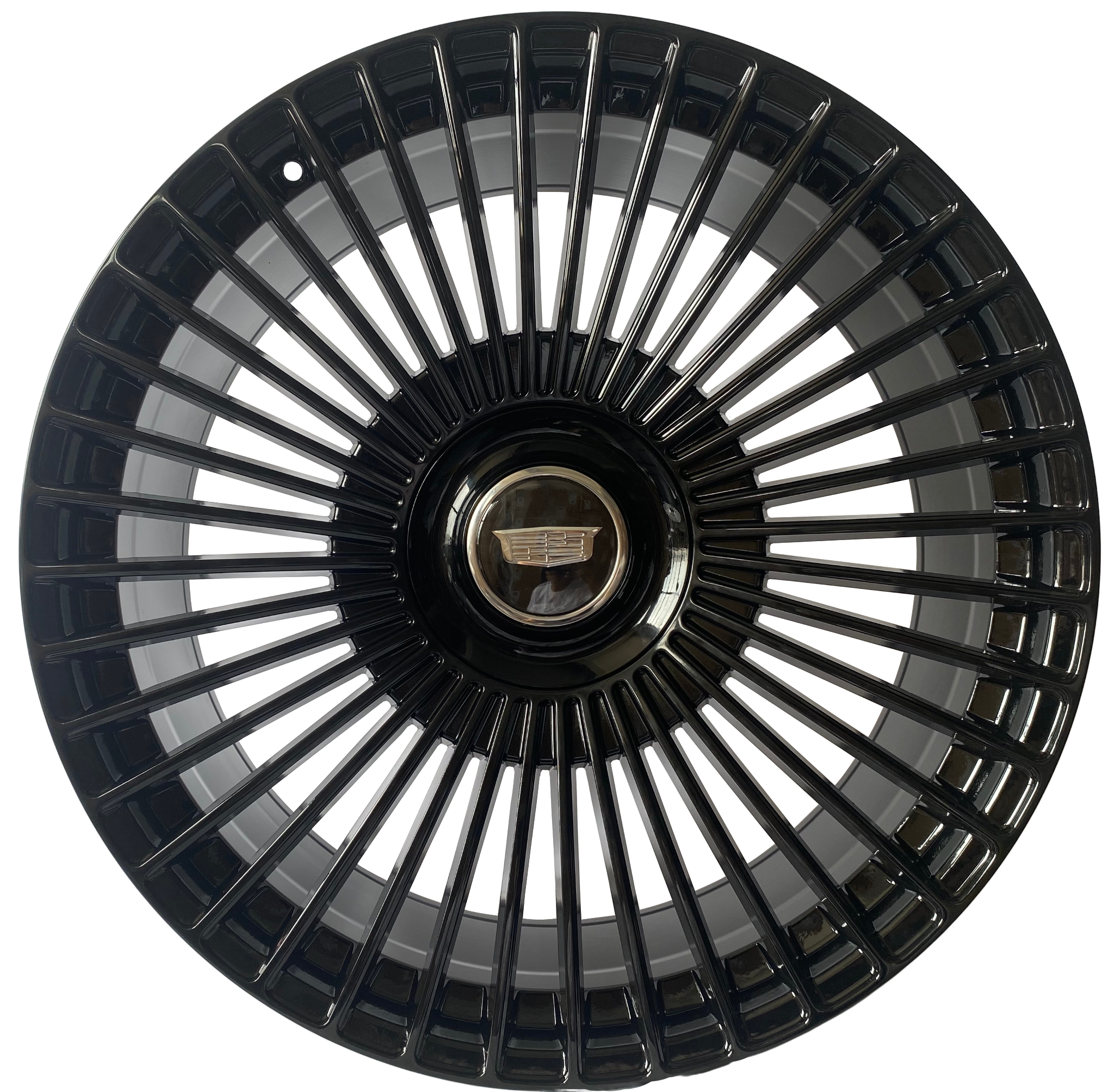


Polishing can help maintain the appearance of brushed aluminum wheels, but it needs to suit the finish. As part of long-term care for brushed aluminum wheels, clean gently and avoid abrasive tools, harsh chemicals, road salt, brake dust, and standing water, which can affect the surface. Treat the brushed texture differently from ordinary polished metal to help preserve its distinctive look.
Let wheels cool before cleaning, rinse away loose grit, then wash gently with non-abrasive tools. Dry them promptly to reduce water spots, and use protection formulated for brushed or satin finishes, particularly before winter driving. This guide covers when polishing is appropriate and how to limit damage from salt, brake dust, dirt, scratches, and water spots. It also explains what to consider when cleaning, protecting, and storing brushed aluminum wheels.
Key Takeaways
- Polishing after cleaning can help maintain shine and limit oxidation, but the right cleaner and gentle tools matter first.
- Prepare wheels for winter with protection suited to brushed or satin finishes, and keep harsh chemicals away.
- Remove brake dust and grime with a careful wash routine to reduce the risk of embedded contaminants and scratches.
- Dry wheels promptly after washing to help prevent water spots and protect the finish.
Is it necessary to polish aluminum wheels after cleaning?
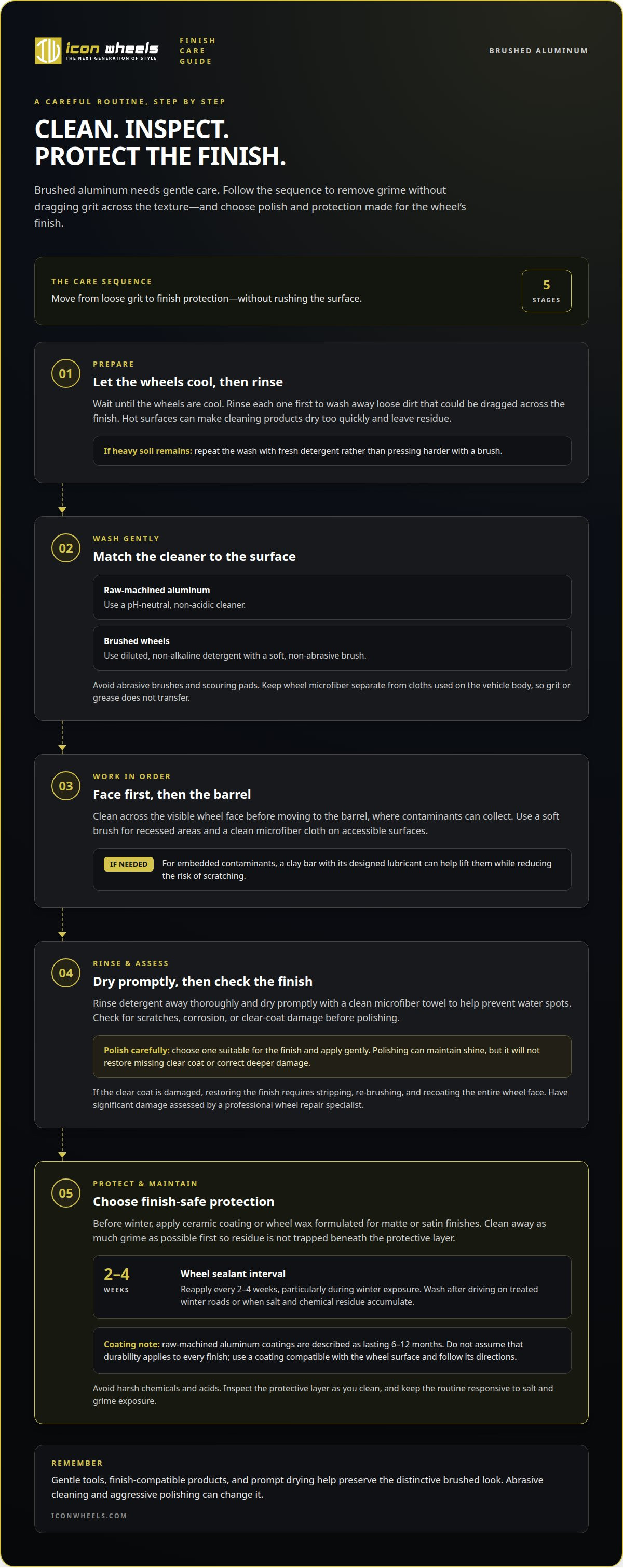
Yes. Polishing after cleaning can help maintain shine and prevent oxidation. For long-term care for brushed aluminum wheels, choose a polish suitable for the finish, since aggressive polishing can change its appearance. Scratches and corrosion may require more than routine polishing. If the clear coat is damaged, restoring the finish requires stripping, re-brushing, and recoating the entire wheel face. Have a professional wheel repair specialist assess significant damage.
- Choose a gentle cleaner and soft tools. For raw-machined aluminum, use a pH-neutral, non-acidic cleaner. For brushed wheels, choose diluted, non-alkaline detergent and a soft, non-abrasive brush. Avoid abrasive brushes and scouring pads, which can scratch aluminum and dull its finish. Keep separate microfiber cloths for wheels and the vehicle body so grit or grease doesn’t transfer to the wheel surface.
- Wait until the wheels are cool, then rinse. Cleaning a hot wheel can make products dry too quickly and leave residue. Rinse each wheel first to remove loose dirt that could drag across the finish during washing. If heavy soil remains after the first wash, repeat with fresh detergent rather than pressing harder with a brush.
- Clean the face before the barrel. Work across the visible wheel face first, then move to the barrel, where contaminants can collect. Use a soft brush for recessed areas and a clean microfiber cloth for accessible surfaces. If washing leaves embedded contaminants, a clay bar with its designed lubricant can help lift them while reducing the risk of scratching.
- Rinse, dry, then assess the finish. Rinse away detergent thoroughly and dry the wheel promptly with a clean microfiber towel to help prevent water spots. Once clean, inspect for scratches, corrosion, or clear-coat damage before polishing. Build long-term care for brushed aluminum wheels around finish-compatible polish and gentle application. Polishing can maintain shine, but it won’t restore missing clear coat or correct deeper damage.
Protecting wheels from road salt and chemicals
For long-term care for brushed aluminum wheels, clean away winter salt after exposure and apply protection before winter. Clean wheels as needed after salt or chemical grime; reapply wheel sealant every 2-4 weeks.
-
Choose a Winter Coating or Wheel Wax
Before winter, apply ceramic coating or wheel wax formulated for matte or satin finishes. These products can help protect brushed aluminum from road salt and other corrosive substances. Avoid harsh chemicals and acids, which can damage the finish and contribute to corrosion. Remove as much grime as possible before applying protection so residue isn’t trapped beneath the layer. This preparation supports long-term care for brushed aluminum wheels.
-
Apply Ceramic Coating for Oxidation Protection
Choose a ceramic coating compatible with the wheel’s surface to help protect against oxidation. Raw-machined aluminum coatings are described as lasting 6-12 months, but that durability shouldn’t be assumed for every finish. Follow the product’s application directions and prepare the surface as directed. For long-term care for brushed aluminum wheels, select a coating intended for matte or satin finishes, and avoid products that could change the wheel’s appearance.
-
Plan Cleaning and Protection Frequency
Wash wheels after driving on treated winter roads or whenever salt and chemical residue accumulate. Reapply wheel sealant every 2-4 weeks, particularly during winter exposure. Inspect the protective layer during cleaning, since road grime can build up and affect its performance. Wheel wax can help repel water and contaminants, but select a formula suited to the existing finish. Keep the routine responsive to exposure, not just the calendar.
Brake dust, dirt, and scratch concealment
Brake dust is more than an eyesore. Its particles can be abrasive and corrosive, and may be difficult to remove once embedded in aluminum. Wash residue off routinely before it contributes to pitting or obscures damage.
- Remove brake dust before it builds up. Wash wheels after dusty or demanding drives, especially when residue is visible around the spokes. Brake dust can scratch the finish as it moves across the surface, and embedded particles may cause pitting. Avoid letting dark deposits sit through repeated drives. A prompt, gentle wash removes surface contamination before it becomes harder to lift.
- Use clean microfiber for each wheel. Work with a fresh microfiber cloth or a soft, non-abrasive brush, and don’t use a cloth that has picked up grit. Dirt trapped in the fibers can drag across the brushed pattern and leave fine marks. Keep wheel-cleaning materials separate from those used on the vehicle body. Rinse contaminated tools before continuing to the next wheel.
- Use wheel wax to reduce residue adhesion. Once the surface is clean, compatible wheel wax can help repel water and contaminants while reducing brake-dust adhesion. That makes later cleaning easier and limits how firmly residue clings to the finish. Choose wax suited to matte or satin surfaces, so protection doesn’t create an unwanted glossy appearance. Wax helps with maintenance, but it won’t erase a scratch.
- Inspect marks before trying to conceal them. After cleaning, examine the wheel face under clear light. A gray film that disappears with washing was dirt; a line that remains may be a scratch. Don’t scrub harder or use abrasive pads to hide it, since these can dull the brushed finish. Check for pitting, curb rash, cracks, or bends. Significant wheel damage needs assessment by a professional wheel repair specialist.
Drying wheels to prevent water spots
Dry raw-machined aluminum wheels promptly after washing to help prevent water spots and accelerated oxidation. Dry the wheel face, barrel, and tight details before droplets evaporate on the surface.
- Start drying as soon as rinsing ends. Don’t leave a freshly washed wheel to air-dry. Water left on raw-machined aluminum can form spots, while prolonged moisture can accelerate oxidation. Work on one wheel at a time, moving directly from the final rinse to drying. This keeps water from sitting on the face while you finish washing other wheels.
- Use a clean, soft drying towel. Choose a microfiber towel that hasn’t collected grit or residue. Press and lift it across the wheel face rather than dragging it over the brushed surface. Use a separate clean section for each area. If the towel picks up visible dirt, switch to a clean one instead of spreading particles across the finish.
- Dry recessed areas and the barrel thoroughly. Water can remain around spoke edges, lug openings, and the inner barrel after the face looks dry. Reach these areas with a clean towel, using gentle contact around narrow edges. Check behind each spoke and along the barrel lip. Removing trapped droplets helps avoid dried marks in places that are harder to inspect later.
- Inspect the wheel under good light. Look across the face and around each spoke for beads or damp patches. Dry any remaining water with a fresh towel section before it evaporates. If spots are already visible, wash and rinse the affected area again, then dry it immediately. Don’t rub dried residue aggressively, because embedded grit can mark the brushed finish.
ICON WHEELS
When cleaning and protection can’t address visible damage, or you want to refresh your vehicle’s look, ICON WHEELS offers custom forged wheels designed for luxury vehicles, including Mercedes, Rolls-Royce, and Land Rover models. A replacement or new design may make more sense than trying to polish away deep damage. Consider the wheel finish and your vehicle’s character as you explore options. Contact ICON WHEELS to explore a wheel design tailored to your vehicle.
Choose the right next step for your wheels
Care can preserve a brushed finish, but it can’t reverse every kind of damage or change a wheel’s design. If your existing wheels no longer suit your vehicle or style, consider whether a new set is right for you. ICON WHEELS offers wheels for Mercedes, Rolls-Royce, and Land Rover, as well as custom forged wheels. These options let you explore a different look while keeping your vehicle’s character in view.
Make the next decision based on the wheel’s condition and the result you want, not on the assumption that more polishing will solve every issue. For drivers considering replacement or a fresh design, contact ICON WHEELS to discuss wheel options. A considered choice can carry your vehicle’s character forward with confidence.
Frequently Asked Questions
How Can I Keep My Wheels From Being Damaged By Salt In The Winter?
Rinse off winter salt before it dries into a stubborn deposit, especially around spoke joints and the inner barrel. After driving on treated roads, inspect these areas during your next wash rather than checking only the wheel face. Maintain a compatible protective layer, and avoid acidic or harsh cleaners that can damage aluminum finishes.
What If The Clear-Coat Ends Up Being Broken?
Clear-coat damage calls for full-face refinishing, not a dab of touch-up polish. The damaged coating must be stripped, then the wheel face re-brushed and recoated for a consistent finish. Don’t sand or polish only the exposed area as a quick fix. Have a professional wheel repair specialist assess cracks, bends, or substantial curb damage.
How do you clean brushed aluminum wheels without damaging the finish?
Wash gently to avoid scratching across the brushed grain. Apply cleaner with a soft, non-abrasive brush, then use a clean microfiber towel on delicate areas. If a mark remains, don’t assume it’s dirt and scrub harder. Inspect the dry wheel first: a scratch or coating defect needs a different remedy from removable residue.
What cleaners are safe for brushed aluminum wheels?
For brushed aluminum, choose a diluted, non-alkaline detergent. For raw-machined aluminum, use a pH-neutral, non-acidic formula. Avoid harsh acids and aggressive chemical cleaners, which can damage the finish and contribute to corrosion. Don’t combine cleaning products. If residue persists, repeat a gentle wash instead of using a stronger formula or abrasive pad.
What sealants or coatings work best for brushed aluminum wheels?
For winter protection, choose ceramic coating or wheel wax made for matte or satin finishes. A finish-specific product can help preserve the wheel’s appearance and add a protective barrier. Clean off grime before applying coating or wax, since residue beneath the layer can interfere with coverage. Follow the product directions and avoid products that add unwanted gloss.
How do you remove brake dust, road salt, and oxidation from brushed aluminum wheels?
Wash away brake dust and road salt with a finish-compatible cleaner and soft tools. If needed, repeat the wash rather than scrubbing harder, then dry the wheel. If dullness remains, determine whether it comes from surface residue, oxidation, or clear-coat damage before polishing. Polishing can help maintain shine, but damaged coating requires refinishing, not repeated cleaning or abrasive treatment.
