
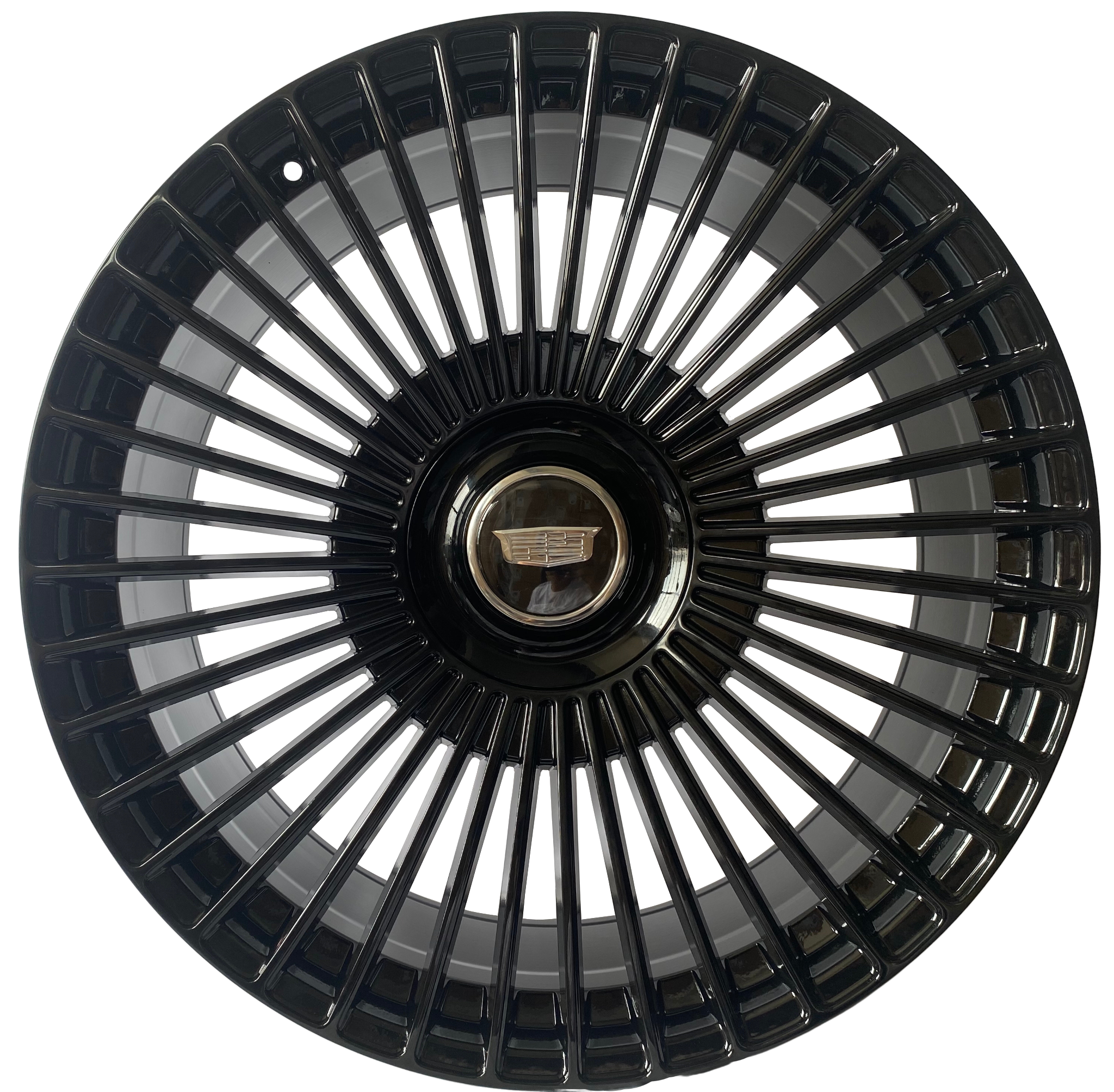
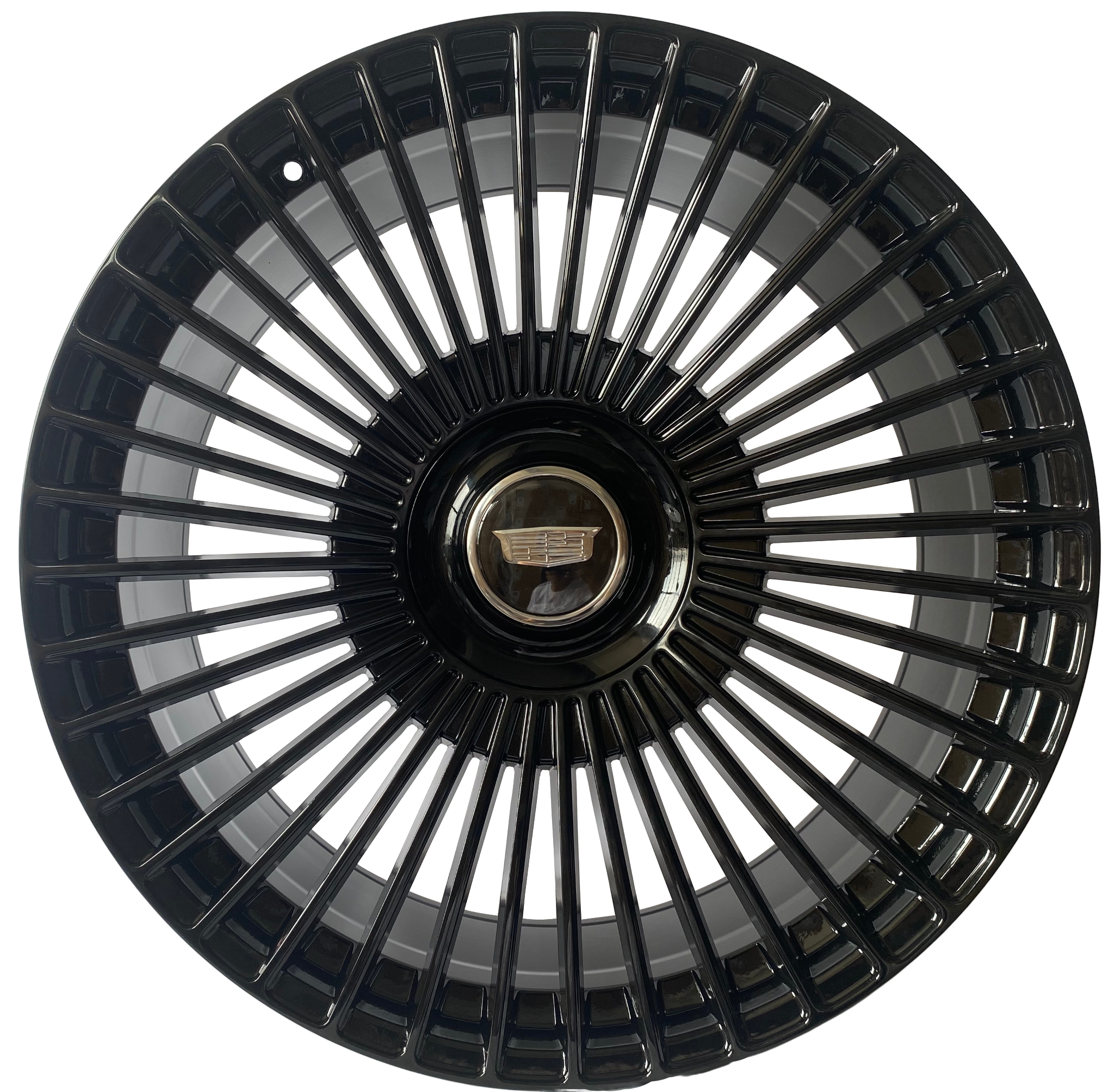


Store complete wheel-and-tire assemblies upright, not stacked on their tires. For storing OEM wheels after an upgrade, choose a dry, temperature-stable spot away from direct sunlight. Clean and fully dry each assembly first, then keep the wheels organized and protected from direct floor contact.
Keeping the original set in good condition can be useful if you need a backup or later want to return your vehicle to its original setup. This guide covers four practical steps: choosing a storage spot, arranging complete wheels upright, organizing components, and deciding whether to reuse, sell, or discard the set. It also explains what to consider before putting stored wheels back on your vehicle, so you can decide based on their condition and your plans for the car.
Key Takeaways
- Choose a dry, temperature-stable storage spot and prepare each wheel carefully before putting it away.
- Weigh the value of keeping the OEM set against your plans for the vehicle and the set’s condition.
- Keep caps, hardware, and wheel-lock keys organized with the correct wheel set so they’re easier to find later.
- Store complete wheel-and-tire assemblies upright, using a suitable support to help protect them.
1. Dry, temperature-stable storage conditions
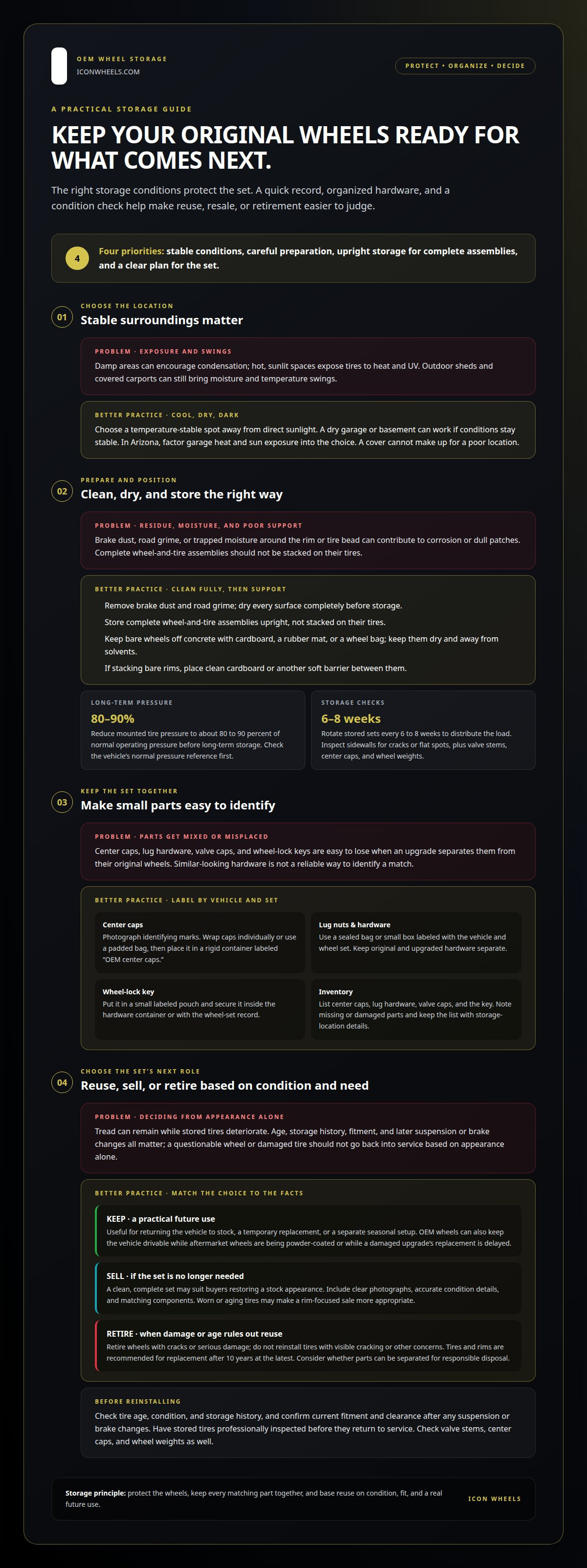
Choose a cool, dry, dark location before storing OEM wheels after an upgrade. Michelin recommends cleaning and fully drying tires before storage, then keeping them away from heat and sunlight. A steady environment also helps reduce condensation, which can contribute to corrosion on exposed metal surfaces. In Arizona, consider garage heat and sun exposure when selecting a spot.
Document the set as you remove it. Photograph each wheel-and-tire assembly, record its previous vehicle position, and note visible damage such as curb marks, cracks, or missing weights. These records help you match wheels to their original positions and compare condition before reuse. For multi-piece rim parts, the Alaska Department of Health & Social Services advises inspecting for damage, deformity, wear, corrosion, and pitting.
Clean wheels thoroughly before storage, removing brake dust and road grime, then dry every surface completely. Residue left on alloy wheels during storage can contribute to micro-corrosion and dull patches beneath the finish. Avoid leaving moisture trapped around the rim or tire bead.
A dry garage or basement can work if conditions stay stable. Damp areas risk condensation, while hot, sunlit garages expose tires to heat and UV. Avoid outdoor sheds and covered carports, where moisture and temperature swings remain concerns. A cover cannot make up for a poor location.
In the US, repair shops and sometimes gas stations store complete wheels for a small fee. The cost depends on the storage arrangement.
For long-term storage, reduce mounted tire pressure to about 80 to 90 percent of normal operating pressure before storage. Check the vehicle’s normal pressure reference before adjusting.
Store bare wheels off concrete using cardboard, a rubber mat, or a wheel bag. Keep them dry and away from solvents. If stacking bare rims, place clean cardboard or another soft barrier between them. A cover protects surfaces but does not replace suitable storage conditions.
Inspect stored sets before reinstalling, and rotate them every 6 to 8 weeks to distribute the load. Check tire sidewalls for cracks or flat spots, plus valve stems, center caps, and wheel weights. USTMA advises professional inspection of stored tires before they return to service.
2. Deciding whether to reuse, sell, or discard the set
Start with how you may use the vehicle next. Keep OEM wheels if you might return the car to stock, need a temporary replacement, or want a separate seasonal setup. Original wheels can keep the vehicle drivable while aftermarket wheels are being powder-coated. They can also serve as a backup if an upgraded wheel is damaged and its replacement is delayed.
Before planning to reuse the set, assess more than the rims. Check tire age, condition, storage history, and current fitment. Suspension or brake changes made after the upgrade can affect whether OEM wheels still clear the vehicle. Stored tires can deteriorate even when tread remains, so have them professionally inspected before putting them back into service. Don’t return a questionable wheel or damaged tire to use based on appearance alone.
A seasonal setup is another reason to keep the original rims. Some owners fit all-season or snow tires to OEM wheels, then switch sets as their driving needs change. This makes sense only when the tires suit the vehicle and the wheels still fit after modifications. If you have no practical backup or seasonal use for the set, it may simply take up valuable storage space.
Consider selling a complete, clean set if you no longer need it. Buyers may value original equipment, especially when they want to restore a vehicle’s stock appearance. Include clear photographs, accurate condition details, and any matching components. Don’t present damaged or questionable wheels as ready for road use. A set with worn or aging tires may be better suited to a rim-focused sale.
Retire wheels with cracks or serious damage, and don’t reinstall tires with visible cracking or other concerns. Tires and rims are recommended for replacement after 10 years at the latest. If the set’s history or condition makes reuse unsuitable, decide whether its parts can be separated for responsible disposal. Base the choice on fit, condition, and a concrete future use, not on attachment to the original set.
3. Organizing caps, hardware, and wheel-lock keys
Keep every small component with the OEM set it belongs to. Center caps, lug nuts, valve caps, and wheel-lock keys are easy to misplace when upgrades separate them from the wheels. Use a labeled container for each set, noting the vehicle model and wheel position. This keeps original parts separate from aftermarket hardware.
Before packing, photograph each wheel’s center cap and note any identifying marks. Place removable caps in a padded bag or wrap them individually in clean, soft material. Don’t toss several caps together, where their faces can rub against one another. Put the bag in a rigid container labeled “OEM center caps” to keep it with the correct wheels.
Store lug nuts and other hardware in a sealed bag or small box. Label it with the vehicle and specific wheel set instead of relying on appearance alone. If the original and upgraded sets use different hardware, keep their containers separate. Don’t assume similar-looking lug nuts or bolts are interchangeable; keep each set with its matching wheels.
Clearly identify wheel-lock keys. Place the key in a small labeled pouch, then secure it inside the hardware container or attach it to the wheel-set record. Keep it accessible rather than buried among loose parts. A label such as “OEM wheels, vehicle model, locking key enclosed” makes the contents clear without opening the package.
Make a simple inventory before storage: list center caps, lug hardware, valve caps, and the wheel-lock key. Note any missing or damaged components, and update the list if you remove something later. Keep the inventory with the storage-location details, not loose inside a wheel. This makes reinstallation easier and helps prevent OEM parts from getting mixed with upgraded components.
Before reinstalling stored wheels, inspect valve stems for cracks or hardened rubber and check that center caps and wheel weights are secure. Make this inspection part of the preparation for reinstalling the wheels, reviewing each listed item before proceeding. The valve stems, center caps, and wheel weights should all receive attention during this check.
4. Storing complete wheels upright
Store complete wheel-and-tire assemblies upright, with each assembly supported individually. This avoids stacking wheels on tire sidewalls, which should not bear another wheel’s weight during storage. A rim tree or suitable wheel hooks can hold assemblies upright and keep them organized. Choose a stable arrangement that prevents wheels from leaning against one another or falling when you move a neighboring assembly.
Leave enough room to lift each assembly out without dragging its rim across another wheel. Arrange the set in vehicle order, for example, and keep the front and rear pairs identifiable. Check that each wheel sits securely on its support rather than balancing on an edge or resting against sharp objects. An orderly setup also makes it easier to inspect every assembly before reuse.
Should tires be stored mounted on or off the wheels? Storage guidance can differ for complete wheel-and-tire assemblies and tires stored separately. Unmounted tires need different positioning, so don’t apply complete-wheel storage practices to tires kept separately.
Avoid laying complete assemblies in a stack. The weight above can load the lower tires, while rims may rub against nearby surfaces. If upright storage isn’t practical, don’t improvise a tall stack. Choose a setup that supports each assembly without placing one wheel on another tire. Hooks and rim trees are established options for keeping complete wheels upright.
Before placing the set, confirm the storage support suits the arrangement and keeps each assembly stable. Keep the set together so matching pairs are easy to identify. When retrieving the wheels, lift each assembly clear of its support and check for visible damage before reinstallation. The takeaway is simple: store complete wheels upright, support each individually, and never stack them on their tires.
Whether you use hooks or a rim tree, arrange complete wheels upright and give each assembly its own support. Choose a storage aid suited to that arrangement.
ICON WHEELS
ICON WHEELS helps drivers planning a new wheel setup find options suited to their vehicle. If your OEM set will stay in storage, or no longer fits your plans, your next step may be choosing wheels that match your vehicle and design priorities. ICON WHEELS offers wheels for Mercedes, Rolls Royce, and Land Rover, along with custom built forged wheels. These options suit distinct vehicle needs and give you room to shape a more personal look. Consider your vehicle, desired style, and whether a custom-built direction fits your upgrade goals. Contact ICON WHEELS to discuss wheel options for your vehicle.
Choose a confident direction for your next setup
Once the original set has a clear place in your plans, use the upgrade as an opportunity to decide how your vehicle should look and feel on the road. Storing OEM wheels after an upgrade keeps that decision open, while your next wheel choice can reflect the vehicle’s character rather than simply replace what came before.
ICON WHEELS offers wheels for Mercedes, Rolls Royce, and Land Rover, as well as custom built forged wheels. The right direction depends on your vehicle and the style you want to create. Whether you’re refining a familiar marque or shaping a more distinctive appearance, choose a setup that feels deliberate and suits your vision.
When you’re ready to consider your next setup, contact ICON WHEELS for wheel advice. Move forward with a clear vision for your vehicle.
Frequently Asked Questions
How should complete wheel-and-tire assemblies be stacked or hung?
Keep complete assemblies upright and supported individually, using a rim tree or suitable wheel hooks. Don’t stack one wheel on another tire, because the tire sidewall shouldn’t carry that load. If you don’t have a storage rack, place each assembly upright on a stable surface with space between wheels. This makes it easier to remove one assembly without shifting or scraping the others.
What temperature, humidity, and light conditions are best for storing wheels and tires?
Choose a cool, dry, dark location with stable temperatures and little moisture, rather than a spot exposed to repeated heat and dampness. A garage or basement can work if it stays dry and out of direct sunlight. Don’t rely on a cover to make up for a hot, humid, or exposed location. Avoid outdoor sheds and covered carports, where weather and temperature changes can affect the stored set.
