
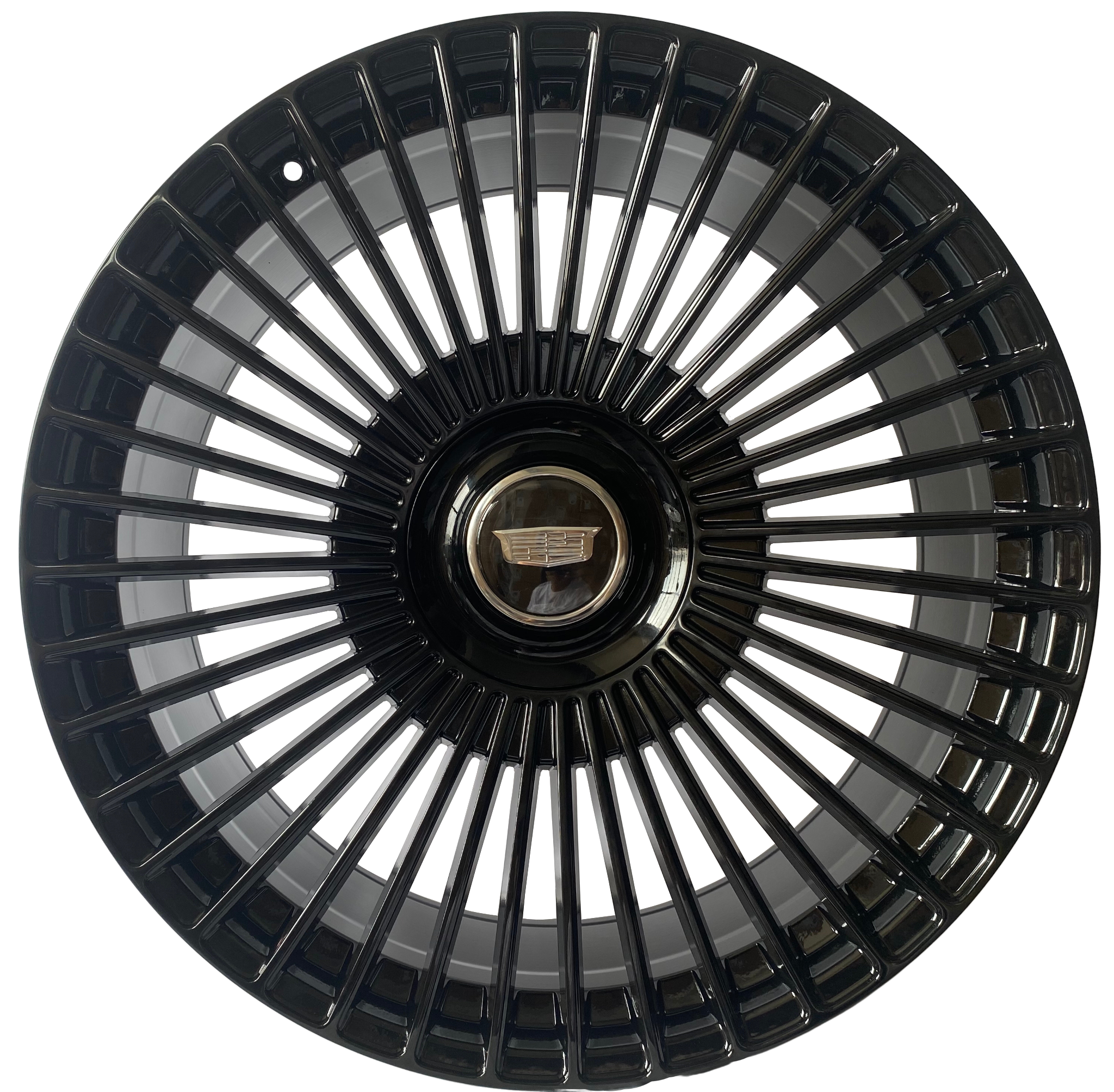
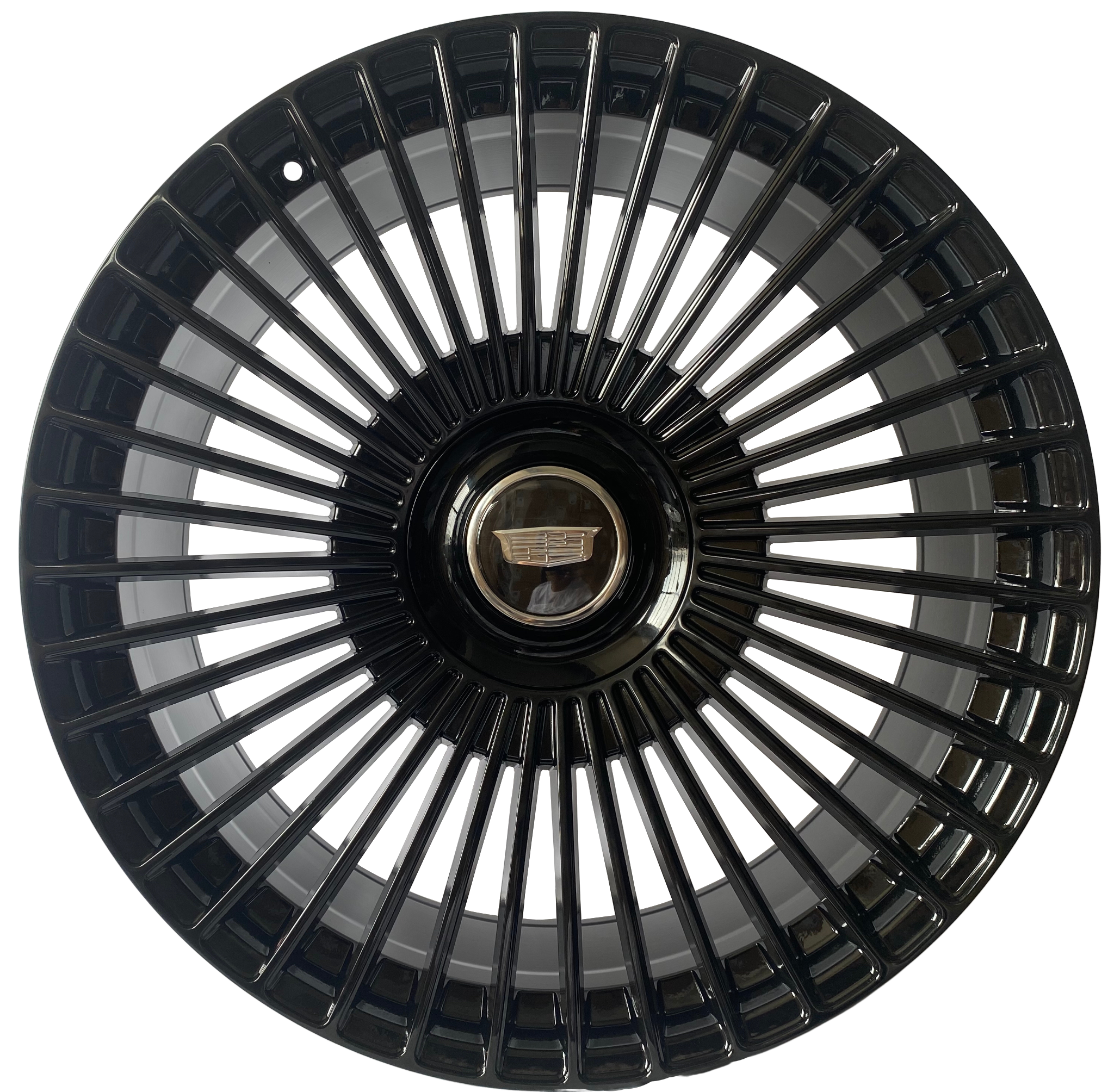


Your Porsche 911 is a precision instrument. Most owners still settle for mass-produced wheels that compromise its true potential. You demand a car that reacts with surgical accuracy. You know that every gram of unsprung weight matters when you're carving through an apex. It's a common frustration to find that even expensive factory options lack the aggressive stance and lightweight edge your driving style requires. Choosing the right forged wheels for Porsche 911 isn't just a cosmetic upgrade. It's a fundamental performance recalibration.
This guide ensures you master the technical nuances of forged wheel engineering to enhance both the performance and the stance of your vehicle. We'll demystify the complexities of center-lock compatibility and offset calculations to help you achieve a perfect flush fitment without spacers. You'll discover how lightweight engineering can increase handling precision by an average of 15 percent. From understanding aerospace-grade 6061-T6 aluminum to navigating our bespoke 15-product Porsche collection, you're about to transform your 911 into a unique, personalized masterpiece.
Key Takeaways
- Understand why high-pressure forged manufacturing is the only choice for the Porsche 911 to avoid the structural compromises of cast alternatives.
- Learn how reducing unsprung weight directly translates to faster acceleration, shorter braking distances, and more responsive suspension dynamics.
- Master the technical differences between monoblock and multi-piece forged wheels for Porsche 911 to align your choice with track performance or custom aesthetics.
- Gain the expertise to achieve a perfect flush stance without spacers by understanding generation-specific offsets and center-lock configurations.
- Discover how custom-engineered wheels built to your specific VIN provide a precision fitment guarantee that OEM options cannot match.
Why Forged Wheels are the Essential Upgrade for the Porsche 911
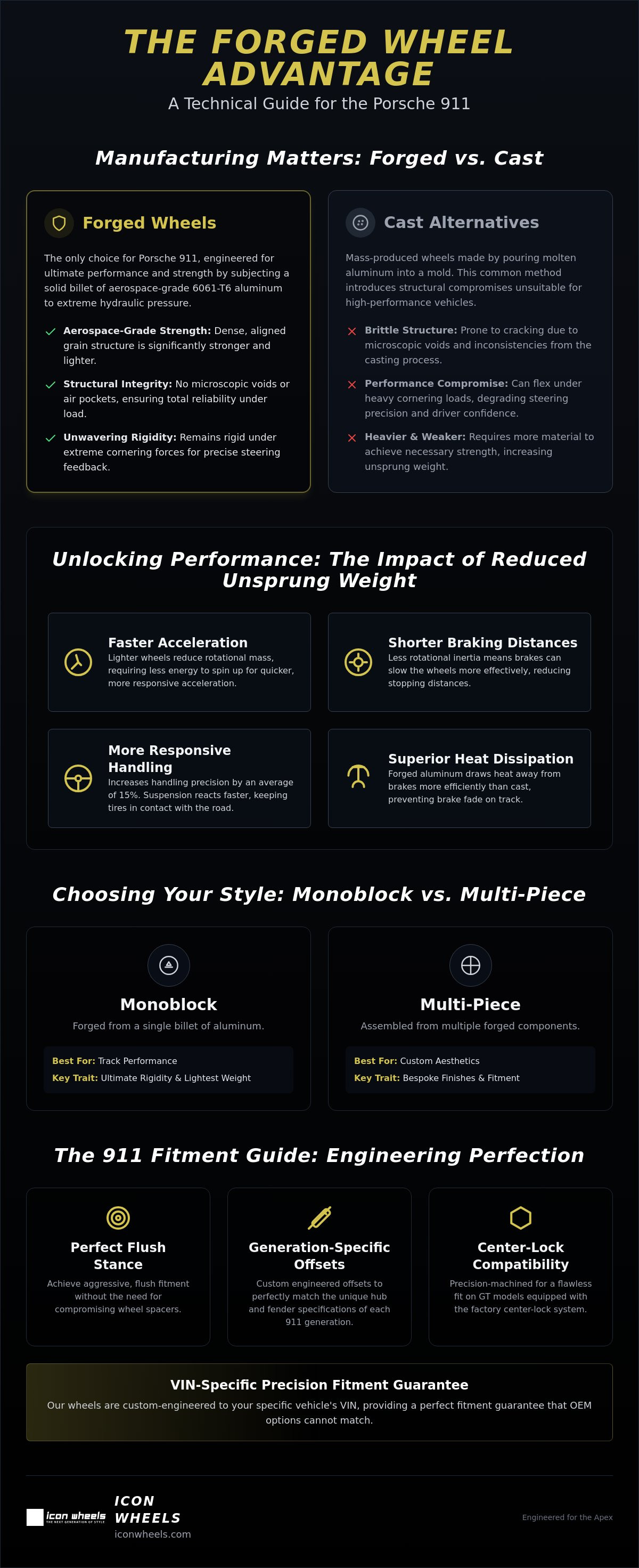
Porsche engineers every 911 to be a masterpiece of balance and speed. Yet, factory wheels often prioritize mass production over ultimate performance. Choosing forged wheels for Porsche 911 is the only way to align your car's unsprung mass with its world-class chassis. Forging involves taking a solid billet of aluminum and subjecting it to extreme hydraulic pressure. This process creates a dense, grain-aligned structure that cast wheels cannot match. While a standard Alloy wheel made by casting contains microscopic voids and air bubbles, a forged wheel is a single, solid piece of engineering perfection.
Cast wheels are brittle. Flow-formed wheels are a compromise. For a car capable of 200 mph, compromises are dangerous. High-speed stability depends entirely on wheel integrity. Under heavy cornering loads, a cast wheel can flex. This subtle deformation ruins the precision of your steering and feedback. Forged wheels remain rigid. They provide the unwavering platform your suspension needs to communicate exactly what the tires are doing. You don't just feel the difference. You drive with total confidence. It's a performance recalibration you can feel in every turn.
The standard Porsche catalog is excellent, but it's also common. You see the same designs at every track day and local meet. Upgrading to custom-built wheels allows you to break free from these factory limitations. It's about more than just a new look. It's about specifying every detail to match your specific vision. Our exclusive 15-product collection is designed to exceed the standards of even the most demanding Porsche owners. We don't just sell wheels. We provide the final piece of your Porsche's identity.
For owners looking to take their vehicle's transformation even further, Restomod Academy provides a detailed look at the costs and planning involved in professional restoration and modification projects.
The Forging Process: Aerospace-Grade Strength
We use 6061-T6 aluminum. This is the same material used in aerospace components where failure isn't an option. During the forging process, the internal grain flow of the metal is redirected to follow the shape of the wheel. This creates a structural lattice that is significantly stronger than any cast alternative. For high-torque models like the 911 Turbo or the high-revving GT3, this strength is vital. It ensures your wheels handle immense power without fatigue. They are lighter. They are stronger. They are better.
Aesthetics Meets Engineering
Your 911 has an iconic silhouette. The wheels must respect that heritage while pushing it forward. We offer custom finishes that perfectly complement Porsche’s Paint to Sample (PTS) program. Whether you want a brushed clear finish to show off the precision machining or a deep satin black for a stealth look, the choice is yours. Owning a bespoke set isn't just about the car. It's about the pride of knowing your Porsche is truly one of one. It's a statement of excellence that commands respect.
Technical Advantages: Unsprung Weight and Handling Dynamics
Precision engineering is the heartbeat of the 911. Every component must work in harmony to deliver that signature driving experience. Upgrading to forged wheels for Porsche 911 isn't just a cosmetic choice. It's a calculated performance decision. The most immediate benefit is the reduction of unsprung mass. This is the weight not supported by your car's suspension. When you lighten the wheels, the dampers and springs can react to the road surface with much higher frequency. The tires stay in contact with the pavement more consistently, which is vital for maintaining the 911's legendary traction.
The unique rear-engine layout of the 911 creates specific demands on the rear axle. Reducing weight at the back end helps manage the pendulum effect during high-speed cornering. For owners of the 991 and 992 generations, this weight reduction is even more critical. Modern 911s often feature rear-axle steering systems. Reducing the weight at the hubs allows these actuators to operate with higher precision and less strain. You get a car that feels more agile and responds to your inputs with surgical accuracy. We ensure all our designs meet the rigorous metallurgical standards of SAE International to guarantee this performance doesn't come at the cost of safety.
Rotational mass also plays a massive role in how your car feels. Lighter wheels require less energy to spin up and less energy to slow down. This translates directly to faster acceleration and shorter braking distances. In a track environment, forged aluminum also offers superior heat dissipation. It draws heat away from the braking system more efficiently than cast alternatives, helping you avoid brake fade during long sessions. You can explore our specific Porsche collection at iconwheels.com to see how we optimize these dynamics.
Improving the Power-to-Weight Ratio
Shedding 5 lbs per corner might seem like a minor change on paper. However, 1 lb of unsprung weight equals roughly 4 lbs of static weight in terms of performance impact. Removing 20 lbs of unsprung weight is effectively like stripping 80 lbs of interior trim out of your car. You'll feel this in the steering wheel immediately. The car becomes more "pointy." Turn-in is sharper, and the front end feels significantly more communicative through tight corners.
Durability on the Street and Track
Street driving in 2026 presents its own set of challenges. Potholes can easily deform a standard cast rim, leading to vibrations or air leaks. Forged aluminum is much denser and more resilient. It resists "pothole deformation" far better than cheap alloy wheels. This durability extends to the track, where the wheels must withstand high thermal loads for hours. If you're also looking to optimize your daily driver, check our guide on Forged Wheels for Porsche Cayenne: The Definitive Engineering Guide.
Monoblock vs. Multi-Piece Forged Wheels: Which Suits Your 911?
The material is only half the story. The construction method defines how your car looks and performs on the limit. Monoblock wheels are carved from a single, solid block of aerospace aluminum. They offer the highest structural stiffness and the lowest weight possible. For GT3 and RS models, this is the gold standard. Multi-piece wheels use separate components bolted together with high-strength hardware. This allows for deeper lips and more aggressive customization. Choosing the right forged wheels for Porsche 911 requires understanding these structural trade-offs before you commit to a build.
Structural stiffness is the primary reason the world's fastest 911s run monoblock setups. A single-piece construction eliminates the minute flex that can occur between bolted components under extreme lateral G-forces. It provides a direct, unfiltered connection between the chassis and the asphalt. If your priority is lap times and surgical precision, monoblock is your only choice. However, if you want to push the boundaries of fitment and stance, multi-piece designs offer a level of millimetric precision that a single block of metal cannot always provide.
Personalization reaches its peak with multi-piece engineering. You aren't limited by the dimensions of a single forging. We can pair different barrel widths and lip depths to create a set that fills your wheel arches perfectly. This is how you achieve that coveted flush look without ever touching a spacer. It's a more complex approach, but for the owner who demands a "one-of-one" aesthetic, it's the only path forward.
The Monoblock Advantage
Performance is non-negotiable for the track-focused driver. Monoblock wheels provide the absolute minimum weight. There are no bolts. There are no seams. This simplicity leads to a lighter wheel and easier maintenance. You don't have to worry about cleaning around dozens of tiny bolts after a dusty session. Modern concave profiles are a monoblock specialty. These designs emphasize the 911’s wide rear hips by drawing the spokes deep into the center. It creates a predatory, wide-body stance that looks fast even when standing still.
The Versatility of Multi-Piece Designs
Aesthetics and fitment precision take priority here. 2-piece and 3-piece designs offer infinite flexibility. Damage is also less of a catastrophe. If you clip a curb at the track or on a narrow city street, you can replace a single outer lip instead of the entire wheel. This modularity is a practical advantage for high-end builds. You can mix and match finishes to create a visual masterpiece. You might choose a brushed face with a polished lip. You could even opt for hidden or exposed titanium hardware. To explore the full range of visual possibilities, see our guide on Custom Forged Wheel Finishes: The Ultimate Guide to Luxury Personalization in 2026. This level of detail is what separates a standard build from an ICON.
The 911 Fitment Guide: Offset, Center Lock, and Generations
Precision is the difference between a car that looks modified and one that looks perfected. Most factory Porsche setups feature a "tucked" fitment where the wheels sit deep inside the arches. Achieving a flush, aggressive stance requires a mastery of Offset (ET). When you commission forged wheels for Porsche 911, you eliminate the need for spacers. Spacers are a compromise. They add unnecessary complexity and potential vibration. A custom-engineered wheel uses a specific offset to push the face of the wheel exactly where it needs to be. This creates a seamless line from the fender to the tire sidewall.
Generation-specific nuances are critical. A 997 chassis has vastly different suspension geometry than a modern 992. The 992 generation often utilizes a staggered diameter setup, such as 20-inch front and 21-inch rear wheels, to optimize mechanical grip. Brake clearance is another non-negotiable factor. If your car is equipped with Porsche Ceramic Composite Brakes (PCCB), the inner barrel and spoke design must clear those massive yellow calipers. Forged construction allows us to design thinner, stronger spokes that provide maximum clearance without sacrificing structural integrity.
Tire selection must also match your wheel dimensions. High-performance rubber like the Michelin Pilot Sport Cup 2 has specific load ratings and sidewall profiles. We calculate the ideal wheel width to ensure the tire bead sits perfectly. This avoids excessive "stretching" which can compromise the contact patch and handling predictability at the limit. Secure your perfect fitment by browsing our custom forged wheels for Porsche today.
Center Lock vs. 5-Lug Configurations
The GTS, Turbo, and GT3 models often feature the iconic Center Lock system. This single-nut design is a direct carryover from Porsche's racing heritage. It requires specialized engineering. The wheel must interface perfectly with the locking splines to ensure safety under high thermal loads. Maintaining the factory torque specification, often 600Nm, is vital. Custom-built forged wheels are superior to generic alternatives because they are machined specifically for the Porsche center-lock hub. This ensures a vibration-free experience and maintains the mechanical soul of your 911.
Optimizing the Stance
Body width dictates your wheel's potential. Narrow-body Carreras require a more conservative offset to avoid fender interference. Wide-body models, like the Carrera 4 or Turbo, allow for a "Deep Concave" profile. This design draws the spokes toward the hub, emphasizing the car's muscular rear hips. We pay close attention to the scrub radius. Changing the wheel width or offset too drastically can alter how the car tracks under braking. Our goal is to enhance the aesthetic while keeping the 911's legendary steering feel intact. We don't just change the look. We refine the geometry.
Discover the ICON WHEELS Porsche Collection: Custom Engineering for 2026
You've mastered the technical nuances. You understand the physics of unsprung weight and the geometry of a perfect offset. Now it's time to execute. Our exclusive 15-product collection represents the pinnacle of wheel design for the 2026 season. We don't believe in universal fitments. Every set of forged wheels for Porsche 911 we produce is a dedicated engineering project. We build for your specific VIN. This ensures that every millimeter of offset and every ounce of weight reduction is optimized for your exact chassis. It's a signature of your status as a discerning owner who refuses to settle for the common path.
Quality control at ICON WHEELS is uncompromising. We utilize elite finishes that are designed to withstand both the heat of the track and the scrutiny of the concours lawn. Our process eliminates the guesswork. You won't deal with vibrations, hub-centric rings, or clearance issues. We deliver a product that is ready to perform from the moment it's unboxed. Transitioning from OEM to forged excellence is the most significant upgrade you can make to your 911’s identity. It's time to step up to the level your car deserves.
Bespoke Engineering for the 911
Different 911 models demand different structural solutions. For the Carrera and Turbo models, we recommend our ultra-lightweight Monoblock options. These wheels are designed for the driver who prioritizes raw performance and structural rigidity. If you pilot a Targa or a Cabriolet, our multi-piece luxury designs offer a more classic, intricate aesthetic. These sets provide the deep lips and complex finishes that complement the unique silhouettes of the open-top models. Whatever your chassis, our collection is curated to enhance its natural lines. You can Browse the ICON WHEELS Forged Porsche Collection to find your starting point.
The ICON WHEELS Experience
We provide a consultative design process that is as refined as the wheels themselves. Our experts work with you to ensure the aesthetics match your vision perfectly. We consider your car's color, your braking system, and your driving habits. Once the design is finalized, we handle everything. We offer national shipping and dedicated support to elite Porsche owners across the country. You aren't just buying a part. You're entering a partnership with a brand that dictates the trends of the luxury aftermarket. Don't let your 911 blend into the background. Upgrade to forged wheels for Porsche 911 and experience the definitive standard of custom engineering.
Command the Road with Unrivaled Precision
Settling for factory standards is no longer an option for the elite Porsche owner. You've seen how forged wheels for Porsche 911 transform a world-class chassis into a surgical instrument. By utilizing elite lightweight 6061-T6 aluminum forging, you reduce unsprung mass and unlock the true handling potential of your vehicle. Whether you're chasing lap times in a GT3 or perfecting the stance of a Targa, custom engineering ensures a flush fitment that spacers simply can't replicate.
Our collection is custom-engineered for every Porsche 911 generation. We offer bespoke finishes designed for seamless PTS compatibility, ensuring your aesthetic is as unique as your driving style. Don't let common OEM designs dilute the identity of your machine. It's time to choose excellence over mass production. Shop the Custom Forged Wheels Collection for Porsche 911 and redefine your driving experience today. Your Porsche deserves the definitive standard of performance.
Frequently Asked Questions
Are forged wheels better than Porsche OEM cast wheels?
Yes. Forged wheels offer a superior strength-to-weight ratio that mass-produced cast wheels can't match. The high-pressure forging process eliminates the microscopic voids and air bubbles common in casting. This results in a wheel that's both lighter and significantly more resilient under extreme lateral loads. You get a more durable product that handles the high-torque demands of the 911 with ease.
Do forged wheels for the Porsche 911 require spacers for a flush fit?
No, not when they're custom-built for your specific car. We engineer every set of forged wheels for Porsche 911 to your exact VIN and desired stance. By calculating the perfect offset (ET) during the design phase, we push the wheel face to the edge of the fender. This achieves a perfect flush look without the added weight or vibration risks of using spacers.
Can I use my factory Porsche center caps with ICON WHEELS?
Yes, we offer this as a standard customization option. We can machine the center bore of your new wheels to accept original Porsche center caps. This allows you to maintain a clean, factory-plus aesthetic while enjoying the performance benefits of a bespoke forged setup. It's the perfect way to blend factory heritage with modern engineering excellence.
What is the weight difference between forged and cast 911 wheels?
You can expect a weight reduction of 20% to 30% compared to standard cast alloy wheels. Forged wheels are manufactured from dense 6061-T6 aluminum, which allows for thinner spokes and lighter barrels without sacrificing integrity. Shedding this unsprung mass is critical. It allows your suspension to react faster, which can improve your car's handling precision by roughly 15% on average.
Are Center Lock forged wheels safe for track use?
Absolutely. Our Center Lock designs are specifically engineered to withstand the intense thermal loads and high torque requirements of track driving. We use precision machining to ensure the wheel interfaces perfectly with Porsche’s locking splines. They are a direct, high-performance replacement for the factory systems found on GTS, Turbo, and GT3 models. Safety and performance are our non-negotiable priorities.
How long does it take to build a custom set of forged wheels for a 911?
The build process typically takes 4 to 8 weeks from design finalization to shipping. This timeline accounts for the precision machining, heat treatment, and multi-stage finishing required for elite quality. We don't rush perfection. Every set undergoes rigorous quality control to ensure it meets our standards before it ever reaches your doorstep. We value your time and our reputation.
Will aftermarket forged wheels void my Porsche warranty?
Generally, no. Installing aftermarket wheels does not void your entire vehicle warranty. Under laws like the Magnuson-Moss Warranty Act, a manufacturer can only deny a warranty claim if they prove the aftermarket part directly caused the failure. We build our wheels to exceed factory load ratings and specifications. This ensures they work in total harmony with your 911’s existing mechanical systems.
What is the best wheel size for a Porsche 992 Carrera?
The 20-inch front and 21-inch rear staggered diameter setup is the definitive choice for the 992. This pairing is what the chassis was designed for. It maintains the intended suspension geometry and electronic calibrations for traction control. We optimize the widths and offsets to provide maximum mechanical grip while keeping the 911's legendary steering feel sharp and communicative.
