


Forged wheels are stronger, but not invulnerable. Can forged wheels crack from potholes? Yes. A hard impact is more likely to bend a forged rim than crack it, but a severe strike can damage either type, especially when a low-profile tire offers less cushioning between the road and the rim.
It’s reasonable to expect forged wheels to handle impacts better than cast wheels. Their denser, more uniform structure makes them less prone to cracking, but it does not protect them from every pothole. The impact’s severity and the wheel’s condition still matter.
This article compares forged and cast wheels’ strength and cracking resistance, explains what can happen during a pothole impact, and outlines signs of damage that need prompt attention. A minor bend may sometimes be repairable, while structural damage can make replacement the safer choice. A wheel can look intact yet have damage that affects its ability to hold air or perform reliably. Understanding the risks helps you make a more informed decision about your vehicle’s wheels.
Key Takeaways
- A severe pothole can still damage a forged wheel, and the type of damage matters when deciding what comes next.
- Structural damage or a crack can make replacement necessary; a minor bend may be a different case.
- Forging creates a denser, more uniform structure than casting, which affects how each wheel responds to impact.
- Low-profile tires provide less cushioning, so tire setup and driving conditions can influence impact risk.
Do forged wheels bend or crack under impact?
Yes. A severe pothole strike can bend a forged wheel, although a hard impact is more likely to bend a forged rim than crack it. The damage depends on the force of the impact and how much cushioning the tire provides.
Impact Sources and Wheel Damage
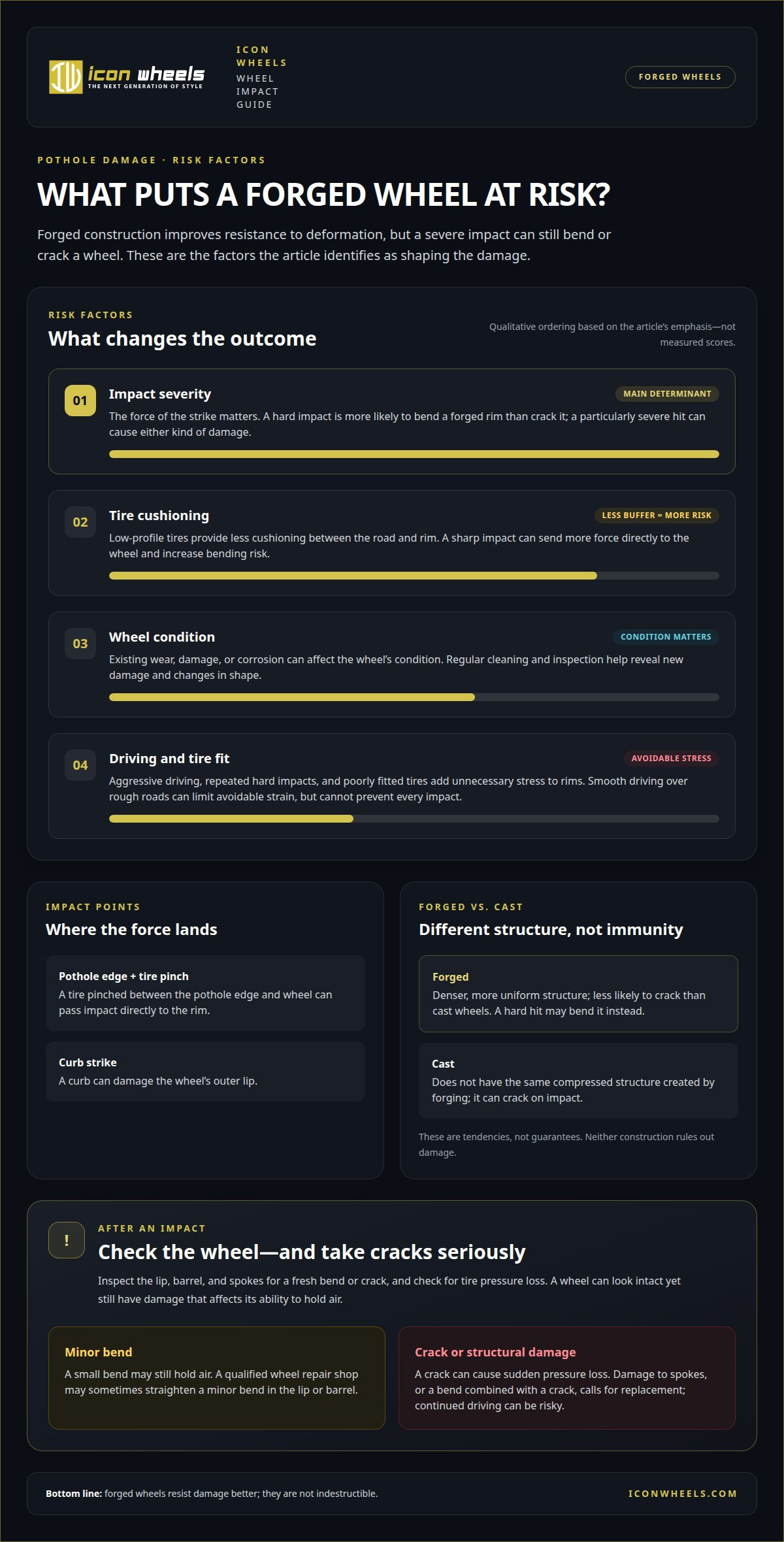
Potholes, curbs, and tire pinches transfer force to the rim at different points. A tire pinched between a pothole edge and the wheel can pass the impact directly to the rim; a curb strike can damage the outer lip. A severe pothole can bend even a forged wheel, so its construction does not make it immune.
After an impact, look for a visible bend or crack, and check for tire pressure loss. A small bend may still hold air, but that doesn’t mean the wheel is undamaged. A qualified wheel repair shop may sometimes straighten a minor bend in the lip or barrel. Damage to the spokes, or a bend combined with a crack, calls for replacement. A crack can cause sudden pressure loss, making continued driving risky.
Low-Profile Tires and Rim Damage
Low-profile tires offer less cushioning between the road and the rim. When a vehicle hits a pothole, that smaller buffer increases the risk of bending the wheel. A sharp impact can send force to the rim instead of being absorbed by the tire.
Check the rim after a pothole or curb strike, and inspect it regularly for damage or wear. Look closely at the lip, barrel, and spokes. A crack or fresh bend deserves attention, even if the tire still holds air. Aggressive driving and poorly fitted tires add unnecessary stress to rims. Driving smoothly over rough roads and using correctly fitted tires can limit avoidable strain, but neither prevents damage from every severe impact.
Forged rim strength and durability
Forging shapes aluminum under pressure, creating a denser, more uniform structure than casting. The process also aligns the metal’s grain flow, contributing to the wheel’s strength. Forged rims are less likely to bend or deform under heavy loads, but their construction does not make them indestructible.
The material and process work together. Aluminum is heated until malleable, then pressure shapes it into a rim. Quality forged wheels use 6061-T6 aluminum. The combination of material and compressed structure helps forged rims withstand demanding driving conditions, while their response still depends on the wheel’s design and the forces it encounters.
Strength matters beyond a single impact. Wheels face repeated loads as a vehicle accelerates, corners, and travels over uneven pavement. A forged rim’s resistance to deformation can help it withstand those stresses. That durability may reduce the need for replacement over time, but it does not prevent damage from extreme conditions or neglect.
Care also affects a wheel’s service life. Dirt and corrosive substances can build up on a rim, so regular cleaning helps prevent that buildup from weakening the wheel. Inspect the rim as you clean it, watching for new surface damage or changes in its shape. A closer look after demanding use can help identify wear before it becomes more serious.
Forged construction is a considered choice for drivers who value strength and durability, not a promise that a wheel will never fail. Pairing a robust rim with regular care supports its long-term condition. The key distinction is improved resistance to bending under load, not immunity to damage. Forged wheels offer the former, not the latter.
Forged rims' susceptibility to cracking
Yes, forged wheels can crack after a pothole impact. Their denser, more uniform structure makes cracking less likely than with other rim types, but cannot prevent every failure. Extreme impacts and poor maintenance can still damage a forged rim. The distinction matters because a crack can cause sudden tire pressure loss, even if the wheel otherwise appears usable.
Impact severity influences how damage develops. A hard strike may bend a forged rim rather than crack it, but a particularly severe hit can still cause a crack. Inspect the wheel after a pothole impact, especially if its shape has changed or the tire loses pressure. A crack is not a minor bend: it indicates structural damage.
Maintenance also affects a wheel’s long-term condition. Corrosive substances can build up on rims and weaken them; regular cleaning helps prevent that buildup. Check the rim as you clean it for visible damage or wear. Regular inspections can reveal minor problems, including cracks, before they become more serious. A clean surface also makes damage easier to spot.
Driving habits and tire fit matter, too. Aggressive driving and poorly fitted tires place unnecessary stress on rims, increasing the likelihood of damage. Repeated hard impacts on rough roads add avoidable strain. Low-profile tires also provide less cushioning between the road and the rim, increasing the risk of bending during a pothole strike. These factors don’t make cracking inevitable, but they affect the forces and conditions a wheel experiences.
If you find a crack, don’t assume the wheel is safe just because it still holds air. Cracks can cause sudden pressure loss, and structural damage calls for replacement. A qualified wheel repair shop may sometimes straighten a minor bend in the lip or barrel, but a crack changes the decision. Prompt inspection after an impact helps distinguish surface wear from damage that compromises the rim.
Forged versus cast wheel cracking resistance
Forged wheels are less likely to crack than cast wheels, but neither construction rules out damage. The difference lies in the aluminum’s structure. Forging compresses the metal and aligns its grain flow, producing a denser, more uniform structure. Casting does not create the same compressed structure, so the two types of wheel can respond differently to impact.
Under a pothole strike, the outcome depends on the impact’s force and where it reaches the wheel. A forged rim may bend rather than crack, while a cast wheel can crack on impact. These are tendencies, not guarantees. A severe hit can damage a forged wheel, and a cast wheel’s condition and the circumstances of the impact matter, too.
That difference helps explain why forged construction is valued for durability, but strength claims deserve careful consideration. Broad statements that one wheel is a fixed percentage stronger don’t show how a particular rim will respond to a pothole. The design, the impact, and the wheel’s condition all affect the result. For example, a laboratory strength comparison does not establish that a wheel is immune to a sharp road impact.
For practical decisions, focus on the damage rather than the manufacturing label. A crack can cause sudden tire pressure loss, whether the wheel is forged or cast. Structural damage calls for replacement; a minor bend may be assessed differently. After a pothole strike, visible cracking, a change in the wheel’s shape, or pressure loss are reasons not to treat the rim as undamaged.
Forging offers greater resistance to cracking, not invulnerability. Extreme conditions and poor maintenance can still contribute to cracks in forged rims. Cast wheels also vary in how they respond, so construction alone cannot diagnose damage. Consider the manufacturing method to understand relative resistance, then assess the actual wheel’s condition and the severity of the impact.
ICON WHEELS
ICON WHEELS offers custom-built forged wheels for drivers considering forged rims for their vehicles. If a pothole has damaged a wheel, the difference between replacement and repair matters: ICON WHEELS sells wheels, not impact-damage assessment or repair services.
Vehicle-specific options include wheels for Mercedes, Rolls-Royce, and Land Rover. Choose a wheel suited to your vehicle and priorities, while keeping in mind that forged construction can improve resistance to cracking but cannot prevent damage from every severe impact. Consider custom-built forged wheels when selecting a forged option for your vehicle.
For guidance on forged wheel options for your vehicle, contact ICON WHEELS.
Choose a forged wheel that fits your next move
Understanding whether forged wheels can crack from potholes gives you a clearer basis for choosing wheels. The right choice also depends on your vehicle and priorities. Consider how you use the vehicle, the roads you regularly travel, and the look you want. These details help guide a considered choice that goes beyond appearance.
ICON WHEELS offers wheel options for Mercedes, Rolls-Royce, and Land Rover, along with custom-built forged wheels. Explore a forged-wheel option when planning a replacement or refining your vehicle’s setup. A vehicle-specific choice brings together fit, design, and the character you want on the road.
Take the next step at your own pace. Contact ICON WHEELS about forged wheels to discuss options for your vehicle. Make a confident choice and give your vehicle a finish that feels distinctly yours.
Frequently Asked Questions
Are forged wheels stronger than cast wheels?
Generally, yes. Forging compresses aluminum and aligns its grain flow, creating a denser, more uniform structure than casting. This construction makes forged wheels less likely to bend or deform under heavy loads. It doesn’t mean every forged wheel will outperform every cast wheel in every impact. For a practical comparison, consider how the wheel is made as well as the conditions and loads it will face.
Can forged wheels crack from potholes?
Forged wheels can crack from potholes, particularly after an extreme impact. A forged rim is more likely to bend than crack under a hard hit, but that is not guaranteed. If a tire begins losing pressure after a pothole strike, treat the wheel as potentially damaged. A crack can cause sudden pressure loss, so don’t assume the rim is sound just because it initially holds air.
Are forged wheels more resistant to pothole damage than cast wheels?
Forged wheels are less likely to crack than cast wheels, but they aren’t immune to pothole damage. Their compressed, more uniform aluminum structure affects how they respond to force. The impact’s severity, point of contact, and the wheel’s condition still matter. A sharp strike can damage a forged rim despite its construction advantage. Assess the actual wheel after an impact rather than relying on its material alone.
What pothole impacts can crack or bend forged wheels?
A severe strike, especially one that drives the rim into a sharp pothole edge, can bend or crack a forged wheel. Depending on where the tire hits, the impact may load the wheel’s lip, barrel, or spokes differently. A very low-profile tire offers less cushioning between the road and the rim, increasing the risk of bending. Curbs and poorly fitted tires can also add stress, so the circumstances of the impact matter.
How can you tell if a forged wheel has a crack after hitting a pothole?
Look for a visible split or other rim damage, and watch for sudden tire pressure loss after the impact. Inspect the lip, barrel, and spokes, since damage can occur in different areas. A wheel that still holds air isn’t necessarily free of cracks. If the impact leaves visible damage or pressure drops, don’t treat the wheel as undamaged; arrange an assessment.
Are cracked forged wheels safe to drive on?
No. A cracked wheel can lose tire pressure suddenly, so continuing to drive on it risks an unexpected loss of inflation. Don’t confuse a crack with a minor bend: a qualified wheel repair shop may sometimes straighten a small bend, but a crack or other structural damage calls for replacement. If a pothole strike leaves a visible crack, avoid using that wheel and arrange a safe alternative.
