
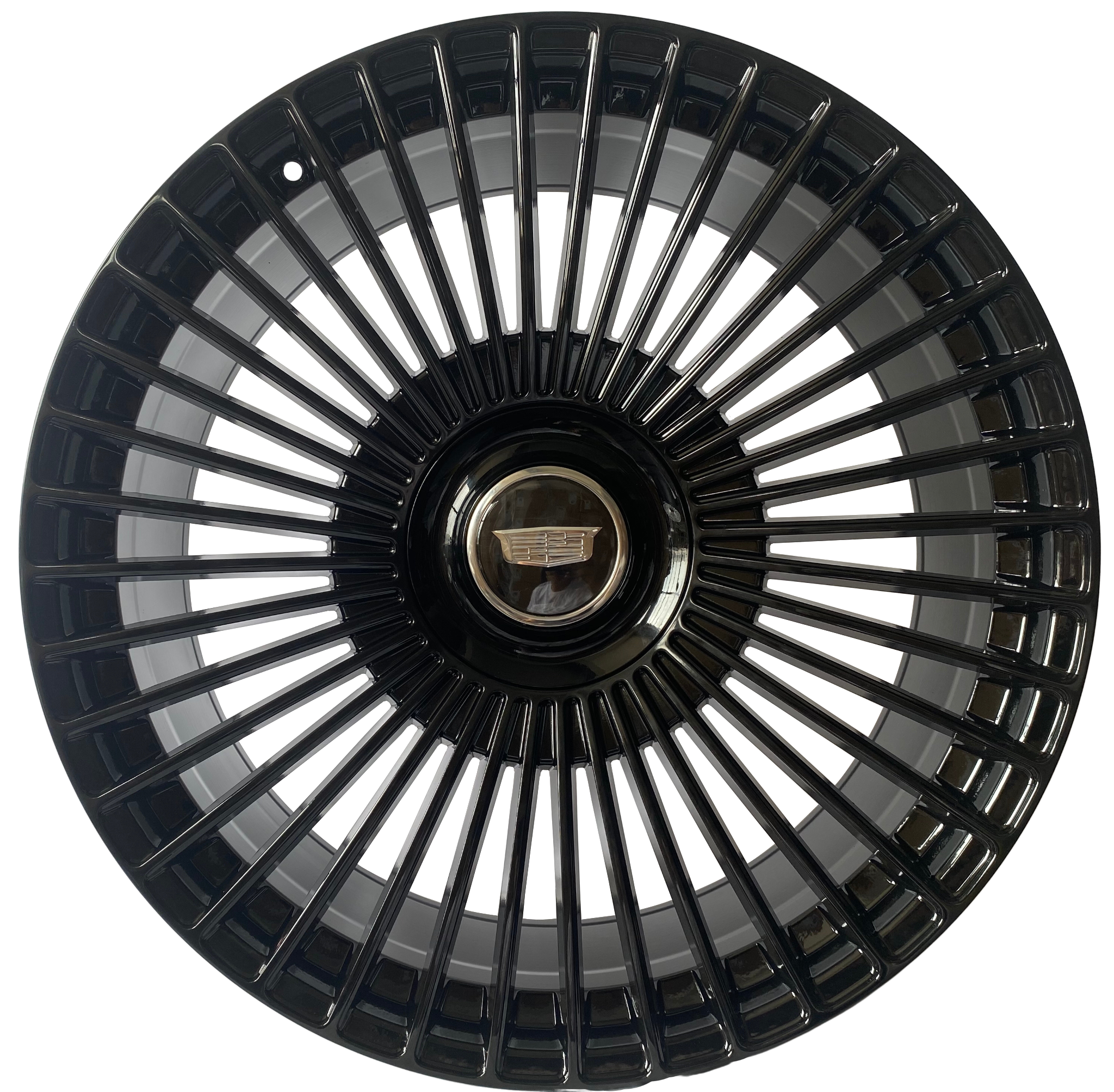
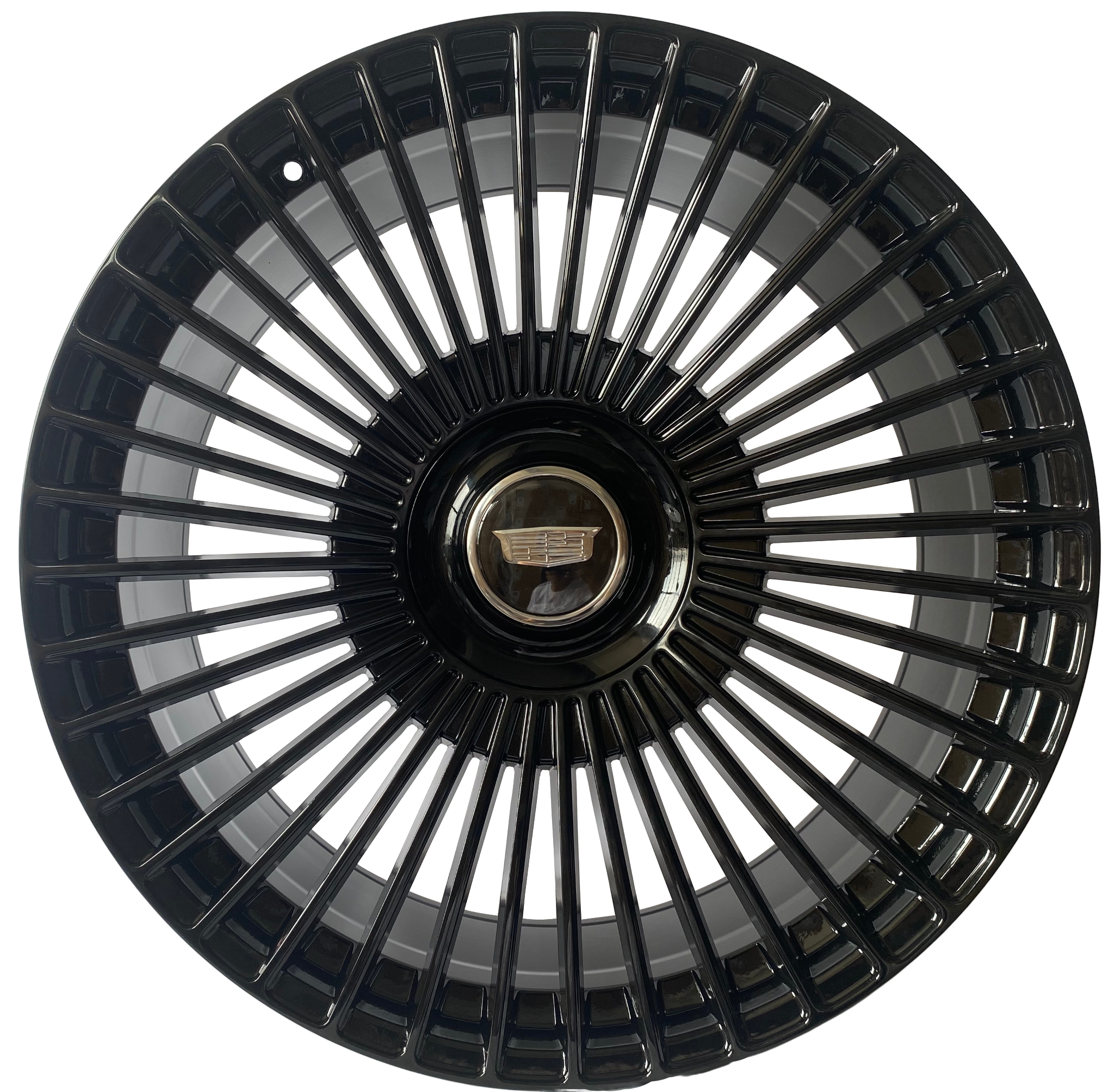


Forged wheels aren’t an automatic upgrade for a daily driver. Are custom forged wheels worth the money? It depends on what you value: lower wheel weight and a tailored design can matter for a performance-focused build, while everyday comfort depends more on factors such as tire sidewall height and pressure than on how the wheel is made.
It’s reasonable to weigh those benefits against the cost and consider what you’ll notice on the road. This article explains how forged wheels are made, how their weight can affect handling, and what to consider when assessing quality and daily-driving comfort. You’ll also see when forged wheels may suit a performance vehicle and when a less costly construction may better match your priorities.
Key Takeaways
- Decide whether forged wheels suit your daily driving by weighing their cost against your performance priorities and the comfort factors that matter most.
- Learn how reducing unsprung weight can affect a vehicle’s response, and why the benefit depends on the rest of the setup.
- Look beyond the “forged” label: material, engineering, load rating, fatigue strength, and vehicle fit all matter.
- Compare forged wheels with cast and flow-formed options to understand where the added cost may align with your goals.
Are forged wheels worth it for a daily driver?
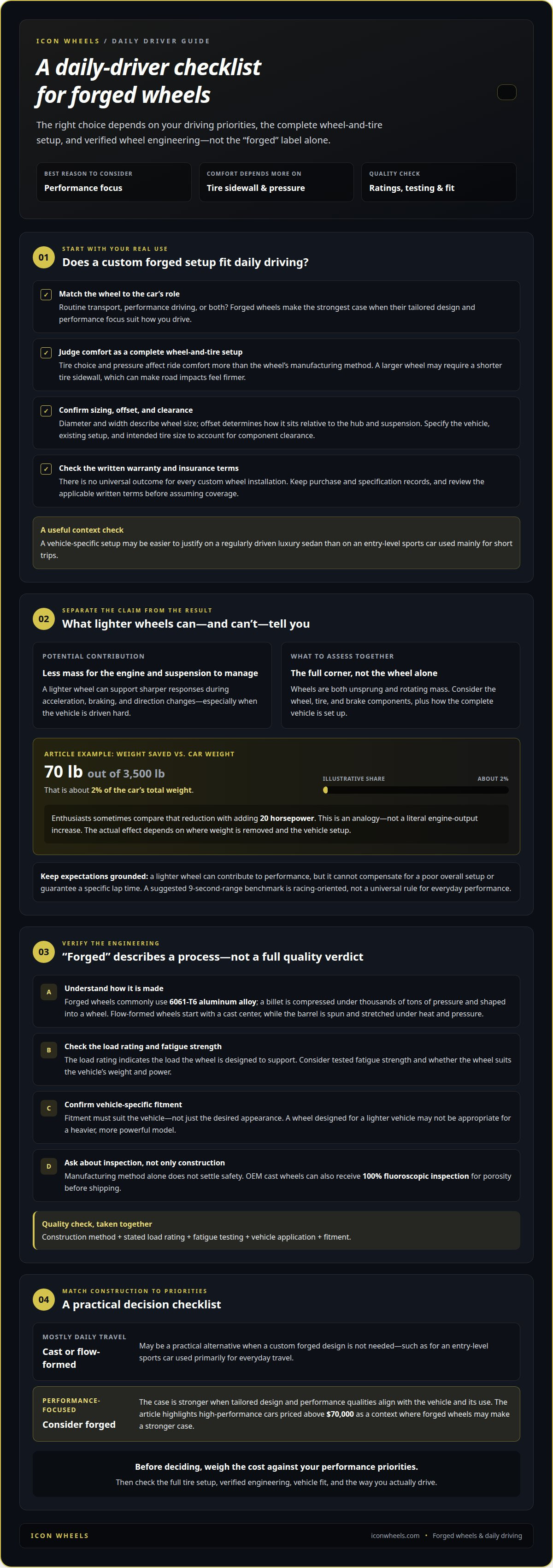
For daily use, forged wheels are most compelling when their tailored design or performance focus suits how you drive. Tire choice and pressure have a greater effect on ride comfort than the wheel’s manufacturing method.
Daily Driving With Forged Wheels
Daily driving with forged wheels means using custom-engineered wheels for commuting, errands, and routine road trips. Owners often ask, “Are custom forged wheels worth the money?” The answer depends on whether their design and performance qualities matter in everyday use. A luxury sedan driven regularly may justify a vehicle-specific setup more readily than an entry-level sports car used mainly for short trips.
Sizing, Offset, and Fitment
Wheel size describes its diameter and width, while offset determines how it sits relative to the hub and suspension. These measurements shape fitment and affect clearance around vehicle components. For a custom order, the vehicle, existing setup, and intended tire size guide the specification. A larger wheel may require a shorter tire sidewall, which can make road impacts feel firmer. If the car is mainly for commuting, consider the complete wheel-and-tire setup when deciding whether custom forged wheels are worth the money.
Warranty and Insurance Effects
There isn’t one universal warranty or insurance outcome for every custom wheel installation. Warranty terms and insurance policies have their own conditions, so a modification’s treatment depends on the specific written terms. A wheel-related issue and an unrelated mechanical problem, for example, may be handled differently. Keep purchase and specification records with your vehicle documents, and review the applicable terms before making assumptions about coverage.
Alternatives for Daily Drivers
Cast and flow-formed wheels offer alternatives when a daily driver doesn’t need a custom forged design. They may suit an entry-level sports car used primarily for everyday travel, where the priority is a practical wheel choice. Forged wheels make a stronger case for high-performance cars priced above $70,000. Match construction, tire setup, and vehicle purpose before settling on a direction.
Choose according to the car’s role: routine transport, performance driving, or both. Forged wheels bring value when their design and intended use align with those priorities.
Weight and unsprung-mass performance benefits
Reducing wheel weight can help a vehicle respond more readily, but the result depends on the complete setup. Compare the full wheel-and-tire package, not the wheel alone.
Wheel Weight and Performance
A lighter wheel reduces the mass the engine must accelerate and the suspension must control. That can support sharper responses during acceleration, braking, and direction changes. The difference matters most when a vehicle is driven hard or used for performance, rather than judged by appearance alone.
Consider the scale of the difference. Saving 70 pounds on a 3,500-pound car represents about 2% of its total weight. Enthusiasts sometimes compare that reduction with adding 20 horsepower, but the comparison is an analogy, not a literal increase in engine output. The actual effect depends on where weight is removed and how the vehicle is set up.
Unsprung and Rotating Weight
Unsprung weight is the mass not supported by the suspension springs, including wheels, tires, and parts of the brakes. Rotating weight is mass that spins as the vehicle moves, such as a wheel and tire. A wheel falls into both categories, so reducing its mass can influence suspension response and the effort required to spin it.
That distinction matters because replacing the wheels alone doesn’t determine the final result. Consider the whole corner, including the wheel, tire, and brake components, before expecting a clear performance change.
Weight savings also have to match the vehicle’s purpose. A road-focused build may benefit from a lighter wheel package, while a dedicated drag setup can have different priorities. Some enthusiasts suggest delaying wheel-weight savings until a car runs in the 9-second range. That’s a racing-oriented benchmark, not a universal rule for everyday performance.
Focus on measurable changes rather than a weight claim in isolation. Compare complete assemblies and consider how the vehicle responds under braking, acceleration, and cornering. A lighter wheel can contribute to performance, but it can’t compensate for a poor overall setup or guarantee a specific lap time.
Wheel quality, engineering, and testing
Forged-wheel quality starts with material and manufacturing, but the word “forged” alone doesn’t establish strength. Forged wheels commonly use 6061-T6 aluminum alloy. During production, a billet is compressed under thousands of tons of pressure, then shaped into a wheel. The process differs from casting, where molten aluminum is poured into a mold.
Manufacturing Methods and Material
Flow-formed wheels use a different combination of methods. Their center begins as a casting, while the barrel is spun and stretched under heat and pressure. These distinctions describe how a wheel is made, not its overall quality.
Manufacturing process alone doesn’t settle the safety question. OEM cast wheels can also receive 100% fluoroscopic inspection for porosity before shipping. That example shows why the label or method should not stand in for a wheel’s engineering and inspection details.
Load Ratings and Engineering
A wheel’s load rating indicates the load it is designed to support. Its tested fatigue strength and suitability for the vehicle’s weight and power are also important safety considerations. For example, a wheel designed for a lighter vehicle may not be appropriate for a heavier, more powerful model. Fitment must suit the vehicle, not just the desired appearance.
Assess these factors together: the stated load rating, fatigue testing, vehicle application, and construction method. A forged label cannot replace those details or guarantee strength by itself. Custom wheel engineering must account for the specific vehicle’s weight and power. The meaningful quality test is whether the finished wheel is engineered and tested for its intended application.
Forged-wheel brands and price ranges
Brand names alone don’t explain what a forged wheel costs or delivers. Across the market, forged wheels can cost two to several times more than cast or flow-formed alternatives. That price difference reflects a premium category, but doesn’t prove that every forged option offers better value for every vehicle.
Compare wheel options by construction, intended vehicle, fitment, and documented engineering, rather than by brand alone. A forged set designed for a specific vehicle application differs from a general cast option in manufacturing approach and customization. The key question is whether those differences matter for your driving goals.
Prices within the forged category can also vary with the specifications. Wheel dimensions, design, and vehicle-specific fitment shape the finished product. A distinctive design for a luxury vehicle may involve different requirements from a simpler setup. Treat a quote as a complete specification, not just a brand comparison.
Use this comparison sequence: identify the construction type, match the wheel to the vehicle, then weigh the stated engineering and design against your priorities. A lower-priced cast or flow-formed option may be the more balanced choice for everyday use. Forged wheels may make more sense when a tailored design or performance-focused build is central to the decision.
Don’t assume a higher price guarantees superior strength or a better driving result. As the engineering discussion above shows, load rating, fatigue testing, and vehicle suitability matter alongside the forging process. Brand recognition can help narrow a shortlist, but technical details show whether a particular wheel suits its intended use.
For a vehicle-specific forged design, explore custom forged wheel options and compare the specifications with your priorities.
ICON WHEELS: Custom Built Forged Wheels
ICON WHEELS offers Custom Built Forged Wheels for drivers seeking a tailored wheel option for a luxury vehicle. If your decision depends on matching a distinctive design to a specific marque, its offerings include Wheels For Mercedes, Wheels For Rolls Royce, and Wheels For Land Rover.
Consider custom forged wheels when vehicle-specific styling matters alongside the performance and engineering factors discussed above. The right choice still depends on your priorities, including daily comfort, wheel weight, fitment, and intended use. Forged wheels aren’t automatically the best value for every driver, but they offer luxury-vehicle owners a route to a more individual specification.
Contact ICON WHEELS to discuss custom forged wheels for your vehicle.
Make Your Wheel Choice With Purpose
Turn your priorities into a clear wheel specification. Decide what matters most for your vehicle: a distinctive appearance, a performance-focused setup, or a considered balance for regular driving. That choice gives the design process a purpose and keeps the decision grounded in how you use the car, rather than the appeal of a label alone.
ICON WHEELS offers Wheels For Mercedes, Wheels For Rolls Royce, and Wheels For Land Rover, alongside custom-built forged options. These vehicle-specific choices give owners a starting point for shaping a wheel design around the car they drive. Consider the character you want the finished setup to express, then bring that vision into the selection process.
Ultimately, whether custom forged wheels are worth the money depends on how closely their design and intended use align with your priorities. If you’re ready to explore a tailored direction, contact ICON WHEELS about custom forged wheels. Make the next choice with intention, and let the finished wheels feel distinctly yours.
Frequently Asked Questions
Are forged wheels stronger than cast wheels?
Not automatically. Forging describes a manufacturing process, but strength also depends on wheel design, load rating, fatigue performance, and vehicle suitability. A well-engineered forged wheel may offer advantages over a cast counterpart, yet the label alone proves neither strength nor safety. For a heavy SUV, compare the wheel’s rated capacity with the vehicle’s requirements, not just its construction.
Do forged wheels ride harsher?
Forged construction alone doesn’t make a ride harsher. Tire setup has a greater influence: a lower-profile tire generally provides less cushioning than a taller-sidewall option, and tire pressure also affects comfort. A driver who changes wheel diameter and tire profile, for example, may notice a firmer ride even if the wheel’s manufacturing method stays the same. Consider the complete wheel-and-tire combination.
What does "forged" actually mean?
“Forged” means the wheel begins as solid aluminum shaped under force, rather than being made by pouring molten aluminum into a mold. The wheel is then machined into its final design. By contrast, flow-forming starts with a cast center and shapes the barrel through heat and pressure. These terms describe manufacturing methods, not an overall quality grade.
How much do custom forged wheels cost in the US?
Custom forged wheel pricing depends on the vehicle, size, design, and fitment. These are listed product prices, not a universal price for every custom wheel order.
How do custom forged wheels compare with flow-formed and cast wheels?
Cast wheels are made by pouring molten aluminum into a mold. Flow-formed wheels combine a cast center with a barrel shaped through heat and pressure. Forged wheels start with solid aluminum shaped under force, then undergo machining. These processes can affect weight, design options, and cost. Choose based on intended use and engineering details, rather than assuming one method suits every vehicle.
Are forged wheels lighter and stronger than cast wheels?
Forged wheels can be lighter than cast wheels, but the difference depends on the specific designs being compared. Strength also depends on load rating, fatigue testing, and vehicle fit, not construction alone. Compare specifications for the exact wheel and vehicle: a lighter wheel isn’t automatically stronger or the right choice.
