
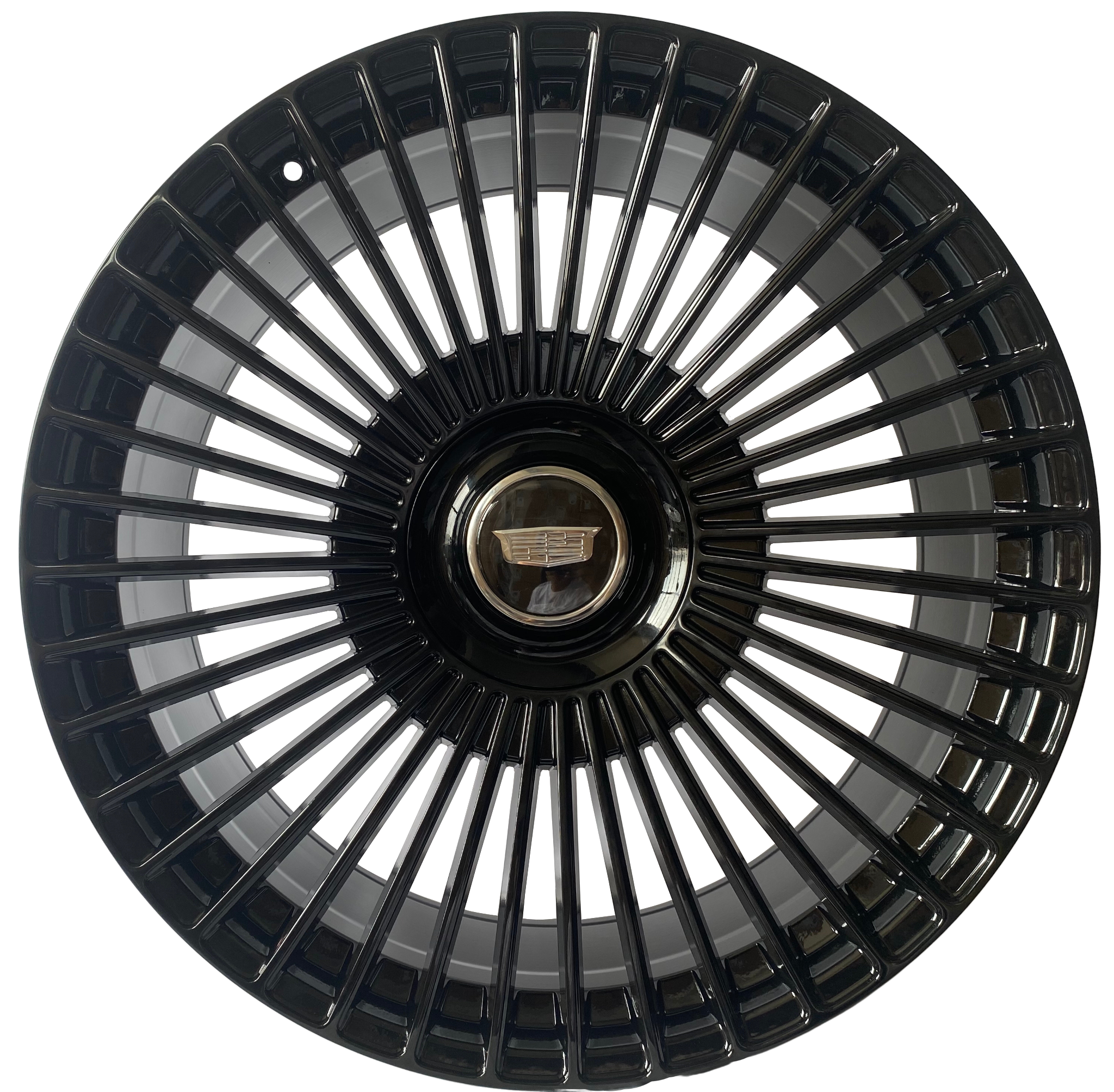
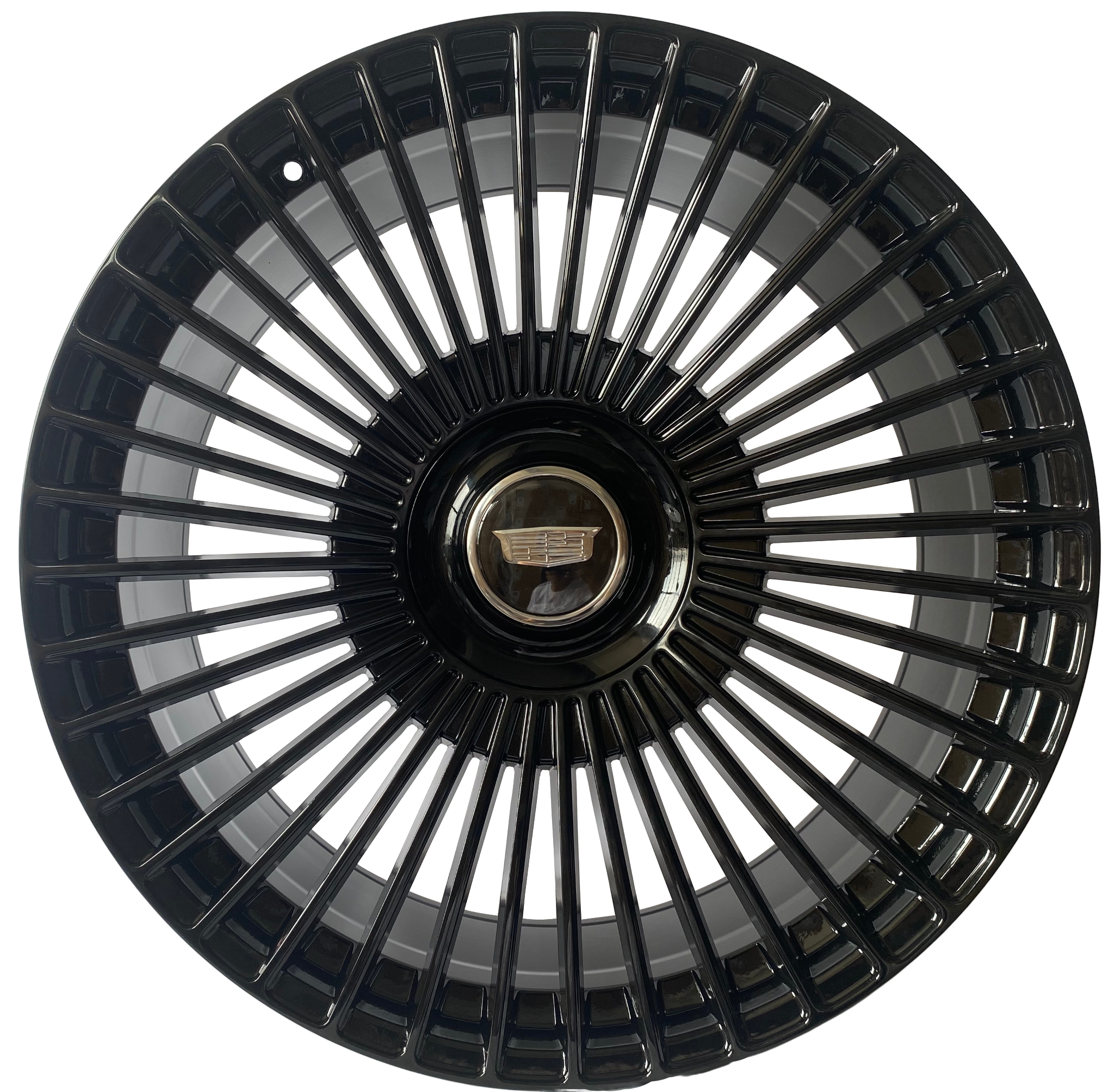


A striking wheel setup works only when the fit is right. Successful show car wheel fitment means matching offset, center bore, bolt pattern and hardware thread size to the vehicle, then checking tire dimensions and clearance. Align those details, and the wheels can complement the car without compromising how they sit.
It’s easy to focus first on diameter, finish and stance. But the measurements behind the look matter just as much, especially when a mismatch affects mounting or clearance. Learn how offset changes wheel position, why center bore and thread size matter, and what to compare before choosing a setup.
We’ll also walk through how to use wheel, tire and package lookup tools to narrow your options. The goal is a considered fitment that brings visual impact and precise compatibility together.
Key Takeaways
- Compare offset, center bore, and thread size with your vehicle’s requirements before settling on a wheel design.
- Use wheel, tire, and package lookup tools to narrow compatible options, then assess the full combination rather than wheel diameter alone.
- To evaluate rubbing, consider how wheel and tire dimensions affect clearance at the suspension and body through steering and movement.
- Understand how incorrect fitment can affect mounting, clearance, and the finished stance before choosing aftermarket wheels.
Wheel geometry, including offset, center bore, and thread size
Build a compatible wheel specification before choosing a finish or stance. Diameter describes the wheel’s overall size across its rim, while width is measured between the bead seats. Both affect tire selection and available clearance, so match them to the vehicle rather than choosing by appearance alone.
Offset is the distance between the wheel’s mounting pad and its centerline. Positive offset places the mounting pad toward the wheel’s outer face; negative offset moves it inward. Changing offset shifts the wheel relative to suspension components and fenders. A wider wheel can also extend farther inward or outward, so assess width and offset together.
Center bore is the opening at the wheel’s center and must fit the vehicle’s hub correctly. A mismatched bore can prevent the wheel from seating as intended. Thread size describes the diameter and pitch of the lug hardware, which must match the vehicle’s studs or bolts. Don’t assume similar-looking threads are interchangeable.
Lug pattern identifies the number of fasteners and the diameter of the circle they form. Compare both elements with the vehicle specification; matching only the lug count isn’t enough. For show car wheel fitment, record diameter, width, offset, center bore, lug pattern and thread size as one complete set.
U.S. aftermarket wheel rules and inspection criteria can vary by state and vehicle use. Don’t treat one state’s inspection practices as a nationwide standard.
To check clearance, compare the wheel’s inner barrel and spokes with the brakes, then assess its inner edge near suspension parts. Check the outer edge against the fender with the steering turned, and consider clearance as the suspension moves. A stationary visual check alone won’t reveal every potential contact point.
Wheel, tire, and package lookup tools
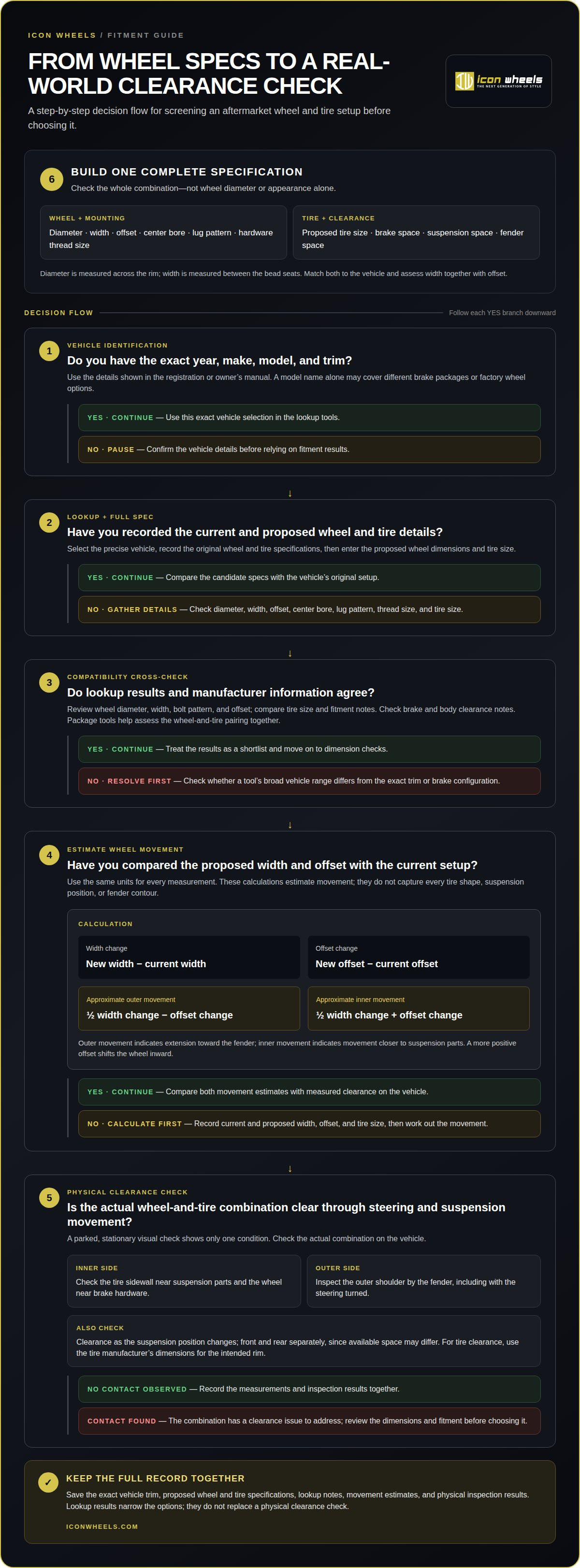
Start with a vehicle-specific wheel lookup tool. Select the exact year, make, model and trim shown in your registration or owner’s manual. A model name alone may cover different brake packages or factory wheel options. Match the vehicle details carefully before relying on a result.
Wheel lookup tools can narrow choices by diameter, width, bolt pattern and offset. Use them to compare candidate specifications with the vehicle’s original setup. Tire lookup tools add another layer: compare the proposed tire size with the current tire and review the fitment notes. Treat results as a shortlist, not a physical clearance test.
Follow a consistent sequence when reviewing results:
- Select the precise vehicle year, make, model, and trim.
- Record the original wheel and tire specifications shown.
- Enter the proposed wheel dimensions and tire size.
- Review compatibility notes, including brake and body clearance.
Package tools combine wheels and tires, helping you assess the complete pairing instead of two separate parts. Compare the package’s stated fitment with your vehicle selection. If you change wheel width or diameter, review tire options again; a suitable wheel doesn’t automatically make every tire size appropriate.
Save the tool results with the exact vehicle trim and proposed specifications. Then compare those details with the wheel manufacturer’s product information. Conflicting results deserve attention: one tool may list a broad vehicle range, while another distinguishes a specific trim or brake configuration. Resolve any mismatch before choosing the package.
For a more individualized design direction, explore custom wheel design considerations alongside your lookup results. A clear specification makes it easier to weigh appearance, tire pairing, and vehicle compatibility as one decision.
How do I calculate whether aftermarket wheels will fit without rubbing?
Compare the proposed wheel with the vehicle’s current setup, using the same units. Record each wheel’s width and offset, along with the tire size. The calculation estimates how the wheel moves inward and outward. It doesn’t account for every tire shape, suspension position or fender contour, so use it to screen options before checking the car physically.
Let width change equal new width minus current width, and offset change equal new offset minus current offset. Keep both measurements in the same unit. Approximate outer movement equals half the width change minus the offset change. Approximate inner movement equals half the width change plus the offset change. The movement estimates indicate whether the wheel extends toward the fender or moves closer to suspension parts.
- Write down the current wheel width, offset, and tire size.
- Record the proposed wheel width, offset, and tire size.
- Calculate outer and inner movement with the formulas above.
- Compare both results with measured clearance at the vehicle.
For example, a wider wheel with unchanged offset adds width on both sides of its centerline. A more positive offset shifts the wheel inward, reducing outer extension while increasing inner intrusion. The tire matters too: its section width and profile affect clearance beyond the wheel rim. Use the tire manufacturer’s dimensions for the intended rim, not just the size shown in a lookup result.
Next, test the actual combination on the vehicle. Check the inner sidewall against suspension components and the wheel against brake hardware. Inspect the outer shoulder near the fender, then turn the steering through its range and check again. Look for contact as the suspension position changes, since a parked, unloaded vehicle shows only one condition. Recheck the front and rear separately; available space may differ.
Record the measurements and inspection results together. A spreadsheet of current and proposed dimensions makes each change traceable, while a physical test can reveal clearance issues that calculations can’t capture.
What are the risks of using wheels with the wrong fitment?
A wheel that doesn’t seat correctly can cause problems before the vehicle moves. A mismatched center bore may prevent it from sitting flush against the hub. An incompatible lug pattern can stop the fasteners aligning with the mounting holes. Never force a wheel into place; inspect the hub and wheel specifications first.
Hardware must match the vehicle’s studs or bolts. Incorrect thread size or pitch can prevent proper engagement, while unsuitable fasteners may not secure the wheel as designed. A wheel that sits unevenly can also cause vibration. Compare thread specifications and fastener seating style, then confirm that the wheel mounts evenly before driving.
- Incorrect offset: The wheel may sit too close to suspension parts or extend beyond the fender.
- Excessive width: The inner barrel or tire can contact suspension components.
- Wrong lug pattern: The mounting holes may not align with the vehicle’s fasteners.
- Unsuitable tire pairing: The tire may not sit correctly on the wheel or clear nearby parts.
Contact can occur in more than one position. A tire that clears the fender while parked may rub when the steering turns or the suspension moves. During a careful clearance inspection, look for marks on the inner sidewall, fender liner and nearby components. Persistent contact can damage surfaces and wear the tire unevenly.
Fitment errors can also undermine the intended stance. For example, an offset that pushes a wheel outward may create an exposed look but reduce fender clearance. A wheel positioned too far inward can crowd suspension components. Check each axle separately, since front and rear clearances may differ. Don’t rely on diameter alone or assume a tool result accounts for every vehicle configuration.
Before choosing a setup, compare the full wheel and tire specifications with the vehicle, then inspect mounting and clearance. Explore a tailored wheel direction for a cohesive fitment plan.
ICON WHEELS: Wheels For Mercedes
ICON WHEELS offers Wheels For Mercedes for owners seeking a distinctive, vehicle-specific look. Its custom-built forged wheels are engineered for luxury vehicles, bringing design and fitment considerations together for a considered upgrade.
Consider this offering when refining a Mercedes build and choosing wheels that suit the vehicle’s character and intended stance. Before deciding, organize the exact model and current wheel specifications. Clear details help you focus on the car’s requirements, not appearance alone.
ICON WHEELS also offers Wheels For Rolls Royce and Wheels For Land Rover. For a Mercedes-focused project, start with the vehicle and the look you want to achieve. Contact ICON WHEELS to discuss Wheels For Mercedes.
Make Your Next Build Intentional
The strongest wheel choice feels integral to the vehicle, not added as an afterthought. Let your preferred stance and finish guide the design while keeping the complete build coherent. A thoughtful approach to show car wheel fitment gives you a clearer foundation for shaping a look that feels distinctly yours.
Before moving forward, bring your vehicle details and design direction together. Consider how the wheels will complement the car’s lines, intended use and overall presence. That clarity makes the next decision more deliberate and helps turn a visual concept into a considered specification.
ICON WHEELS offers wheels for Mercedes, Rolls Royce, and Land Rover. If you’re planning a luxury vehicle build, contact ICON WHEELS about fitment to discuss your direction. Take the next step with confidence, and create a setup that reflects your vision.
Frequently Asked Questions
How do I find my car's wheel fitment specifications?
Start with your owner’s manual and the vehicle’s tire information placard, then compare them with the markings on your current wheels. Record the tire size and any wheel dimensions stamped on the rim. If the car has been modified, its current setup may not match factory specifications, so treat those records as a starting point, not proof of compatibility.
What do wheel offset, bolt pattern, center bore, and wheel width mean?
These measurements describe different parts of the wheel-to-vehicle connection. Offset and wheel width help establish where the wheel sits; bolt pattern describes how its mounting holes align with the hub. Center bore describes the opening around the hub’s raised center. Keep each value separate in your notes: matching one measurement doesn’t establish that the other specifications fit.
How do I measure a car's bolt pattern and center bore?
Use a bolt-pattern gauge or suitable measuring tool, and identify the number of mounting holes before measuring their layout. For an even-hole pattern, measure across the centers of opposite holes; odd-hole patterns require a pattern-specific method. Measure the hub’s raised pilot diameter with calipers to determine center bore. Record the units and measurement points to prevent mix-ups.
What wheel and tire sizes fit my car's make, model, and year?
Use a lookup tool with the vehicle’s exact year, make, model and trim, then compare its results with the factory placard and wheel markings. For example, two trims from the same model year may have different brake packages. Review the proposed wheel-and-tire combination as a complete set, and account for vehicle modifications before selecting a size.
What is the difference between wheel offset and backspacing?
Offset measures the mounting pad’s position relative to the wheel’s centerline. Backspacing measures from the wheel’s mounting surface to its inner edge. Both help describe where a wheel sits, but use different reference points. Converting between them requires wheel width, so don’t compare backspacing figures directly with offset figures when reviewing fitment notes.
